


 Peržiūrėti realaus dydžio版
 Siųsti
 Dalintis
 Išsamiau
 Gidas
Gidas

 Atsisiųsti
 Panašūs eksponatai
 Rentgeno spindulių nuotrauka
 Diaporama
 Statistika
Self portrait


 Rodyti daugiau
Rankų darbo aliejinės reprodukcijos
Rankiniu būdu tapytas aliejus ant droblio jūsų pageidaujamame dydį ir rėmuose – mūsų menininkų darbas pagal užsakymą. ( Perjungti į spausdinimą Perejti prie skaitmeninių vaizdų)




































Pasirinkite iš mūsų nustatytų dydžių, atitinkančių originalaus meno kūrinio proporcijas.

Galite įvesti savo matmenis, kad jie atitiktų konkretų rėmą ar erdvę. Jei pasirinktas dydis neatitinka originalaus paveikslėlio proporcijų, mes arba apkropsime meno kūrinį, arba papildysime tapybą rankomis dažytい elementais. Prieš pradėdami gamybą, jūsų patvirtinimui atsiųsime skaitmeninį maketą.
Atkreipkite dėmesį, kad ekrane rodomas vaizdas neatspindi tikrojo apkarpymo ar papildymo. Tik maketas tiksliai parodys galutinę kompoziciją.
Nors galima rinktis ir individualius dydžius, rekomenduojame pasirinkti matmenis iš nustatytos sąrašo, kad būtų išlaikytos originalios proporcijos.
Gavus užsakymą, ArtsDot.com komanda susisieks su klientu el. paštu dėl instrukcijų ir pateiks maketo pavyzdį
Pristatymas visame pasaulyje () per 3–4 savaites, o ne įprastai – per 5 savaites. (24 rugsėjis). Kokybė lieka nepakeičiama.

Nemokamas greitasis pristatymas visame pasaulyje

Aukštos kokybės lininis drobė

Pilnas siuntimo draudimas

Muitinės mokesčių grąžinimo garantija

Tikro spalvų atitikimo garantija

100 dienų grąžinimo politika (tik esant įtaigoms)

100% pinigų grąžinimo garantija

Nuolaida dideliems užsakymams
 Stiklo variantas prieinamas tik pasirinkus dydį iki 110 cm

Self portrait
Reprodukcijos technika
Reprodukcijos dydis
-


Visų pasirinktų variantų kaina
$ 263
Susiję kūriniai


Autoriaus biografija
A Visionary Between Worlds: The Life and Legacy of Raymond Francis McIntyre
The story of Raymond Francis McIntyre is one of quiet brilliance and the profound tension between a sheltered upbringing and the vibrant, often turbulent, currents of European modernism. Born in Christchurch, New Zealand, in 1879, McIntyre’s early years were shaped by a delicate balance of physical fragility and immense creative potential. Though his health often necessitated a life of introspection, he found solace in the rich textures of music and literature, becoming an accomplished cellist and a frequent companion to the intellectual circles of his youth. This early period of isolation did not stifle him; rather, it cultivated a deep, observant eye—a quality that would later define his ability to capture the subtle nuances of light and human emotion.
His formal journey into the world of fine art began at the Canterbury School of Art, where he studied under the watchful eyes of Herdman Smith and Alfred Walsh. These early mentors provided him with a rigorous foundation in draughtsmanship, yet McIntyre’s spirit was too expansive for the provincial boundaries of New Zealand alone. After a brief hiatus from formal training, he returned to his studies with renewed vigor in 1906, eventually making the life-altering decision to relocate to London in 1909. This move marked his transition from a local talent to a participant in the global dialogue of early twentieth-century art. Settling into a studio on Cheyne Walk, he immersed himself in the heart of the British art scene, seeking out the masters who could help him bridge the gap between traditional technique and the emerging modern aesthetic.
The Convergence of Tradition and Modernity
In London, McIntyre found himself at a crossroads of influential styles. Enrolling at the Westminster Technical Institute, he studied under the legendary William Nicholson and Walter Sickert, figures who were instrumental in shaping the trajectory of British painting. It was during this period that his fascination with the Pre-Raphaelite movement began to coalesce with a keen awareness of contemporary European trends. He possessed a unique ability to synthesize the meticulous, almost reverent detail of the Pre-Raphaelites with the loose, atmospheric qualities of Impressionism and the experimental spirit of Art Nouveau.
His work often reflected a "Whistlerian" temperament—a term used by his contemporaries to describe his subtle, tonal approach and his ability to imbue a canvas with a sense of poetic stillness. While some local critics in New Zealand initially dismissed him as a mere decorator or an overly experimental Impressionist, the international stage offered a different verdict. McIntyre’s paintings were characterized by:
- Luminous Color Palettes: An acute sensitivity to how light interacts with surfaces, particularly in his landscapes and still lifes.
- Understated Elegance: A mastery of portraiture that captured the psychological depth of his subjects without resorting to melodrama.
- Structural Precision: A foundation of strong draughtsmanship that allowed him to experiment with modern textures while maintaining classical integrity.
A Lasting Impression on the Artistic Canon
Despite his self-effacing nature and a tendency toward privacy, McIntyre’s presence in the art world was undeniably significant. He exhibited extensively at prestigious venues such as the Goupil Gallery, the New English Art Club, and the Thames Valley Art Club. His inclusion in the Royal Academy served as a testament to his technical prowess and his standing among the elite of British painters. Even as he navigated the complexities of being an expatriate artist, his work remained deeply connected to the evolving zeitgeist of the early 1900s, blending elements of Japanese aesthetics with the burgeoning movements of European modernism.
Though his life was tragically short, ending in 1933, the impact of Raymond Francis McIntyre continues to resonate. He remains a pivotal figure for those studying the flow of artistic influence from the colonies to the metropole. His oeuvre stands as a beautiful, complex bridge between the romanticism of the nineteenth century and the bold experimentation of the twentieth. Today, his works are cherished not only for their aesthetic beauty but as historical windows into a period of profound transition, reminding us of an artist who, despite his quietude, spoke volumes through every brushstroke.

raymond francis mcintyre
1879 - 1933 , New Zealand
Trumpa informacija apie kūrėją
- Artistic Movement Or Style: Pre-Raphaelite influence; European modernism
- Artists Or Movements Influenced By This Artist:
- Goupil Gallery
- New English Art Club
- Royal Academy
- Artists Who Influenced This Artist:
- Herdman Smith
- Alfred Walsh
- William Nicholson
- Walter Sickert
- Date Of Death: September 24, 1933
- Full Name: Raymond Francis McIntyre
- Nationality: New Zealander
- Notable Artworks: ['Self portrait']
- Place Of Birth: Christchurch, New Zealand
Susiję straipsniai

Expressionist Painting: 10 Masterpieces That Defined a Movement | ArtsDot
Explore 10 Expressionist paintings that revolutionized art! Discover Munch, Kirchner & Kandinsky's iconic works. Find museum-quality reproductions and vibrant canvas prints to elevate your home decor on ArtsDot.com.

Impressionistic Realism's Finest: 10 Masterpieces for Your Home | ArtsDot
Journey through Impressionistic Realism with 10 iconic masterpieces by Monet, Renoir & Van Gogh. Explore art history, techniques & find museum-quality reproductions for your home at ArtsDot.com. Discover all masterpieces online!

The Echo of Self: Reflectivity as a Core Theme in Art History & Contemporary Practice
Explore the rich history of self-representation in art, from Renaissance masters to modern innovators. Discover how artists use portraiture to reveal identity, emotion & the depths of the human psyche. Expert insights for collectors.

Reflecting the Self: A History of Portraiture & Psychological Insight
Explore the fascinating history of self-portraiture from Renaissance masters like Dürer & Rembrandt to modern interpretations. Discover the psychological insights and artistic techniques behind these iconic works. Expert analysis for art enthusiasts.
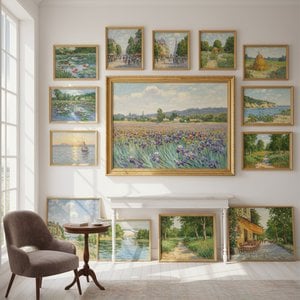
Impressionistinio Peizažo Simfonija: 10 Šedevrų, Apibrėžusių Epoją
Atraskite 10 impresionistinio peizažo šedevrų, kuriuos įkvėpė Monet, Renoir ir kiti! Sužinokite apie jų kūrybos istorijas bei spalvų magiją. Aukščiausios kokybės dailės reprodukcijos – ArtsDot.com. Išskirtinis interjero dizainas jūsų namams!