

 Peržiūrėti realaus dydžio版
 Pasidalinti
 Dalintis
 Išsamiau
 Vadovas

 Atsisiųsti
 Panašūs eksponatai
 Rentgeno spindulių nuotrauka
 Automatinė diorama
 问答
问答 Statistika
Christ


 Skaityti daugiau
Giclée / Meno spausdinimas
Muziejų lygio „giclée“ arba drobos spausdinimas: greita gamyba ir lankstios apdailos parinktys. ( Pirkti rankų darbo tapybą Perejti prie skaitmeninių vaizdų)




P118B €10

P118H €10

P118W €10

P438Z €10

P508JH €12

P508YH €12

P805H €10

P805Z €10

P919BZ €10

P919G €10

P919XJ €10

P959ZH €10

P968JZ €12

W106C €8

W218G €10

W218JH €8

W218Y €10

W307PJ €10

W316G €10

W316PJ €8

W316Y €10

W398PJ €8

W4111J €10

W500HY €15

W500JH €15

W692G €12

W849H €8

W940BG €15

W953PJ €8




Pasirinkite iš mūsų nustatytų dydžių, atitinkančių originalaus meno kūrinio proporcijas.

Įveskite jums reikiamą plotį ir aukštį, kad atvaizdas derėtų prie jūsų rėmo ar sienos. Spausdiną galima tik sumažinti, bet nepadidinti virš originalaus paveikslėlio dydžio, todėl keičiant proporcijas, dalis vaizdo prarandama. Prieš spausdinimą atsiųsime jums skaitmeninį maketą patvirtinimui. Šioje puslapio nuotraukoje matomas pjūvis nėra tikslus – jį rodo tik maketas.
Pristatymas visame pasaulyje () per 2 weeks, o ne įprastas 4/5 savaičių laikotarpis. (5 lapkritis)

Nemokamas greitasis pristatymas visame pasaulyje

Aukštos kokybės lininis drobė

Pilnas siuntimo draudimas

Muitinės mokesčių grąžinimo garantija

Tikro spalvų atitikimo garantija

100 dienų grąžinimo politika (tik esant įtaigoms)

100% pinigų grąžinimo garantija

Nuolaida dideliems užsakymams
 Stiklo variantas prieinamas tik pasirinkus dydį iki 110 cm

Christ
Giclée / Meno spausdinimas
Reprodukcijos matmenys
-


Bendroji kaina
€ 56
A Divine Gaze: Exploring Quinten Matsijs' Christ
To stand before this devotional portrait of Christ is to encounter a moment suspended in time—a profound intersection of divine majesty and human intimacy. Painted around 1529 by the master Quinten Matsijs, this bust-length depiction transcends mere representation; it offers a direct, soulful communion with the sacred. The overall impression is one of quiet dignity, a somber yet radiant presence that seems to gaze directly out from the panel into the modern viewer's soul. Matsijs, a key figure in the early Netherlandish tradition, imbued this work with the characteristic blend of meticulous realism and deep spiritual resonance that defined the Antwerp School.
Technique and Material Mastery
The technical brilliance evident here is breathtaking. The artist employed oil paint on panel, allowing for subtle gradations of tone and an almost palpable sense of texture. Observe how the light seems to emanate not just from the halo, but from within the very subject himself. Matsijs masterfully handles the interplay between light and shadow; the illumination, seemingly cast from above and slightly to the left, sculpts the contours of Christ’s face, lending a three-dimensional volume that belies the flatness of the panel. The background, rendered in deep, velvety blues, serves not merely as negative space but as an abyss against which the luminous figure seems to emerge, enhancing the dramatic impact.
Symbolism Woven into Form
Every element within this composition carries symbolic weight. The radiant golden halo is more than ornamentation; it is a visual declaration of divinity, composed of radiating lines that suggest an unending source of holiness. The color palette itself speaks volumes: the rich, deep blue undergarment contrasts beautifully with the authoritative sweep of the red cloak, colors traditionally associated with royalty and sacrifice within Christian iconography. Furthermore, Christ’s direct gaze engages us in a silent dialogue, inviting contemplation on themes of piety, redemption, and eternal truth.
Historical Context and Emotional Resonance
Rooted in the early 16th century Antwerp art scene, this piece reflects the period's deep commitment to religious devotion. While Matsijs was known for blending sacred narratives with subtle moral undertones, here he focuses intensely on the devotional portraiture that characterized the era. For the contemporary collector or designer, owning a reproduction of this work is acquiring more than just artwork; it is acquiring a focal point of contemplation. It possesses an inherent gravitas, capable of transforming any space—be it a private chapel, a study, or a grand hall—into a sanctuary of quiet reflection.
Klausimai ir atsakymai
Kokia emocinė nuotaika lydi „Christ“ kūrinį, priskiriamą Northern Renaissance stiliui?
„Christ“ Reflective emocija akompaniuoja jo Northern Renaissance stiliui.
Kokia „Christ“ – Kvintinas Matsijs orientacija?
„Christ“ – Kvintinas Matsijs yra Portrait kompozicija. Prieš renkantis spausdinimo dydį, verta patikrinti proporcijas.
Ar kūrinys „Christ“ – Kvintinas Matsijs saugomas originalaus paveikslautojo valstybėje?
Ne – kūrinys saugomas užsienyje. kūrinys „Christ“ saugomas United States of America, o Kvintinas Matsijs gimė Belgija.
panašūs kūriniai


Autoriaus biografija
**ankstyvasis gyvenimas ir moksliavimas**
Kvintinas Matsijs, viena iš ryškiausių ankstyvojo neterlandų tradicijos figūrų, gimė 1466 metais Leuvene, Belgijoje. Pasak liaudies tradicijų, Matsijs savo karjerą pradėjo kaip geležininkas, kol vėliau persirodė į tapybą, nors šis jo gyvenimo aspektas išlieka kiek spulative.**meniškoji karjera ir indėlis**
Daugiau nei dvidebimį metų dirbęs Antverpyje, Kvintinas Matsijs sukūrė daugybę kūrinių, pasižyminčių religiniu rėminiu sluoksniu bei satyrinėmis nuolinkio tendencijomis. Jo indėlis į ankstyvojo neterlandų meno judėjimą yra itin didelis, pelnytant jam atsidavimą kaip Antverpio tapybos mokyklos įkūrėjui. Ši mokykla vėliau tapo dominuojančia jėga flėmų menoje XVI amžiui.**pastebimieji kūriniai ir inovacija**
- **Švč. Mergelė su Šventąja Kotrina ir Šv. Barbora**: šis šedevras demonstruoja Matsijio meistriškumą derinti religines temas su subtiliomis moralinėmis prasmėmis. - **<Jakobas Obrikto**: garsiojo klavirologistas portretas, pabrėžiantis Matsijio gebėjimą įamžinti savo paveikslų subjektų esmę.**palikimas ir įtaka**
Matsijs ankstyvajai neterlandų tradicijai atnešė naujas technikas ir motyvus, atvėrędami kelią būsimoms menininkų kartoms. Jo įtakos galima rasti vėlesnių flėmų dažytojų darbuose, kurie kūrė remdamiesi jo inovacijomis.- pagrindinis indėlis: Antverpio tapybos mokyklos įkūrimas, tapusios flėmų meno pamatu XVI amžiuje.
- pastebimieji muziejai, kuriuose eksponuojami jo darbai: Koninklijk Museum voor Schone Kunsten Antverpyje, Belgijoje, saugo kelis Matsijio šedevrus, leidžiančius pažinti jo meninę genijų.
- žiūrėti daugiau Kvintino Matsijio meno: tyrinėkite [ArtsDot.com kolekciją](https://AllapasPaintingsStore.com/@/quinten-matsijs), kad gilinėtomis būdais pažintumėte jo kūrinius ir ankstyvojo neterlandų meno judėjimą.
**išvados**
Kvintino Matsijio palikimas yra įrodymas apie jo neblėstančią įtaką flėmų tapybai. Per savo inovatyvų požiūrį jis ne tik apibrėžė Antverpio mokyklą, bet ir paveikė platesnį šiaurinio renesanso meno horizontą. Jo darbai ir toliau įkvepia bei intriguoja, atverdami langą XV amžiaus Flandrijos meninei ir kultūrinei subtilybei.
Kvintinas Matsijs
1466 - 1530 , Belgija
Trumpa informacija
- Artistic Movement Or Style: Tarpinis Renesansas
- Artists Or Movements Influenced By This Artist: ['Michelangelo']
- Artists Who Influenced This Artist:
- Lorenzo Ghiberti
- Filippo Brunelleschi
- Date Of Birth: 1466
- Date Of Death: 1530
- Full Name: Donato di Niccolò di Betto Bardi
- Nationality: Itališkas
- Notable Artworks:
- Šventasis Georgas
- Daidas (bronzinis)
- Gatamelatos veizdinys
- Place Of Birth: Leuvenas, Belgija
Susiję straipsniai

Sacred Narratives on Canvas: Exploring Religious Scenes & Their Enduring Influence
Explore the rich history of religious art from Giotto to the Renaissance masters with ArtsDot. Discover symbolism, techniques & enduring legacies. Museum-quality reproductions available.

Sacred Narratives on Canvas: Exploring Religious Painting Through History
Explore the rich history of religious painting with ArtsDot.com! Discover iconic artworks, symbolism & techniques from antiquity to the Renaissance. Enhance your art appreciation today.
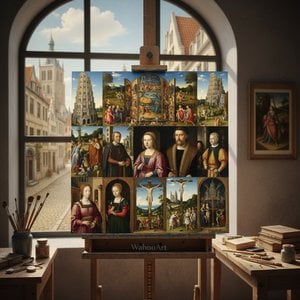
Šiaurės Renesanso Šedevrai: 10 paveikslių, kuriuos privalote pažinti
Atraskite 10 Šiaurės Renesanso šedevrų, kurie formavo Europos meną! Jan van Eyck, Dürer ir kiti meistrai – jų kūriniai, istorijos bei spalvos. Aukščiausios kokybės tapybos reprodukcijos jūsų namams. Išskirtinis dizainas ArtsDot.com!
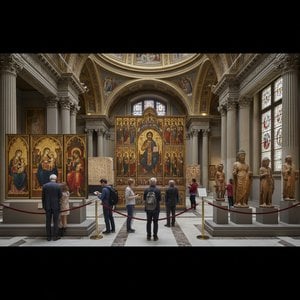
Sacred Narratives Embodied: A Comprehensive Exploration of Religious Iconography in Art History
Explore the rich history of religious iconography in art! Discover symbolism, movements & masterpieces from Byzantine to Renaissance periods. Expert insights for collectors and enthusiasts at ArtsDot.

The Northern Renaissance: A Flourishing of Realism, Religious Reform & Artistic Innovation
Explore the Northern Renaissance! Discover Jan van Eyck's innovations, religious shifts, & key artists of this influential period. Expert analysis and insights into Early Netherlandish painting at ArtsDot.