

 Peržiūrėti realaus dydžio版
 Pasidalinti
 Dalintis
 Išsamiau
 Vadovas

 Atsisiųsti
 Panašūs eksponatai
 Rentgeno spindulių nuotrauka
 Automatinė diorama
 Q&A
Q&A Statistika
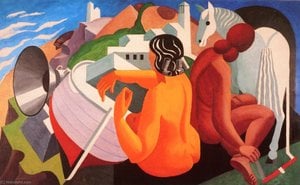
Orpheus and Eurydice
 Skaityti daugiau
Šiame puslapyje rodomas meno kūrinys yra saugomas autorių teisių įstatymais, todėl neturime teisės legaliai kurti ar parduoti jo identiškos reprodukcijos. Ši apsauga užtikrinama remiantis tokiais tarptautiniais susitarimais kaip Bernės konvencija ir pagal nacionalines įstatymų nuostatas, įskaitant tas, kurias nurodo JAV autoriškos teisės įstatymas – 17-asis skyrius.
Šis metodas visiškai atitinka autorių teises, nes jame nėra saugomo kūrinio kopijavimo ar dubliavimo. Tai yra kūrybinė reinterpretacija – naujas paveikslas, kurį įkvėpė originalas, tačiau kuris nėra jo identiškas.
Giclée / Meno spausdinimas
Muziejų lygio „giclée“ arba drobos spausdinimas: greita gamyba ir lankstios apdailos parinktys. ( Pirkti rankų darbo tapybą Perejti prie skaitmeninių vaizdų)




































Pasirinkite iš mūsų nustatytų dydžių, atitinkančių originalaus meno kūrinio proporcijas.

Įveskite jums reikiamą plotį ir aukštį, kad atvaizdas derėtų prie jūsų rėmo ar sienos. Spausdiną galima tik sumažinti, bet nepadidinti virš originalaus paveikslėlio dydžio, todėl keičiant proporcijas, dalis vaizdo prarandama. Prieš spausdinimą atsiųsime jums skaitmeninį maketą patvirtinimui. Šioje puslapio nuotraukoje matomas pjūvis nėra tikslus – jį rodo tik maketas.
Pristatymas visame pasaulyje () per 2 weeks, o ne įprastas 4/5 savaičių laikotarpis. (2 lapkritis)

Nemokamas greitasis pristatymas visame pasaulyje

Aukštos kokybės lininis drobė

Pilnas siuntimo draudimas

Muitinės mokesčių grąžinimo garantija

Tikro spalvų atitikimo garantija

100 dienų grąžinimo politika (tik esant įtaigoms)

100% pinigų grąžinimo garantija

Nuolaida dideliems užsakymams
 Stiklo variantas prieinamas tik pasirinkus dydį iki 110 cm

Orpheus and Eurydice
Giclée / Meno spausdinimas
Reprodukcijos matmenys
-


Bendroji kaina
€ 55
panašūs kūriniai



Autoriaus biografija
The lines of a dual life
Nikos Engonopoulos lived through a period where the boundaries between words and images often blurred. Born in Athens in 1907, his early years were marked by a move to Constantinople during the first World War. This movement between places preceded a formative time in Paris, where he studied at a lycee from 1923 to 1927. Upon returning to Greece, he followed the path of many of his generation, completing military service and working in various roles, from a bank translator to a designer for the Urban Planning Department of the Greek Ministry of Public Works.
His training at the Athens School of Fine Arts between 1932 and 1938 brought him into contact with teachers like Konstantinos Parthenis and Yannis Kefallinos. He also spent time as an apprentice to Fotis Kontoglou, absorbing the spirit of Byzantine art. This education was not confined to a single classroom; he sought out independent studies in Munich and several Italian cities. These varied exposures allowed him to develop a way of seeing that pulled from many different eras at once.
A language of symbols
The work produced by Engonopoulos often relies on the unexpected placement of figures. He used techniques such as egg tempera on wood, engraving, and woodcutting to bring together elements that do not naturally belong in the same space. His paintings frequently feature mythological characters, military figures, and the female form, all set against a backdrop that feels both ancient and modern. There is a specific way he uses color and drawing to connect the traditions of Byzantine iconography with the more fragmented logic of surrealism.
His creative output was never limited to the canvas. He was equally active in writing, producing poetry that shared the same surrealist impulses as his visual art. His collections, such as Do Not Distract the Driver and The Clavicembalos of Silence, used language to create much like his paintings used pigment. He also worked in theatre, designing costumes and creating mock-ups for plays like Caesar and Cleopatra. The way he approached a stage set or a book illustration was tied to the same interest in historical and folk Greek imagery.
Recognition and presence
The reception of his work was not always quiet. His first solo exhibition in 1939 drew sharp reactions from critics, yet he continued to build a steady presence in the Greek art scene. He was a founding member of the Armos art group in 1964 and later served as a professor of painting at the National Technical University of Athens. His reach extended beyond Greece, notably representing the country at the Venice Biennale in 1954 and participating in the Sao Paulo Biennale the following year.
Throughout his life, he received several honors for his contributions to both literature and the visual arts, including the First Poetry Award from the Greek Ministry of Education in 1958 and the Gold Cross of George I in 1966. His paintings remain in significant collections, such as the National Gallery of Greece and the Benaki Museum. He passed away in Athens in 1985, leaving behind a body of work that remains tied to the specific historical and cultural textures of the 20th century.

Nikos Engonopoulos
1907 - 1985
Trumpa informacija
- Artistic Movement Or Style: Surrealism, Generation of the '30s
- Artists Who Influenced This Artist:
- Andreas Embirikos
- Yannis Tsarouchis
- Giorgio de Chirico
- Yannis Moralis
- Lautreamont
- Full Name: Nikos Engonopoulos
- Nationality: Greek
- Notable Artworks:
- Bolivar, a Greek Poem
- The Death of Archimedes
- Two Philosophers and a Soldier
- Orpheus
- Place Of Birth: Athens, Greece
- Date Of Birth: 1907
- Date Of Death: 1985