

 Peržiūrėti realaus dydžio版
 Pasidalinti
 Dalintis
 Išsamiau
 Vadovas

 Atsisiųsti
 Panašūs eksponatai
 Rentgeno spindulių nuotrauka
 Automatinė diorama
 问答
问答 Statistika
Ignudo (13)


 Skaityti daugiau
Giclée / Meno spausdinimas
Muziejų lygio „giclée“ arba drobos spausdinimas: greita gamyba ir lankstios apdailos parinktys. ( Pirkti rankų darbo tapybą Perejti prie skaitmeninių vaizdų)




P118B €10

P118H €10

P118W €10

P438Z €10

P508JH €12

P508YH €12

P805H €10

P805Z €10

P919BZ €10

P919G €10

P919XJ €10

P959ZH €10

P968JZ €12

W106C €8

W218G €10

W218JH €8

W218Y €10

W307PJ €10

W316G €10

W316PJ €8

W316Y €10

W398PJ €8

W4111J €10

W500HY €15

W500JH €15

W692G €12

W849H €8

W940BG €15

W953PJ €8




Pasirinkite iš mūsų nustatytų dydžių, atitinkančių originalaus meno kūrinio proporcijas.

Įveskite jums reikiamą plotį ir aukštį, kad atvaizdas derėtų prie jūsų rėmo ar sienos. Spausdiną galima tik sumažinti, bet nepadidinti virš originalaus paveikslėlio dydžio, todėl keičiant proporcijas, dalis vaizdo prarandama. Prieš spausdinimą atsiųsime jums skaitmeninį maketą patvirtinimui. Šioje puslapio nuotraukoje matomas pjūvis nėra tikslus – jį rodo tik maketas.
Pristatymas visame pasaulyje () per 2 weeks, o ne įprastas 4/5 savaičių laikotarpis. (9 lapkritis)

Nemokamas greitasis pristatymas visame pasaulyje

Aukštos kokybės lininis drobė

Pilnas siuntimo draudimas

Muitinės mokesčių grąžinimo garantija

Tikro spalvų atitikimo garantija

100 dienų grąžinimo politika (tik esant įtaigoms)

100% pinigų grąžinimo garantija

Nuolaida dideliems užsakymams
 Stiklo variantas prieinamas tik pasirinkus dydį iki 110 cm

Ignudo (13)
Giclée / Meno spausdinimas
Reprodukcijos matmenys
-


Bendroji kaina
€ 56
The Enigmatic Embrace: Michelangelo’s *Ignudo* – A Window into the Soul
Within the breathtaking grandeur of the Sistine Chapel, nestled amidst scenes of biblical drama and divine intervention, resides a seemingly simple fresco—a nude male figure known as *Ignudo* (Latin for “ignorant” or “unlearned”). Painted by Michelangelo Buonarroti in 1509, this small yet profoundly moving work transcends its modest scale to offer a glimpse into the artist’s genius, his understanding of human anatomy, and perhaps, a reflection on the very nature of man. More than just a decorative element within the larger narrative of the Chapel, *Ignudo* stands as an intimate meditation on vulnerability, repose, and the quiet dignity of the human form.
The fresco’s context is crucial to understanding its power. The Sistine Chapel, commissioned by Pope Sixtus IV, was intended as a visual testament to Catholic doctrine, depicting scenes from Genesis and the Old Testament. Michelangelo, already renowned for his sculptures like *David* and *Pietà*, was tasked with adorning the chapel’s ceiling – a monumental undertaking that consumed him for years. Amidst this colossal project, *Ignudo* emerges as a delicate counterpoint to the grander narratives, a moment of serene contemplation within a whirlwind of artistic activity. The figure is positioned in the lower left corner of the “Sacrifice of Noah” panel, a scene depicting the aftermath of the great flood. Its placement suggests a pause, a quiet observation amidst the chaos and renewal depicted above.
A Study in Form and Gesture
Michelangelo’s mastery of anatomy is immediately apparent in *Ignudo*. The figure's body is rendered with an astonishing level of detail—every muscle, vein, and contour meticulously observed and flawlessly translated onto the frescoed surface. Yet, this isn’t a cold, clinical depiction; rather, it’s imbued with a palpable sense of life. The relaxed posture, with arms raised to shield the face, conveys a feeling of vulnerability and introspection. The slight twist of the torso, executed through masterful *contrapposto* (a technique where weight is shifted to one leg), creates a dynamic balance within the figure's stillness. Notice how the subtle curve of his spine echoes the gentle arc of his arms—a visual harmony that speaks volumes about Michelangelo’s understanding of proportion and movement.
The artist’s use of *sfumato* – a technique employing hazy, blurred outlines to soften transitions between light and shadow – further enhances the figure's ethereal quality. The background is subtly rendered with two small birds—one near the top left corner and another towards the bottom right—and a vase on the far left, adding depth and visual interest without distracting from the central subject. These elements contribute to the overall impression of tranquility and seclusion.
Symbolism and Interpretation
The identity of the figure remains deliberately ambiguous, contributing to *Ignudo’s* enduring appeal. Some scholars suggest he represents a young Adam, shielding himself from the knowledge of sin—a poignant premonition of humanity's fall. Others interpret him as a symbol of innocence or vulnerability, a reminder of our shared human condition. The act of covering his face could be seen as a gesture of protection, a desire to escape the harsh realities of the world. Regardless of its precise meaning, *Ignudo* invites viewers to contemplate themes of mortality, faith, and the search for inner peace.
Michelangelo’s decision to include this seemingly simple figure within such a monumental work is itself significant. It demonstrates his ability to create moments of profound emotional resonance even amidst grander narratives. *Ignudo* serves as a reminder that art can be both visually stunning and deeply contemplative, offering a space for individual reflection and connection with the timeless themes explored throughout human history.
Bringing *Ignudo* Home: A ArtsDot Reproduction
ArtsDot is proud to offer meticulously crafted oil painting reproductions of Michelangelo’s *Ignudo*. Our skilled artisans painstakingly recreate every detail of the original fresco, using only the finest pigments and archival-quality materials. Whether you're an art enthusiast, a collector seeking a piece of Renaissance history, or simply drawn to the beauty and serenity of this iconic image, our reproduction provides a stunning way to experience Michelangelo’s genius in your own home. Explore our collection today and discover the perfect *Ignudo* reproduction to complement your space and inspire contemplation.
Discovering the Art of the Sistine Chapel | Sistine Chapel ceiling | Michelangelo
Klausimai ir atsakymai
Kokia spausdinimo konfigūracija rekomenduojama kūriniui „Ignudo (13)“ – Mikelandželas Buonarotis?
Rekomenduojama spausdinti „Ignudo (13)“ – Mikelandželas Buonarotis reprodukciją Large dydį, Tall formatu.
Kur galiu įsigyti „Ignudo (13)“ – Mikelandželas Buonarotis skaitmeninį vaizdą?
Skaitmeninį „Ignudo (13)“ – Mikelandželas Buonarotis vaizdą galima įsigyti šio kūrinio Skaitmeninis vaizdas puslapio skiltyje: aukštos raiškos skaitmeninio vaizdo atsisiuntimas.
Atsižvelgiant į kūrinio datą, prie kokios Mikelandželas Buonarotis karjeros etapos galima priskirti „Ignudo (13)“?
Atsižvelgiant į 1509 datą, kūrinys „Ignudo (13)“ priskiriamas Mikelandželas Buonarotis High Renaissance laikotarpiui.
panašūs kūriniai


Autoriaus biografija
Akmens ir dulkių svoris
Kaprezės kalvariuose jaunas vyras mokėsi pažinti akmens svorį ir marmuro dulkių šiurkštumą. Gimęs 1475 m., Mikelandželas Buonarotis Simoni pirmosias gyvenimo metus praleido netoli Settignano, kur jo tėvas valdė akmenų skylę. Drėgnosios žemės kvapas ir krakšenys nuo įkločių į uolą buvo neatsiejami vaikystės elementai. Jis savo kelią pradėjo ne nuo teptukų, o nuo skulptoriaus įrankio. Mokymasis Florencijoje pas Domenicą Ghirlandaiją suteikė jam galimybę prisidėlimi prie augančio miesto susidomėjimo žmogaus kūnu, tačiau būtent Medici sodai tikrai išformavo jo žvalgą. Ten, tarp senovės Graikijos ir Romos fragmentų, jis studijavo, kaip šviesa padeda skulptūroms: kaip ji slidžiai nusileidžia per raumenis ir kaulus.
Jo kūryba pradėjo atskleisti savo esmę per gilią anatomijos studiją. Jis stebėjo, kaip noka užlaiko svorį ir kaip oda išsistems per sąnarius. Šis dėmesys fizinei kūno realybėi tapo jo pagrindine kalba. Prieš pasiekdamas Romą 1496 m., jis jau skulptavo figūras, kurios turėjo sunkaus, jautiamo buvimo pojūtį. Pietà, užbaigta 1499 m., demonstruoja tą ankstyvą gebėjimą priversti marmurą atrodyti ne mažiau minkštą kaip kūnas, net kai jis neša mirties naštą.
Lubų įtampa
Darbas apipasakojant Siksto koplyčios lubų istoriją nebuvo tai, ko jis aktyviai ieškojo. Jis save matė kaip skulptorių – žmogų, kuris iš akmens ištraukia gyvybę, o ne tiesiog pliaupia pigmentą ant tinko. Visgi ketverių metų ilgiau jis dirbo aukščiausiose koplyčios aukštuose, nupiešdamas daugiau nei 300 figūrų iš Verdėjimo knygos. Fizinis nuovargis buvo akivaizdus jo kasdienybėje. Jis praleisdavo valandas nepatogiose pozicijose, jo kūną męsliavo nuolatinis įlankio kūlo darbas ir sunkus freskos technikos taikymas. Tokiuose paveiksluose kaip Adamo kūrinys, įtampa slypi nedaugingame tarpelyje tarp dviejų pirštų – tai beveik prisilietimo akimirka, kuri išlaiko žiūrovų dėmesį per gryną kompoziciją.
Laikui bėgant jo stilius nuėjo at away nuo subalansuotų Auktojo Renesanso idealų link kažko labiau neramžiaus, skubančio. Jo vėlesni darbai, tokie kaip Paskutinis teisius ant altoriaus sienos, rodė perėjimą link manierizmo. Figūros tapo išlygiintos, o kompozicijos – užkrautos ir dramatiškos. Šis pokytis atspindėjo keičantįsi dvasinį klimatą Romoje. Jis toliau dirbo su intensyvumu, kuris daugeliui atrodė neišlaisvintamas, dažnai palikdamas projektus nepereiklausus, kol jo mintys skriaudžia naujus architektūros ar skulptūros iššūkius.
Architektūra ir paskutinis gyvenimas
Savo vėlesniais dešimtmečiais Mikelandželas Buonarotis daug dėmesio skyrė pastatų konstrukcijoms. Būdamas 71 metų amžiaus, jis perėmė Šv. Petro bazilikos darbus, pakeisdamas planus ir sukūrę masyvesnį, įkvepiantį dizainą. Jis taip pat zaproavo Laurentianos biblioteką, kur jo architektūrinės elementų naudojimas žaidė prieš tradiciją, sukuriant judesio pojūtį pačiame akmenį. Jo darbas Romos Piazza del Campidoglio aikštėje parodė, kaip jis gali organizuoti viešąją erdvę naudojant simetriją ir klasicinius motyvus, vedančius akį per aikštę.
Jis mirė Romoje 1564 m., palikdamas palikimą, užrašytą marmure, freskose ir akmeniu. Jo gyvenimą apibrėžo keli pagrindiniai vaidmenys:
- Skulptorius: kūrięs tokius darbus kaip Davidas iš vieno Carrara marmuro blokas.
- Tapininkas: įgyvendinęs milžiniškus naratyvinius ciklus Siksto koplyčios sienose.
- Architektas: perprojektavęs Šv. Petro bazilikos pamatus ir Laurentianos bibliotekos struktūrą.
- Poetas: išreiškięs savo vidinę sielą per rimas.

Mikelandželas Buonarotis
1475 - 1564 , Italija
Trumpa informacija
- Gimimo Data: 1475
- Gimimo Vieta: Kaprezė, Italija
- Menininkai, Kurių Įtaką Davė Šis Menininkas: ['Domenico Ghirlandaio']
- Meninis Stilius Ar Kierunekas: Aukštasis Renesansas, manierizmas
- Meno Kierunkai Ar Stiliai, Kuriems Šis Menininkas Davė Įtaką: ['Manierizmas']
- Mirties Data: 1564
- Pilnas Vardas: Michelangelo di Lodovico Buonarroti Simoni
- Tautybė: Italija
- Žinomiausi Darbai:
- Pietà
- Davidas
- Siksto koplyčios lubos
- Paskutinis teisiųis
Susiję straipsniai
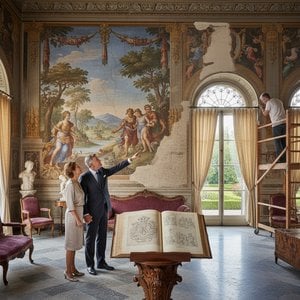
Šeimos Palikimas Tapyboje: Freskos Istorija ir Kultūrinė Reikšmė Kaip Amžina Vertybė
Atraskite freskų istoriją ir kultūrinę reikšmę! Ekspertai patars, kaip įamžinti šeimos palikimą sienų tapyboje. Aukštos kokybės restauravimas ir užsakomieji paveikslai. Investicija į ilgalaikį meno paveldą.

The Enduring Legacy of Fresco: Technique, History & Artistic Expression Across Cultures
Explore the rich history & enduring legacy of fresco painting! Discover ancient techniques, Giotto's masterpieces, and modern applications. Expert insights for art lovers & professionals.

Michelangelo Buonarroti: 25 Šedevrai, Įkvėpę Kartas | ArtsDot.lt
Atraskite 25 Michelangelo Buonarroti šedevrus! Išsami informacija apie Davidą, Pietà ir Siksto koplyčios freskas. Meno reprodukcijos jūsų interjerui – ArtsDot.com.

The Enduring Legacy of Fresco: Technique, History & Artistic Expression
Explore the rich history & enduring artistry of fresco painting. Discover techniques from Giotto to Michelangelo, conservation efforts, & modern applications. Learn how ArtsDot brings this timeless art form to your home.

The Enduring Legacy of Fresco Painting: Techniques, History & Contemporary Relevance
Explore the rich history & enduring artistry of fresco painting – from Giotto to Michelangelo! Discover techniques, conservation efforts, & modern applications. Learn how ArtsDot brings this timeless art form to your home.


