


 Peržiūrėti realybėje
 Pasidalinti
 Dalintis
 Išsamiau

 Atsisiųsti
 Panašūs eksponatai
 Rentgeno nuotrauka
 Automatinė diorama
Las Vegas, Nevada, November


 Skaityti daugiau
Giclée / Meno spausdinimas
Muziejų lygio „giclée“ arba drobos spausdinimas: greita gamyba ir lankstios apdailos parinktys. ( Pirkti rankomis tapytą paveikslą Pirkti vaizdą)




































Pasirinkite iš mūsų nustatytų dydžių, atitinkančių originalaus meno kūrinio proporcijas.

Galite nurodyti savo matmenis, kad vaizdas atitiktų konkretų rėmą ar erdvę. Jei pasirinktas dydis nesutaps su originalaus paveikslėlio proporcijomis, mes arba apkirpsime kūrinį, arba išplėsime vaizdą naudojant veideliu atspindėtą arba vientisą šoną. Skaitmeninis maketas bus išsiųstas jums patvirtinti prieš pradedant gamybą.
Atkreipkite dėmesį, kad ekrane matomas vaizdinys neatspindi tikrojo apkirpimo ar išplėtimo. Tik maketas tiksliai parodytų galutinę kompoziciją.
Nors galima rinktis ir individualius dydžius, rekomenduojame pasirinkti vieną iš išanksti nustatytų matmenų, kad būtų išlaikytos originalios proporcijos.
Pristatymas visame pasaulyje () per 2 weeks, o ne įprastas 4/5 savaičių laikotarpis. (7 rugsėjis)

Nemokamas greitasis pristatymas visame pasaulyje

Aukštos kokybės lininis drobė

Pilnas siuntimo draudimas

Muitinės mokesčių grąžinimo garantija

Tikro spalvų atitikimo garantija

100 dienų grąžinimo politika (tik esant gamyklinėms defektams)

100% pinigų grąžinimo garantija

Nuolaida už kelias reprodukcijas
 Stiklo variantas prieinamas tik pasirinkus dydį iki 110 cm

Las Vegas, Nevada, November
Giclée / Meno spausdinimas
Reprodukcijos matmenys
-


Galutinė kaina
$ 62
panašūs kūriniai


Autoriaus biografija
Georg Baselitz: A Life Sculpted in Inversion
Born Hans-Georg Kern in Deutschbaselitz, a small village in the Upper Lusatia region of Germany, on January 23rd, 1938, Georg Baselitz’s early life was profoundly shaped by the devastation and displacement wrought by World War II. This experience—the destruction of his hometown, the loss of community, and the lingering sense of a fractured order—became a central, recurring theme in his work, informing not just subject matter but also his distinctive artistic approach. Growing up amidst the rubble and remnants of a shattered society instilled within him a deep questioning of established norms and a desire to forge his own path, a sentiment that would ultimately manifest in his revolutionary technique of painting upside down.
Baselitz’s formal art education began at the local school in Kamenz, where he was captivated by reproductions of Louis-Ferdinand von Rayski's 1859 painting *Wermsdorfer Wald*. This encounter with Realist landscape painting ignited a passion for drawing and observation, laying the groundwork for his later explorations of figurative representation. Despite being rejected from the Kunstakademie in Dresden, he persevered and enrolled at the Hochschule für Bildende und Angewandte Kunst in East Berlin, where he honed his skills under influential professors. However, it was not simply technical proficiency that defined his early artistic development; Baselitz’s intellectual curiosity extended beyond the realm of painting, drawing inspiration from figures like Jakob Böhme, a 17th-century German mystic and philosopher whose ideas about inner vision and the dissolution of the self resonated deeply with the artist.
The Birth of a Unique Style: Upside Down Painting
A pivotal moment in Baselitz’s artistic trajectory arrived in 1969, when he began to paint his subjects upside down. This seemingly radical decision was not born out of mere aesthetic experimentation but rather a deliberate attempt to dismantle the representational conventions that had previously governed his work. Frustrated with the perceived artificiality and emotional distance inherent in traditional portraiture, Baselitz sought to bypass the intellect and tap directly into the subconscious. By inverting his paintings, he aimed to strip away the mediating role of conscious thought, allowing the image to emerge from a more primal, intuitive source.
This technique wasn’t simply about flipping an image; it represented a fundamental shift in Baselitz's artistic process. He would often begin with a rough sketch on a large sheet of paper, working quickly and instinctively before turning it over and continuing the painting from the reverse side. This method created a sense of immediacy and spontaneity, as if the images were being revealed rather than deliberately constructed. The resulting paintings are characterized by their raw energy, fragmented forms, and often unsettling emotional intensity – a direct reflection of the turbulent experiences that shaped his life.
Influences and Artistic Language
Baselitz’s artistic language is remarkably eclectic, drawing upon a diverse range of influences—from Soviet era illustration art and the Mannerist period to African sculptures. The stark simplicity and expressive power of Soviet-era posters, with their bold lines and flattened forms, undoubtedly played a role in shaping his early style. Similarly, the elongated figures and distorted perspectives of Mannerist painting provided a precedent for his later explorations of scale and proportion. The rhythmic patterns and symbolic imagery found in African sculpture offered another source of inspiration, informing his use of line and gesture to convey meaning.
Furthermore, Baselitz’s work is deeply rooted in the concept of “naive art,” characterized by its directness, lack of technical skill, and often dreamlike quality. This influence can be seen in his early paintings, which resemble folk art or children's drawings—a deliberate rejection of academic conventions and a return to a more primal mode of expression. However, unlike naive artists who typically depict idyllic scenes, Baselitz’s work is often imbued with a sense of melancholy, anxiety, and existential questioning.
Legacy and Recognition
Despite initial skepticism from the art establishment, Georg Baselitz quickly gained international recognition for his groundbreaking technique and powerfully expressive paintings. Exhibitions in major museums and galleries around the world cemented his place as one of the most important artists of the late 20th century. His work has been praised for its originality, emotional depth, and profound engagement with themes of identity, memory, and the human condition.
Baselitz’s influence extends far beyond the realm of painting; he has also created sculptures, graphic works, and installations, further expanding the scope of his artistic practice. His commitment to experimentation and his willingness to challenge conventional notions of art have made him a pivotal figure in the Neo-Expressionist movement and continue to inspire artists today. As an artist who consistently questioned established norms and forged his own unique path, Georg Baselitz remains a compelling testament to the power of individual vision and artistic innovation.

michael sinclair
1938 - 2017 , United Kingdom
Trumpa informacija
- Artistic Movement Or Style: Neo-Expressionism
- Artists Or Movements Influenced By This Artist: ['Gerhard Richter']
- Artists Who Influenced This Artist:
- Soviet illustration art
- Mannerist period
- African sculptures
- Date Of Birth: January 23, 1938
- Full Name: Georg Baselitz
- Nationality: German
- Notable Artworks:
- Where is the Yellow Milkjug
- Mrs Bird?
- Place Of Birth: Deutschbaselitz, Germany
Susiję straipsniai

Monochrome Visions: Exploring the Aesthetic & Historical Significance of Black & White Photography
Explore the rich history & artistic power of black and white photography. From early techniques to iconic masters like Ansel Adams, discover why monochrome continues to captivate art lovers today. Expert insights for collectors.

Beyond the Lens: Photography's Enduring Influence on Modern & Contemporary Art
Explore photography's pivotal role in shaping modern & contemporary art. Discover key movements, influential artists like Stieglitz, and expert collecting advice from ArtsDot.

Pictorialism: A Search for Artistic Photography's Soul – Aesthetics, Techniques & Legacy
Explore the captivating world of Pictorialism – a pivotal movement that transformed photography into fine art. Discover key artists like Stieglitz & Käsebier, techniques, and collecting tips from experts.
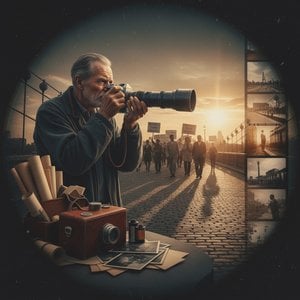
Witnessing History Through Lens & Light: Documentary Photography's Enduring Legacy
Explore the powerful history of documentary photography – from its origins to contemporary masters like Gordon Parks & W. Eugene Smith. Discover how this art form shapes our understanding of society and witness pivotal moments in time.

Documentary Photography's Defining Moments: 10 Masterpieces for Your Home |
Explore 10 defining documentary photography masterpieces – from Dorothea Lange to Robert Capa. Discover powerful stories, iconic images & timeless art for your home. Museum-quality prints at .