

 Peržiūrėti realaus dydžio版
 Pasidalinti
 Dalintis
 Išsamiau
 Vadovas

 Atsisiųsti
 Panašūs eksponatai
 Rentgeno spindulių nuotrauka
 Automatinė diorama
 问答
问答 Statistika
Self Portrait with a Bucket Hat


 Skaityti daugiau
Giclée / Meno spausdinimas
Muziejų lygio „giclée“ arba drobos spausdinimas: greita gamyba ir lankstios apdailos parinktys. ( Pirkti rankų darbo tapybą Perejti prie skaitmeninių vaizdų)




P118B €10

P118H €10

P118W €10

P438Z €10

P508JH €12

P508YH €12

P805H €10

P805Z €10

P919BZ €10

P919G €10

P919XJ €10

P959ZH €10

P968JZ €12

W106C €8

W218G €10

W218JH €8

W218Y €10

W307PJ €10

W316G €10

W316PJ €8

W316Y €10

W398PJ €8

W4111J €10

W500HY €15

W500JH €15

W692G €12

W849H €8

W940BG €15

W953PJ €8




Pasirinkite iš mūsų nustatytų dydžių, atitinkančių originalaus meno kūrinio proporcijas.

Įveskite jums reikiamą plotį ir aukštį, kad atvaizdas derėtų prie jūsų rėmo ar sienos. Spausdiną galima tik sumažinti, bet nepadidinti virš originalaus paveikslėlio dydžio, todėl keičiant proporcijas, dalis vaizdo prarandama. Prieš spausdinimą atsiųsime jums skaitmeninį maketą patvirtinimui. Šioje puslapio nuotraukoje matomas pjūvis nėra tikslus – jį rodo tik maketas.
Pristatymas visame pasaulyje () per 2 weeks, o ne įprastas 4/5 savaičių laikotarpis. (3 lapkritis)

Nemokamas greitasis pristatymas visame pasaulyje

Aukštos kokybės lininis drobė

Pilnas siuntimo draudimas

Muitinės mokesčių grąžinimo garantija

Tikro spalvų atitikimo garantija

100 dienų grąžinimo politika (tik esant įtaigoms)

100% pinigų grąžinimo garantija

Nuolaida dideliems užsakymams
 Stiklo variantas prieinamas tik pasirinkus dydį iki 110 cm

Self Portrait with a Bucket Hat
Giclée / Meno spausdinimas
Reprodukcijos matmenys
-


Bendroji kaina
€ 56
A Fractured Mirror: The Psychological Depth of Max Beckmann
In the hauntingly beautiful 1921 drypoint etching, Self Portrait with a Bucket Hat, Max Beckmann invites us into a visual meditation on the instability of the human soul. This is not merely a portrait of an artist at a specific moment in time; it is a profound exploration of identity captured through the lens of German Expressionism. As we gaze upon the figure, we are met with more than just a man in formal attire and a distinctive hat; we encounter a layered consciousness. Beckmann masterfully utilizes multiple ghostly reflections—faint, spectral images of his own face—that drift behind the primary subject. These overlapping silhouettes create an unsettling sense of duality, suggesting that the self is not a singular, solid entity, but rather a fragmented collection of memories, traumas, and shifting perceptions.
The emotional weight of the piece is inextricably linked to the historical turbulence of Beckmann’s era. Having served as a medical orderly during the First World War, the artist emerged with a vision irrevocably altered by the horrors of conflict. This profound engagement with existential questioning finds its way into every etched line. The mood is one of deep contemplation, tinged with a palpable melancholy that resonates with anyone who has ever grappled with the complexities of existence. For the collector or the lover of fine art, this work offers a window into the post-war psyche, making it a powerful centerpiece for any collection focused on the psychological depth of modern masters.
The Mastery of Line and Texture
Technically, the etching is a triumph of precision and expressive energy. Utilizing a zinc plate and handmade paper, Beckmann employs the drypoint technique to achieve a remarkable textural complexity. There is no reliance on soft washes or blended gradients here; instead, the artist relies on the deliberate manipulation of thick, expressive linework to define form. These vigorous lines delineate the contours of his facial features and the heavy fabric of his clothing with an almost tactile realism, yet they simultaneously create deep, velvety shadows that lend the composition a dramatic, chiaroscroll effect.
The interplay between light and shadow is particularly striking. Light appears to descend from above, catching the ridges of the etched lines to create subtle highlights that pull the subject forward from the darkness. This technique creates a sense of three-dimensionality despite the somewhat flattened perspective characteristic of the medium. For interior designers seeking to add intellectual and visual gravity to a space, the monochromatic intensity of this piece provides a sophisticated anchor. The stark contrast between the deep blacks and the cream tones of the paper allows the artwork to command attention without overwhelming its surroundings, offering a timeless elegance that complements both contemporary and classical decor.
A Timeless Symbolism for the Modern Collector
Beyond its technical brilliance, Self Portrait with a Bucket Hat serves as a symbolic bridge between the traditional portraiture of the past and the fractured reality of the modern age. The recurring reflections act as metaphors for the elusive nature of truth and the multifaceted layers of human experience. It is an artwork that demands slow looking—a piece that rewards the viewer with new discoveries upon every encounter. Whether one is drawn to its historical significance within the German Expressionist movement or its ability to evoke a sense of introspective mystery, Beckmann’s work remains an essential study in the art of seeing.
Owning a high-quality reproduction of this masterpiece allows for the infusion of profound emotional resonance into a home or gallery. It is an invitation to contemplate the beauty found within fragmentation and the strength found within vulnerability. As a piece of decor, it brings with it a sense of history, intellect, and an enduring, quiet power that continues to captivate the modern eye.
Klausimai ir atsakymai
Kokį Maksas Bekmanas kūrybos etapą atitinka „Self Portrait with a Bucket Hat“ data, nurodyta kaip 1921?
1921 m. data įtraugia „Self Portrait with a Bucket Hat“ į Maksas Bekmanas kūrybinio plėtojimo Early Period laikotarpį.
Kokia bendra „Self Portrait with a Bucket Hat“ – Maksas Bekmanas nuotauda?
„Self Portrait with a Bucket Hat“ – Maksas Bekmanas nuotaika apibūdinama kaip Dramatic. Ši klasifikacija gali padėti priderinti kūrinį prie aplinkos.
Kuris menininkas ir koks stilius slypi už „Self Portrait with a Bucket Hat“?
Kūrinį „Self Portrait with a Bucket Hat“ sukūrė Maksas Bekmanas, pasižymintis German Expressionism stiliumi.
panašūs kūriniai


Autoriaus biografija
ankstyvasis gyvenimas ir meninė plėtra
Max Beckmann, žymus vokiečių paintas, piešlys, grafikas, skulptorius ir rašytojas, gimė 1884 m. vasario 12 d. Saksonijos Leipziguje. Jo meninė kelionė prasidėjo nuo akademiškai tikslių vaizduotų formų, tačiau vėliau jos transformuojosi į iškraipytas figūras ir erdves, atspindėjančias jo pasikeitusią žmogaus supratimą po tarnybos medicinos pagalbininku Pirmojo pasaulinio karo metu.meninė stilius ir įtodiniai veiksniai
Beckmanno stiliui, šaknus \<į šiautą> viduramžių vitražų vaizdinio, įtakos davė daugybė menininkų, įskaitant Cézanne, Van Gogh, Blake, Rembrandt ir Rubens. Jis taip pat kūrė įkvėpimą iš vėlyvojo viduramio ir ранinio renesanso Šiaurės Europos menininkų, tokių kaip Bosch, Bruegel ir Matthias Grünewald.pastebimieji darbai ir parodos
Tarp jo svarbiausių kūrinių išskirtinai išsiskiria „Bark“ (įsiginta Berlyno Nacionalinėje galerijoje) bei „Self-portrait in Tuxedo“ (pirkta 1928 m.). Menininkas taip pat surengė retrospektyvų Mannheim städtische kunsthalle (1928 m.), taip pat Bazelyje ir Zūriche (1930 m.).vėlesnis gyvenimas ir tremtis
Beckmanno gyvenimo sėkmė pasikeitė su Adolfo Hitlerio įžaliųjų kėlimusiui, kas paskarbo jį iš meno mokyklos Frankfurte ir sukėlė daugiau nei 500 jo kūrinių konfiskaciją. Jis dešimties metų gyveno savartiškos tremties Amsterdamas, nes nepavyko gauti vizos į Jungtines Amerikos Valstijas.palikimas
Jo meninis palikimas tęsiasi per mokymą Vašingtono universiteto meno mokyklose Sent Luisas ir Brooklyn muziejuje. Pirmoji jo retrospektyva JAV įvyko 1948 m. Sent Luiso miesto meno muziejuje, o Vokijos Max-Slevogt galerijoje galima rasti kolekciją jo darbų. svarbios datos:gimė: 1884 m. vasario 12 d.
mirė: 1950 m. gruodžio 27 d.

Maksas Bekmanas
1884 - 1950 , Vokietija
Trumpa informacija
- Gimimo Data: 1884 m. vasario 12 d.
- Gimimo Vieta: Leipcigas, Vokietija
- Meninis Stilius: Ekspresionizmas
- Mirties Data: 1950 m. gruodžio 27 d.
- Pilietybė: Vokiečių
- Pilnas Vardas: Max Carl Friedrich Beckmann
- Turėjęs Įtakos Menininkai:
- Rembrandt
- Bosch
- Įtakoję Judesiai/Menininkai:
- Georges Seurat
- Vincent van Gogh
- Žymiausi Darbai:
- The Bark
- Self-Portrait in Tuxedo
Susiję straipsniai

Etching Masters: 10 Legendary Prints That Revolutionized Art | ArtsDot
Journey through 10 legendary etching masterpieces by Rembrandt, Dürer & Goya. Explore the history of printmaking and discover timeless art for your home. Find museum-quality reproductions at ArtsDot.com.

Max Beckmann: Navigating Trauma & Modernity Through a Distorted Lens
Explore the powerful world of Max Beckmann's art – a journey through trauma, modernity & distortion. Discover his key works, influences, and lasting legacy with expert analysis.
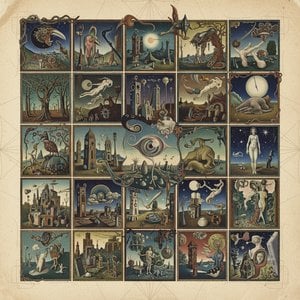
Max Ernst: 25 Šedevrai, Įkvėpę Surrealizmą | Tapyba, Dekorai ir Menas ArtsDot.com
Atraskite 25 įspūdingiausius Max Ernst kūrinius – nuo dadaizmo iki surrealizmo. Tapybos meistriškumas, psichologinis realizmas ir unikalios technikos. Įkvėpkite interjerui su ArtsDot.com reprodukcijomis! Explore the full collection online.

German Expressionism's 10 Defining Masterpieces | Art for Your Home
Explore 10 defining German Expressionism masterpieces – from Munch's 'The Scream' to Kandinsky’s abstracts. Discover the artists, stories & bold colors behind this powerful art movement. Find museum-quality reproductions at ArtsDot.com.

Etching: A Historical Survey of Technique, Aesthetic Qualities & Enduring Artistic Significance
Explore the rich history of etching, from its origins to Rembrandt's masterful innovations. Discover the technique, aesthetic qualities & enduring legacy of this captivating art form. Expert insights for collectors and enthusiasts.


