


 Peržiūrėti realaus dydžio版
 Siųsti
 Dalintis
 Išsamiau
 Vadovas

 Atsisiųsti
 Panašūs eksponatai
 Rentgeno spindulių nuotrauka
 Diaporama
 Statistika
The Pentecost
 Tempera
- International Gothic
 1414
1414- Late Medieval
 15.0 x 15.0 cm
 Szépművészeti Múzeum
 Rodyti daugiau
Šiame puslapyje rodomas meno kūrinys yra saugomas autorių teisių įstatymais, todėl neturime teisės legaliai kurti ar parduoti jo identiškos reprodukcijos. Ši apsauga užtikrinama remiantis tokiais tarptautiniais susitarimais kaip Bernės konvencija ir pagal nacionalines įstatymų nuostatas, įskaitant tas, kurias nurodo JAV autoriškos teisės įstatymas – 17-asis skyrius.
Šis metodas visiškai atitinka autorių teises, nes jame nėra kūrinio kopijavimo ar dubliavimo. Tai yra kūrybinė reinterpretacija – naujas paveikslas, kurį įkvėpė originalas, tačiau kuris nėra jo identiškas.
Giclée / Meno spausdinimas
Muziejų lygio „giclée“ arba drobos spausdinimas: greita gamyba ir lankstios apdailos parinktys. ( Pirkti rankomis tapytą reprodukciją Perejti prie skaitmeninių vaizdų)




P118B €10

P118H €10

P118W €10

P438Z €10

P508JH €12

P508YH €12

P805H €10

P805Z €10

P919BZ €10

P919G €10

P919XJ €10

P959ZH €10

P968JZ €12

W106C €8

W218G €10

W218JH €8

W218Y €10

W307PJ €10

W316G €10

W316PJ €8

W316Y €10

W398PJ €8

W4111J €10

W500HY €15

W500JH €15

W692G €12

W849H €8

W940BG €15

W953PJ €8




Pasirinkite iš mūsų nustatytų dydžių, atitinkančių originalaus meno kūrinio proporcijas.

Įveskite jums reikiamą plotį ir aukštį, kad atvaizdas derėtų prie jūsų rėmo ar sienos. Spausdiną galima tik sumažinti, bet nepadidinti virš originalaus paveikslėlio dydžio, todėl keičiant proporcijas, dalis vaizdo prarandama. Prieš spausdinimą atsiųsime jums skaitmeninį maketą patvirtinimui. Šioje puslapio nuotraukoje matomas pjūvis nėra tikslus – jį rodo tik maketas.
Pristatymas visame pasaulyje () per 2 weeks, o ne įprastas 4/5 savaičių laikotarpis. (21 spalis)

Nemokamas greitasis pristatymas visame pasaulyje

Aukštos kokybės lininis drobė

Pilnas siuntimo draudimas

Muitinės mokesčių grąžinimo garantija

Tikro spalvų atitikimo garantija

100 dienų grąžinimo politika (tik esant įtaigoms)

100% pinigų grąžinimo garantija

Nuolaida dideliems užsakymams
 Stiklo variantas prieinamas tik pasirinkus dydį iki 110 cm

The Pentecost
Giclée / Meno spausdinimas
Reprodukcijos dydis
-


Visų pasirinktų variantų kaina
€ 54
The Pentecost: A Symphony of Color and Faith
“The Pentecost” by master theodoric stands as a testament to the artistic fervor of Prague during the Holy Roman Empire’s golden age—a period defined by opulent liturgical art and an unwavering devotion to religious iconography. Created in 1414, this monumental Antiphonal and Gradual fragment embodies the stylistic hallmarks of the ‘soft style,’ reflecting the influence of French miniatures while simultaneously capturing the profound spiritual essence of medieval piety.
The artwork’s central focus is a captivating depiction of a woman adorned with a vibrant blue veil or dress—a deliberate choice mirroring the color symbolism prevalent in Gothic art, where blue represented divine grace and purity. Surrounding her are figures rendered with meticulous detail, showcasing the artist's mastery of perspective and shading techniques characteristic of the era. The eagle soaring above symbolizes ascension and divine providence, adding dynamism to the composition.
- Style: International Gothic
- Technique: Tempera on wood panel
- Dimensions: 15 x 15 cm
- Provenance: Sedlec Monastery Fragment
More than just a visual representation, “The Pentecost” speaks to the core beliefs of its time. The depiction aligns with biblical narratives emphasizing divine intervention and spiritual renewal—themes central to the liturgical traditions of Prague’s monasteries. The artist skillfully blended observation of nature with lyrical artistic expression, creating an image that transcends mere decoration.
The fragment's preservation at the Museum of Fine Arts in Budapest offers a rare glimpse into the artistic legacy of master theodoric and the broader context of Bohemian Gothic art. Its gilded border—once framing the psalm initiating Pentecostal prayers—further underscores its significance as a devotional masterpiece, reflecting the grandeur and sophistication of Prague’s ecclesiastical patronage.
Consider commissioning a high-quality giclée reproduction to bring this evocative artwork into your home or office – allowing you to appreciate the beauty and spiritual depth of “The Pentecost” for generations to come. Explore similar pieces by master theodoric at ArtsDot.
问答 (or more naturally for a website heading): Klausimai ir atsakymai
Koks reprodukcijos dydis rekomenduojamas kūriniui „The Pentecost“, autorius – Master Theodoric?
Rekomenduojamas spausdinimo dydis kūriniui „The Pentecost“, autorius – Master Theodoric yra Small.
Iš ko ir kokiu stiliumi sukurta „The Pentecost“?
Kūrynomame „The Pentecost“ Tempera technika susilieja su International Gothic stiliaus plaukta.
Ar kūrinys „The Pentecost“, autorius – Master Theodoric yra šviesus ar tamsus?
Įrašytos „The Pentecost“, autorius – Master Theodoric reikšmės: šviesos intensyvumas – balanced, luminansas – Soft Shadow.
Susiję kūriniai


Autoriaus biografija
A Courtly Vision: The Life and Art of Master Theodoric
Master Theodoric, or Magister Theodoricus as he was known in Latin inscriptions, stands as the most thoroughly documented painter of Bohemian Gothic art. Born sometime before 1328 – his precise origins remain shrouded in some mystery, though speculation points towards a Rhineland upbringing – Theodoric rose to prominence as the favored court artist of Charles IV, Holy Roman Emperor. This patronage wasn’t merely professional; it was a testament to Theodoric's unique artistic vision and skill, one that would define an era and establish him as the leading representative of the ‘Soft Style’ within International Gothic painting.
The first concrete mention of Theodoric appears in 1348, when he joined Prague’s painters’ confraternity. However, it was his appointment as imperial painter to Charles IV in 1359 that truly cemented his position. This marked the beginning of a prolific period, inextricably linked with the Emperor's ambitious building projects and fervent desire to elevate Prague as a cultural center rivaling Paris or Florence. Theodoric wasn’t simply executing commissions; he was instrumental in shaping the visual language of Charles IV’s court, imbuing it with a refined elegance and spiritual depth.
The Chapel of the Holy Cross: A Masterpiece of Devotion
Without question, Theodoric's magnum opus is the decoration of the Chapel of the Holy Cross at Karlštejn Castle. Commissioned around 1357-1367, this chapel was intended to house imperial relics and serve as a private devotional space for Charles IV. The project involved over one hundred wooden panel paintings depicting saints, prophets, Church Fathers, and angels—a breathtaking ensemble that remains largely intact today. What sets these panels apart is not merely their sheer number but the distinctive style Theodoric brought to them.
Rejecting the dramatic narratives favored in Italian Gothic art, Theodoric embraced a more static, hieratic approach. Figures are robust yet softly modeled, possessing an inner serenity and timeless quality reminiscent of Byzantine icons. He employed reverse perspective, creating a flattened spatial depth that draws attention to the symbolic weight of each figure rather than realistic representation. The use of gold leaf as a background wasn’t merely decorative; it transformed the panels into shimmering objects of veneration, akin to reliquaries themselves. The jagged rock formations and subtle emotional expressions further contribute to the chapel's unique atmosphere of spiritual contemplation.
Influences and Artistic Development
Tracing Theodoric’s influences is a complex undertaking. While his origins are debated, it’s likely he received training in northern Italy during the 1350s, absorbing elements of the burgeoning International Gothic style. However, he didn't simply replicate Italian models. A strong Byzantine influence permeates his work, evident in the iconic quality of his figures and the use of gold backgrounds. Some scholars suggest a possible connection to Eastern Christian artistic traditions, perhaps linked to Charles IV’s ecumenical policies and interest in diverse religious practices.
Theodoric's synthesis of Western Gothic forms with Byzantine aesthetics was revolutionary for central Europe. He wasn’t merely blending styles; he was creating something entirely new—a ‘soft style’ characterized by inner light, symbolic stillness, and a profound sense of spiritual devotion. This aesthetic, often referred to as the “beautiful style,” would profoundly impact late 14th- and early 15th-century painting in Bohemia and beyond.
Legacy and Historical Significance
Master Theodoric’s influence on Bohemian art is immeasurable. He established a new standard for courtly painting, shaping the visual identity of Charles IV's reign and inspiring generations of artists to come. His work wasn’t confined to religious commissions; he also created portraits of prominent figures like Archbishop Jan Očko z Vlašimi, further demonstrating his versatility and skill.
While few other works can be definitively attributed to him, the impact of his style is evident in numerous paintings from the period. His legacy extends beyond Bohemia, influencing artists as far afield as Paolo Veronese and Titian, who admired the elegance and refinement of International Gothic painting. Today, Theodoric’s panels at Karlštejn Castle remain a testament to his artistic genius—a captivating glimpse into the world of 14th-century Prague and the courtly vision of one of its most celebrated masters.
- Notable Works: Apostle Barnabas, Saint Jerome (Convent Sainte-Agnès, Prague), Saint Catherine (c. 1360-1364), Portrait of Jan Očko z Vlašimi
- Style Characteristics: Soft Style, International Gothic, Byzantine influence, hieratic figures, gold backgrounds, reverse perspective.
- Patronage: Charles IV, Holy Roman Emperor

Master Theodoric
Czech Republic
Trumpa informacija apie kūrėją
- Place Of Birth: Prague, Czech Republic
- Notable Artworks: ['Various works featured in The World Goes Pop exhibition']
- Artistic Movement Or Style: World Goes Pop
- Artists Who Influenced This Artist: ['Influenced by diverse artists within the World Goes Pop movement']
- Artists Or Movements Influenced By This Artist: ['Influences include various pop art figures']
Susiję straipsniai

The Shadow of Faith: Exploring Gothic Art's Spiritual Intensity & Architectural Innovation
Explore the spiritual intensity & architectural innovation of Gothic art! Discover the symbolism behind cathedrals, stained glass & master artists like Giotto and Monet. A deep dive into medieval history & artistic expression.

Beyond Borders: The Spiritual & Stylistic Innovations of International Gothic Art
Explore the exquisite beauty & spiritual depth of International Gothic art. Discover key artists like Simone Martini & Pol de Limbourg, its origins, symbolism, and lasting influence on European painting. Expert insights at ArtsDot.

Illuminating History: A Comprehensive Exploration of Tempera Painting Techniques & Artistic Legacy
Explore the rich history & techniques of tempera painting! Discover Renaissance masters like Botticelli & Fra Angelico, conservation insights, and the enduring legacy of this captivating art form.

The Radiant Dusk of Medieval Vision: Exploring Late Gothic Art's Synthesis of Faith, Form & Emotionality (c. 1300-1500)
Explore the exquisite beauty & spiritual depth of Late Gothic art (c. 1300-1500). Discover key artists, symbolism, and its lasting influence on the Renaissance. Expert insights at ArtsDot.
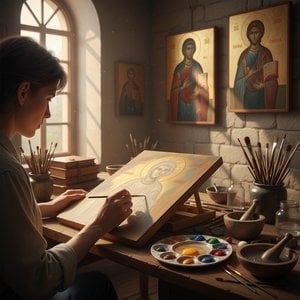
Illuminating Surfaces: A Comprehensive Exploration of Tempera on Panel Painting Techniques & Historical Significance
Explore the rich history & techniques of tempera painting! Discover Renaissance masters like Botticelli & Fra Angelico, conservation insights, and the enduring legacy of this captivating art form. Learn more now!