


 Peržiūrėti realaus dydžio版
 Siųsti
 Dalintis
 Išsamiau
 Vadovas

 Atsisiųsti
 Panašūs eksponatai
 Rentgeno spindulių nuotrauka
 Diaporama
 Statistika
Red and Orange


 Rodyti daugiau
Šiame puslapyje rodomas meno kūrinys yra saugomas autorių teisių įstatymais, todėl neturime teisės legaliai kurti ar parduoti jo identiškos reprodukcijos. Ši apsauga užtikrinama remiantis tokiais tarptautiniais susitarimais kaip Bernės konvencija ir pagal nacionalines įstatymų nuostatas, įskaitant tas, kurias nurodo JAV autoriškos teisės įstatymas – 17-asis skyrius.
Kaip pagarbią ir teisėtą alternatyvą, mes siūlome pagal užsakymą rankomis dažytus paveikslus, įkvėptus originalo. Mūsų įgudę ir profesionalūs menininkai kruopščiai tiria originalo stilių, nuotaiką ir meninę esmę, kad sukurtų naują, unikalią kūrinį, kuris sukelia tą paties jausmą – išlikdamas tuo tarciau originaliu, savarankišku kūrybiniu darbu.
Šis metodas visiškai atitinka autorių teises, nes jame nėra kūrinio kopijavimo ar dubliavimo. Tai yra kūrybinė reinterpretacija – naujas paveikslas, kurį įkvėpė originalas, tačiau kuris nėra jo identiškas.
Rankų darbo aliejinės reprodukcijos
Rankiniu būdu tapytas aliejus ant droblio jūsų pageidaujamame dydį ir rėmuose – mūsų menininkų darbas pagal užsakymą. ( Perjungti į spausdinimą Perejti prie skaitmeninių vaizdų)




P118B €10

P118H €10

P118W €10

P438Z €10

P508JH €12

P508YH €12

P805H €10

P805Z €10

P919BZ €10

P919G €10

P919XJ €10

P959ZH €10

P968JZ €12

W106C €8

W218G €10

W218JH €8

W218Y €10

W307PJ €10

W316G €10

W316PJ €8

W316Y €10

W398PJ €8

W4111J €10

W500HY €15

W500JH €15

W692G €12

W849H €8

W940BG €15

W953PJ €8




Pasirinkite iš mūsų nustatytų dydžių, atitinkančių originalaus meno kūrinio proporcijas.

Įveskite jums reikiamą plotį ir aukštį, kad paveikslas atitiktų jūsų rėmą ar sieną. Kadangi šis darbas yra rankinio darbo, siekiant išgauti kitokio formos dydį, paveikslas gali būti šiek tiek didesnis (nuo kraštų bus palikta daugiau erdvės) arba mažesnis – pasirinkite jums patogiausią variantą. Prieš pradedant tapyti, atsiųsime jums skaitmeninį maketą patvirtinimui. Šioje puslapio nuotraukoje matomas vaizdas nėra galutinis rezultatas – jį parodys tik sukurtas maketas.
Gavus užsakymą, ArtsDot.com komanda susisieks su klientu el. paštu dėl instrukcijų ir pateiks maketo pavyzdį
Pristatymas visame pasaulyje () per 3–4 savaites, o ne įprastai – per 5 savaites. (24 spalis). Kokybė lieka nepakeičiama.

Nemokamas greitasis pristatymas visame pasaulyje

Aukštos kokybės lininis drobė

Pilnas siuntimo draudimas

Muitinės mokesčių grąžinimo garantija

Tikro spalvų atitikimo garantija

100 dienų grąžinimo politika (tik esant įtaigoms)

100% pinigų grąžinimo garantija

Nuolaida dideliems užsakymams
 Stiklo variantas prieinamas tik pasirinkus dydį iki 110 cm

Red and Orange
Reprodukcijos technika
Reprodukcijos dydis
-


Visų pasirinktų variantų kaina
€ 231
Red and Orange: A Journey Through Rothko’s Emotional Landscape
Mark Rothko, one of the towering figures of 20th-century art, didn't simply paint pictures; he crafted portals into the depths of human emotion. His work, particularly pieces like ‘Red and Orange,’ invites a profound engagement, demanding that we surrender to its quiet intensity rather than seeking immediate visual gratification. This painting, a cornerstone of his mature style, exemplifies Rothko’s revolutionary approach to color field abstraction – a deliberate move away from representational imagery towards pure feeling expressed through the luminous interaction of hues. It's a piece designed not to be ‘looked at,’ but *felt*. The genesis of ‘Red and Orange’ lies within the vibrant, yet turbulent, context of Abstract Expressionism, a movement that emerged in post-war America as artists sought new ways to grapple with the anxieties and uncertainties of the time. Rothko, however, forged his own distinct path within this broad movement. He wasn't interested in grand gestures or dramatic narratives; instead, he focused on distilling emotion into its most elemental form – color itself. His technique involved applying layers upon layers of oil paint, often mixed with turpentine to achieve a remarkable luminosity and subtle textural variations. The canvas isn’t merely a surface for pigment; it becomes an active participant in the creation of atmosphere, absorbing and reflecting light in ways that subtly shift the painting's mood throughout the day. Notice the delicate blending at the heart of the composition – a deliberate ambiguity that encourages contemplation rather than definitive interpretation. The painting’s structure is deceptively simple: two dominant rectangles of color—a rich, pulsating red on the left and an equally vibrant orange on the right—are juxtaposed within a larger field of muted tones. However, this apparent simplicity belies a complex interplay of visual and emotional forces. Rothko wasn't simply placing colors side-by-side; he was creating a dynamic tension between them, suggesting both harmony and discord. The red, often associated with passion, energy, and even danger, dominates the left portion of the canvas, while the orange—linked to warmth, optimism, and vitality—takes precedence on the right. This division isn’t rigid or absolute; rather, it creates a sense of movement and flow as the eye travels across the surface, drawn into the merging point where the two colors meet. The subtle gradations within each rectangle, achieved through meticulous layering and blending, add depth and complexity to the composition, preventing it from feeling flat or static. Rothko’s intention wasn't to depict a specific scene or object but to evoke universal human emotions – tragedy, ecstasy, doom—as he famously articulated in his writings. In ‘Red and Orange,’ the bold hues can be interpreted as symbols of these fundamental experiences. The intensity of the red might represent moments of profound sorrow or struggle, while the warmth of the orange suggests hope, joy, or a sense of transcendence. It’s important to recognize that Rothko deliberately avoided providing viewers with easy answers; he wanted them to project their own feelings and associations onto the canvas, creating a deeply personal experience. The painting becomes a mirror reflecting our own inner landscape. The legacy of ‘Red and Orange,’ and indeed of Mark Rothko's entire body of work, is undeniable. His color field paintings have profoundly influenced generations of artists, from abstract expressionists to contemporary painters exploring the expressive potential of color. Reproductions of this piece offer a remarkable opportunity to bring Rothko’s emotional intensity into any space, transforming interiors into contemplative sanctuaries. Consider how the rich hues interact with your existing décor – will they enhance the sense of warmth and tranquility, or add a touch of dramatic tension? The choice is yours, but one thing is certain: ‘Red and Orange’ remains a powerful testament to the transformative power of art.The Artistic Movement: Abstract Expressionism and Rothko's Place Within It
Rothko’s work stands as a pivotal contribution to Abstract Expressionism, a movement that fundamentally shifted the focus of American art away from representational imagery towards subjective experience and emotional expression. Emerging in the aftermath of World War II, Abstract Expressionism was characterized by its emphasis on spontaneity, gesture, and the artist's inner world. Artists like Jackson Pollock, Willem de Kooning, and Barnett Newman sought to capture the raw energy and anxieties of the post-war era through large-scale canvases and unconventional techniques. However, Rothko distinguished himself from his contemporaries with his deliberate restraint and focus on color as a primary means of communication. Unlike the gestural brushstrokes favored by Pollock or the fragmented figures of de Kooning, Rothko’s paintings are defined by their smooth, almost meditative surfaces. He rejected the notion of the artist's hand as a visible element in the work, striving instead to create an illusion of seamlessness and luminosity. This pursuit of pure color was deeply influenced by his interest in spirituality and Eastern philosophy, which he believed could provide access to profound emotional states. Rothko’s paintings aren’t about depicting something; they *are* the feeling itself – a distillation of experience rendered in pigment and light. The influence of earlier artistic traditions is also evident in Rothko's work. He drew inspiration from Byzantine icons, which are characterized by their flattened forms, luminous colors, and symbolic content. Similarly, he was fascinated by the color theories of Goethe, who proposed that colors could be understood as having specific psychological effects. Rothko’s use of complementary colors – red and orange in ‘Red and Orange,’ for example – is a deliberate attempt to create visual tension and evoke particular emotional responses. He wasn't simply arranging colors on a canvas; he was conducting an experiment in color psychology, seeking to harness the power of hue to communicate profound human experiences.The Painting: 'Red and Orange' - A Detailed Examination
‘Red and Orange’ is a prime example of Rothko’s distinctive technique and his unwavering commitment to expressing emotion through color. The painting measures approximately 39 ½ x 31 ¾ inches (100.5 x 80.6 cm), a size that allows the colors to dominate the viewer's field of vision, creating an immersive experience. As mentioned previously, the composition is built around two rectangular fields of color: a deep, saturated red on the left and a vibrant orange on the right. These rectangles are not sharply defined; rather, they bleed into one another at their edges, creating a sense of fluidity and ambiguity. The layering technique employed by Rothko is crucial to understanding the painting’s luminosity. He applied multiple thin layers of oil paint, often mixed with turpentine to achieve a translucent effect. This process allowed light to penetrate through the pigments, creating an almost ethereal glow. The texture of the canvas itself plays a significant role in this effect – it's subtly uneven and slightly rough, adding depth and complexity to the surface. Notice how the red seems to vibrate and pulsate within its rectangular frame, while the orange radiates warmth and vitality. The subtle variations in color intensity are also noteworthy. Rothko didn’t simply apply a uniform shade of red or orange; he carefully modulated the hues throughout each rectangle, creating areas of lighter and darker tones. This technique adds depth and dimension to the composition, preventing it from feeling flat or static. The blending at the point where the two colors meet is particularly intriguing – it creates a sense of ambiguity and suggests that the painting is in a state of constant flux. It’s as if the red and orange are merging and separating simultaneously, reflecting the complexities of human emotion.Emotional Resonance: Rothko's Pursuit of Universal Feeling
Rothko believed that color possessed the power to evoke profound emotional responses in viewers – tragedy, ecstasy, doom—as he himself articulated. He wasn’t interested in creating beautiful or aesthetically pleasing paintings; his primary goal was to communicate these fundamental human experiences directly and without mediation. This conviction stemmed from his belief that art could serve as a bridge between individuals, fostering empathy and understanding. The success of ‘Red and Orange,’ and indeed of Rothko's entire body of work, lies in its ability to tap into these universal emotions. The painting doesn’t require any specific interpretation or explanation; it simply *is* – a luminous field of color that invites the viewer to contemplate their own feelings and associations. It’s not uncommon for people to experience tears or a sense of profound emotion when viewing Rothko's paintings, suggesting that he has succeeded in creating works that resonate deeply with our shared human condition. Rothko’s approach was radical for its time, challenging traditional notions of art as representation and inviting viewers to engage with the work on an emotional level. His paintings are not meant to be ‘looked at’; they are meant to be *felt*. They are a testament to the transformative power of color and a profound exploration of the human psyche.问答 (or more naturally for a website heading): Klausimai ir atsakymai
Kokio ryškumo spalvos turi „Red and Orange“, autorius – Markas Rotko?
Šiame paveikslėlyje „„Red and Orange“, autorius – Markas Rotko“ spalvų intensyvumas yra Vividūs.
Kaip „Red and Orange“ subalansuoja šviesą ir tamsą?
„Red and Orange“ bendroji ryškumas yra šviesos ir šešėlio, o švytėjimas – Tamsus.
Ar „Red and Orange“ galima peržiūrėti papildydami realybę?
„Red and Orange“ turi papildytoji realybės peržiūros funkciją: kūrinio AR peržiūra puslapyje jį galite pamatyti savo erdvėje naudodami suderinamą įrenginį.
Susiję kūriniai


Autoriaus biografija
Marko Rotko: Spalvos ir emocijų simfonija
Markas Rotko, gimęs Markus Yakovlevičius Rotkovičius 1903 m. rugsėjo 25 d. Daugpilyje, tuometinėje Rusijos imperijoje (dabar Latvija), nuo pat vaikystės jautėsi atitrūkęs nuo aplinkos – jausmas, kuris giliai paveikė jo meninę kelionę. Jo ankstyvieji metai buvo apipolti žydų šeimos nerimu, gyvenančios Pale of Settlement, kur vyravo pogromai ir politinė nestabilumas. Šis klimatas įskiepijo gilų žmogaus kančių jautrumą – temą, kuri atsispindės visoje jo kūryboje. 1913 m. emigracija į Portlandą, Oregone, JAV, ne tik pakeitė geografinę padėtį, bet ir sukėlė kultūrinę pertvarką jaunam Rotko. Nors jo tėvas, farmacininkas ir intelektualas su socialistiniais pažiūrėmis, skatino namuose diskusijas ir mokymąsi, netrukus po atvykimo miręs Jacob Rothkowitz metė ilgą šešėlį. Ši ankstyvoji nuostolio patirtis, kartu su asimiliacijos iššūkiais, paskatino visą gyvenimą trukusią egzistencinių temų – mirties, traumos ir prasmės paieškos – tyrinėjimą. Nors jis sėkmingai studijavo Jeilio universitete, Rotko jautėsi patrauktas Niujorko miesto energinga atmosfera, atsisakęs formaliojo išsilavinimo siekdamas savo aistros menui Meno studentų lygoje. Šie ankstyvieji metai padėjo pagrindą meninei vizijai, kuri galiausiai sužadintų tradicinius tapybos supratimą ir perrašytų spalvos emocinį galią.Nuo figūratyvumo iki abstraktaus ekspresionizmo
Rotko ankstyvieji meno tyrinėjimai buvo tvirtai įsišaknyję realizme, vaizduodami miesto scenas ir portretus su aštriu detalių atpažinimu. Tačiau šie ankstyvieji darbai jau numatė psichologinę gylį, kuris taps jo pasižymėjimo ženklu. 1940-ųjų dešimtajame dešimtmetyje, kai pasaulis susidūrė su Antrojo pasaulinio karo siaubingais įvykiais, Rotko meno transformacija buvo dramatiška. Paveiktas surrealizmo ir mitologijos, jis pradėjo atsiriboti nuo reprezentacinės vaizdinės raiškos, siekdamas išreikšti universalias žmogaus emocijas per simbolines formas. Šis laikotarpis pažymėjo daugformių paveikslų atsiradimą – drobėmis, kuriose pulsuoja dviprasmiški, biomorfiniai pavidalai, tarsi plūduriuojantys tarp figūratyvumo ir abstrakcijos. Šie darbai nebuvo tik formos eksperimentai; tai buvo giliai jaučiami atsakymai į karo sukeltas nerimtis ir neapibrėtumas. Vėliau 1940-ųjų dešimtajame dešimtmetyje Rotko atrado savo pasižymėjimo stilių: didelio formato drobės, kuriomis dominuoja stačiakampių spalvų blokai, kurie tarsi plūduriuoja ir rezonuoja vienas su kitu. Jis atsisakė visų atpažįstamos vaizdinės raiškos pėdsakų, sutelkdamas dėmesį į gryno spalvos ir formos emocinį poveikį. Tai buvo esminis momentas abstraktaus ekspresionizmo plėtrą, kuris Rotko paskelbė lyderiu šioje inovatyvioje srovėje.Spalvų laukai ir siekis į transcendenciją
Rotko brandžiojo darbo apibrėžimas yra tai, kas tapo žinoma kaip „spalvos laukų“ tapyba – didelės spinduliuojančių spalvų erdvės, kurios panardina žiūrovą imersijai. Šie paveikslai nėra apie *ką* jie vaizduoja, bet apie *kaip* jie jus verčia jausti. Rotko tikėjo, kad menas turėtų įtraukti žiūrovą visceraliai, apeidamas intelektualųjį analizę ir kalbėdamas tiesiogiai su emocijomis. Jis kruopščiai sluoksnavo plonus dažų sluoksnius, sukurdama subtilių tonų ir tekstūrų variacijas, kurios atrodė kylanti iš pačios drobės viduje. Jo stačiakampių formų kraštukai dažnai yra neryškūs, leidžiantis joms susijungti ir sąveikauti viena su kita, sukuriant gylio ir judesio jausmą. Rotko specialiai vengė pavadinimų, be numerių – „Nr. 1“, „Nr. 6“ – skatindamas žiūrovus susidurti su paveikslais be išankstinių įsitikinimų ir leisti savo emociniams atsakams juos vadovauti. Jis siekė sukurti erdvę meditacijai, prieglaudą, kur žiūrovas galėtų susijungti su kažkuo didesniu už save. Jo ambicija buvo nieko mažiau nei sukelti gilias dvasines patirtis spalvų kalba.Svarbiausi pasiekimai ir palikimas
Tarp Rotko reikšmingiausių pasiekimų yra „Nr. 10 (1950)“, esminis darbas, kuriame atsispindi jo besivystantis stilius, ir Seagram Murals (1958). Užsakyti Niujorko Four Seasons restoranui, šie muralai galiausiai buvo atmesti Rotko, kuris jautėsi, kad jie bus pažeisti savo numatytoje aplinkoje. Vietoj to jis juos padovanojo Londono Tate galerijai, kur jie ir dabar įkvepia nuostabą ir apmąstymus. Galbūt jo ambicingiausias projektas buvo Rothko Chapel (1971) Hjustone, Teksase – nedaugmaitinė šventykla, kuriame eksponuojami keturiolika jo paveikslų. Sukurtas kaip tylios kontempliacijos erdvė, koplyčia daugelio laikoma sakralia vieta, įkūnijusia Rotko tikėjimą meno dvasiniu galiu. Rotko įtaka paskesnėms kartoms menininkų yra didžiulė. Jis atidarė kelią minimalistiniam menui ir toliau įkvepia šiuolaikinius dailininkus, kurie tyrinėja abstrakcijos emocines galimybes. Nepaisant viso gyvenimo kovos su depresija, baigusiomis tragišku savižudybe 1970 m., Markas Rotko išlieka vienu svarbiausių ir įtakingiausių XX amžiaus menininkų – spalvų meistru, kurio darbai ir toliau rezonuoja su publikomis visame pasaulyje.Emocinės rezonanso galia
- Rotko paveikslai yra šventi dėl savo gebėjimo perteikti universalias žmogaus emocijas – tragediją, ekstazę, bejėgiškumą ir vilties.
- Jo spalvą kaip emocinio išraiškos priemonę tyrinėjimas su revoliucija abstraktaus tapybos.
- Rothko koplyčia yra liudijimas jo tikėjimo meno dvasiniu galiu.
- Jis išlieka esminiu figūru abstraktaus ekspresionizmo ir didžiule įtaka šiuolaikiniams menininkams.

Markas Rotko
1903 - 1970 , Latvija
Trumpa informacija apie kūrėją
- Artistic Movement Or Style: Abstraktaus ekspresionizmo
- Artists Or Movements Influenced By This Artist:
- Minimalizmas
- Abstraktaus ekspresionizmo
- Date Of Birth: 1903 m. rugsėjo 25 d.
- Date Of Death: 1970 m. vasario 25 d.
- Full Name: Markas Rotko
- Nationality: Amerikietis
- Notable Artworks:
- Nr. 10 (1950)
- Seagram Murals
- Rothko Chapel
- Place Of Birth: Daugpilis, Latvija
Susiję straipsniai

Kandinsky's Masterpieces: 25 Paintings That Define Abstract Art | ArtsDot
Journey through Wassily Kandinsky's 25 most iconic abstract paintings. Explore his revolutionary use of color, form & spiritual expressionism. Find museum-quality Kandinsky reproductions and elevate your home decor with ArtsDot.com. Discover all masterpieces on ArtsDot.com!
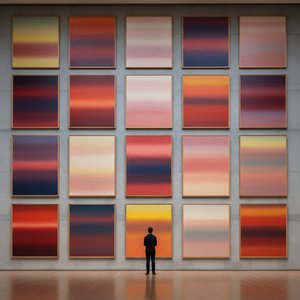
Mark Rothko: 25 Šedevrai, Apibūdinantys Spalvų Ir Jaustmo Gylį | ArtsDot
Atraskite 25 įspūdingiausius Mark Rothko kūrinius! Gilinkitės į abstraktaus meno spalvų laukus, ekspresionizmą ir jaustmingas tapybas. Meno reprodukcijos aukščiausia kokybe – ArtsDot.com

Beyond Representation: Exploring the Emotional Landscape of Abstract Expressionism
Explore the profound emotional world of Abstract Expressionism with ArtsDot. Discover key artists like Pollock & Rothko, learn about collecting, and find museum-quality reproductions to inspire your space.

Top 10 Abstraktus Ekspresionizmas: Simboliai ir Grožio Paslaptys
Atraskite 10 legendinių abstraktus ekspresionizmo kūrinių! Pažinkite Pollocko, Rothko ir kitų genijų istorijas bei jų spalvingas meno interpretacijas. Puikios meninės reprodukcijos jūsų namams – ArtsDot.com

The Sublimity of Color: Exploring the Emotional Landscapes of Mark Rothko's Abstract Expressionism
Explore the profound emotional depth of Mark Rothko's abstract expressionism. Discover the history, techniques & lasting impact of this pivotal Color Field painter. Expert insights for collectors and art enthusiasts.


