


 Peržiūrėti realaus dydžio版
 Siųsti
 Dalintis
 Išsamiau
 Vadovas

 Atsisiųsti
 Panašūs eksponatai
 Rentgeno spindulių nuotrauka
 Diaporama
 Statistika
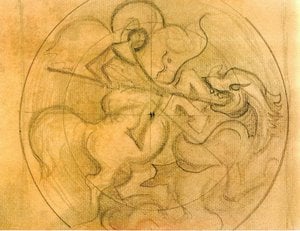
Untitled
 38.0 x 46.0 cm
 Rodyti daugiau
Šiame puslapyje rodomas meno kūrinys yra saugomas autorių teisių įstatymais, todėl neturime teisės legaliai kurti ar parduoti jo identiškos reprodukcijos. Ši apsauga užtikrinama remiantis tokiais tarptautiniais susitarimais kaip Bernės konvencija ir pagal nacionalines įstatymų nuostatas, įskaitant tas, kurias nurodo JAV autoriškos teisės įstatymas – 17-asis skyrius.
Kaip pagarbią ir teisėtą alternatyvą, mes siūlome pagal užsakymą rankomis dažytus paveikslus, įkvėptus originalo. Mūsų įgudę ir profesionalūs menininkai kruopščiai tiria originalo stilių, nuotaiką ir meninę esmę, kad sukurtų naują, unikalią kūrinį, kuris sukelia tą paties jausmą – išlikdamas tuo tarciau originaliu, savarankišku kūrybiniu darbu.
Šis metodas visiškai atitinka autorių teises, nes jame nėra kūrinio kopijavimo ar dubliavimo. Tai yra kūrybinė reinterpretacija – naujas paveikslas, kurį įkvėpė originalas, tačiau kuris nėra jo identiškas.
Rankų darbo aliejinės reprodukcijos
Rankiniu būdu tapytas aliejus ant droblio jūsų pageidaujamame dydį ir rėmuose – mūsų menininkų darbas pagal užsakymą. ( Perjungti į spausdinimą Perejti prie skaitmeninių vaizdų)




































Pasirinkite iš mūsų nustatytų dydžių, atitinkančių originalaus meno kūrinio proporcijas.

Įveskite jums reikiamą plotį ir aukštį, kad paveikslas atitiktų jūsų rėmą ar sieną. Kadangi šis darbas yra rankinio darbo, siekiant išgauti kitokio formos dydį, paveikslas gali būti šiek tiek didesnis (nuo kraštų bus palikta daugiau erdvės) arba mažesnis – pasirinkite jums patogiausią variantą. Prieš pradedant tapyti, atsiųsime jums skaitmeninį maketą patvirtinimui. Šioje puslapio nuotraukoje matomas vaizdas nėra galutinis rezultatas – jį parodys tik sukurtas maketas.
Gavus užsakymą, ArtsDot.com komanda susisieks su klientu el. paštu dėl instrukcijų ir pateiks maketo pavyzdį
Pristatymas visame pasaulyje () per 3–4 savaites, o ne įprastai – per 5 savaites. (22 spalis). Kokybė lieka nepakeičiama.

Nemokamas greitasis pristatymas visame pasaulyje

Aukštos kokybės lininis drobė

Pilnas siuntimo draudimas

Muitinės mokesčių grąžinimo garantija

Tikro spalvų atitikimo garantija

100 dienų grąžinimo politika (tik esant įtaigoms)

100% pinigų grąžinimo garantija

Nuolaida dideliems užsakymams
 Stiklo variantas prieinamas tik pasirinkus dydį iki 110 cm

Untitled
Reprodukcijos technika
Reprodukcijos dydis
-


Visų pasirinktų variantų kaina
€ 231
Susiję kūriniai



Autoriaus biografija
A Legacy Forged in Color and Resilience
The story of Manabu Mabe is one of profound transformation, a narrative that begins far from the bright galleries of São Paulo and moves through the shadows of hardship into the luminous heights of international abstraction. Born in Japan in 1924 to a family once graced by prosperity, Mabe’s early years were defined by a sudden and devastating financial collapse that forced his family to emigrate to Brazil in 1934. This journey, a grueling fifty-day voyage in steerage, marked the beginning of a life shaped by immense physical labor and an unyielding creative spirit. As a young boy on a São Paulo coffee plantation, Mabe labored amidst the coffee trees, tending to rice and vegetables, yet even in the midst of such demanding toil, his mind remained tether of paper scraps and the quiet pursuit of self-taught literacy. It was under the dim glow of a kerosene lamp that he mastered Portuguese, a linguistic bridge that would eventually connect his Japanese heritage with his Brazilian home.
Before ascending to the pinnacle of the fine arts, Mabe’s creative journey took a more tactile, artisanal path. In the late 1950s, he established himself in São Paulo as a craftsman specializing in the delicate art of hand-painted ties. This period of meticulous detail and color application served as a precursor to his later mastery of much larger, more expansive canvases. The transition from the small-scale precision of silk to the sweeping gestures of oil on canvas was nothing short of meteoric. By the late 1950s, Mabe had emerged as a formidable force in the contemporary art scene, securing the top prize at São Paulo’s Contemporary Art Salon and earning Brazil's highest honor at the São Paulo Bienal. His talent even caught the eye of the international community, earning him prestigious accolades as one of the "artists under 35" at the inaugural Paris Biennial, signaling the arrival of a truly global voice.
The Vibrancy of Lyrical Abstraction
Mabe’s mature style is characterized by an extraordinary command of Color Field painting, a technique that allowed him to explore the emotional weight of pure pigment. Drawing inspiration from the monumental works of Mark Rothko and the expressive energy of Willem de Kooning, Mabe developed a visual language that prioritized texture, tonal gradation, and luminous hues. His canvases often became vast landscapes of light, dominated by warm yellows, deep reds, and striking teals. In works such as Esperança du Jouém, one can witness his ability to blend Pop Art sensibilities with the fluid, organic movements of lyrical abstraction, creating compositions that feel both dynamic and serene.
Central to his artistic evolution was his involvement with Grupo Seibi, a collective founded in 1963. This group provided a vital sanctuary for artists dedicated to exploring abstract forms and engaging in deep dialogues regarding the future of modernism in Brazil. Through this collective, Mabe helped shape a movement that sought to transcend representational boundaries, pushing toward an art that spoke directly to the soul through color and form. His work during this era was not merely about decoration; it was an attempt to capture the essence of light and emotion, using thick, expressive brushstrokes to create a sense of depth and movement that invited the viewer into a meditative state.
A Tragic Loss and Enduring Triumph
The trajectory of Mabe’s career is inextricably linked to one of the most heartbreaking mysteries in art history. In 1979, a catastrophic event involving Varig Flight 707—a cargo plane carrying fifty of his significant paintings en route from Tokyo to Rio de Janeiro—resulted in the total disappearance of much of his work. This loss was more than a theft of objects; it was a rupture in the historical record of his development. Yet, rather than allowing this tragedy to silence his voice, Mabe’s legacy endured through the works that remained and the profound impact he had already left on the Brazilian landscape.
Today, the significance of Manabu Mabe is preserved in the permanent collections of the world's most esteemed institutions. His presence can be felt in the halls of:
- The São Paulo Museum of Contemporary Art (MASP)
- The Museum of Modern Art (MoMA) in Rio de Janeiro
- The Beaux-Arts Museum of Dallas
- The Boston Contemporary Art Museum
Mabe remains a pivotal figure whose life serves as a testament to the resilience of the human spirit. From the coffee plantations of Brazil to the prestigious biennials of Paris, his journey was one of constant reinvention. He transformed the hardship of displacement into a vibrant, abstract language that continues to resonate with anyone moved by the power of color and the enduring beauty of light.

Manabu Mabe
1924 - 1997
Trumpa informacija apie kūrėją
- Full Name: Manabu Mabe
- Nationality: Japanese
- Date Of Birth: 1924
- Date Of Death: 1997
- Place Of Birth: Japan
- Notable Artworks:
- TA SO GA RE
- Esperança du Jouém
- Artistic Movement Or Style: Abstract Painting / Grupo Seibi
- Artists Or Movements Influenced By This Artist: ['Color Field']