

- 105.0 x 131.0 cm


Vaizdas atitinka jūsų pasirinkimus: , .
Kolekcinio objekto aprašas
Discover 'The Bridge' by Joseph Vickers Deville – a serene Impressionist landscape painting of twilight forests & castles. Explore its warm colors & textured brushwork.
 Skaityti daugiau
Autoriaus biografija
Discover Joseph Vickers Deville’s evocative landscapes & coastal scenes (1856-1925). Explore his serene depictions of England's countryside & waterways – a master of tonal realism.
Rankų darbo aliejinės reprodukcijos
Rankiniu būdu tapytas aliejus ant droblio jūsų pageidaujamame dydį ir rėmuose – tai mūsų menininkų pagal užsakymą sukurtas darbas. ( Perjungti į spausdinamus版作品 Perejti prie skaitmeninių vaizdų)
Daugiau informacijos apie šį paveikslą
 Peržiūrėti realaus dydžio版
 Pasidalinti
 Dalintis
 Išsamiau
 Vadovas

 Atsisiųsti
 Panašūs eksponatai
 Rentgeno spindulių nuotrauka
 Automatinė diorama
 问答
问答 Statistika
Užsisakykite savo paveislinį keturiuose paprastuose žingsniuose
Neskubėkite. Galite pakeisti bet kurį atsakymą; kaina jūsų užsakymo kortelėje keičiasi po kiekvieno pasirinkimo.
1 Pirmas iš keturių žymių
Kokio dydžio norėtumėte?
Šie dydžiai išlaiko originalaus paveikslėlio proporcijas. Piešinyje matomas jūsų pasirinkimas ant sienos, virš dvimetrinio sofos.
Arba nurodykite savo matmenis
Pasirinkite iš mūsų nustatytų dydžių, atitinkančių originalaus meno kūrinio proporcijas.

Įveskite jums reikiamą plotį ir aukštį, kad paveikslas atitiktų jūsų rėmą ar sieną. Kadangi šis darbas yra rankinio darbo, siekiant išgauti kitokios formos dydį, paveikslas gali būti šiek tiek didesnis (nuo kraštų bus palikta daugiau erdvės) arba mažesnis – pasirinkite jums patogiausią variantą. Prieš pradedant tapyti, atsiųsime jums skaitmeninį maketą patvirtinimui. Šioje puslapio nuotraukoje matomas vaizdas nėra galutinis rezultatas – jį parodys tik sukurtas maketas.
2 Antras iš keturių žingsnių
Kaip turėtų būti paruoštas: surolluotas, įtemptas ar įdėtas į rėmą?
Žemiau pateiktos kainos galioja pasirinktam pirmame žingsnyje dydžiui.
Pasirinkite ištempto drobės kraštus
Pasirinkite rėmelį

Baltas apasutojimas €1

Išblėstantis šonas €1

Išplėstinis €1

P118B €10

P118H €10

P118W €10

P438Z €10

P508JH €12

P508YH €12

P805H €10

P805Z €10

P919BZ €10

P919G €10

P919XJ €10

P959ZH €10

P968JZ €12

W106C €8

W218G €10

W218JH €8

W218Y €10

W307PJ €10

W316G €10

W316PJ €8

W316Y €10

W398PJ €8

W4111J €10

W500HY €15

W500JH €15

W692G €12

W849H €8

W940BG €15

W953PJ €8

H24-GOLD €30

H24-SILVER €30

H36-GOLD €45

H36-SILVER €45
Įrėmintas
Rėmo apvadas: . Bendras dydis su rėmu: .
3 Trečias iš keturių žingsnių
Ar norėtumėte paveisale kažką pakeisti?
Dauguma žmonių atsako ne. Kadangi kiekvienas paveikslas yra sukuriamas rankomis, mūsų suregistis taip pat gali jį pritaikyti jums.
Gavus užsakymą, ArtsDot.com komanda susisieks su klientu el. paštu dėl nurodymų ir pateiks preliminarią maketą.
4 Ketvirtas iš keturių žymių
Keletas apdailos variantų
Visi jie yra neprivalomi. Jau pasirinkti atsakymai nieko papildomo nekainuoja.
Kas tai piešia?
Pristatymas visame pasaulyje () per 3–4 savaites, o ne įprastai – per 5 savaites. (10 lapkritis). Kokybė lieka nepakeičiama.
Pavadinimo plokštelė, kaip muziejuje?
Išgraviruotos bronzinės plokštelės detalės
This elegant plaque features the artist's name and the title of the artwork, finely engraved for a timeless presentation.
It is made from bronze with a refined, elegant finish. The text is precisely laser-engraved for a sharp and permanent result. Measuring 9x2 cm, the plaque is compact yet easy to read. It's built to be durable and scratch-resistant, offering a professional, museum-quality look. Mounting is simple thanks to the included adhesive backing.
Skaidrios akrilo plokštelės informacija
The plaque includes essential engraved details such as the artist's name, the title of the artwork, the date it was created, the type of media used-like oil on canvas or watercolor-a brief description of the piece, and a QR code that links to the complete artwork information.
It is crafted from clear acrylic, offering a sleek, modern appearance. The text is UV-engraved in black to ensure strong visual contrast. With a size of 10x15 cm, it ensures optimal readability. It comes equipped with two metal hooks for secure wall mounting. The plaque is designed to be weather-resistant, making it suitable for various environments, and it includes interactive features that work seamlessly with smartphone scanning.
Juodos akrilo plokštelės informacija
This elegant plaque includes engraved information such as the artist's name, the title of the artwork, the date it was created, the type of media used (like oil on canvas or watercolor), a short description of the artwork, and a QR code for quick access to more information.
The plaque itself is made from refined black acrylic with a premium finish. The text is laser-engraved in white for high contrast and readability. Its size is 10x15 cm, designed to be easy to read. It comes with two metal hooks for professional mounting. The design is sleek and fits any interior style. It is also weather-resistant and durable, with built-in digital integration for mobile compatibility.
Apsauginis lakas?
Kada jums reikia?
✓ Patikrinti ir užsakyti
Jūsų paveikslas, tiksliai taip, kaip užsakėte

The Bridge
Reprodukcijos technika
Reprodukcijos matmenys
-

Aukščiausios klasės meistras
Daugiau detalių, meistriškumo ir papildomo gamybos laiko
-

Reprodukcijos rėmėjimo parinktys
-
-
Dėl meno kūrinių ar reprodukcijų, kurių bet kuri pusė yra didesnė nei 105 cm (apie 41 inch), rėmas bus siunčiamas kaip išskaidytas surinkimo rinkinys. Šis metodas užtikrina saugų pristatymą ir apsaugo nuo transportavimo metu galimos žalos.
Reikalingas profesionalus surinkimas – tai nėra „pasidaryk pats“ (DIY) produktas.
Rinkinys turi būti surinktas, o drobė išplėsta naudojant patyrį profesionalų rėmininką, medžio klijus (nėra įtraukti į rinkinį), drobės plėšimo kleslę bei presas, kad rėmo rėžiai išliktų tiesūs, kol klijai išdžiūvus. Netinkamas surinkimas arba netolydus drobės įtampa gali negrįžtamai sugadinti meno kūrinį, todėl šie atvejai nėra užtraukiami mūsų garantijos.
 Dėl meno kūrinių ar reprodukcijų, kurių bet kuri pusė yra didesnė nei 105 cm (apie 41 inch), rėmas bus siunčiamas kaip išskaidytas surinkimo rinkinys. Šis metodas užtikrina saugų pristatymą ir apsaugo nuo transportavimo metu galimos žalos.
Į komplektą įeina visi vientisos medienos elementai, tiksliai išpjauti pagal dydį.
Surmontinama naudojant pridėtus varžtus bei papildomai reikalingą medžio kliją kampų jungtims, kuris nėra pridėtas ir turi būti parinktas rėmininkui.
Reikalingi profesionalūs įrankiai, kurie nėra įtraukti į rinkinį: drobės kėlimo plytelės (stiprintuvai) ir klemiai, laikantys rėmo strygius tiesiu kampu, kol džiūsta lipas.
Svarbu:
Kampų jungtims reikalingi medžio klijai, barams reikia laikyti naudojant presas, kol klijai visiškai išdžiūvės, o surinktam rėmui įtempiamai privilgti būtinos drobės įtempimo plytযুক্ত. Šios priemonės į rinkinį neįtrauktos. Prieš užsakydami šio dydžio rinkinį, rekomenduojame pasimalkoti patyrusiu rėmų meistru.

Pavadinimo lentelė
-
-

Apsauginis lakas
Blizgus lakas (ryškina spalvas, saugo nuo šviesos ir drėgmės)
-

Personalizuoti kūrinį
Ką galima pakeisti (pavyzdžiui): pakeisti veidą klientui skirta nuotrauka; pridėti augintinį (pvz., katę pakeisti šuniu); įtraukti paslėptą žinutę fone; pakeisti fono kraštovaizdį ar elementus.
-

Skubiai
Pristatymas visame pasaulyje () per 3–4 savaites, o ne įprastai – per 5 savaites. (10 lapkritis). Kokybė lieka nepakeičiama.
-
Skubus pristatymas
Pristatymas visame pasaulyje () per 5 weeks. (17 lapkritis).
Įskaičiuota
Bendroji kaina
€ 235
Stiklo variantas prieinamas tik pasirinkus dydį iki 110 cm
Pridedama prie kiekvieno užsakymo
- Nemokamas greitasis pristatymas visame pasaulyje
- Aukštos kokybės lininis drobė
- Pilnas siuntimo draudimas
- Muitinės mokesčių grąžinimo garantija
- Tikro spalvų atitikimo garantija
- 100 dienų grąžinimo politika (tik esant įtaigoms)
- 100% pinigų grąžinimo garantija
- Nuolaida dideliems užsakymams


Artistic Style and Technique
The artist's use of color and light is notable, with the warm tones of the setting sun casting a golden glow over the entire scene. The trees in the foreground are depicted with a sense of depth, while the bridge and roadway provide a sense of scale and perspective. The painting appears to be an oil on canvas, showcasing the artist's skill and attention to detail. Key Features of the painting include:- The use of warm colors to create a sense of tranquility
- The depiction of trees and foliage in the foreground
- The inclusion of a bridge and roadway to provide scale and perspective
The McLean Museum and Art Gallery is a notable institution in Scotland, housing a collection of artworks including The Bridge by Joseph Vickers Deville. For more information on the museum and its collection, visit ArtsDot.com.
Conclusion
The painting The Bridge by Joseph Vickers Deville is a beautiful example of a serene landscape. With its use of warm colors, depiction of trees and foliage, and inclusion of a bridge and roadway, this piece is a notable work of art. For those interested in learning more about the artist and his style, visit ArtsDot.com to explore their collection of handmade oil painting reproductions.Klausimai ir atsakymai
Kokios temos atsispindi kūrynioje „The Bridge“ – Joseph Vickers Deville?
„The Bridge“ – Joseph Vickers Deville vaizdeletas: landscape painting, sunset scene”, “forest path”, “twilight mood”, “bridge artwork”, “golden light”, “scenic view”.
Kokią vietą Joseph Vickers Deville pasikartojančių temų tarėje užima „The Bridge“?
Tarp užfiksuotų Joseph Vickers Deville temų – corot's landscapes", romantic light, atmospheric perspective, rural life depiction, "subdued, peaceful scene", "serene – kūrinys „The Bridge“ akcentuoja landscape painting, sunset scene”, “forest path”, “twilight mood”, “bridge artwork”, “golden light”, “scenic view”.
Kokiam stiliui priklauso „The Bridge“?
„The Bridge“ yra Impressionism stiliaus kūrinys. Šis dailos kryptis nurodo meninę tradiciją, kurios šis darbas yra dalis.
panašūs kūriniai


Joseph Vickers Deville
1856 - 1925
Autoriaus biografija
Joseph Vickers Deville: A Master of Tranquil Landscape Painting
Joseph Vickers Deville (1856–1925) stands as a quietly influential figure in British landscape painting, particularly renowned for his masterful execution of tonal realism and his evocative depictions of the Shropshire countryside and coastal scenes. Born in Eaton, Derbyshire, he established himself as an artist primarily based in Wolverhampton, where he cultivated a studio amidst Tettenhall Wood and garnered considerable acclaim for his artistic sensibilities. Though lacking formal training, Deville’s innate talent shone through, securing membership to prestigious institutions like the Royal Academy and cementing his legacy as a respected chronicler of England's natural beauty.- Early Life & Influences: Born in 1856, Deville’s formative years were shaped by a rural upbringing in Derbyshire, fostering an enduring connection with the landscapes that would dominate his artistic output. While biographical details remain sparse, anecdotal evidence suggests he was drawn to Impressionistic ideals—particularly the subtle interplay of light and shadow—influenced by artists like Claude Monet and Frederic Church.
- Career Highlights & Exhibitions: Deville’s professional journey commenced in Wolverhampton around 1881, where he diligently pursued his artistic vocation. He rapidly gained recognition within Birmingham's art community, becoming a Fellow of the Royal Society of Artists in Birmingham in 1917 and exhibiting extensively throughout Britain and internationally. Notably, sixty eight of his works graced the halls of the Royal Academy between 1876 and 1920, demonstrating his commitment to artistic excellence.
Style & Technique: Tonal Realism Embodied
Deville’s distinctive style hinged upon tonal realism—a technique prioritizing capturing the essence of a scene through nuanced gradations of color and light. Unlike Impressionists who sought to convey fleeting impressions, Deville meticulously rendered landscapes with painstaking detail, emphasizing atmospheric conditions and textural qualities. His canvases often presented muted palettes dominated by earthy tones—greens, browns, blues—creating an atmosphere of serenity and contemplation. The artist’s meticulous brushwork achieved remarkable subtlety, conveying the mood of melancholy and solitude – exemplified in his iconic painting “The Moonlight,” which accompanied Beethoven's Sonata No. 14.Notable Works & Locations
Among Deville’s celebrated compositions is "Beach by Conway Castle," a breathtaking watercolor capturing the rugged beauty of North Wales coastline. This artwork exemplifies his ability to distill complex visual information into harmonious tonal harmonies, reflecting the grandeur and tranquility of the natural world. Furthermore, Deville's landscapes of Shropshire—particularly Porthwen Bay—have been preserved at Wolverhampton Art Gallery and McLean Museum & Art Gallery, offering visitors a poignant glimpse into his artistic vision. His paintings are also housed in Sheffield Museum and Art Gallery.Legacy & Recognition
Joseph Vickers Deville’s contribution to British landscape painting is marked by understated elegance and profound sensitivity. Despite lacking formal training, he achieved considerable renown within the Birmingham art circle and garnered international acclaim for his evocative depictions of rural England. His enduring influence can be discerned in subsequent generations of artists who embraced tonal realism as a means of conveying emotional depth and atmospheric nuance—a testament to Deville’s unwavering dedication to artistic craftmanship and his profound appreciation for the sublime beauty of the natural world.References
Algernon Graves, The Royal Academy of Arts. A Complete Dictionary of Contributors. Vol.1 Morris S. and Morris K. A Catalogue of Birmingham & West Midlands Painters of the Nineteenth Century. 1974. Grant M. Waters. Dictionary of British Artists Working 1900-1950. 1975.Susiję straipsniai

Evocations of Place: A Historical Journey Through Landscape Art
Explore the rich history of landscape art with ArtsDot. Discover renowned artists, movements like Impressionism & Romanticism, and expert guidance for collecting timeless pieces. Find your perfect serene escape today!
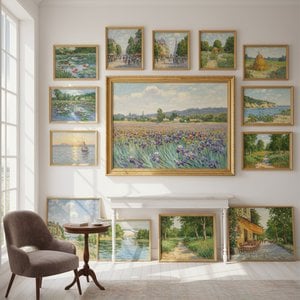
Impressionistinio Peizažo Simfonija: 10 Šedevrų, Apibrėžusių Epoją
Atraskite 10 impresionistinio peizažo šedevrų, kuriuos įkvėpė Monet, Renoir ir kiti! Sužinokite apie jų kūrybos istorijas bei spalvų magiją. Aukščiausios kokybės dailės reprodukcijos – ArtsDot.com. Išskirtinis interjero dizainas jūsų namams!

Joseph Clover: A Study in Luminosity & Transient Beauty – Exploring the Ephemeral Landscapes of a British Impressionist
Explore the captivating landscapes of Joseph Clover, a pioneering British Impressionist & innovator in anaesthesia. Discover his unique artistic vision, subtle colour palettes, and enduring legacy with ArtsDot.