
 Oil On Canvas
- WallArt
- Dutch Golden Age
 1650
1650 47.0 x 59.0 cm
 Wallraf-Richartzas Muziejus

The picture follows your choices: , .
Kolekcinio objekto aprašas
Discover ‘Calm’ by Jan van de Cappelle – a serene 1650 Dutch Golden Age marine painting. Admire its light, detail & atmospheric perspective at the Wallraf-Richartz Museum.
 Skaityti daugiau
Autoriaus biografija
Jan van de Cappelle (1626-1679) – Tylių jūros ir žiemos peizažų nyderlandų aukso amžiaus meistras. Žinomas dėl dangaus atspindžių ramiose vandenų paviršiuose, jis sujungė meną ir sėkmę. Atraskite jo retus kūrybos!”
Rankų darbo aliejinės reprodukcijos
Rankiniu būdu tapytas aliejus ant droblio jūsų pageidaujamame dydį ir rėmuose – tai mūsų menininkų pagal užsakymą sukurtas darbas. ( Perjungti į spausdinamus版作品 Perejti prie skaitmeninių vaizdų)
More about this painting
 Peržiūrėti realaus dydžio版
 Pasidalinti
 Dalintis
 Išsamiau
 Vadovas

 Atsisiųsti
 Panašūs eksponatai
 Rentgeno spindulių nuotrauka
 Automatinė diorama
 Q&A
Q&A Statistika
Order your painting in four simple steps
Take your time. You can change any answer; the price in your order card follows each choice.
1 Step one of four
Which size would you like?
These sizes keep the proportions of the original painting. The drawing shows your choice on a wall, above a two-metre sofa.
Or give your own measurements
Pasirinkite iš mūsų nustatytų dydžių, atitinkančių originalaus meno kūrinio proporcijas.

Įveskite jums reikiamą plotį ir aukštį, kad paveikslas atitiktų jūsų rėmą ar sieną. Kadangi šis darbas yra rankinio darbo, siekiant išgauti kitokios formos dydį, paveikslas gali būti šiek tiek didesnis (nuo kraštų bus palikta daugiau erdvės) arba mažesnis – pasirinkite jums patogiausią variantą. Prieš pradedant tapyti, atsiųsime jums skaitmeninį maketą patvirtinimui. Šioje puslapio nuotraukoje matomas vaizdas nėra galutinis rezultatas – jį parodys tik sukurtas maketas.
2 Step two of four
How should it be prepared: rolled, stretched or framed?
The prices below are for the size you chose in step one.
Choose the edges of the stretched canvas
Choose your frame

White €1

Blurside €1

Extended €1

P118B €10

P118H €10

P118W €10

P438Z €10

P508JH €12

P508YH €12

P805H €10

P805Z €10

P919BZ €10

P919G €10

P919XJ €10

P959ZH €10

P968JZ €12

W106C €8

W218G €10

W218JH €8

W218Y €10

W307PJ €10

W316G €10

W316PJ €8

W316Y €10

W398PJ €8

W4111J €10

W500HY €15

W500JH €15

W692G €12

W849H €8

W940BG €15

W953PJ €8

H24-GOLD €30

H24-SILVER €30

H36-GOLD €45

H36-SILVER €45
Įrėmintas
Moulding: . Overall size with the frame: .
3 Step three of four
Would you like anything changed in the painting?
Most people answer no. Because each painting is made by hand, our artist can also adapt it for you.
After order, ArtsDot.com team will email client for instructions and provide a mockup preview
4 Step four of four
A few finishing options
All of them are optional. The answers already selected cost nothing extra.
Who paints it?
Pristatymas visame pasaulyje () per 3–4 savaites, o ne įprastai – per 5 savaites. (29 spalis). Kokybė lieka nepakeičiama.
A nameplate, as in a museum?
Išgraviruotos bronzinės plokštelės detalės
This elegant plaque features the artist's name and the title of the artwork, finely engraved for a timeless presentation.
It is made from bronze with a refined, elegant finish. The text is precisely laser-engraved for a sharp and permanent result. Measuring 9x2 cm, the plaque is compact yet easy to read. It's built to be durable and scratch-resistant, offering a professional, museum-quality look. Mounting is simple thanks to the included adhesive backing.
Skaidrios akrilo plokštelės informacija
The plaque includes essential engraved details such as the artist's name, the title of the artwork, the date it was created, the type of media used-like oil on canvas or watercolor-a brief description of the piece, and a QR code that links to the complete artwork information.
It is crafted from clear acrylic, offering a sleek, modern appearance. The text is UV-engraved in black to ensure strong visual contrast. With a size of 10x15 cm, it ensures optimal readability. It comes equipped with two metal hooks for secure wall mounting. The plaque is designed to be weather-resistant, making it suitable for various environments, and it includes interactive features that work seamlessly with smartphone scanning.
Juodos akrilo plokštelės informacija
This elegant plaque includes engraved information such as the artist's name, the title of the artwork, the date it was created, the type of media used (like oil on canvas or watercolor), a short description of the artwork, and a QR code for quick access to more information.
The plaque itself is made from refined black acrylic with a premium finish. The text is laser-engraved in white for high contrast and readability. Its size is 10x15 cm, designed to be easy to read. It comes with two metal hooks for professional mounting. The design is sleek and fits any interior style. It is also weather-resistant and durable, with built-in digital integration for mobile compatibility.
A protective varnish?
When do you need it?
✓ Check and order
Your painting, as you ordered it

Calm
Reprodukcijos technika
Reprodukcijos matmenys
-

Aukščiausios klasės meistras
Daugiau detalių, meistriškumo ir papildomo gamybos laiko
-

Reprodukcijos rėmėjimo parinktys
-
-
Dėl meno kūrinių ar reprodukcijų, kurių bet kuri pusė yra didesnė nei 105 cm (apie 41 inch), rėmas bus siunčiamas kaip išskaidytas surinkimo rinkinys. Šis metodas užtikrina saugų pristatymą ir apsaugo nuo transportavimo metu galimos žalos.
Reikalingas profesionalus surinkimas – tai nėra „pasidaryk pats“ (DIY) produktas.
Rinkinys turi būti surinktas, o drobė išplėsta naudojant patyrį profesionalų rėmininką, medžio klijus (nėra įtraukti į rinkinį), drobės plėšimo kleslę bei presas, kad rėmo rėžiai išliktų tiesūs, kol klijai išdžiūvus. Netinkamas surinkimas arba netolydus drobės įtampa gali negrįžtamai sugadinti meno kūrinį, todėl šie atvejai nėra užtraukiami mūsų garantijos.
 Dėl meno kūrinių ar reprodukcijų, kurių bet kuri pusė yra didesnė nei 105 cm (apie 41 inch), rėmas bus siunčiamas kaip išskaidytas surinkimo rinkinys. Šis metodas užtikrina saugų pristatymą ir apsaugo nuo transportavimo metu galimos žalos.
Į komplektą įeina visi vientisos medienos elementai, tiksliai išpjauti pagal dydį.
Surmontinama naudojant pridėtus varžtus bei papildomai reikalingą medžio kliją kampų jungtims, kuris nėra pridėtas ir turi būti parinktas rėmininkui.
Reikalingi profesionalūs įrankiai, kurie nėra įtraukti į rinkinį: drobės kėlimo plytelės (stiprintuvai) ir klemiai, laikantys rėmo strygius tiesiu kampu, kol džiūsta lipas.
Svarbu:
Kampų jungtims reikalingi medžio klijai, barams reikia laikyti naudojant presas, kol klijai visiškai išdžiūvės, o surinktam rėmui įtempiamai privilgti būtinos drobės įtempimo plytযুক্ত. Šios priemonės į rinkinį neįtrauktos. Prieš užsakydami šio dydžio rinkinį, rekomenduojame pasimalkoti patyrusiu rėmų meistru.

Pavadinimo lentelė
-
-

Apsauginis lakas
Blizgus lakas (ryškina spalvas, saugo nuo šviesos ir drėgmės)
-

Personalizuoti kūrinį
Ką galima pakeisti (pavyzdžiui): pakeisti veidą klientui skirta nuotrauka; pridėti augintinį (pvz., katę pakeisti šuniu); įtraukti paslėptą žinutę fone; pakeisti fono kraštovaizdį ar elementus.
-

Skubiai
Pristatymas visame pasaulyje () per 3–4 savaites, o ne įprastai – per 5 savaites. (29 spalis). Kokybė lieka nepakeičiama.
-
Skubus pristatymas
Pristatymas visame pasaulyje () per 5 weeks. (5 lapkritis).
Įskaičiuota
Bendroji kaina
€ 232
Stiklo variantas prieinamas tik pasirinkus dydį iki 110 cm
Included with every order
- Nemokamas greitasis pristatymas visame pasaulyje
- Aukštos kokybės lininis drobė
- Pilnas siuntimo draudimas
- Muitinės mokesčių grąžinimo garantija
- Tikro spalvų atitikimo garantija
- 100 dienų grąžinimo politika (tik esant įtaigoms)
- 100% pinigų grąžinimo garantija
- Nuolaida dideliems užsakymams


A Stillness Captured: Jan van de Cappelle’s “Calm”
Jan van de Cappelle's "Calm," painted in 1650, isn’t merely a depiction of a coastal scene; it’s an invitation to a profound moment of tranquility. Often overlooked amidst the dramatic seascapes favored by his contemporaries, this work reveals a quieter, more introspective side to the artist’s remarkable talent. It's a painting that speaks not just of the visual beauty of a Dutch waterway but also of a carefully cultivated state of mind – a stillness reflected in every brushstroke and subtle hue.
The scene unfolds along a broad, gently curving river, its surface rendered with an almost unsettling smoothness. The water is devoid of visible waves or currents, mirroring the overcast sky above with remarkable fidelity. This isn’t the turbulent drama of a storm; it's a deliberate choice by van de Cappelle to evoke a sense of profound peace and contemplation. The composition is remarkably balanced, drawing the eye across the canvas towards a solitary fisherman wading into the shallow water on the right side of the frame. He stands as a small, almost insignificant figure against the vastness of the landscape, yet his presence anchors the scene and invites us to share in this quiet moment.
The Language of Light and Shadow
Van de Cappelle’s mastery lies not just in capturing the visual appearance of the water but also in conveying its atmosphere through a masterful use of light and shadow. The painting is bathed in a diffused, almost ethereal light – neither bright nor dark, but rather a soft, muted glow that seems to emanate from within the canvas itself. This subtle illumination creates an incredible sense of depth and volume, as if we could step directly into the scene and feel the cool dampness of the air. The artist employs a technique known as *chiaroscuro*, skillfully contrasting areas of light with deep shadows to heighten the drama and create a three-dimensional effect.
Notice how the distant boats are rendered in paler, almost ghostly tones – a deliberate device by van de Cappelle to suggest their distance and the atmospheric haze that softens their outlines. The foreground elements, particularly the fisherman and the boats closest to the viewer, are painted with greater detail and richness of color, drawing our attention and anchoring us within the scene. The brushwork itself is remarkably smooth and blended, contributing to the overall sense of serenity and stillness.
A Window into 17th-Century Dutch Life
"Calm" offers a fascinating glimpse into the daily life of 17th-century Holland – a society deeply connected to its waterways. The presence of fishing boats, the solitary figure of the fisherman, and the overall atmosphere of quiet industry all speak to this reality. However, van de Cappelle doesn’t simply depict a snapshot of everyday life; he elevates it into something more profound. He captures not just *what* is happening but also *how* it feels – the sense of peace, contentment, and connection with nature that characterized so many Dutch lives during that era.
Interestingly, van de Cappelle’s background as a textile merchant profoundly influenced his artistic vision. His intimate knowledge of color, texture, and pattern—skills honed in the demanding world of dyeing fabrics—translated seamlessly into his paintings. He sought to create works that were not just visually appealing but also emotionally resonant, evoking feelings of tranquility and contemplation.
Symbolism and Emotional Resonance
Beyond its technical brilliance, “Calm” is imbued with a subtle sense of symbolism. The stillness of the water can be interpreted as a metaphor for inner peace – a state of mind free from turmoil and anxiety. The solitary fisherman represents humanity’s connection to nature, reminding us of our place within the larger world. And the overcast sky, rather than suggesting gloom, evokes a feeling of quiet contemplation and introspection.
Ultimately, “Calm” is a painting that invites us to slow down, breathe deeply, and appreciate the beauty of stillness. It’s a testament to van de Cappelle's extraordinary talent and his ability to capture not just the visual appearance of the world but also its profound emotional essence. A reproduction of this work offers a chance to bring this sense of serenity into any space, serving as a constant reminder of the importance of finding moments of peace in our own lives.
Klausimai ir atsakymai
Kada ir kokiais medžiagomis buvo sukurta „Calm“?
„Calm“ sukurtas 1650 m. naudojant Oil On Canvas techniką. Medžiaga ir data nurodo, kaip ir kada buvo sukurtas originalas.
Kur galima pamatyti „Calm“ – Janas Van De Cappelle originalą?
Originalus „Calm“ – Janas Van De Cappelle saugomas Wallraf-Richartzas Muziejus, Köln, Deutschland. Kopija leidžia šį kūrinį eksponuoti namuose.
Kokio Janas Van De Cappelle kūrybos etapo priklauso „Calm“ (1650)?
1650 m. data įtraugia „Calm“ į Janas Van De Cappelle kūrybinio plėtojimo Mature Period laikotarpį.
panašūs kūriniai


Janas Van De Cappelle
1624 - 1679, Nyderlandai
Autoriaus biografija
Ramyja būsenos veidlys: Jano van de Cappelle gyvenimas ir palikimas
Janas van de Cappelle iškyla kaip ypatinga, šviesi figūra olandų Aukso amžiaus panteone – menininkas, kurio vieta meno istorijoje apibrėžta giliu, meditatyviu ramybės pojūčiu. Skirtingai nei daugelis jo samtvorių, kūręusi masinius kūrinių kiekį, Cappelle kūryba išlieka pastebimai nedidelė, tačiau kiekvienas jo darbas pasižymi išskirtine išraiška. Jis nebuvo tik jūros paveikslų meistras; jis buvo žmogus su dideliu pasaulio svarbiu statusu, pramonės titaną, neatsiejamas nuo ekonominio Amsterdamo pulso. Sėkminga veikla tekstilės pramonėje ir puikus kolekcionerio skonis suteikė jo gyvenimui unikalią dvikalbystę – verslo meistriškumo ir meninės jautrumo susiliejimą. Šis turto ir vizijos sankryža leido jam išugdyti stilių, kuris ne tik vaizduoja jūros pasaulį, bet ir įamžina jo sielą – ramybę, atspindinčią tiek vandens paviršių, tiek begini skyra viršuje.
Gimęs Amsterdame 1624 metais, Janas van de Cappelle pasirinko neįprastą kelią link meninės meistriškės. Nors daugelis jo eras meistrų buvo iškovoti griežtose oficialių gilvės mokymų ugnys, Cappelle buvo daugeliui savaviydis – faktas, kuris galbūt prisidėjo prie jo vizijos ypatingo, neapsunkoto natūralumo. Jo auklėjimas buvo glaudžiai susijęs su techniniu pramonės sudėtingumu; jo tėvas, Franchoy van de Cappelle, valdė didelę dažų manufaktūrą, specializuojančiąsi purpurinės spalvos gamyboje. Toka aplinka, reikalaujanti tikslumo bei gilaus spalvų ir chemijos supratimo, tikriausiai suteikė Janui neįvertojamą pagrindą vėlesnėms šviesos ir atmosferos tyrimams. Nors jis galėjo būti paveiktas Simon de Vlieger stiliaus jautrumo, kurio kompozicijos turi tam tikrą struktūrinį panašumą su jo pačios, Cappelle kūryba galiausiai peržengė paprastą įtaką ir pasiekė gryno atmosferinio švelnumo būseną.
Šviesos ir atmosferinės perspektyvos meistriškumas
Tikrasis Jano van de Cappelle genijus slypi jo gebėjime manipuliuoti oro ir vandens elementais, sukuriant gilią emocinę išraišką. Jis dažnai šlominamas kaip išskirtinis XVII amžiaus Holandijos jūros menininkas – titulas, įgytas dėl nepanašaus atmosferinės perspektyvos meistriškumo. Jo technika ryškiausiai pasireiškia būdos, kaip jis atspindi dangaus formacijas ramiuose, stiklo kaip vandens paviršiuose. Tokiuose darbuose kaip Laivai pristabdyti ramioje jūroje, žiūrintysis ne tik stebi jūros vaizdą, bet yra pakvietas į sustabdytos animacijos momentą. Subtilūs šviesos gradacijos ir kruopščiai atvaizduoti debesys sukuria begalinės erdvės pojūtį, kuriame riba tarp jūros ir dangaus tampa gražiaily išnykusia.
Jo meninė kalba įsipina iš Willem van de Velde Didžiojo realizmo, tačiau ji pasižymi švelnumu, kuris yra tik jo paties. Ten, kur kiti galėtų susikoncentruoti į karo veikimo energiją ar audros jėgą, Cappelle ieškojo ramybės, randamos po judėjimo sūra ar prieš jo pradžią. Jo kompozicijose dažnai išraiškiami:
- Šviesos ir šešėlio žaiskumas: trumpalaikiai momentai, kai saulės šviesa pr뚫ia debesų sluoksnius, apšvindėdama vieną vienintuką valklą.
- Atmosferinis niuansas: subtalus miglos, rūko ir skaidrumo valdymas, suteikiantis jo peizažams liềnimą su temperatūros ir drėgmės pojūčiu.
Istorinė reikšmė ir neblėstantis poveikis
Jano van de Cappelle istorinė reikšmė kertasi giliau nei estetinė jo drobučių grožis. Jis atstoko olandų Aukso amžiaus gebėjimą rasti ypatingą paprastame. Per savo burkų, upių scenų ir žiemos peizažų vaizdinimą jis užfiksuojo jūros tapatybę šalies, kuri tuo metu buvo pasaulinės prekybos centras. Net ir jo dinamiškesniuose darbuose, pavyzdžiui, Valstybinė barbarka, sveikina heimų flotilė, išlieka vidinė tvarkos ir orumo jausmas, atspindintis jo eras struktūrizuotą klestėjimą.
Nors jo gyvenimas pasibaigė 1679 metais, paliekant ribotą šedevrų kolekciją, jo poveikis jūros meno žanrui yra neįvertinamas. Jis būsimas kartas mokė paveikti ne tik tai, kas matoma, bet ir tai, kas jaučiama – oro svorį, bangujos ramybę ir tylią horizonto didybę. Šiandien jo darbai išlieka esminiais orientiriais visiems, siekiantiems suprasti jautrią pusiausvyrą tarp žmogaus, gamtos ir šviesos, kuri juos sujungia. Jo palikimas yra ramybė – ilgalaikis įtodas menininkui, rado begalybę tylo viduje.
Susiję straipsniai

Olandijos Aukso Amžius: 10 Šedevrų, Apibrėžiančių Meną ir Stilių
Atraskite Olandijos Aukso Amži\u017us meninius šedevrus! 10 legendin\u017iŴ paveikslžiai – Rembrandto, Vermeerio ir kt. darbai. Sužnkitę j\u016ungo namus aukso amži\u017us grožiu! Āukrai, interjero dizainas – viskas ArtsDot.com. Ižirkite kolekciją internete!

Pieter de Hooch: Illuminating Dutch Domestic Life & Golden Age Charm
Explore the captivating world of Pieter de Hooch, a master of Dutch Golden Age painting. Discover his innovative use of light, intimate domestic scenes, and lasting influence on art history. Learn more at ArtsDot.
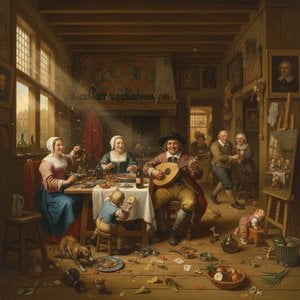
Jan Steen: A Master of Dutch Genre Painting & the Golden Age
Explore the life & art of Jan Steen, a leading Dutch Golden Age painter renowned for his humorous genre scenes & insightful social commentary. Discover his techniques, legacy, and collecting tips.