


 Peržiūrėti realaus dydžio版
 Siųsti
 Dalintis
 Išsamiau
 Vadovas

 Atsisiųsti
 Panašūs eksponatai
 Rentgeno spindulių nuotrauka
 Diaporama
 Statistika
Forest Landscape
 Etching
- Baroque
 1643
1643- Early Modern
 27.0 x 32.0 cm
 Szépművészeti Múzeum
 Rodyti daugiau
Giclée / Meno spausdinimas
Muziejų lygio „giclée“ arba drobos spausdinimas: greita gamyba ir lankstios apdailos parinktys. ( Pirkti rankomis tapytą reprodukciją Perejti prie skaitmeninių vaizdų)




P118B €10

P118H €10

P118W €10

P438Z €10

P508JH €12

P508YH €12

P805H €10

P805Z €10

P919BZ €10

P919G €10

P919XJ €10

P959ZH €10

P968JZ €12

W106C €8

W218G €10

W218JH €8

W218Y €10

W307PJ €10

W316G €10

W316PJ €8

W316Y €10

W398PJ €8

W4111J €10

W500HY €15

W500JH €15

W692G €12

W849H €8

W940BG €15

W953PJ €8




Pasirinkite iš mūsų nustatytų dydžių, atitinkančių originalaus meno kūrinio proporcijas.

Įveskite jums reikiamą plotį ir aukštį, kad atvaizdas derėtų prie jūsų rėmo ar sienos. Spausdiną galima tik sumažinti, bet nepadidinti virš originalaus paveikslėlio dydžio, todėl keičiant proporcijas, dalis vaizdo prarandama. Prieš spausdinimą atsiųsime jums skaitmeninį maketą patvirtinimui. Šioje puslapio nuotraukoje matomas pjūvis nėra tikslus – jį rodo tik maketas.
Pristatymas visame pasaulyje () per 2 weeks, o ne įprastas 4/5 savaičių laikotarpis. (23 spalis)

Nemokamas greitasis pristatymas visame pasaulyje

Aukštos kokybės lininis drobė

Pilnas siuntimo draudimas

Muitinės mokesčių grąžinimo garantija

Tikro spalvų atitikimo garantija

100 dienų grąžinimo politika (tik esant įtaigoms)

100% pinigų grąžinimo garantija

Nuolaida dideliems užsakymams
 Stiklo variantas prieinamas tik pasirinkus dydį iki 110 cm

Forest Landscape
Giclée / Meno spausdinimas
Reprodukcijos dydis
-


Visų pasirinktų variantų kaina
€ 54
A Journey into the Italianate Dream
To gaze upon this depiction of a forest landscape is to step across the threshold of time, transported to the sun-dappled, yet subtly shadowed corners of Italia in the early seventeenth century. This piece captures the very essence of the Dutch fascination with the Mediterranean world—a yearning for the classical grandeur and luminous atmosphere that beckoned Northern European artists away from their familiar northern skies. It speaks volumes about the cultural currents of the time, when study trips to Italy were not merely leisure pursuits but vital academic pilgrimages for painters seeking mastery.
The Hand of Jan Both: Mastering Mediterranean Light
Created around 1643 by Jan Both, this work places us squarely within his mature period. Both was a key figure in the "Dutch Italianate" movement, an artistic current defined by its deep absorption of Roman and Venetian landscape ideals. While the subject matter is profoundly natural—a gently sloping hillside descending toward placid waters, framed by dense, brooding foliage—the execution reveals a meticulous technical prowess. The style leans heavily into the detailed realism characteristic of Dutch Golden Age drawing or etching. Notice how the lines themselves become carriers of light and shadow; they are not merely outlines but carefully modulated tonal passages built through expert hatching and cross-hatching.
Technique and Atmosphere: An Etcher's Precision
The physical evidence suggests a technique rooted in drypoint or fine etching upon copper plate. This medium allowed Both to achieve an astonishing level of linear precision, giving the forest its palpable texture. The light is not harsh; rather, it is diffused, suggesting the soft veil of an overcast day or the deep cool shade beneath a canopy. This masterful handling of shadow creates an incredible sense of depth—a visual recession where foreground details give way to atmospheric haze in the distance. The organic shapes of the trees and the water’s edge are rendered with such care that one can almost hear the quiet murmur of the stream.
Symbolism of Solitude and Nature's Embrace
Beyond its technical brilliance, the painting resonates with profound emotional undertones. The subtle inclusion of small figures wandering through the woods transforms the scene from a mere topographical study into a meditation on human experience. These travelers seem absorbed in their own contemplation, dwarfed by the immensity and tranquility of nature. This quietude speaks to an era grappling with both intense artistic patronage (as Both himself experienced) and a growing appreciation for the sublime power of the natural world—a refuge from the bustling life of the city.
Bringing the Italianate Spirit Home
For the collector or designer, this reproduction offers more than just decoration; it offers an atmosphere. It is a window into scholarly aspiration, a celebration of masterful draftsmanship, and an invitation to pause. The deep greens, muted earth tones, and the silvery quality of the water lend themselves beautifully to creating a space that feels both historically rich and serenely contemporary—a perfect anchor for any room seeking the quiet dignity of a classical landscape.
问答 (or more naturally for a website heading): Klausimai ir atsakymai
Kokia yra „Forest Landscape“, autorius – Jan Both dominuojanti spalva?
Black (#050504) yra pagrindinė kūrinio „Forest Landscape“, autorius – Jan Both spalva.
Kokią temą ir atmosferą sujungia „Forest Landscape“, autorius – Jan Both?
„Forest Landscape“, autorius – Jan Both sujungia forest landscape, dutch art, 17th century scene, serene nature, detailed drawing, italian influence, monochromatic tone ir Serene atmosferą.
Keliame laikotarpiu buvo sukurta „Forest Landscape“, autorius – Jan Both?
Istorinis laikotarpis kūriniam „Forest Landscape“, autorius – Jan Both yra Early Modern. Ši klasifikacija priskiria šį kūrinį konkrečiam meno istorijos etapui.
Susiję kūriniai


Autoriaus biografija
Jan Both (1610–1652): Viduržemio šviesos meistras
Jan Dirksz Both buvo olandų painininkas, piešlys ir etcheris, tapęs viena ryškiausių „italiečių stiliaus“ peisžragų judėjimo figūra sparbuojančios Nyderlandų aukso amžiaus laikotarpiu. Verslui apie 1615–1618 metus gimęs Utrehte, jis buvo jaunesniojo Andries Both brolis. Jų tėvas, Dirck Both, stiklo paveikslininkas ar stiklinačius, jiems įrodė ankstyvą meninio meistriškumo vertinimą. Nors biografinės detalės išlieka gana retos, moksliniai tyrimai leidžia manyti, kad Janui mokymus suteikė Abraham Bloemaert ir Gerrit van Honthorst, o tai įtraukė jį į įtakingiausių jo laikmečio menininkų bendrovę.- Formavimosi metai ir mokslas: Formatyviniai Both metų praleisi buvo Utrehte, kur jis kartu su broliu Andries tobulino savo įgūdžius, pasisavindamas technikas iš tėvo stiklinimo praktikos – pramonės, giliai įsišaknijusios flamandų tradicijų.
- Romos įtaka: Verslui 1638 m., Janas ir Andries pradėjo transformaciją – kelionę į Romą per Prancūziją, kur pasinerė į meninę popiežių dvasą ir susidūrė su tokiomis šviesos asmenybėmis kaip Bloemaert ir Gerrit van Honthorst. Šis patirtis giliai suformavo jų stilių ir estetinį suvokimą.
Romos įtaka ir bendradarbiavimas su Claude Lorrain
Roma tapo tikru Both meninės plėtros krosnimu. Kol Andries susikoncentruojo į žanrinę sceną, sekdamas Pieter van Laer stiliumi, Janas savo pašalinėjo pirmiausia peisžragų menui – stiliui, kuris buvo stipriai įkvėstas Claude Lorrain veiklos. Jis su nelygiam šviesos ir spalvos meistriškumu įtraukė eterinį Viduržemio jūros regiono grožį. Ypač pastebima, kaip jis artimai bendradarbiavo su Herman van Swanevelt projektuojant monumentalų darbinį Madride, Buen Retiro rūmai, taip demonstruodamas savo ambiciją ir meninį gebėjimą aukščiausiuose Europos globėjų sluoksniuose. Šis partnerystė sutvirtino Both reputaciją kaip šio peisžragų stiliaus novatoriaus.Išskirtiniai paveikslai ir meninės savybės
Both kūryba pasižymi plačiais, vaizduotės pilnais peisžragais, skystai pamirktais šviesiausiu auksinės šviesos spinduliu – tai yra Claude Lorrain stiliaus žymė ir rodiklis platesnių meninių sūrynių, sklaidos Europo visoje. Jo šedevras, „Peisžragas su banditais, vedančiais kalinius“ (Bostono grožio meno muziejus), puikiai atspindi šį estetinį spindulį. Diagonalios kelias nukreipia akį į sceną, sudedant realistiškas figūras į idiliškų vaizdų foną, kurį papuožia kruopščiai atvaizduota augmenika. Dažnai pasikartojantys motyvai apima religines ar mitologines figūras – kaip matoma „Parisio teisme“ (Londonas, National Gallery) – dažnai sukurtas kitų Utreto menininkų, pavyzdžiui, Cornelis van Poelenburch, taip pabrėžiant Both įsipareigojimą humanistiniams idealams ir meninėms konvencijoms.Palikimas ir įtaka
Janas Both brolis Andries tragiškai mirt dėl ligos Venecijoje, grįžtant iš Romos. Nepaisant trumpo gyvenimo, Andries įsipake savo vietą kaip gerbiama menininko, specializuojamo pietaus scenomis – žanru, atspindinčiu to meto socialiąją realybę. Janas Both meninis palikimas kertasi ne tik per individualius paveikslus; jis buvo mokytojas talentingiems moksletojams, tokiems kaip Barend Bispinck ir Willem de Heusch, užtikrindamas, kad jo stiliaus inovacijos toliau įkvėstų būsimas menininkų kartas. Jo darbai vis tiek yra šlovės objektas dėl savo evokuojamos atmosferos, meistriškos technikos ir indėlio į olandų peisžragų meno vystymą – tai liudijimas nesivėlinančios Both įtakos visai Europos menhistei.Kolekcijos
- Cambridge universiteto Fitzwilliam muziejus ė
- Ermitažas, Sankt Peterburgas
- Kunsthistorisches Museum, Viena
- Louvre, Paris
- Mauritshuis karališkoji paveikslų galerija

Jan Both
1610 - 1652 , Nyderlandai
Trumpa informacija apie kūrėją
- Artistic Movement Or Style: Italiku stiliaus peisražas
- Artists Or Movements Influenced By This Artist: ['Claude Lorrain']
- Artists Who Influenced This Artist:
- Abraham Bloemaert
- Gerrit van Honthorst
- Date Of Birth: Utrecht, Nyderlandai (1610)
- Date Of Death: 1652 m. rugpjūčio 9 d.
- Full Name: Jan Dirksz Both
- Nationality: Olandų
- Notable Artworks:
- Šv. Ana su Mergelė Marija ir Krikščionys
- Peisražas su banditais, vedančiais kalinius
- Parisio teismas
- Place Of Birth: Utrecht
Susiję straipsniai

Olandijos Aukso Amžius: 10 Šedevrų, Apibrėžiančių Meną ir Stilių
Atraskite Olandijos Aukso Amži\u017us meninius šedevrus! 10 legendin\u017iŴ paveikslžiai – Rembrandto, Vermeerio ir kt. darbai. Sužnkitę j\u016ungo namus aukso amži\u017us grožiu! Āukrai, interjero dizainas – viskas ArtsDot.com. Ižirkite kolekciją internete!

Golden Light & Dutch Skies: Bringing the Magic of Dutch Golden Age Landscapes into Your Home
Transform your home with the breathtaking light of Dutch Golden Age landscapes. Discover how hand-painted oil reproductions of masterworks like Ruisdael and Vermeer bring timeless elegance, atmosphere, and soulful texture to modern interiors. Elevate your space with museum-quality art.

Charles Leickert: Capturing the Dutch Golden Age Light – A Comprehensive Study of Technique, Context, and Legacy
Explore the captivating winter landscapes of Charles Leickert, a master of Dutch Golden Age light & atmosphere. Discover his techniques, symbolism, and lasting legacy – a comprehensive study for art enthusiasts and collectors.
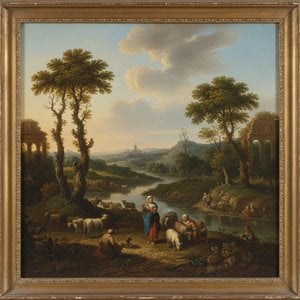
Nicolaes Berchem: Dutch Golden Age Pastoralism & the Evolution of Landscape Painting
Explore the captivating world of Nicolaes Berchem, a leading Dutch Golden Age painter. Discover his idyllic landscapes, masterful technique & lasting influence on art history. Learn more at ArtsDot.

Golden Age Reflections: Dutch Baroque Painting & Cultural Innovation
Explore the Dutch Golden Age of painting! Discover key artists like Vermeer & ter Borch, their innovative techniques, and the rich cultural context behind these Baroque masterpieces. Learn about collecting & appreciating this iconic art period.
