

 Peržiūrėti realybėje
 Pasidalinti
 Dalintis
 Išsamiau

 Atsisiųsti
 Panašūs eksponatai
 Rentgeno nuotrauka
 Automatinė diorama
The Cab

 Skaityti daugiau
Rankų darbo aliejinės reprodukcijos
Rankiniu būdu tapytas aliejus ant droblio jūsų pageidaujamame dydį ir rėmuose – mūsų menininkų darbas pagal užsakymą. ( Pirkti spaudinį Pirkti vaizdą)




P118B $10

P118H $10

P118W $10

P438Z $10

P508JH $12

P508YH $12

P805H $10

P805Z $10

P919BZ $10

P919G $10

P919XJ $10

P959ZH $10

P968JZ $12

W106C $8

W218G $10

W218JH $8

W218Y $10

W307PJ $10

W316G $10

W316PJ $8

W316Y $10

W398PJ $8

W4111J $10

W500HY $15

W500JH $15

W692G $12

W849H $8

W940BG $15

W953PJ $8




Pasirinkite iš mūsų nustatytų dydžių, atitinkančių originalaus meno kūrinio proporcijas.

Galite įvesti savo matmenis, kad jie atitiktų konkretų rėmą ar erdvę. Jei pasirinktas dydis neatitinka originalaus paveikslėlio proporcijų, mes arba apkropsime meno kūrinį, arba papildysime tapybą rankomis dažytい elementais. Prieš pradėdami gamybą, jūsų patvirtinimui atsiųsime skaitmeninį maketą.
Atkreipkite dėmesį, kad ekrane rodomas vaizdas neatspindi tikrojo apkarpymo ar papildymo. Tik maketas tiksliai parodys galutinę kompoziciją.
Nors galima rinktis ir individualius dydžius, rekomenduojame pasirinkti matmenis iš nustatytos sąrašo, kad būtų išlaikytos originalios proporcijos.
Gavus užsakymą, ArtsDot.com komanda susisieks su klientu el. paštu dėl instrukcijų ir pateiks maketo pavyzdį.
Pristatymas visame pasaulyje () per 3–4 savaites, o ne įprastai – per 5 savaites. (16 rugpjūtis). Kokybė lieka nepakeičiama.

Nemokamas greitasis pristatymas visame pasaulyje

Aukštos kokybės lininis drobė

Pilnas siuntimo draudimas

Muitinės mokesčių grąžinimo garantija

Tikro spalvų atitikimo garantija

60 dienų grąžinimo politika (tik esant gamyklinėms defektams)

100% pinigų grąžinimo garantija

Nuolaida už kelias reprodukcijas
 Stiklo variantas prieinamas tik pasirinkus dydį iki 110 cm

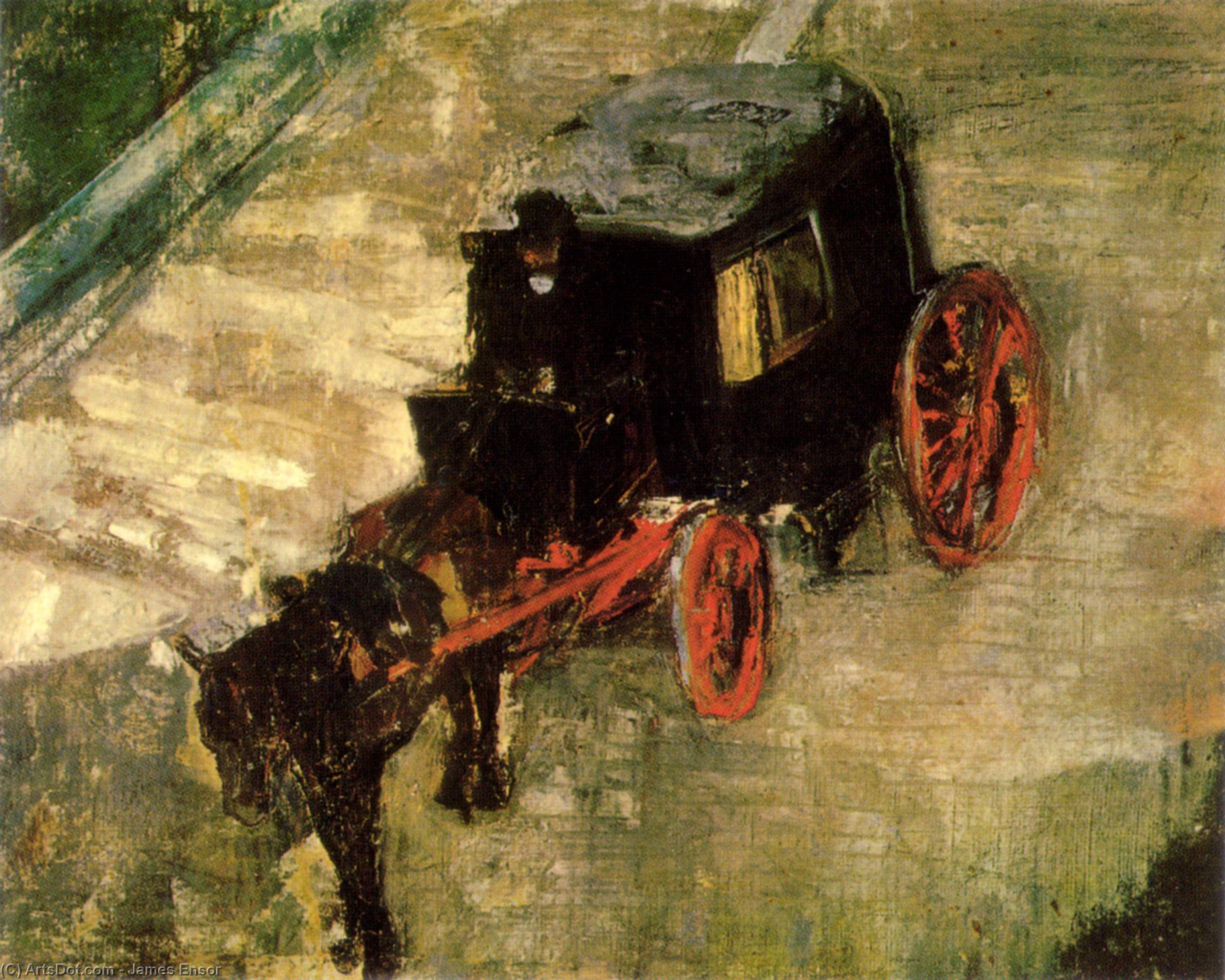
The Cab
Reprodukcijos technika
Reprodukcijos matmenys
-


Galutinė kaina
$ 263
Kūrinio aprašymas
A Glimpse into Ensor’s World: Decoding ‘The Cab’
James Ensor's *The Cab* is a captivating engraving that offers a window into the artist’s unique vision and his pivotal role in the development of Expressionism. More than just a depiction of everyday life, this work pulsates with an unsettling energy, hinting at deeper psychological currents beneath the surface. The scene presents a horse-drawn carriage – the ‘cab’ itself – dominating the composition, pulled by two horses and guided by a formally dressed driver. This seemingly mundane subject is rendered with a striking intensity that transcends simple representation.Style & Technique: A Master of Line
Ensor's mastery of engraving is immediately apparent in *The Cab*. The stark contrast between black and white creates a dramatic visual impact, emphasizing the textures of the scene – the rough coat of the horses, the polished carriage, and the muddy road. His technique isn’t about precise detail; rather, it prioritizes capturing movement and atmosphere through dynamic lines and carefully considered shading. This approach is characteristic of his style, which balances meticulous craftsmanship with a deliberately unsettling aesthetic. The loose, gestural quality of the lines imbues the scene with a sense of instability and urgency, as if the carriage is perpetually in motion.Historical Context: Forerunner of Expressionism
Created during a period of significant artistic upheaval, *The Cab* reflects Ensor’s rejection of academic conventions and his embrace of subjective experience. As a key figure in the transition from Impressionism to Expressionism, he paved the way for artists like Edvard Munch and Wassily Kandinsky who would later explore the depths of human emotion through distorted forms and bold colors. Ensor’s work, including pieces like *The Despair of Pierrot*, often featured grotesque imagery and a sardonic view of society – themes that resonate subtly within *The Cab*. The late 19th century was a time of rapid social change and growing anxieties, which found expression in the art of this period.Symbolism & Interpretation: Beyond the Surface
While seemingly straightforward, *The Cab* invites multiple interpretations. The carriage itself can be seen as a symbol of transition, journey, or even isolation. The driver, shrouded in formality, might represent societal constraints or the impersonal forces that govern modern life. The muddy road suggests hardship and uncertainty, while the overall atmosphere evokes a sense of melancholy. Ensor often employed symbolism to critique social norms and explore the darker aspects of human nature, and *The Cab* is no exception. It’s a work that rewards careful observation and contemplation.Emotional Impact & Aesthetic Appeal
*The Cab* isn't merely a visual representation; it’s an emotional experience. The engraving evokes feelings of unease, transience, and perhaps even a touch of foreboding. Its monochromatic palette and dynamic composition create a powerful aesthetic impact that lingers in the mind long after viewing. This piece would be a striking addition to any collection, lending a sophisticated yet unsettling atmosphere to a space. It’s particularly well-suited for interiors seeking a blend of historical significance and artistic intrigue.Further Exploration
- Discover other notable works by James Ensor: The Despair of Pierrot and The Intrigue.
- Explore the broader movement of Expressionism and its influence on modern art.
- Consider pairing *The Cab* with works by contemporaries like Wassily Kandinsky or Edvard Munch to create a compelling dialogue between artistic visions.
panašūs kūriniai


Autoriaus biografija
Gyvenimas pasikraustęs kaukėse ir šešuliuose: Jameso Ensoro pasaulis
1860 m. Ostende, Belgijoje, gimęs James Sidney Edouard Ensor iškrato iš įtraukiančio kultūrų susiliejimo – jo tėvas buvo anglas, o motina – belgė. Ši dviseklė kilmė galbūt iš anksto numatė visą gyvenimą šį menininką lydėsiantį susižavėjimą kaukėmis ir pasirodymais – temomis, kurios vėliau dominuotų jo nerūpestingame, tačiau įtraukiančiame kūrybos veikalme. Augdamas po skambaus pietaukos kurorto energija, jaunasis James buvo giliai paveiktas karnavalių ir keivybės atmosferos. Jo tėvai valdė suvenyrų parduotuvę, pilną rakhčių, karnavalinių masek ir keistų daiktų – tai buvo tikras stebuklų kabinetas, kuris įžvėgė jo vaizdotę ir suteikė turtingą vizualinį žodyną būsimai menui. Nors iš pradžių jis nesugebėjo susidompėti tradiciniais akademiniais siekiais, Ensor galiausiai įstojo į Briuselio Karališkąją dailės akademiją, tačiau jos griežta struktūra jam atrodė dusinanti jo augančiai meninei vizijai. Jis greitai suprato, kad turi iškovoti savo kelią – kelią, kuris išvestų jį daleko už konvencinių ribų.
Nuo tamsių realizmo iki groteskiškų vizijų
Ensoro ankstyvieji paveikslai atspindėjo labiau tradicinį požiūrį, vaizduodami kasdienio gyvenimo escenas tamsiais tonais. Tokie darbai kaip „Rusų muzika“ (1881) ir „Girtukai“ (1883) atskleidžia pradinį talentą, kovojantį su realizmu, tačiau net ir šiose ankstyvose kūrybos dalyse jau juntamos būsimos nerūpestingos vaizduotės užuominos. Lemtingas lūžis įvyko tada, kai Ensoro paletė linksmingėjo, o tematikos turinys tapo vis keistingesnis. Jis pradėjo savo plėslus klesti karnavalais, skeletais, lėmėmis ir alegoriškomis figūrinėmis – pasauliu, prisigėrusiu fantazija ir dažnai besiribojančiu su grotesku. Tai nebuvo tik stiliaus pokytis; tai buvo tyčia atliktas tamsiųs žmogaus egzistencijos sričių tyrimas, visuomenės normų atmetimas ir moksliškos racionalybės atsisakymas. Jo stilius tapo akimirksniu atpažįstamas dėl drąsių traukų, ryškių spalvų ir teatralumo – tai buvo unikalus jo pats vizualinis kalbos būdas. Vaizdos vaikystės aplinkos įtaka yra neabejotina: tos karnavalinės kaukės nebuvo tiesiog dekoratyviniai elementai; jos buvo paslėptų tapatybių, socialinės kritikos ir išorės trapumo simboliai.
Nerimo šedevrai: pagrindiniai kūriniai ir pasikartojančios temos
Visos savo karjeros metu Ensoras sukūrė darbų seriją, kuri šiandien vis dar šokiruoja ir žavinti auditoriją. „Skandalizuotos kaukės“ (1au83) yra ankstyvas įrodymas jo susižavėjimo pasirodymų galia ir jų gebėjimu atskleisti slaptas emocijas. Galbūt jo kontroversiškiausias darbas, „Kristaus įžangė į Briuselį“ (1888–1889), išlieka galinga religinės hipokrizės ir visuomenės abtaiściumo satire – paveikslas, kuris iš pradžių sulaukė griežtos kritikos, o dabar yra švęčiamas kaip šedevras. Nerūpestingas Kristaus vaizdas, įžengiantis į miestą, pilną groteskiškų kaukėtų figūrų, yra stiprus komentaras apie atotrūkį tarp dvasinių idealų ir žmogaus elgsenos. „Skeletai, kovojantys dėl paklaustaus žmogaus“ (1891) siūlo griežtą meditaciją apie mirtį, nykštį ir gyvenimo absurdiškumą, o „Šv. Antano kančios“ (1887) gilina sudėtingas alegorines temas apie pagundą, nuodėmę ir dvasinę kovą. Visame jo kūrybos darbe pasikartoja mirties tyrimai, socialinė kritika, religinė satire ir begalinė vaizduotės galia – temos, kurios išlaiko amžiną aktualumą.
Modernizmo pionierius: įtaka ir palikimas
Nors Ensoras atsisakė lengvo įdiegimo į kategorijas, jo meninė kilmė yra sudėtinga ir įtraukianti. Jis pripažino tokių meistrų kaip Pieteris Bruegelis Didysis, kurio persitempusių scenų ir moralizuojančių naratyvų istorijos rezonavo su jo pačiu viziniu, taip pat Francisco Goya, kurio juodasis humoras ir neatsitraukiančios žmogaus kančios aprašymai paliko neištrinčiam įspūdį. James Abbott McNeill Whistlerio pabrėžimas esteticizmui taip pat pritarė Ensoro meniniams pojūčiams. Tačiau Ensoras nebuvo tik imitatorius; jis sujungė šias įtakas į kažką visiškai naujo ir originalaus. Šiuolaikiniu laiku jis plačiai pripažįstamas kaip svarbi figūra pereinamajame etape nuo XIX amvio simbolizmo prie ankstyvojo XX amžiaus ekspresionizmo ir surrealizmo – tikras moderniojo meno pionierius. Jo drąsus priešaumą padavęs požiami tyrimas, groteskiškų vaizdų priėmimas ir akademinių konvencijų atmetimas atvėrė kelią būsimoms menininkų kartoms, kurios išdrįso iššūkį kelti meninei normai. Nepaisant pradinės priešmaršų, Ensoras savo vėlesniaisiais metais galiausiai sulaukė pripažinimo: 1929 m. karališkasis Albertas I pavadino jį baronu, o 1933 m. jam suteikta Légion d'honneur garbė. Jis mirė Ostende 1949 m., palikdamas kūrybos turtą, kuris ir toliau sužavina, sukrėtė ir įkvepia. Jo palikimas išlieka įrodymu apie meno galią susidurti su nemalgiomis tiesomis ir tyrinėti žmogaus būties gilumas.

Džeimsas Ensoras
1860 - 1949 , Belgija
Trumpa informacija
- Artistic Movement Or Style: Expressionism, Surrealism
- Artists Who Influenced This Artist:
- Bruegel the Elder
- Francisco Goya
- Whistler
- Date Of Birth: April 13, 1860
- Date Of Death: November 19, 1949
- Full Name: James Sidney Edouard Ensor
- Nationality: Belgian
- Notable Artworks:
- The Scandalized Masks
- Skeletons Fighting...
- Christ's Entry into Brussels
- Place Of Birth: Ostend, Belgium
Susiję straipsniai

White on Canvas: 10 Masterpieces & Timeless Elegance for Your Home Decor
Explore 10 iconic white paintings by Monet, Whistler & Rothko! Discover the stories behind these serene masterpieces and their impact on art history. Find museum-quality reproductions for your home decor at .

Džeimso Ebboto Maknilo Vislerio 25 Šedevrai: Tonalizmo Elegancija Jūsų Interjere
Atraskite 25 įspūdingiausius Džeimso Ebboto Maknilo Vislerio kūrinius! Tonalizmo meistras, noktiurnai ir portretai – meno istorijos šedevrai jūsų interjerui. Pirkti aukštos kokybės reprodukcijas ArtsDot.com

Dark Masterpieces: 10 Iconic Paintings Dominated by Black Tones |
Explore 10 iconic paintings dominated by black tones, from Rembrandt’s chiaroscuro to Goya's dark expressions. Discover the stories behind these masterpieces & find museum-quality art reproductions for your home at .
Sir Alfred Munnings' Masterpieces: 25 Paintings That Define Equine Art | ArtsDot
Explore 25 iconic Sir Alfred Munnings paintings! Discover the beauty of British Impressionism, equine art & rural England. Find museum-quality reproductions and elevate your home decor with ArtsDot. Explore the full collection online.

James Ensor's Grotesque Visions: Social Commentary & Artistic Innovation
Explore the unsettling yet captivating world of James Ensor, a pioneer of Expressionism. Discover his satirical masterpieces, symbolic imagery & lasting influence on modern art. High-quality reproductions available at ArtsDot.



