

 Peržiūrėti realaus dydžio版
 Pasidalinti
 Dalintis
 Išsamiau
 Vadovas

 Atsisiųsti
 Panašūs eksponatai
 Rentgeno spindulių nuotrauka
 Automatinė diorama
 问答
问答 Statistika
A Sati or Widow Burning

- 92.0 x 71.0 cm


 Skaityti daugiau
Giclée / Meno spausdinimas
Muziejų lygio „giclée“ arba drobos spausdinimas: greita gamyba ir lankstios apdailos parinktys. ( Pirkti rankų darbo tapybą Perejti prie skaitmeninių vaizdų)




P118B €10

P118H €10

P118W €10

P438Z €10

P508JH €12

P508YH €12

P805H €10

P805Z €10

P919BZ €10

P919G €10

P919XJ €10

P959ZH €10

P968JZ €12

W106C €8

W218G €10

W218JH €8

W218Y €10

W307PJ €10

W316G €10

W316PJ €8

W316Y €10

W398PJ €8

W4111J €10

W500HY €15

W500JH €15

W692G €12

W849H €8

W940BG €15

W953PJ €8




Pasirinkite iš mūsų nustatytų dydžių, atitinkančių originalaus meno kūrinio proporcijas.

Įveskite jums reikiamą plotį ir aukštį, kad atvaizdas derėtų prie jūsų rėmo ar sienos. Spausdiną galima tik sumažinti, bet nepadidinti virš originalaus paveikslėlio dydžio, todėl keičiant proporcijas, dalis vaizdo prarandama. Prieš spausdinimą atsiųsime jums skaitmeninį maketą patvirtinimui. Šioje puslapio nuotraukoje matomas pjūvis nėra tikslus – jį rodo tik maketas.
Pristatymas visame pasaulyje () per 2 weeks, o ne įprastas 4/5 savaičių laikotarpis. (13 lapkritis)

Nemokamas greitasis pristatymas visame pasaulyje

Aukštos kokybės lininis drobė

Pilnas siuntimo draudimas

Muitinės mokesčių grąžinimo garantija

Tikro spalvų atitikimo garantija

100 dienų grąžinimo politika (tik esant įtaigoms)

100% pinigų grąžinimo garantija

Nuolaida dideliems užsakymams
 Stiklo variantas prieinamas tik pasirinkus dydį iki 110 cm

A Sati or Widow Burning
Giclée / Meno spausdinimas
Reprodukcijos matmenys
-


Bendroji kaina
€ 56
panašūs kūriniai


Autoriaus biografija
A Renaissance Man of the Orient
James Atkinson (1780–1852) was a figure of extraordinary breadth, a true polymath whose life story reads like an epic of the nineteenth century. Born in Darlington, England, to a family of humble origins, Atkinson’s journey from the industrial landscapes of Northern England to the vibrant, complex heart of colonial India is nothing short of remarkable. While history often remembers him as a distinguished surgeon and a profound Persian scholar, his artistic legacy provides a window into the soul of an era defined by exploration, discovery, and the romanticized gaze of the East. His life was a seamless tapestry woven from threads of medical precision, linguistic mastery, and a deeply evocative painterly vision.
His intellectual foundation was forged through rigorous academic discipline, having studied medicine in London and Edinburgh. This scientific training instilled in him an eye for meticulous detail—a quality that would later define his approach to both his scholarly translations and his canvases. Upon arriving in India in 1802 as a surgeon's mate, Atkinson did not merely observe the landscape; he immersed himself in its cultural and linguistic depths. His fascination with Persian culture led him to become a vital bridge between East and West, translating complex texts that brought the nuances of Middle Eastern thought to an English-speaking audience.
The Canvas of Colonial India
As an artist, Atkinson belonged to the burgeoning tradition of Orientalist painting, yet his work possessed a unique intimacy born of lived experience. Unlike many travelers who painted from hearsay or brief excursions, Atkinson’s art was rooted in his deep integration into Indian society. Influenced heavily by the renowned painter George Chinnery, Atkinson developed a style that captured the atmospheric splendor and the poignant realities of life in the subcontinent. His brushwork often reflected the influence of European Romanticism, utilizing light and shadow to imbue scenes of Indian landscapes and village life with a sense of spiritual depth and dramatic tension.
His paintings frequently moved beyond mere documentation, seeking instead to capture the emotional resonance of his surroundings. Whether depicting the ritualistic intensity of A Sati or Widow Burning or the rhythmic energy of festivals like Charakpuja, Atkinson’s work is characterized by a masterful command of color and a profound respect for his subjects. His ability to render the textures of draped fabrics, the heat of the tropical sun, and the solemnity of religious ceremonies allowed him to create works that were both visually stunning and culturally significant.
Legacy of a Scholar-Artist
The significance of James Atkinson lies in his refusal to be confined by a single discipline. He was a man who could navigate the delicate complexities of the Calcutta Mint, edit the Calcutta Gazette, and yet find profound peace in the depiction of an Afghan mountain pass or a Persian garden. His contributions were multifaceted:
- Linguistic Bridge: Through his scholarly translations, he facilitated a deeper understanding of Persian literature and culture within the British Empire.
- Visual Record: His illustrated books and paintings serve as invaluable historical documents, capturing the social fabric of 19th-century India and Afghanistan before the sweeping changes of late Victorian colonialism.
- Artistic Influence: As a pupil of George Chinnery, he helped propagate a specific style of Indian landscape painting that blended European technique with Eastern subject matter.
Ultimately, Atkinson remains a captivating figure of the Romantic age—a man whose life was defined by an insatiable curiosity and an enduring passion for the beauty found in the unknown. His legacy survives not only in the archives of medical history or linguistic studies but in the vibrant, enduring colors of his paintings, which continue to invite us into the vanished worlds he so lovingly documented.

James Atkinson
1780 - 1852 , United Kingdom
Trumpa informacija
- Full Name: James Atkinson
- Nationality: British
- Date Of Birth: 1780
- Date Of Death: 1852
- Place Of Birth: Darlington, England
- Notable Artworks:
- A Sati or Widow Burning
- Charakpuja, the Hook Swinging Festival
- Artistic Movement Or Style: Orientalist Painting
- Artists Who Influenced This Artist: ['William Hayley']
- Artists Or Movements Influenced By This Artist: ['Romanticism']
Susiję straipsniai

Džeimso Ebboto Maknilo Vislerio 25 Šedevrai: Tonalizmo Elegancija Jūsų Interjere
Atraskite 25 įspūdingiausius Džeimso Ebboto Maknilo Vislerio kūrinius! Tonalizmo meistras, noktiurnai ir portretai – meno istorijos šedevrai jūsų interjerui. Pirkti aukštos kokybės reprodukcijas ArtsDot.com

William James Müller: Navigating Victorian Sentiment & Realism in British Landscape Painting
Explore the captivating landscapes of William James Müller, the leading artist of the Bristol School. Discover his Victorian masterpieces, Egyptian travels & Lycian sketches – a journey through 19th-century art and technique.

William Etty: Rediscovering Victorian Sensibility & the Sublime in Historical Painting
Explore the captivating world of William Etty, a pioneering Victorian artist famed for his dramatic historical paintings and groundbreaking nude figures. Discover his life, controversial reception, and enduring legacy with our expert analysis.

John Ottis Adams: Capturing Rural Indiana's Luminist Spirit
Explore the serene landscapes of John Ottis Adams, a key American Impressionist of the Hoosier Group. Discover his Luminist style & forgotten legacy with ArtsDot.
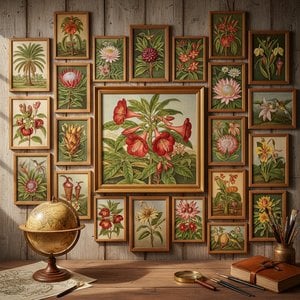
Marianne North's Masterpieces: 25 Botanical Paintings That Bloom With Adventure | ArtsDot
Journey through the vibrant world of Marianne North’s botanical paintings! Explore 25 iconic artworks from this Victorian artist, celebrating exotic flora & travel. Find museum-quality reproductions and curated decor ideas at ArtsDot.com.