
- Pradžia

- Spausdinimas ant drobės
- jacques daret
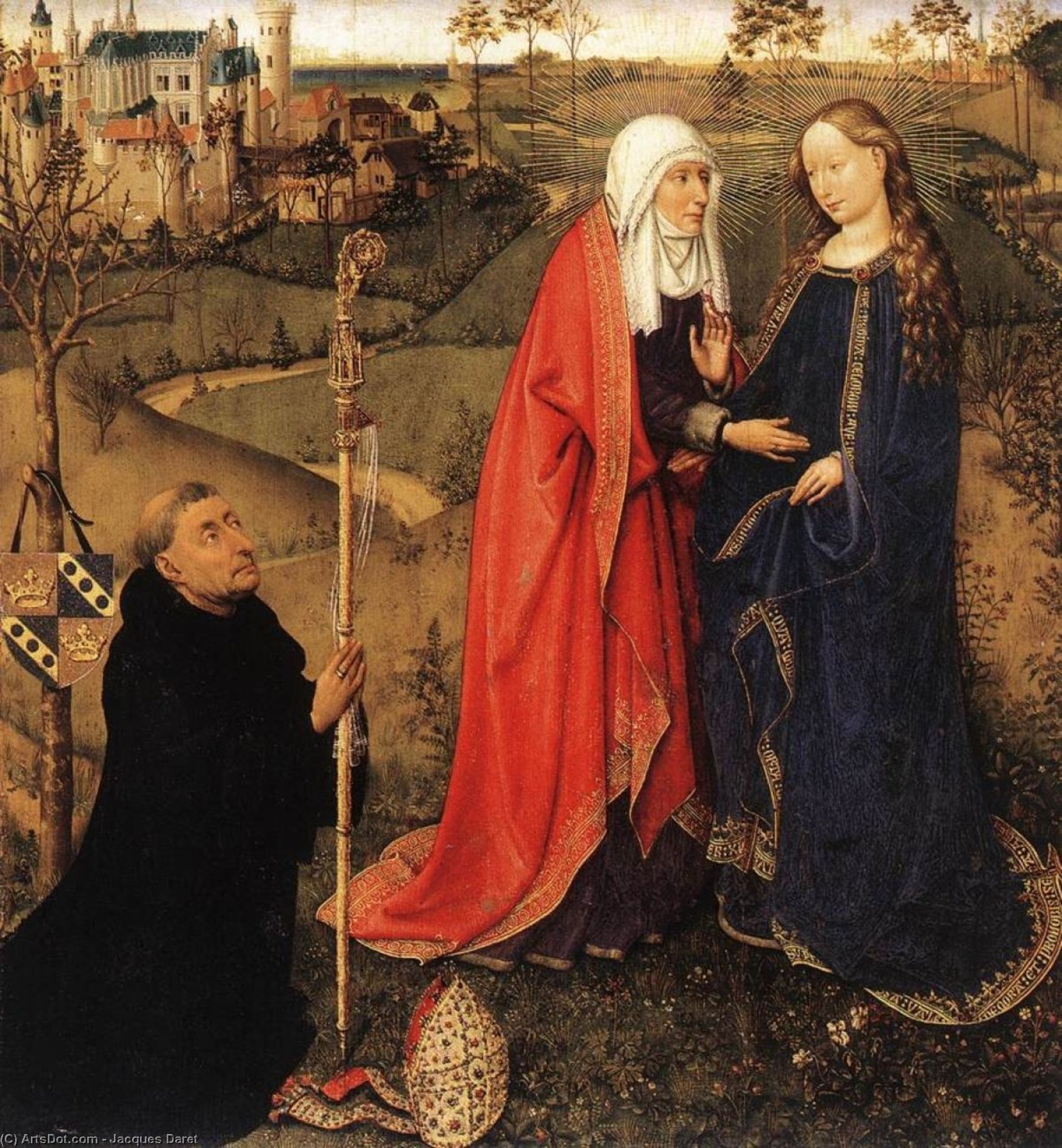
- Visitation
 Užsisakyti kopiją Pirkti skaitmeninį paveikslą
 Pasidalinti
 Dalintis
 Išsamiau
 Pridėti į mėgstamiausius

 Atsisiųsti
 Panašūs eksponatai
 Rentgeno nuotrauka
 Automatinė diorama
Visitation
 Oil On Panel
- Early Netherlandish
 1434
1434 57.0 x 52.0 cm
 Staatliche Museen zu Berlin
 Skaityti daugiau
Giclée / Meno spausdinimas
Muziejų lygio „giclée“ arba drobos spausdinimas: greita gamyba ir lankstios apdailos parinktys.




P118B $10

P118H $10

P118W $10

P438Z $10

P508JH $12

P508YH $12

P805H $10

P805Z $10

P919BZ $10

P919G $10

P919XJ $10

P959ZH $10

P968JZ $12

W106C $8

W218G $10

W218JH $8

W218Y $10

W307PJ $10

W316G $10

W316PJ $8

W316Y $10

W398PJ $8

W4111J $10

W500HY $15

W500JH $15

W692G $12

W849H $8

W940BG $15

W953PJ $8




Pasirinkite iš mūsų nustatytų dydžių, atitinkančių originalaus meno kūrinio proporcijas.

Galite nurodyti savo matmenis, kad vaizdas atitiktų konkretų rėmą ar erdvę. Jei pasirinktas dydis nesutaps su originalaus paveikslėlio proporcijomis, mes arba apkirpsime kūrinį, arba išplėsime vaizdą naudojant veideliu atspindėtą arba vientisą šoną. Skaitmeninis maketas bus išsiųstas jums patvirtinti prieš pradedant gamybą.
Atkreipkite dėmesį, kad ekrane matomas vaizdinys neatspindi tikrojo apkirpimo ar išplėtimo. Tik maketas tiksliai parodytų galutinę kompoziciją.
Nors galima rinktis ir individualius dydžius, rekomenduojame pasirinkti vieną iš išanksti nustatytų matmenų, kad būtų išlaikytos originalios proporcijos.
Pristatymas visame pasaulyje () per 2 weeks, o ne įprastas 4/5 savaičių laikotarpis. (23 liepa)

Nemokamas greitasis pristatymas visame pasaulyje

Aukštos kokybės lininis drobė

Pilnas siuntimo draudimas

Muitinės mokesčių grąžinimo garantija

Tikro spalvų atitikimo garantija

60 dienų grąžinimo politika (tik esant gamyklinėms defektams)

100% pinigų grąžinimo garantija

Nuolaida už kelias reprodukcijas
 Stiklo variantas prieinamas tik pasirinkus dydį iki 110 cm

Visitation
Giclée / Meno spausdinimas
Reprodukcijos matmenys
-


Galutinė kaina
-
Kolekcinio eksponato aprašymas
A Moment of Grace: Jacques Daret’s “Visitation”
Jacques Daret's "Visitation," painted in 1434-35 during the vibrant artistic milieu of Arras, Belgium, is more than just a religious depiction; it’s a masterclass in Early Netherlandish realism and a poignant meditation on faith, family, and divine grace. This panel painting, now housed within the Gemäldegalerie in Berlin, offers a remarkably intimate glimpse into a pivotal moment from Luke's Gospel – the visit of Mary to Elizabeth, foretelling the birth of John the Baptist. Daret’s skill lies not merely in his technical proficiency but in his ability to imbue this biblical narrative with an almost palpable sense of serenity and profound spiritual significance.
The composition is meticulously balanced, reflecting the influence of Robert Campin, Daret's acknowledged master. The central figures – Mary and Elizabeth – are positioned within a carefully constructed architectural setting, a modest room suggesting domestic tranquility. Daret’s use of linear perspective, though subtly applied, creates a sense of depth and spatial awareness uncommon for the period. Geometric shapes—rectangles defining the walls, ovals forming the faces—are rendered with an astonishing level of detail, showcasing the artist's command of form and his dedication to precise observation. The color palette is restrained yet luminous; rich reds and blues dominate Mary’s garments, contrasting beautifully with the muted tones of Elizabeth’s robes, drawing the viewer’s eye to the central interaction.
The Language of Symbolism
Beyond its formal qualities, “Visitation” is laden with symbolic meaning. The halo above Mary's head immediately signifies her divine status and role as the mother of God. Elizabeth’s hand resting gently on Mary’s arm symbolizes mutual support and blessing – a visual representation of the spiritual connection between these two women. The staff held by the monk, subtly included in the background, serves as a reminder of his vocation and the importance of religious devotion within the community. Even the landscape—a rolling, verdant vista—holds symbolic weight, representing the earthly realm from which this miraculous event unfolds.
The inclusion of the angel, hovering discreetly above, reinforces the divine intervention at play. Its wings are rendered with a delicate grace, and its expression conveys both reverence and anticipation. The gesture of blessing – a raised hand – further emphasizes the sacred nature of the encounter. Daret’s careful attention to these details elevates the painting beyond a simple illustration of a biblical story; it becomes a visual poem exploring themes of faith, lineage, and divine providence.
Technique and Materials
Daret's mastery is evident in his meticulous application of oil paint on panel. The technique employed—extensive layering and glazing—creates an astonishingly smooth surface, rich with subtle color variations and luminous highlights. The artist skillfully manipulated light to sculpt the figures’ forms, emphasizing their volume and creating a sense of three-dimensionality. Close examination reveals the painstaking process involved in building up these layers of paint, each brushstroke contributing to the overall effect of depth and realism.
The use of gold leaf—particularly in the halo and the angel's garments—adds a touch of opulence and further enhances the painting’s spiritual aura. The panel itself, likely made of poplar wood, provides a stable foundation for this intricate work. Daret’s commitment to quality materials and his refined technique are testaments to his artistic skill and dedication.
A Window into the 15th Century
"Visitation" offers a valuable window into the artistic and cultural landscape of 15th-century Flanders. It exemplifies the growing influence of Early Netherlandish painting, characterized by its realism, attention to detail, and profound psychological insight. Daret’s work stands alongside that of other masters of the period—Robert Campin, Rogier van der Weyden, and Jan van Eyck—contributing to a rich artistic tradition that continues to inspire artists today. Reproductions of this captivating artwork capture not only its visual beauty but also the profound spiritual message at its heart.
panašūs kūriniai


Susiję straipsniai

Early Netherlandish Masters: 10 Paintings That Revolutionized Art & Decor
Journey into the world of Early Netherlandish painting! Explore 10 masterpieces by Jan van Eyck, Rogier van der Weyden & more. Discover stunning detail, symbolism & Renaissance art for your home decor. Find museum-quality reproductions on ArtsDot.com

Claude Monet šedevrai: 25 paveikslai, įkvepiantys grožiu ir harmonija
Atraskite 25 įspūdingiausius Claude Monet šedevrus! Sužinokite apie impresionizmą, vandens lelijų paveikslus ir spalvų magiją. Meno reprodukcijos aukščiausia kokybe – ArtsDot.com. Išsamesnės informacijos rasite internetu.

Illuminating Realism: A Comprehensive Exploration of the Early Netherlandish Renaissance Movement
Explore the captivating world of Early Netherlandish painting! Discover Jan van Eyck & other Flemish masters, their revolutionary techniques, hidden symbolism, and lasting legacy. A comprehensive guide for art enthusiasts.

Early Netherlandish Masters: 10 Paintings That Revolutionized Art & Decor
Journey into the Early Netherlandish Renaissance! Explore 10 iconic paintings by Jan van Eyck, Rogier van der Weyden & more. Discover stunning detail, symbolism, and oil painting techniques. Find museum-quality art reproductions for your home at ArtsDot.com.

Gray Masterpieces: 10 Iconic Paintings & Timeless Home Decor Ideas
Explore 10 iconic gray paintings by masters like Rembrandt, Hopper & Whistler. Discover the stories behind these atmospheric artworks and find museum-quality art reproductions for your home decor at . Explore the full collection online.

