


 Peržiūrėti realaus dydžio版
 Siųsti
 Dalintis
 Išsamiau
 Vadovas

 Atsisiųsti
 Panašūs eksponatai
 Rentgeno spindulių nuotrauka
 Diaporama
 Statistika
Italian Landscape
 Oil On Canvas
- WallArt
- Romantic Landscape Painting
 1795
1795- Early Modern
 65.0 x 96.0 cm
 Hermitage muziejus
 Rodyti daugiau
Giclée / Meno spausdinimas
Muziejų lygio „giclée“ arba drobos spausdinimas: greita gamyba ir lankstios apdailos parinktys. ( Pirkti rankomis tapytą reprodukciją Perejti prie skaitmeninių vaizdų)




P118B €10

P118H €10

P118W €10

P438Z €10

P508JH €12

P508YH €12

P805H €10

P805Z €10

P919BZ €10

P919G €10

P919XJ €10

P959ZH €10

P968JZ €12

W106C €8

W218G €10

W218JH €8

W218Y €10

W307PJ €10

W316G €10

W316PJ €8

W316Y €10

W398PJ €8

W4111J €10

W500HY €15

W500JH €15

W692G €12

W849H €8

W940BG €15

W953PJ €8




Pasirinkite iš mūsų nustatytų dydžių, atitinkančių originalaus meno kūrinio proporcijas.

Type the width and the height you need, to fit your frame or your wall. A print can only be cut, never made bigger than the picture, so a size with a different shape loses a part of the image. We send you a digital mockup to approve before we print anything. The picture shown on this page does not show the real cut — only the mockup does.
Pristatymas visame pasaulyje () per 2 weeks, o ne įprastas 4/5 savaičių laikotarpis. (14 spalis)

Nemokamas greitasis pristatymas visame pasaulyje

Aukštos kokybės lininis drobė

Pilnas siuntimo draudimas

Muitinės mokesčių grąžinimo garantija

Tikro spalvų atitikimo garantija

100 dienų grąžinimo politika (tik esant įtaigoms)

100% pinigų grąžinimo garantija

Nuolaida dideliems užsakymams
 Stiklo variantas prieinamas tik pasirinkus dydį iki 110 cm

Italian Landscape
Giclée / Meno spausdinimas
Reprodukcijos dydis
-


Visų pasirinktų variantų kaina
€ 54
A Symphony of Light and Tranquility
In the vast tapestry of the Romantic movement, few works capture the ethereal essence of the Italian countryside as profoundly as Jacob Philippe Hackert’s Italian Landscape. Created in 1795, this oil on canvas masterpiece serves as a window into an idealized Arcadia, where the grandeur of nature and the quietude of pastoral life exist in perfect, undisturbed harmony. As one gazes upon the canvas, there is an immediate sense of being transported to a world far removed from the industrializing tensions of the late 18th century. The painting does not merely represent a location; it evokes a feeling of timelessness, inviting the viewer to linger within its sun-drenched valleys and misty mountain peaks.
The composition is a masterclass in balanced tension, guiding the eye through a meticulously layered journey. In the foreground, a tranquil river meanders with a gentle grace, its surface acting as a mirror for the clear blue sky and the lush greenery that lines its banks. The presence of grazing cows adds a touch of pastoral intimacy, grounding the epic scale of the landscape in the humble, rhythmic reality of rural life. As the gaze moves toward the middle ground, rolling hills draped in verdant vegetation lead the viewer upward toward a majestic mountain range. These peaks, partially veiled by an atmospheric haze, command the horizon with an imposing power that speaks to the Romantic fascination with the sublime—the awe-inspiring and sometimes overwhelming beauty of the natural world.
The Mastery of Atmosphere and Technique
Hackert’s technical prowess is most evident in his sophisticated use of sfumato, a technique he refined under the influence of his mentor, Claude Joseph Vernet. By subtly blurring the boundaries between distant mountains and the sky, Hackert creates a palpable sense of depth and atmospheric perspective. This soft, smoky transition prevents the landscape from feeling static; instead, it breathes with moisture and light. The artist’s ability to marry minute, realistic details—such as the individual textures of foliage and the rugged contours of rocks—with this expansive, misty atmosphere is what distinguishes this work as a pinnacle of his era.
The color palette is a deliberate study in serenity, dominated by harmonious shades of emerald, forest green, and deep azure. These cool tones are punctuated by the warm, golden light that seems to filter through the clouds, illuminating the classical architecture nestled among the trees. This interplay of light and shadow does more than define form; it establishes a mood of profound peace. For the discerning collector or interior designer, this painting offers a sophisticated focal point that brings a sense of calm and classical elegance to any space, acting as an anchor of tranquility in a modern environment.
Historical Resonance and Lasting Legacy
To understand the Italian Landscape is to understand the heart of a traveling artist. Hackert, born in Germany but deeply enamored with the Mediterranean spirit, spent much of his career capturing the light of Italy. His work reflects the transition from Neoclassical precision toward the more expressive, emotional observations of the Romantic era. The inclusion of classical architectural elements—columns and structures that hint at a storied past—serves as a poignant reminder of humanity's historical connection to the land. These man-made wonders do not intrude upon the scenery but rather blend seamlessly into the natural topography, suggesting a world where civilization and nature exist in a state of grace.
Owning a reproduction of such a significant work allows one to possess a fragment of art history. It is an invitation to daily contemplation, a piece that rewards repeated viewing with new discoveries of light, shadow, and texture. Whether placed in a grand library or a contemporary living suite, Hackert’s vision of the Italian landscape remains a timeless testament to the enduring power of beauty and the quiet majesty of the earth.
问答 (or more naturally for a website heading): Klausimai ir atsakymai
Kiek šviesos, kaip atrodo, atspindi „Italian Landscape“ spalvos?
„Italian Landscape“ spalvos pasižymi Gentle Luminance šviesos intensyvumu.
Kas sukūrė „Italian Landscape“ ir kada?
Jakobas Filipas Hakertas sukūrė „Italian Landscape“ 1795 m.
Kada buvo sukurta „Italian Landscape“ ir prie kokio stiliaus priskiriama?
„Italian Landscape“ sukurtas 1795 m., priklausantį Romantic Landscape Painting stiliui.
Susiję kūriniai


Autoriaus biografija
Pradiniai metai ir meninės pamatinės Jacob Philipp Hackert į meninę erdvę įžengė 1737 metais, gimęs Prenzlau, Brandenburg – regione, kuris šiandien yra Vokietijos dalis. Jo vaikystė buvo surengta menu; jo tėvas, Philipp Hackert, dirbo kaip portretistas ir gyvūnų paveikslų meistras, taip klodamas pirmąsias pam bases jaunojo Jacobi kūrybiniam keliui. Šis šeimyninis įtampas išsiplėtavo ir į jo dėdę, po kurio vadovavimu jis toliau tobulino savo įgūdžius. Nuo 1758 metų prasidėjo oficialus mokymasis prestižinėje Berlyno Prusijos meno akademijoje, kur jis skrupmeniškai lavino techninius pagrindus, vėliau apibrėžiančius jo stilių. Tačiau Hackerto ankstyvoji karjera nebuvo prisioninta vien sienų. Jo kelionės vedė per Švedijos Pomeraniją ir galiausiai į Stokholmą, kur svarbus užsakymas baronui Adolfui Friedrichui von Olthof – dekoratyviniai freskos barono posiadmenėse – išplėtė jo menines horizontus ir atvėrę jo akis į įvairias estetinę jautrumą. Šie formavimo metai buvo lemiami şekiant Hackerto žvilgsnį ir ruošiant jį didesnėms savo karjeros scenoms.
Italijos pažadinimas: Parisas, Roma ir Neapolas
Laimingo ir lemtingo skyriaus pradžia įvyko 1765–1atum 1768 metais, kai Hackert kartu su kolega šveiciu artistu Balthasar Anton Dunker persikėlė į Parisą. Šis laikotarpis tapo transformatyviu, pasmergdamas jį gyvybingai meninei aplinkai. Jis pajuto gilią įtaką Claude’ui Josephui Vernetui, garsiajam peizažų ir jūros vaizdų paveikslui, į savo augantį stilių įsisavinant dramatiškas kompozicijas ir atmosferinius efektus. Simultaniškai studijos vokiečių graveikos meistre Johann Georg Veille padėjo tobulinti jo tikslumą ir dėmesį detalėms. 1768 metais Hackert pradėjo kelionę, kuri negrįžtamai pakeitė jo meninę trajektoriją – su broliu Georgu jis persikėlė į Italiją, pagrindiniu atveju įsikuręs Romoje ir Neapole. Šis žingsnis pažymėjo neįtikėtinai produktyvaus laikot向き pradą, skatinamą daugybe užsakymų su Italijos kaimo vaizdais, ypač nuo Sir William Hamilton. Jis nukelbėjo per visą Italiją, kruopščiai dokumentuodamas jos grožį ir pelnęs pripažinimą kaip peizažų meistras. Šviesa, spalvos, pati Italijos pusiasios esmė jį užburiło, tapdama jo kūrybos savybe.Rėmėjai, pripažinimas ir meninis žydėjimas
Hackerto meninė karjera pasiekė naujas aukštynes dėl talento ir strateginio rėmėjų derinio. Jo gebėjimas įamžinti aukštąją Italijos grožį rezonavo su svarbiais asmenimis visoje Europoje. Didžiulį įtaką padavė užsakymas iš Rusijos imperatorienės Katalinos Didelės – ciklas paveikslų, vaizduojančių lemiamą Chesmos mūšį, taip sutvirtinant jo reputaciją tarptautiniu mastu. Jo padėtį dar stiprino sėkmingas ryšys su popiežiu Pius VI, derinančiu svarbius meninius projektus, kurie parodė jo meistriškumą ir universalumą. 1786 metais Hackert pasiekė savo karjeros viršūnę, kai buvo paskirtas Neapolo dviejų Sicilijų Ferdinando I dvaro paveikslu. Ši prestižinė funkcija išsidarbino ne tik tapimu paveikslavusi: jam buvo patikėta patarėjti kuriant paveikslų restauravimo laboratoriją Museo di Capodimonte ir prižiūrėti vertingų Farnese kolekcijų perkėlimą iš Romas į Neapolą, taip demonstruojant jo gilią supratimą apie meno istoriją ir konservaciją. Jis sukūrė žinomus paveikslus, vaizduojančius Casertą ir Casertos karališkąjį rūną, taip pat seriją, iliustruojančią Bourbonų uostus. Įdomu, kad tuo metu Hackert taip pat tarnavo kaip slaptas informatorius Rusijai, palaikydamas ryšį su Andrey Razumovsky – tai liudija apie sudėtingą politinę aplinką, kurioje jis veikė. Ypač brangus ryšys užsimezgė tarp Hackerto ir Johann Wolfgang von Goethe 1apas aplankius Neapolo 1786 metais, suformuojant draugystę, kuri dar labiau pakėlė jo intelektualinį prestižą.Stilius, palikimas ir istorinė reikšmė
Jacob Philipp Hackert meninis stilius atstoko įtraukiantį klasikinio peizažo ir pradinės Romantizmo jautrumo sintezę. Stipriai įsikėlus Claude’ui Lorrainui, jo kompozicijos pasižymi kruopščiai subalansuotomis aranžuotėmis, kurios sujungia pastebėtą realybę su idealizuota estetinė vizija. Tačiau Hackert išsiskirė nepalingstančiu įsipareigojimu botaniniam tikslumui ir pageidavimu pateikti atpažįstamą vietų vaizdinimą. Jo paveikslai pasižymi aštriu gamtos detalių vaizdavimu ir realistišku Italijos kraštovo portretu, dažnai nugrįžtamu į šiltą, auksinę šviesą. Jis teisėtai laikomas vienu didžiausių *vedutismo* žanro interpretatorių – paveikslų, kurie kruopščiai vaizduoja miesto vaizdus ir peizažus su topografiniu tikslumu. Hackerto istorinė reikšmė kertasi ne tik jo meniniuose indėliuose; jis tarnavo kaip gyvybiškai svarbus kultūrinis ambasadorius tarp Vokietijos ir Italijos vėliavųjųje XVIII amatoria, jungiant meno tradicijas ir skatintant kultūrinį mainą. Jis mirė 1807 m. balandžio 28 d. San Pietro di Careggi netoli Florencijos, palikdamas didelį kūrybinį palikimą, kuris ir toliau kelia susižvalgymą bei pagarbą dėl savo grožio, techninio meistriškumo ir neblėstančios istorinės svarbos. Jo peizažai nėra tik kraštovo atvaizdai; tai langai į pasaulį, prisigaudintą tiek klasikinio elegancijos, tiek Romantizmo emocijų.
Jakobas Filipas Hakertas
1737 - 1807 , Vokietija
Trumpa informacija apie kūrėją
- Artistic Movement Or Style: Klasicizmas, Romantizmas
- Artists Or Movements Influenced By This Artist: Vedutizmas
- Artists Who Influenced This Artist:
- Claude Joseph Vernet
- Johann Georg Wille
- Claude Lorrain
- Date Of Birth: 1737 m. rugsėjo 15 d.
- Date Of Death: 1807 m. balandžio 28 d.
- Full Name: Jacob Philipp Hackert
- Nationality: Vokietis
- Notable Artworks:
- Peizažas su upe
- Kazerteros vaizdas
- Ruduo
- Česmos ciklas
- Place Of Birth: Prenzlau, Vokietija
Susiję straipsniai

Evocations of Place: A Historical Journey Through Landscape Art
Explore the rich history of landscape art with ArtsDot. Discover renowned artists, movements like Impressionism & Romanticism, and expert guidance for collecting timeless pieces. Find your perfect serene escape today!

Baroko Šedevrai: 10 Menų Simbolių, Apibūdinusių Epoką | ArtsDot
Atraskite 10 baroko šedevrų, kurie apibrėžė epoką! Karolis Rubenzas, Berninis ir kiti meistrai – jų kūriniai, istorijos bei spalvos. Aukščiausios kokybės dailės reprodukcijos ir interjero įkvėpimas ArtsDot.com. Išnagrinėkite visą kolekciją internete!

10 Romantinių Peizažų Simbolių: Tapybos Majestatės Viršūnės
Atraskite 10 legendinių romantinio peizažo kūrinių! Pasinerkite į Claude Lorrain, Caspar David Friedrich ir J.M.W. Turner genijaus pasaulį. Išmokite apie tapybos meistriškumą bei gamtos grožį. Aukščiausios kokybės meno reprodukcijos – ArtsDot.com. Tyrinėkite kolekciją!
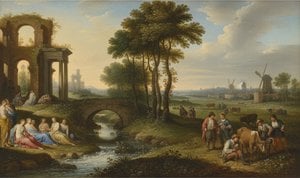
Cornelis van Poelenburch: Bridging Mannerism & the Dutch Baroque Landscape
Discover Cornelis van Poelenburch, a pivotal Dutch Baroque landscape painter bridging Mannerism & Italianate styles. Explore his life, key works, and lasting influence on 17th-century art with ArtsDot.

Džono Konsteblio Šedevrai: 25 Išskirtiniai Darbai Jūsų Interjerui | ArtsDot
Atraskite 25 įspūdingiausius Džono Konsteblio paveikslus! Romantizmo meistro gamtos vaizdai, Dedham Vale peizažai ir meno istorijos šedevrai. Meno reprodukcijos jūsų interjerui – ArtsDot.com