

- 130.0 x 224.0 cm


Vaizdas atitinka jūsų pasirinkimus: , .
Autoriaus biografija
Jack Whitten (1939-2018) was a groundbreaking American abstract painter & sculptor known for his innovative techniques, 'Black Monolith' series, and exploration of African American culture, identity, and the Civil Rights Movement. A pioneer in abstra
 Skaityti daugiau
Rankų darbo aliejinės reprodukcijos
Rankiniu būdu tapytas aliejus ant droblio jūsų pageidaujamame dydį ir rėmuose – tai mūsų menininkų pagal užsakymą sukurtas darbas. ( Perjungti į spausdinamus版作品 Perejti prie skaitmeninių vaizdų)
Šis kūrinys yra saugomas autorinės teisės
Šiame puslapyje rodomas meno kūrinys yra saugomas autorių teisių įstatymais, todėl neturime teisės legaliai kurti ar parduoti jo identiškos reprodukcijos. Ši apsauga užtikrinama remiantis tokiais tarptautiniais susitarimais kaip Bernės konvencija ir pagal nacionalines įstatymų nuostatas, įskaitant tas, kurias nurodo JAV autoriškos teisės įstatymas – 17-asis skyrius.
Kaip pagarbią ir teisėtą alternatyvą, mes siūlome pagal užsakymą rankomis dažytus paveikslus, įkvėptus originalo. Mūsų įgudę ir profesionalūs menininkai kruopščiai tiria originalo stilių, nuotaiką ir meninę esmę, kad sukurtų naują, unikalią kūrinį, kuris sukelia tą paties jausmą – išlikdamas tuo tarciau originaliu, savarankišku kūrybiniu darbu.
Šis metodas visiškai atitinka autorių teises, nes jame nėra saugomo kūrinio kopijavimo ar dubliavimo. Tai yra kūrybinė reinterpretacija – naujas paveikslas, kurį įkvėpė originalas, tačiau kuris nėra jo identiškas.
Daugiau informacijos apie šį paveikslą
 Peržiūrėti realaus dydžio版
 Pasidalinti
 Dalintis
 Išsamiau
 Vadovas

 Atsisiųsti
 Panašūs eksponatai
 Rentgeno spindulių nuotrauka
 Automatinė diorama
 问答
问答 Statistika
Užsisakykite savo paveislinį keturiuose paprastuose žingsniuose
Neskubėkite. Galite pakeisti bet kurį atsakymą; kaina jūsų užsakymo kortelėje keičiasi po kiekvieno pasirinkimo.
1 Pirmas iš keturių žymių
Kokio dydžio norėtumėte?
Šie dydžiai išlaiko originalaus paveikslėlio proporcijas. Piešinyje matomas jūsų pasirinkimas ant sienos, virš dvimetrinio sofos.
Arba nurodykite savo matmenis
Pasirinkite iš mūsų nustatytų dydžių, atitinkančių originalaus meno kūrinio proporcijas.

Įveskite jums reikiamą plotį ir aukštį, kad paveikslas atitiktų jūsų rėmą ar sieną. Kadangi šis darbas yra rankinio darbo, siekiant išgauti kitokios formos dydį, paveikslas gali būti šiek tiek didesnis (nuo kraštų bus palikta daugiau erdvės) arba mažesnis – pasirinkite jums patogiausią variantą. Prieš pradedant tapyti, atsiųsime jums skaitmeninį maketą patvirtinimui. Šioje puslapio nuotraukoje matomas vaizdas nėra galutinis rezultatas – jį parodys tik sukurtas maketas.
2 Antras iš keturių žingsnių
Kaip turėtų būti paruoštas: surolluotas, įtemptas ar įdėtas į rėmą?
Žemiau pateiktos kainos galioja pasirinktam pirmame žingsnyje dydžiui.
Pasirinkite ištempto drobės kraštus
Pasirinkite rėmelį

Baltas apasutojimas €1

Išblėstantis šonas €1

Išplėstinis €1

P118B €10

P118H €10

P118W €10

P438Z €10

P508JH €12

P508YH €12

P805H €10

P805Z €10

P919BZ €10

P919G €10

P919XJ €10

P959ZH €10

P968JZ €12

W106C €8

W218G €10

W218JH €8

W218Y €10

W307PJ €10

W316G €10

W316PJ €8

W316Y €10

W398PJ €8

W4111J €10

W500HY €15

W500JH €15

W692G €12

W849H €8

W940BG €15

W953PJ €8

H24-GOLD €30

H24-SILVER €30

H36-GOLD €45

H36-SILVER €45
Įrėmintas
Rėmo apvadas: . Bendras dydis su rėmu: .
3 Trečias iš keturių žingsnių
Ar norėtumėte paveisale kažką pakeisti?
Dauguma žmonių atsako ne. Kadangi kiekvienas paveikslas yra sukuriamas rankomis, mūsų suregistis taip pat gali jį pritaikyti jums.
Gavus užsakymą, ArtsDot.com komanda susisieks su klientu el. paštu dėl nurodymų ir pateiks preliminarią maketą.
4 Ketvirtas iš keturių žymių
Keletas apdailos variantų
Visi jie yra neprivalomi. Jau pasirinkti atsakymai nieko papildomo nekainuoja.
Kas tai piešia?
Pristatymas visame pasaulyje () per 3–4 savaites, o ne įprastai – per 5 savaites. (4 lapkritis). Kokybė lieka nepakeičiama.
Pavadinimo plokštelė, kaip muziejuje?
Išgraviruotos bronzinės plokštelės detalės
This elegant plaque features the artist's name and the title of the artwork, finely engraved for a timeless presentation.
It is made from bronze with a refined, elegant finish. The text is precisely laser-engraved for a sharp and permanent result. Measuring 9x2 cm, the plaque is compact yet easy to read. It's built to be durable and scratch-resistant, offering a professional, museum-quality look. Mounting is simple thanks to the included adhesive backing.
Skaidrios akrilo plokštelės informacija
The plaque includes essential engraved details such as the artist's name, the title of the artwork, the date it was created, the type of media used-like oil on canvas or watercolor-a brief description of the piece, and a QR code that links to the complete artwork information.
It is crafted from clear acrylic, offering a sleek, modern appearance. The text is UV-engraved in black to ensure strong visual contrast. With a size of 10x15 cm, it ensures optimal readability. It comes equipped with two metal hooks for secure wall mounting. The plaque is designed to be weather-resistant, making it suitable for various environments, and it includes interactive features that work seamlessly with smartphone scanning.
Juodos akrilo plokštelės informacija
This elegant plaque includes engraved information such as the artist's name, the title of the artwork, the date it was created, the type of media used (like oil on canvas or watercolor), a short description of the artwork, and a QR code for quick access to more information.
The plaque itself is made from refined black acrylic with a premium finish. The text is laser-engraved in white for high contrast and readability. Its size is 10x15 cm, designed to be easy to read. It comes with two metal hooks for professional mounting. The design is sleek and fits any interior style. It is also weather-resistant and durable, with built-in digital integration for mobile compatibility.
Apsauginis lakas?
Kada jums reikia?
✓ Patikrinti ir užsakyti
Jūsų paveikslas, tiksliai taip, kaip užsakėte

Untitled (D2X68C)
Reprodukcijos technika
Reprodukcijos matmenys
-

Aukščiausios klasės meistras
Daugiau detalių, meistriškumo ir papildomo gamybos laiko
-

Reprodukcijos rėmėjimo parinktys
-
-
Dėl meno kūrinių ar reprodukcijų, kurių bet kuri pusė yra didesnė nei 105 cm (apie 41 inch), rėmas bus siunčiamas kaip išskaidytas surinkimo rinkinys. Šis metodas užtikrina saugų pristatymą ir apsaugo nuo transportavimo metu galimos žalos.
Reikalingas profesionalus surinkimas – tai nėra „pasidaryk pats“ (DIY) produktas.
Rinkinys turi būti surinktas, o drobė išplėsta naudojant patyrį profesionalų rėmininką, medžio klijus (nėra įtraukti į rinkinį), drobės plėšimo kleslę bei presas, kad rėmo rėžiai išliktų tiesūs, kol klijai išdžiūvus. Netinkamas surinkimas arba netolydus drobės įtampa gali negrįžtamai sugadinti meno kūrinį, todėl šie atvejai nėra užtraukiami mūsų garantijos.
 Dėl meno kūrinių ar reprodukcijų, kurių bet kuri pusė yra didesnė nei 105 cm (apie 41 inch), rėmas bus siunčiamas kaip išskaidytas surinkimo rinkinys. Šis metodas užtikrina saugų pristatymą ir apsaugo nuo transportavimo metu galimos žalos.
Į komplektą įeina visi vientisos medienos elementai, tiksliai išpjauti pagal dydį.
Surmontinama naudojant pridėtus varžtus bei papildomai reikalingą medžio kliją kampų jungtims, kuris nėra pridėtas ir turi būti parinktas rėmininkui.
Reikalingi profesionalūs įrankiai, kurie nėra įtraukti į rinkinį: drobės kėlimo plytelės (stiprintuvai) ir klemiai, laikantys rėmo strygius tiesiu kampu, kol džiūsta lipas.
Svarbu:
Kampų jungtims reikalingi medžio klijai, barams reikia laikyti naudojant presas, kol klijai visiškai išdžiūvės, o surinktam rėmui įtempiamai privilgti būtinos drobės įtempimo plytযুক্ত. Šios priemonės į rinkinį neįtrauktos. Prieš užsakydami šio dydžio rinkinį, rekomenduojame pasimalkoti patyrusiu rėmų meistru.

Pavadinimo lentelė
-
-

Apsauginis lakas
Blizgus lakas (ryškina spalvas, saugo nuo šviesos ir drėgmės)
-

Personalizuoti kūrinį
Ką galima pakeisti (pavyzdžiui): pakeisti veidą klientui skirta nuotrauka; pridėti augintinį (pvz., katę pakeisti šuniu); įtraukti paslėptą žinutę fone; pakeisti fono kraštovaizdį ar elementus.
-

Skubiai
Pristatymas visame pasaulyje () per 3–4 savaites, o ne įprastai – per 5 savaites. (4 lapkritis). Kokybė lieka nepakeičiama.
-
Skubus pristatymas
Pristatymas visame pasaulyje () per 5 weeks. (11 lapkritis).
Įskaičiuota
Bendroji kaina
€ 234
Stiklo variantas prieinamas tik pasirinkus dydį iki 110 cm
Pridedama prie kiekvieno užsakymo
- Nemokamas greitasis pristatymas visame pasaulyje
- Aukštos kokybės lininis drobė
- Pilnas siuntimo draudimas
- Muitinės mokesčių grąžinimo garantija
- Tikro spalvų atitikimo garantija
- 100 dienų grąžinimo politika (tik esant įtaigoms)
- 100% pinigų grąžinimo garantija
- Nuolaida dideliems užsakymams


panašūs kūriniai


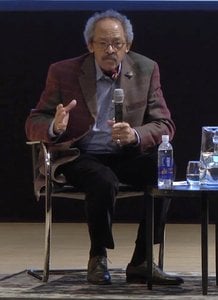
Jack Whitten
1939 -
Autoriaus biografija
Jack Whitten: A Revolutionary Voice in Abstract Art
Jack Whitten (1939-2018) stands as a towering figure in American abstract art, an artist whose relentless experimentation and profound engagement with history—particularly the legacy of slavery and the Civil Rights Movement—transformed conventional notions of painting and sculpture. More than simply creating visually arresting works, Whitten invented techniques that fundamentally altered the possibilities of artistic expression, earning him recognition as a true innovator and a vital voice in the latter half of the 20th century. His career spanned six decades, marked by constant evolution, a refusal to be categorized, and an unwavering commitment to exploring the complex relationship between art, culture, and social justice.
Born in Bessemer, Alabama—a city steeped in the realities of Jim Crow segregation—Whitten’s early life profoundly shaped his artistic vision. His father's death when he was eight instilled a sense of resilience and independence, while his mother’s private kindergarten provided an initial exposure to the creative process. Crucially, his inheritance from his uncle, a sign painter, furnished him with tools that would become central to his groundbreaking techniques. This early connection to visual communication—the act of creating signs, slogans, and images for public consumption—laid the groundwork for his later explorations of representation and its limitations.
Whitten’s artistic journey began at Tuskegee Institute, where he initially pursued a pre-medical degree, influenced by his brother's ambition to become an army doctor. However, witnessing the injustices of segregation firsthand ignited within him a deep commitment to social change. He joined the ROTC and used earnings from painting store tags to support himself through college, while simultaneously participating in Civil Rights demonstrations, including a pivotal march in Baton Rouge where he helped organize protest signs. This experience solidified his belief in nonviolent resistance and profoundly influenced the themes that would permeate much of his work.
Moving to New York City in 1960, Whitten enrolled at Cooper Union, immersing himself in the vibrant art scene of the burgeoning metropolis. There, he encountered a diverse range of influences—from the abstract expressionists like Willem de Kooning and Jackson Pollock to Black abstractionists such as Romare Bearden and Jacob Lawrence. These encounters sparked a period of intense experimentation, leading him to develop his signature techniques: layering acrylic paint with nylon mesh fabric to create soft, textured surfaces; utilizing a “developer”—a T-shaped tool—to drag the paint across the canvas in single, decisive strokes; and later, employing electrostatic printing methods to produce works that blurred the boundaries between painting and photography. His early work, particularly the "Heads" series (1964), demonstrated his fascination with exploring the interplay of form and perception, utilizing translucent white pigment against black to create ambiguous, almost ghostly figures.
The Black Monolith Series and a Legacy of Protest
Perhaps Whitten’s most enduring contribution to art history is the “Black Monolith” series (1970-1976), a body of work that stands as both a personal memorial and a powerful statement about the legacy of slavery in America. Inspired by the death of his brother, Whitten created a series of paintings—often monumental in scale—dedicated to those he held dear: friends, family members, and prominent figures who had shaped his life and worldview. These works are characterized by their dense layering of paint, often incorporating fragments of newspaper clippings, photographs, and other found materials, creating textured surfaces that evoke the weight of history and memory.
The “Black Monolith” series is not simply a collection of portraits; it’s an exploration of trauma, loss, and resilience. Whitten deliberately employed techniques—such as layering paint with a squeegee to create a sense of movement and disruption—to convey the emotional intensity of his subject matter. The use of black as a dominant color further amplified this effect, symbolizing both mourning and the enduring presence of the past. As he himself stated, “My paintings are designed as weapons,” aiming to “penetrate and destroy the Western aesthetic” and ultimately serve as tools for social and political change.
Technique and Innovation: A Perpetual Experiment
What distinguished Jack Whitten from many of his contemporaries was not a fixed style but an unwavering commitment to experimentation. Throughout his career, he constantly pushed the boundaries of painting technique, developing new methods and materials that defied conventional artistic practices. His early work with nylon mesh fabric created a unique textural effect, while his use of the “developer” tool—a simple T-shaped instrument—allowed him to manipulate paint in ways previously unimaginable.
Whitten’s studio became a laboratory, where he rigorously tested the properties of various materials and techniques. He famously experimented with freezing acrylic paint, heating it, smashing it with a hammer, and applying it directly to paper using electrostatic printing methods. This relentless pursuit of innovation resulted in a remarkably diverse body of work—ranging from delicate, feather-like textures to dense, layered compositions filled with fragments of text and imagery. His willingness to embrace chance and spontaneity further contributed to the unique character of his art.
Recognition and Historical Significance
Despite facing significant challenges as a Black artist in a predominantly white art world, Jack Whitten’s work gradually gained recognition throughout the 1970s and 80s. He received numerous accolades, including a solo exhibition at the Whitney Museum of American Art in 1974 and a National Medal of Arts in 2016—a testament to his profound impact on contemporary art. His work is now held by major museums around the world, including the Museum of Modern Art (MoMA) and the Metropolitan Museum of Art.
More than just an artist, Jack Whitten was a cultural commentator who used his art to address issues of race, identity, and social justice. His “Black Monolith” series remains a powerful symbol of remembrance and resilience, while his innovative techniques continue to inspire artists today. Whitten’s legacy lies not only in the beauty of his paintings but also in his unwavering commitment to challenging conventions and using art as a means of engaging with the complexities of American history.