

- 74.0 x 60.0 cm


The picture follows your choices: , .
Kolekcinio objekto aprašas
Admire Hortense Haudebourt-Lescot's 'Self-Portrait' (1825), a classical masterpiece showcasing her skill & introspective style. Explore its rich details, historical context & artistic significance at ArtsDot.
 Skaityti daugiau
Autoriaus biografija
Discover Hortense Haudebourt-Lescot's genre scenes & historical paintings! French artist known for Italian peasant depictions, teaching, & salon exhibitions (1784-1845).
Rankų darbo aliejinės reprodukcijos
Rankiniu būdu tapytas aliejus ant droblio jūsų pageidaujamame dydį ir rėmuose – tai mūsų menininkų pagal užsakymą sukurtas darbas. ( Perjungti į spausdinamus版作品 Perejti prie skaitmeninių vaizdų)
More about this painting
 Peržiūrėti realaus dydžio版
 Pasidalinti
 Dalintis
 Išsamiau
 Vadovas

 Atsisiųsti
 Panašūs eksponatai
 Rentgeno spindulių nuotrauka
 Automatinė diorama
 Q&A
Q&A Statistika
Order your painting in four simple steps
Take your time. You can change any answer; the price in your order card follows each choice.
1 Step one of four
Which size would you like?
These sizes keep the proportions of the original painting. The drawing shows your choice on a wall, above a two-metre sofa.
Or give your own measurements
Pasirinkite iš mūsų nustatytų dydžių, atitinkančių originalaus meno kūrinio proporcijas.

Įveskite jums reikiamą plotį ir aukštį, kad paveikslas atitiktų jūsų rėmą ar sieną. Kadangi šis darbas yra rankinio darbo, siekiant išgauti kitokios formos dydį, paveikslas gali būti šiek tiek didesnis (nuo kraštų bus palikta daugiau erdvės) arba mažesnis – pasirinkite jums patogiausią variantą. Prieš pradedant tapyti, atsiųsime jums skaitmeninį maketą patvirtinimui. Šioje puslapio nuotraukoje matomas vaizdas nėra galutinis rezultatas – jį parodys tik sukurtas maketas.
2 Step two of four
How should it be prepared: rolled, stretched or framed?
The prices below are for the size you chose in step one.
Choose the edges of the stretched canvas
Choose your frame

White €1

Blurside €1

Extended €1

P118B €10

P118H €10

P118W €10

P438Z €10

P508JH €12

P508YH €12

P805H €10

P805Z €10

P919BZ €10

P919G €10

P919XJ €10

P959ZH €10

P968JZ €12

W106C €8

W218G €10

W218JH €8

W218Y €10

W307PJ €10

W316G €10

W316PJ €8

W316Y €10

W398PJ €8

W4111J €10

W500HY €15

W500JH €15

W692G €12

W849H €8

W940BG €15

W953PJ €8

H24-GOLD €30

H24-SILVER €30

H36-GOLD €45

H36-SILVER €45
Įrėmintas
Moulding: . Overall size with the frame: .
3 Step three of four
Would you like anything changed in the painting?
Most people answer no. Because each painting is made by hand, our artist can also adapt it for you.
After order, ArtsDot.com team will email client for instructions and provide a mockup preview
4 Step four of four
A few finishing options
All of them are optional. The answers already selected cost nothing extra.
Who paints it?
Pristatymas visame pasaulyje () per 3–4 savaites, o ne įprastai – per 5 savaites. (1 lapkritis). Kokybė lieka nepakeičiama.
A nameplate, as in a museum?
Išgraviruotos bronzinės plokštelės detalės
This elegant plaque features the artist's name and the title of the artwork, finely engraved for a timeless presentation.
It is made from bronze with a refined, elegant finish. The text is precisely laser-engraved for a sharp and permanent result. Measuring 9x2 cm, the plaque is compact yet easy to read. It's built to be durable and scratch-resistant, offering a professional, museum-quality look. Mounting is simple thanks to the included adhesive backing.
Skaidrios akrilo plokštelės informacija
The plaque includes essential engraved details such as the artist's name, the title of the artwork, the date it was created, the type of media used-like oil on canvas or watercolor-a brief description of the piece, and a QR code that links to the complete artwork information.
It is crafted from clear acrylic, offering a sleek, modern appearance. The text is UV-engraved in black to ensure strong visual contrast. With a size of 10x15 cm, it ensures optimal readability. It comes equipped with two metal hooks for secure wall mounting. The plaque is designed to be weather-resistant, making it suitable for various environments, and it includes interactive features that work seamlessly with smartphone scanning.
Juodos akrilo plokštelės informacija
This elegant plaque includes engraved information such as the artist's name, the title of the artwork, the date it was created, the type of media used (like oil on canvas or watercolor), a short description of the artwork, and a QR code for quick access to more information.
The plaque itself is made from refined black acrylic with a premium finish. The text is laser-engraved in white for high contrast and readability. Its size is 10x15 cm, designed to be easy to read. It comes with two metal hooks for professional mounting. The design is sleek and fits any interior style. It is also weather-resistant and durable, with built-in digital integration for mobile compatibility.
A protective varnish?
When do you need it?
✓ Check and order
Your painting, as you ordered it

Self-Portrait
Reprodukcijos technika
Reprodukcijos matmenys
-

Aukščiausios klasės meistras
Daugiau detalių, meistriškumo ir papildomo gamybos laiko
-

Reprodukcijos rėmėjimo parinktys
-
-
Dėl meno kūrinių ar reprodukcijų, kurių bet kuri pusė yra didesnė nei 105 cm (apie 41 inch), rėmas bus siunčiamas kaip išskaidytas surinkimo rinkinys. Šis metodas užtikrina saugų pristatymą ir apsaugo nuo transportavimo metu galimos žalos.
Reikalingas profesionalus surinkimas – tai nėra „pasidaryk pats“ (DIY) produktas.
Rinkinys turi būti surinktas, o drobė išplėsta naudojant patyrį profesionalų rėmininką, medžio klijus (nėra įtraukti į rinkinį), drobės plėšimo kleslę bei presas, kad rėmo rėžiai išliktų tiesūs, kol klijai išdžiūvus. Netinkamas surinkimas arba netolydus drobės įtampa gali negrįžtamai sugadinti meno kūrinį, todėl šie atvejai nėra užtraukiami mūsų garantijos.
 Dėl meno kūrinių ar reprodukcijų, kurių bet kuri pusė yra didesnė nei 105 cm (apie 41 inch), rėmas bus siunčiamas kaip išskaidytas surinkimo rinkinys. Šis metodas užtikrina saugų pristatymą ir apsaugo nuo transportavimo metu galimos žalos.
Į komplektą įeina visi vientisos medienos elementai, tiksliai išpjauti pagal dydį.
Surmontinama naudojant pridėtus varžtus bei papildomai reikalingą medžio kliją kampų jungtims, kuris nėra pridėtas ir turi būti parinktas rėmininkui.
Reikalingi profesionalūs įrankiai, kurie nėra įtraukti į rinkinį: drobės kėlimo plytelės (stiprintuvai) ir klemiai, laikantys rėmo strygius tiesiu kampu, kol džiūsta lipas.
Svarbu:
Kampų jungtims reikalingi medžio klijai, barams reikia laikyti naudojant presas, kol klijai visiškai išdžiūvės, o surinktam rėmui įtempiamai privilgti būtinos drobės įtempimo plytযুক্ত. Šios priemonės į rinkinį neįtrauktos. Prieš užsakydami šio dydžio rinkinį, rekomenduojame pasimalkoti patyrusiu rėmų meistru.

Pavadinimo lentelė
-
-

Apsauginis lakas
Blizgus lakas (ryškina spalvas, saugo nuo šviesos ir drėgmės)
-

Personalizuoti kūrinį
Ką galima pakeisti (pavyzdžiui): pakeisti veidą klientui skirta nuotrauka; pridėti augintinį (pvz., katę pakeisti šuniu); įtraukti paslėptą žinutę fone; pakeisti fono kraštovaizdį ar elementus.
-

Skubiai
Pristatymas visame pasaulyje () per 3–4 savaites, o ne įprastai – per 5 savaites. (1 lapkritis). Kokybė lieka nepakeičiama.
-
Skubus pristatymas
Pristatymas visame pasaulyje () per 5 weeks. (8 lapkritis).
Įskaičiuota
Bendroji kaina
€ 234
Stiklo variantas prieinamas tik pasirinkus dydį iki 110 cm
Included with every order
- Nemokamas greitasis pristatymas visame pasaulyje
- Aukštos kokybės lininis drobė
- Pilnas siuntimo draudimas
- Muitinės mokesčių grąžinimo garantija
- Tikro spalvų atitikimo garantija
- 100 dienų grąžinimo politika (tik esant įtaigoms)
- 100% pinigų grąžinimo garantija
- Nuolaida dideliems užsakymams


The Enigmatic Gaze: Unveiling Hortense Haudebourt Lescot’s Self-Portrait
Hortense Haudebourt Lescot's 1825 “Self-Portrait” is not merely a likeness; it’s an intimate revelation, a carefully constructed tableau of introspection and quiet strength. Painted during a pivotal period in her career – a time when she was establishing herself as a significant figure within the French art scene – this oil on canvas offers a rare glimpse into the mind of an artist grappling with her own identity and artistic vision. The painting’s power lies not just in its technical mastery, but in the palpable sense of contemplation radiating from the subject's gaze, drawing the viewer into a silent dialogue across time.
(Image courtesy of the Web Gallery of Art)
A Classical Foundation, A Personal Touch
Rooted firmly in the classical traditions championed by her mentor, Guillaume Guillon Lethière, Haudebourt Lescot’s style is immediately recognizable. The composition adheres to a balanced symmetry, with the artist centrally positioned against a dramatic backdrop of deep, almost impenetrable black. This stark contrast—a hallmark of chiaroscuro—immediately directs the viewer's attention to her face, highlighting its delicate features and intense expression. Yet, despite this adherence to established forms, there’s an undeniable sense of personal voice woven throughout the work. The subtle variations in tone, the carefully rendered texture of her dress, and the directness of her gaze all speak to a deliberate effort to convey something deeply felt.
Decoding the Details: Technique and Symbolism
The artist’s skill is evident in every brushstroke. A meticulous attention to detail—particularly in capturing the nuances of fabric, the delicate folds of her dress, and the subtle sheen on her skin—demonstrates a profound understanding of material and light. The use of smooth, blended strokes creates an illusion of volume and depth, while strategically placed highlights draw the eye to key points of interest. The crossed arms, a gesture both poised and slightly defensive, invite interpretation. They suggest a quiet self-assurance, perhaps even a guardedness, hinting at the challenges faced by women artists navigating a male-dominated world.
A Window into an Era: Context and Legacy
Created in 1825, this “Self-Portrait” reflects the evolving role of women in the art world. Haudebourt Lescot’s journey from aspiring dancer to respected painter is a testament to her perseverance and talent. Her work, particularly her depictions of Italian peasant life, offered a fresh perspective on contemporary society, challenging conventional artistic subjects. Furthermore, her decision to paint herself—a relatively rare occurrence for women artists of the time—underscores her ambition and desire to be recognized as an individual creator. The painting’s inclusion in the Musée du Louvre stands as a powerful affirmation of her artistic merit, ensuring that her legacy continues to inspire generations of artists.
For those seeking a tangible connection to this remarkable work, meticulously crafted reproductions are available at ArtsDot.com. To delve deeper into the life and art of Hortense Haudebourt Lescot, we encourage you to visit the Musée du Louvre’s website for further insights into this extraordinary collection.
Klausimai ir atsakymai
Kokio Hortense Haudebourt Lescot kūrybos etapo priklauso „Self-Portrait“ (1825)?
Atsižvelgiant į 1825 datą, kūrinys „Self-Portrait“ priskiriamas Hortense Haudebourt Lescot Mature Period laikotarpiui.
Kokia yra „Self-Portrait“ – Hortense Haudebourt Lescot švytėjimo intensyvumas?
„Self-Portrait“ spalvos pasižymi Dark šviesos intensyvumu.
Kur galiu įsigyti rankinio darbo „Self-Portrait“ – Hortense Haudebourt Lescot reprodukciją?
Rankumų reprodukciją kūrinio „Self-Portrait“ – Hortense Haudebourt Lescot galite užsakyti tiesiogiai jo Rankų darbo aliejinis reprodukcija puslapyje: rankomis dažyta aliejaus reprodukcija ant lininio drobos, gaminama pagal užsakymą.
panašūs kūriniai


Hortense Haudebourt Lescot
1784 - 1845, France
Autoriaus biografija
A Life Captured in Light and Shadow
The story of Hortense Haudebourt-Lescot is one of profound observation and the courage to find beauty in the overlooked. Born Antoinette Cécile Hortense Viel in Paris in 1784, her journey from the daughter of a perfumer to a celebrated figure of the French Romantic era was paved with an extraordinary dedication to the nuances of human existence. Her early years were shaped by a precocious talent that caught the eye of the renowned history painter Guillaume Guillon-Lethière. Under his mentorship, she did not merely learn the mechanics of oil on canvas; she inherited a passion for the dramatic interplay of light and shadow, a technique that would later become her signature. This formative bond was more than academic; it was a gateway to the wider world, leading her to the Eternal City when Lethière was appointed director of the French Academy in Rome.
It was within the sun-drenched landscapes and vibrant streets of Italy, between 1808 and 1816, that Haudebourt-Lescot truly discovered her artistic soul. While many of her contemporaries sought the grandeur of mythological epics or the stiff formality of aristocratic portraiture, she found herself drawn to the rhythmic pulse of rural life. She became a chronicler of the Italian peasantry, capturing the intricate textures of their costumes, the warmth of their domestic rituals, and the quiet dignity of their daily labors. This period of immersion allowed her to develop a style that blended classical rigor with a burgeoning realism, transforming simple genre scenes into profound studies of human character.
The Mastery of Genre and Detail
As she returned to Paris, Haudebourt-Lescot began to make her mark on the prestigious Salon, exhibiting works that commanded attention for their psychological depth and technical brilliance. Her ability to employ chiaroscuro—the dramatic contrast between light and dark—served to illuminate not just the physical features of her subjects, but their very essence. In her celebrated self-portraits, such as the one from 1825, she presents an enigmatic gaze that invites the viewer into a silent dialogue, revealing an artist who was as much a philosopher of sight as she was a painter of form.
Her oeuvre is characterized by several defining elements:
- Meticulous Realism: A profound devotion to capturing the tactile reality of fabrics, skin, and domestic environments.
- Humanist Perspective: An empathetic approach to genre painting that elevated the lives of common people to the level of high art.
- Technical Sophistication: The seamless integration of classical composition with the emotive, atmospheric qualities of the Romantic movement.
Beyond her individual canvases, Haudebourt-Lescot’s influence extended into the very fabric of the Parisian art scene. Her home became a vibrant salon, a gathering place for the intellectual and artistic elite of the 19th century. As a teacher, she passed her rigorous standards of observation to a new generation of women artists, including Herminie Déhérain and Marie-Ernestine Serret, ensuring that her legacy of precision and empathy would endure.
A Lasting Legacy in French Art
The historical significance of Hortense Haudebourt-Lescot lies in her role as a pioneer. At a time when the boundaries for women in the fine arts were often strictly circumscribed, she navigated the complexities of the art world with grace and distinction. Her recognition by the Duchess of Berry, who appointed her as her personal painter, serves as a testament to her standing within the highest echelons of French society. Yet, despite this proximity to power, her heart remained tethered to the authentic, the rustic, and the real.
Today, her works reside in some of the world's most esteemed institutions, including the Louvre Museum, serving as enduring reminders of her ability to find the extraordinary within the ordinary. She remains a vital figure for anyone seeking to understand the transition from Neoclassicism to Romanticism, and her life stands as a testament to the power of the artist's eye to transform the fleeting moments of life into eternal masterpieces.
Susiję straipsniai

19th Century Masterpieces: 10 Paintings That Defined an Era | ArtsDot
Journey through 19th century art with ArtsDot! Explore 10 iconic paintings – from Monet & Renoir to Courbet – and discover the stories behind Romanticism, Realism & Impressionism. Find museum-quality reproductions for your home decor. Explore the full collection online!
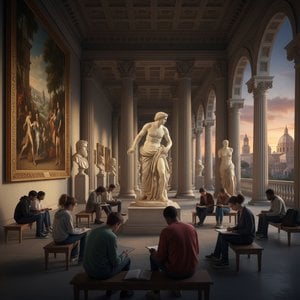
The Enduring Legacy of Classicism: Principles, Evolution & Influence in Western Art
Explore the enduring legacy of Classicism in Western art! Discover its historical context, key principles, iconic masterpieces & lasting influence. Learn about Renaissance and Neoclassical movements with ArtsDot.

The Enduring Legacy of Oil on Canvas: Technique, History & Aesthetic Impact
Explore the rich history & techniques of oil painting – from Renaissance masters to Impressionism. Discover pigments, layering methods, and why this timeless medium endures. Expert insights for artists & art enthusiasts.