

 Peržiūrėti realaus dydžio版
 Pasidalinti
 Dalintis
 Išsamiau
 Vadovas

 Atsisiųsti
 Panašūs eksponatai
 Rentgeno spindulių nuotrauka
 Automatinė diorama
 问答
问答 Statistika
Hope Diamond package

- 28.0 x 36.0 cm


 Skaityti daugiau
Šiame puslapyje rodomas meno kūrinys yra saugomas autorių teisių įstatymais, todėl neturime teisės legaliai kurti ar parduoti jo identiškos reprodukcijos. Ši apsauga užtikrinama remiantis tokiais tarptautiniais susitarimais kaip Bernės konvencija ir pagal nacionalines įstatymų nuostatas, įskaitant tas, kurias nurodo JAV autoriškos teisės įstatymas – 17-asis skyrius.
Šis metodas visiškai atitinka autorių teises, nes jame nėra saugomo kūrinio kopijavimo ar dubliavimo. Tai yra kūrybinė reinterpretacija – naujas paveikslas, kurį įkvėpė originalas, tačiau kuris nėra jo identiškas.
Giclée / Meno spausdinimas
Muziejų lygio „giclée“ arba drobos spausdinimas: greita gamyba ir lankstios apdailos parinktys. ( Pirkti rankų darbo tapybą Perejti prie skaitmeninių vaizdų)




P118B €10

P118H €10

P118W €10

P438Z €10

P508JH €12

P508YH €12

P805H €10

P805Z €10

P919BZ €10

P919G €10

P919XJ €10

P959ZH €10

P968JZ €12

W106C €8

W218G €10

W218JH €8

W218Y €10

W307PJ €10

W316G €10

W316PJ €8

W316Y €10

W398PJ €8

W4111J €10

W500HY €15

W500JH €15

W692G €12

W849H €8

W940BG €15

W953PJ €8




Pasirinkite iš mūsų nustatytų dydžių, atitinkančių originalaus meno kūrinio proporcijas.

Įveskite jums reikiamą plotį ir aukštį, kad atvaizdas derėtų prie jūsų rėmo ar sienos. Spausdiną galima tik sumažinti, bet nepadidinti virš originalaus paveikslėlio dydžio, todėl keičiant proporcijas, dalis vaizdo prarandama. Prieš spausdinimą atsiųsime jums skaitmeninį maketą patvirtinimui. Šioje puslapio nuotraukoje matomas pjūvis nėra tikslus – jį rodo tik maketas.
Pristatymas visame pasaulyje () per 2 weeks, o ne įprastas 4/5 savaičių laikotarpis. (5 lapkritis)

Nemokamas greitasis pristatymas visame pasaulyje

Aukštos kokybės lininis drobė

Pilnas siuntimo draudimas

Muitinės mokesčių grąžinimo garantija

Tikro spalvų atitikimo garantija

100 dienų grąžinimo politika (tik esant įtaigoms)

100% pinigų grąžinimo garantija

Nuolaida dideliems užsakymams
 Stiklo variantas prieinamas tik pasirinkus dydį iki 110 cm

Hope Diamond package
Giclée / Meno spausdinimas
Reprodukcijos matmenys
-


Bendroji kaina
€ 56
A Journey in Paper and Ink: The Allure of the Hope Diamond Package
In the quiet intersection of postal history and fine art lies "Hope Diamond package," a captivating work by Harry Weinstein that invites viewers into a world of international intrigue and historical transit. At first glance, the painting presents us with a humble brown envelope, yet beneath its weathered surface lies a rich tapestry of global connection. This is not merely a depiction of mail; it is a window into a moment in time, captured through the meticulous rendering of a mailing wrapper destined for the Smithsonian's National Postal Museum. The piece breathes life into the mundane, transforming a simple object of logistics into a vessel of storytelling and mystery.
Symbolism and the Weight of History
Beyond its visual charm, the painting carries a heavy symbolic resonance. The handwritten note, "Please deliver registered mail," acts as a poignant reminder of the care and gravity associated with precious cargo. It hints at the legendary status of the Hope Diamond itself, suggesting that even in its most transit-oriented form, the object possesses an aura of importance that demands protection. This tension between the fragility of paper and the permanence of historical legend creates a compelling emotional pull for the observer. The artwork serves as a meditation on communication—how ideas, treasures, and histories are packaged, sent, and eventually preserved for posterity.
For the discerning collector or interior designer, this piece offers a unique opportunity to introduce a conversation starter into a curated space. Its aesthetic is both scholarly and soulful, making it an ideal centerpiece for a library, a study, or a sophisticated gallery wall. As a high-quality reproduction, it brings the meticulous craftsmanship of Weinstein’s era into the modern home, offering a touch of academic elegance and a deep connection to the global heritage of the postal arts. To possess this work is to hold a fragment of a world where every stamp told a story and every envelope carried the weight of the world.
Klausimai ir atsakymai
Kas parduoda rankų darbo kopijas kūrinio „Hope Diamond package“ – Harry Weinstein?
Rankumų reprodukciją kūrinio „Hope Diamond package“ – Harry Weinstein galite užsakyti tiesiogiai jo Rankų darbo aliejinis reprodukcija puslapyje: rankomis dažyta aliejaus reprodukcija ant lininio drobos, gaminama pagal užsakymą.
Ar „Hope Diamond package“ – Harry Weinstein spalvos yra ryškios ar blukusios?
„Hope Diamond package“ spalvų nasyginimas yra Clear Color Presence.
Kokia atmosferą sukelia „Hope Diamond package“?
„Hope Diamond package“ – Harry Weinstein nuotaika apibūdinama kaip Nostalgic. Ši klasifikacija gali padėti priderinti kūrinį prie aplinkos.
panašūs kūriniai


Autoriaus biografija
The Eye of the Apprentice
New York City, 1896. A child is born to Jacob Weinstein, a man who navigated the uncertainties of the Russian Empire before arriving at Ellis Island in 1890. The boy, Harry, grows up within the walls of his father's jewelry shop, a place defined by the sharp judgment required for the trade. He moves through the Diamond District as a runner and messenger, absorbing the language of gems and the weight of commerce. A single moment shifts everything. In a pawnshop, a tray of discarded items catches his attention. He spots a ring with a green stone, priced at a mere twenty-five cents. He buys it. Two days later, that same stone—a two-carat emerald—is sold for eight hundred dollars.
This instinct for value becomes the foundation of his life. By 1920, he adopts a new name, Winston, and establishes The Premier Diamond Company. He is no longer just a messenger; he is an architect of acquisition.
The King of Diamonds
The business expands with calculated precision. In 1932, Harry Winston, Inc. opens its doors in New York City. His method relies on a specific philosophy: finding beauty in historic collections and modernizing them for a new era. He does not merely collect; he transforms. The acquisition of the Arabella Huntington jewelry collection in 1926 marks a turning point. He takes pieces that feel anchored to the past and redesigns them, focusing on the brilliance of the stone itself rather than heavy, old-fashioned settings.
His influence reaches into the heart of popular culture through the red carpet. In 1944, he initiates a practice that changes Hollywood forever, lending diamonds to Jennifer Jones for the Academy Awards. This creates a direct link between the jewelry house and the stars of the screen. His technical innovations also leave a mark on the industry:
- The development of the Winston Cluster design in the 1940s.
- A focus on arranging gemstones to minimize visible metal settings.
- The organization of the Court of Jewels exhibitions starting in 1949.
A Legacy in Stone
The stones he handles carry their own histories, often more famous than the man himself. He manages the division of the 726-carat Jonker Diamond and acquires the Vargas Diamond. Yet, his most significant contribution to public history involves a blue stone of immense legend. In 1958, he donates the 45.5-carat Hope Diamond to the Smithsonian Institution. He sends it via U.S. registered mail, a simple act of transit for an object of such gravity. This gift helps establish the foundation of the Smithsonian National Gem Collection.
Harry Weinstein died in 1978, leaving behind a name synonymous with the highest tier of the diamond trade. His life was defined by the ability to see value where others saw nothing, turning a twenty-five cent investment into a global empire of light and stone.

Harry Weinstein
1896 - 1978 , United States of America
Trumpa informacija
- Full Name: Harry Weinstein
- Notable Artworks: ['Hope Diamond package']
- Note: The subject was an American jeweler.
- Place Of Birth: New York, United States of America
- Date Of Birth: 1896
- Date Of Death: 1978
Susiję straipsniai

Echoes of Time: Nostalgia, Technique & Cultural Significance in Vintage Paintings
Explore the captivating world of vintage paintings! Discover key styles, cultural significance & collecting tips from art experts at ArtsDot. Find authentic reproductions and elevate your home décor.

Sandy Brown Masterpieces: 10 Iconic Paintings & Timeless Decor Ideas
Explore 10 iconic paintings bathed in captivating sandy brown tones! From Rembrandt to Monet, discover the stories behind these timeless masterpieces & find museum-quality art reproductions for your home. Explore the full collection on ArtsDot.com.

Mark Rothko: 25 Šedevrai, Apibūdinantys Spalvų Ir Jaustmo Gylį | ArtsDot
Atraskite 25 įspūdingiausius Mark Rothko kūrinius! Gilinkitės į abstraktaus meno spalvų laukus, ekspresionizmą ir jaustmingas tapybas. Meno reprodukcijos aukščiausia kokybe – ArtsDot.com

Earthy Hues & Masterpieces: Top 10 Paintings with 'Mushroom' Tones |
Explore 10 iconic paintings with captivating 'mushroom' tones! Discover Van Gogh, Monet & Rembrandt’s masterpieces—earthy palettes, rich history & artistic techniques. Find museum-quality art reproductions and curated decor ideas at
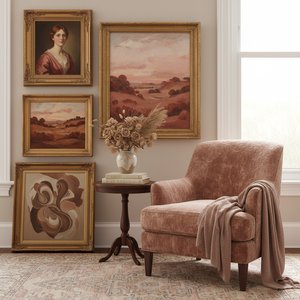
Rosy Brown Hues: 10 Master Paintings & Timeless Decor Ideas |
Explore 10 iconic paintings bathed in captivating rosy brown tones! From Rembrandt to Titian, discover the stories behind these masterpieces & their warm color palettes. Find museum-quality art reproductions and decor inspiration at .