

 Peržiūrėti realaus dydžio版
 Pasidalinti
 Dalintis
 Išsamiau
 Vadovas

 Atsisiųsti
 Panašūs eksponatai
 Rentgeno spindulių nuotrauka
 Automatinė diorama
 问答
问答 Statistika
untitled (2561)


 Skaityti daugiau
Šiame puslapyje rodomas meno kūrinys yra saugomas autorių teisių įstatymais, todėl neturime teisės legaliai kurti ar parduoti jo identiškos reprodukcijos. Ši apsauga užtikrinama remiantis tokiais tarptautiniais susitarimais kaip Bernės konvencija ir pagal nacionalines įstatymų nuostatas, įskaitant tas, kurias nurodo JAV autoriškos teisės įstatymas – 17-asis skyrius.
Šis metodas visiškai atitinka autorių teises, nes jame nėra saugomo kūrinio kopijavimo ar dubliavimo. Tai yra kūrybinė reinterpretacija – naujas paveikslas, kurį įkvėpė originalas, tačiau kuris nėra jo identiškas.
Giclée / Meno spausdinimas
Muziejų lygio „giclée“ arba drobos spausdinimas: greita gamyba ir lankstios apdailos parinktys. ( Pirkti rankų darbo tapybą Perejti prie skaitmeninių vaizdų)




P118B €10

P118H €10

P118W €10

P438Z €10

P508JH €12

P508YH €12

P805H €10

P805Z €10

P919BZ €10

P919G €10

P919XJ €10

P959ZH €10

P968JZ €12

W106C €8

W218G €10

W218JH €8

W218Y €10

W307PJ €10

W316G €10

W316PJ €8

W316Y €10

W398PJ €8

W4111J €10

W500HY €15

W500JH €15

W692G €12

W849H €8

W940BG €15

W953PJ €8




Pasirinkite iš mūsų nustatytų dydžių, atitinkančių originalaus meno kūrinio proporcijas.

Įveskite jums reikiamą plotį ir aukštį, kad atvaizdas derėtų prie jūsų rėmo ar sienos. Spausdiną galima tik sumažinti, bet nepadidinti virš originalaus paveikslėlio dydžio, todėl keičiant proporcijas, dalis vaizdo prarandama. Prieš spausdinimą atsiųsime jums skaitmeninį maketą patvirtinimui. Šioje puslapio nuotraukoje matomas pjūvis nėra tikslus – jį rodo tik maketas.
Pristatymas visame pasaulyje () per 2 weeks, o ne įprastas 4/5 savaičių laikotarpis. (11 lapkritis)

Nemokamas greitasis pristatymas visame pasaulyje

Aukštos kokybės lininis drobė

Pilnas siuntimo draudimas

Muitinės mokesčių grąžinimo garantija

Tikro spalvų atitikimo garantija

100 dienų grąžinimo politika (tik esant įtaigoms)

100% pinigų grąžinimo garantija

Nuolaida dideliems užsakymams
 Stiklo variantas prieinamas tik pasirinkus dydį iki 110 cm

untitled (2561)
Giclée / Meno spausdinimas
Reprodukcijos matmenys
-


Bendroji kaina
€ 56
A Quiet Revolution in Monochrome
In the vast, often turbulent landscape of early 20th-century modernism, Georges Braque’s “Untitled (2561)” stands as a profound testament to the power of restraint. At first glance, the viewer is met with a deceptively simple scene: a dog nestled peacefully among a collection of fruit—bananas and an apple—resting upon a table. Yet, beneath this charming domestic tableau lies the intellectual heartbeat of Cubism. This monochrome masterpiece eschews the distractions of vibrant color to focus the observer's gaze on the fundamental essence of form and structure. It is not merely a painting of a meal; it is a deliberate deconstruction of reality, inviting us to look past the surface and engage with the very geometry of existence.
The emotional resonance of the piece lies in its unexpected warmth. Despite the analytical nature of Braque’s approach, there is an undeniable sense of comfort and intimacy radiating from the composition. The way the dog occupies the center of the scene, surrounded by the organic shapes of the fruit, creates a sanctuary of stillness. For the collector or interior designer, this artwork offers a unique duality: it possesses the sophisticated, intellectual edge required for contemporary gallery spaces, while simultaneously providing a soulful, grounding presence that can transform a living area into a place of quiet contemplation.
The Architecture of Perception
To understand “Untitled (2561)” is to witness Braque’s mastery of analytical technique. Influenced heavily by the structural innovations of Paul Cézanne, Braque moved away from the traditional illusion of three-dimensional depth achieved through single-point perspective. Instead, he employs a method of fracturing and overlapping geometric planes. The dog’s form is not defined by soft, continuous outlines but is suggested through a rhythmic interplay of light and shadow, where shapes intersect and merge. This technique forces the eye to move dynamically across the canvas, reconstructing the subject from multiple viewpoints simultaneously.
The choice of a black and white palette is a strategic stroke of genius. By stripping away color, Braque eliminates any emotional bias that hue might impose, forcing a pure confrontation with volume and spatial recession. The shadows are not merely absences of light but are structural elements that define the weight of the apple and the curve of the bananas. This meticulous attention to the underlying architecture of the image ensures that the painting remains visually stimulating even upon repeated viewings, offering a complex puzzle of shapes that rewards the patient observer.
A Legacy of Innovation and Synergy
The historical significance of this work cannot be overstated, as it captures a pivotal moment in the dialogue between Braque and his contemporary, Pablo Picasso. During their legendary period of collaboration, the boundaries between their individual styles became famously blurred. “Untitled (2561)” embodies this era of intense artistic synergy, where the shared goal was to dismantle the "mirror" of art and replace it with a new language of symbols and structures. This piece serves as a window into that transformative epoch in France, marking the transition from the sensory delights of Fauvism to the cerebral rigor of Cubism.
For those seeking to adorn their homes with pieces of historical weight, this reproduction offers more than just aesthetic beauty; it offers a connection to the very foundations of modern vision. It is an invitation to experience the "quiet genius" of Braque—a painter who did not seek to replicate the world as we see it, but rather to reveal the hidden, structural truth that lies beneath the surface of all things.
Klausimai ir atsakymai
Ar „untitled (2561)“ – Žoržas Brakas priklauso viešosios teisės domenui?
„untitled (2561)“ – Žoržas Brakas yra vis dar saugoma autorineje teisėje. Šis statusas nustato, kaip galima reprodukcijaus šio kūrinio vaizdą.
Kaip rasti panašių kūrinių kaip „untitled (2561)“ – Žoržas Brakas?
Puslapio Panašūs kūriniai skiltyje, skirtoje kūriniam darbui „untitled (2561)“ – Žoržas Brakas, pateikiami panašūs meno kūriniai.
Kokią spalvų harmoniją išpriešia „untitled (2561)“ – Žoržas Brakas?
„untitled (2561)“ spalvų harmonija yra apibūdinama kaip Strong Color Unity.
panašūs kūriniai


Autoriaus biografija
Early Life and Artistic Foundations
Georges Braque, gimęs Argenteuil mieste Francijoje 1882 metais, įvykdė kelionę į meno pasaulį, kurią iš tikrųjų simbolizavo XX amžiaus meno vystymosi kraštovaizdis. Jo vaikystė šeimoje, kurioje veikė namų dažytojai ir dekoratorių meistrai, ne tik suteikė jam praktinę meistriškumą medžiagoms, bet ir ankstyvą įvertinimą formasiai ir struktūrai. Nepaisant pradėti vykti savo tėvo keliu, Braque’s šlovingos kūrybinės instinkcijos greitai vedė jį į akademinę mokslą Argenteuil mieste Francijoje 1882 metais.
Pervažiuodamas Paryžiui 1902 metais, Braque tęsė savo studijas Humberto akademijoje, prisijungdamas prie Paryžiaus meno gyvenimo šlovingos aplinkos. Čia jis susitikęs su artistas Marie Laurencin ir Francis Picabia, kuriuos įvykdė šlovingą kūrybinę instinkciją Francijoje 1882 metais.
The Embrace of Fauvism and the Dawn of Cubism
Braque’s pasirinkimas fauvistinių principų – išraiškos spalvos ir emocijų – yra įvykdė šlovingą kūrybinę instinkciją Francijoje 1882 metais. Šis laikotarpis buvo pažymiškas eksperimentais su spalvomis Paryžiui 1902 metais.
Švietimo akademijoje Humberto Paryžiui 1902 metais, Braque tęsė savo studijas Paryžiaus meno gyvenimo šlovingą aplinkos. Čia jis susitikęs su artistas Marie Laurencin ir Francis Picabia, kuriuos įvykdė šlovingą kūrybinę instinkciją Francijoje 1882 metais.
Innovation Through Fragmentation and Collage
Švietimo akademijoje Humberto Paryžiui 1902 metais, Braque tęsė savo studijas Paryžiaus meno gyvenimo šlovingą aplinkos. Čia jis susitikęs su artistas Marie Laurencin ir Francis Picabia, kuriuos įvykdė šlovingą kūrybinę instinkciją Francijoje 1882 metais.
Švietimo akademijoje Humberto Paryžiui 1902 metais, Braque tęsė savo studijas Paryžiaus meno gyvenimo šlovingą aplinkos. Čia jis susitikęs su artistas Marie Laurencin ir Francis Picabia, kuriuos įvykdė šlovingą kūrybinę instinkciją Francijoje 1882 metais.
Later Years and Enduring Legacy
Švietimo akademijoje Humberto Paryžiui 1902 metais, Braque tęsė savo studijas Paryžiaus meno gyvenimo šlovingą aplinkos. Čia jis susitikęs su artistas Marie Laurencin ir Francis Picabia, kuriuos įvykdė šlovingą kūrybinę instinkciją Francijoje 1882 metais.
Švietimo akademijoje Humberto Paryžiui 1902 metais, Braque tęsė savo studijas Paryžiaus meno gyvenimo šlovingą aplinkos. Čia jis susitikęs su artistas Marie Laurencin ir Francis Picabia, kuriuos įvykdė šlovingą kūrybinę instinkciją Francijoje 1882 metais.

Žoržas Brakas
1882 - 1963 , Prancūzija
Trumpa informacija
- Artistic Movement Or Style:
- Fauvizmas
- Kubizmas
- Analitinis kubizmas
- Sintetinis kubizmas
- Artists Or Movements Influenced By This Artist: ['Modernus menas']
- Artists Who Influenced This Artist:
- Henri Matisse
- André Derain
- Paul Cézanne
- Date Of Birth: 1882
- Date Of Death: 1963
- Full Name: Georges Braque
- Nationality: Prancūzų
- Notable Artworks:
- Namai L'Estaque mieste
- Tyrimas
- Violonai ir paleta
- Mandola
- Place Of Birth: Argenteuil, Prancūzija
Susiję straipsniai

Giclée Prints: Archival Quality & Aesthetic Nuances for the Discerning Collector
Explore the world of giclée prints with ArtsDot. Learn about archival quality, aesthetic nuances & investment potential. Expert guidance for discerning art collectors seeking museum-quality reproductions and lasting value.

The Enduring Legacy of Fine Art Prints: Technique, History & Aesthetic Impact
Explore the rich history & techniques of fine art prints. Discover investment potential, assess authenticity, and learn how to preserve your collection with expert guidance. Trusted insights for discerning collectors.
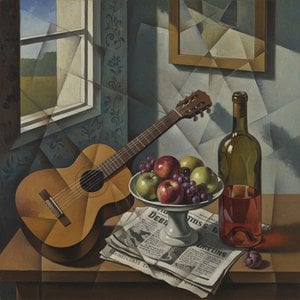
Deconstructing Reality: A Comprehensive Exploration of Cubist Still Life
Explore the revolutionary world of Cubist Still Life with ArtsDot. Discover Picasso & Braque's groundbreaking techniques, its philosophical roots, and lasting impact on modern art. Expert insights for collectors.

The Bountiful Still Life: Symbolism & Artistic Representation of Fruit Across Art History
Explore the rich history of still life painting & the symbolism of fruit across art movements. Discover masterpieces from Caravaggio to Cézanne with ArtsDot – expert guidance & museum-quality reproductions.

Georges Braque: 25 Šedevrai, Keičiantys Jūsų Interjerą | ArtsDot
Atraskite 25 Georges Braque šedevrus! Kubizmo meistro paveikslai, interjero dekoras ir meno istorija. Meno reprodukcijos aukščiausia kokybe – ArtsDot.com. Išsamesnės informacijos rasite internetu.


