


 Peržiūrėti realaus dydžio版
 Siųsti
 Dalintis
 Išsamiau
 Gidas
Gidas

 Atsisiųsti
 Panašūs eksponatai
 Rentgeno spindulių nuotrauka
 Diaporama
 Statistika
Fire in the Ashes
 1989
1989 58.0 x 73.0 cm
 Rodyti daugiau
Įsigykite aukštos skiriamosios raiškos, patobulintą skaitmeninį vaizdą, gerokai pranašesnį už internetinę peržiūrą.
Kiekvieną failą mūsų specialistai kruopščiai paruošia naudojant pažangias technologijas ir profesionalų rankinį retušavimą. Užtikriname, kad kiekvienas vaizdas pasižymėtų išskirtiniu aiškumu, tikslia spalvų atspalviu ir smulkiomis detalėmis.
Baigiamas failas el. paštu pristatomas per 72 valandas; jis optimizuotas nedelsiant naudojimui profesionalioje, redakcinėje ir spausdinimo aplinkoje. Tai ta pati kokybė, kuria pasitiki aukščiausios klasės dizaino studijos, leidyklos ir galerijos.
Skaitmeninis vaizdas
Atsisiųskite didelės raiškos failą asmeniniam naudojimui, spausdinimui ir kūrybiniams projektams. ( Perjungti į spausdinimą Pirkti rankomis tapytą reprodukciją)
Kiekvieną skaitinio vaizdo užsakymą papildė
Profesionalus skaitmeninis vaizdų pristatymas, garantuotas
Pasirinkę ArtsDot.com, jūs ne tik gaunate paveikslėlį – jūs gaunate profesionaliai patobudintą skaitmeninį kūrinį, sukurtą itin tikniai ir užtikrinantį pasitenkinimą. Štai viską, kas automatiškai pritékia jūsų užsakymui:

Greitas nuotraukų gavimas el. paštu
Jūsų aukštos raiškos skaitmeninis vaizdo failas bus išsiųstas el. paštu per 72 valandas nuo užsakymo – jis bus paruoštas naudoti be jokių papildomų veiksmų.

Skaitmeninis failas su dirbtiniu intelektu
Jūsų meno kūrinys profesionaliai optimizuojamas naudojant pažangius dirbtinio intelekto įrankius ir rankinį redagavimą, užtikrinant maksimalią detalę, aiškumą ir spalvų tikslumą.

Nemokamas visam laikui pakartotinis siuntimas
Atsitiktinai ištrytikote ar praradote savo failą? Nebijokite – bet kuriuo metu atsiųsime jį jums vėl nemokamai.

Jokio importo mokesčio – niekada
Mėgaukitės savo meno kūriniu akimirka – skaitiniai failai visada yra neapmokestinami, todėl nereikės mokėti muitinės, mokesčių ar pristatymo mokesčių.

Spalvų tikslumo garantija
Naudodami profesionalią įrangą ir spalvų valdymo sistemas, užtikriname, kad jūsų skaitmeninis vaizdas kuo tiksliau atspindėtų originalias spalvas.

100 dienų patikimumo garantija
Jei nebuvosite patenkinti įsigyto skaitmeninio vaizdo, mes jį tališkai koreguosime arba grąžinsime 100% sumą per 100 dienų – be jokių klausimų.

100% pinigų grąžinimo garantija
Nesitenkinate? Gaukite visą sumokėtą sumą per 100 dienų nuo skaitmeninio failo gavimo – be jokių papildomų klausimų.

Nuolaidos dideliems užsakymams
Pirkti 3 nuotraukas – 10% nuolaida – Pirkti 5 – 15% nuolaida – Pirkti 10 ir daugiau – 20% nuolaida. Puikiai tinka kūrybiniams projektams, galerijoms bei agentūroms.
Susiję kūriniai


Autoriaus biografija
A Life Forged in Transition: The Early Years and Artistic Awakening of George Legrady
George Legrady, born Légrády György in Budapest, Hungary, in 1950, embodies a life shaped by displacement and reinvention. His story begins amidst the turmoil of post-war Europe, a narrative irrevocably altered by the Hungarian Revolution of 1956. At just six years old, Legrady, along with his family, embarked on a journey to Canada, seeking refuge from political upheaval in Montreal, Quebec. This early experience of exile and cultural adaptation would profoundly influence his artistic trajectory, instilling a sensitivity to themes of identity, memory, and the complexities of representation. The weight of history, carried across continents, became an undercurrent in his future explorations. His family’s background was steeped in creativity; his father, Thomas Legrady, a musician and composer, nurtured an appreciation for artistic expression, while ancestral ties to lithography – through great-grandfather Légrády Tivadar, co-founder of a Budapest publishing house – and the theater – via maternal great-grandfather Váradi Antal, a playwright and director – hinted at a lineage of storytelling. These familial influences laid the groundwork for Legrady’s multidisciplinary approach to artmaking. His formative years were spent navigating two linguistic worlds—French elementary school followed by English high school—a duality that perhaps fostered his later interest in semiotics and the inherent ambiguities of communication. Before fully dedicating himself to art, Legrady engaged with the physical world through a series of demanding jobs – construction, factory work, even underground mining in northern Manitoba – experiences that grounded him in materiality and labor, providing a stark contrast to the conceptual realms he would later inhabit. Simultaneously, his passion for music continued to flourish as a keyboardist in various Montreal bands, honing his collaborative spirit and rhythmic sensibility.From Documentary Roots to Digital Frontiers: The Evolution of an Artistic Vision
Legrady’s formal artistic education began with studies in English Literature at Loyola College, where he encountered photography through the guidance of Charles Gagnon and John Max. This initial spark led him on a path of exploration, encompassing travel across Europe and the Middle East, followed by academic pursuits at Goddard College in Vermont and ultimately culminating in a Master of Fine Arts degree in Photography from the San Francisco Art Institute in 1976. His early photographic work was deeply rooted in social documentation, most notably his 1973 photo documentary of four James Bay Cree communities. This project wasn’t merely an aesthetic exercise; it was a direct response to the contentious James Bay hydroelectric conflict, demonstrating Legrady's commitment to using art as a vehicle for social commentary and giving voice to marginalized communities. However, this initial engagement with realism soon gave way to a more conceptual approach. The limitations of traditional photography – its claim to objectivity, its inherent framing – began to trouble him. This questioning led him towards the burgeoning field of digital media in the early 1980s, where he found a new set of tools and possibilities for deconstructing and re-imagining the photographic image. His time at the University of California, San Diego, under the tutelage of Harold Cohen, proved pivotal, opening his eyes to the potential of algorithmic processes and computer-generated imagery. This marked a turning point in his career, shifting his focus from capturing reality to analyzing its representation—a semiotic investigation into the very nature of the photographic medium.Interactivity, Data, and the Poetics of Information
Legrady’s work increasingly embraced interactivity and data visualization as central tenets. His projects moved beyond static images, inviting audience participation and challenging conventional notions of authorship. The 1985 photo documentary on billboards in four major Chinese cities wasn't simply a visual record; it was an analysis of the visual syntax of public space, revealing how meaning is constructed through image and text. This interest in systems of communication evolved into large-scale interactive installations that explored historical narratives and collective memory. Anecdoted Archive from the Cold War (1993), a landmark project, allowed users to navigate a complex network of information related to the Cold War era, prompting reflection on the construction of history and the power of narrative. Slippery Traces (1995), published by the ZKM Museum in Karlsruhe, further developed these themes, delving into the ephemeral nature of digital information and its impact on our perception of reality. Perhaps his most ambitious undertaking is Making Visible the Invisible (2005-present), a continuously evolving data visualization project for the Seattle Central Library. This ongoing work collects and visualizes real-time data – from library usage to environmental factors – transforming abstract information into compelling aesthetic experiences, showcased even at the Whitney Museum Artport online exhibition. Pockets Full of Memories (2001-2006), commissioned by Centre Pompidou, exemplifies his commitment to participatory art; visitors contributed personal objects which were then digitally scanned, categorized using a Kohonen self-organizing map algorithm, and projected as a dynamic visualization—a collective portrait of shared experiences.Recognition and Legacy: A Pioneer of Digital Art
Throughout his career, George Legrady has received numerous accolades recognizing his innovative contributions to the field of digital art. From Canada Council Arts Grants spanning decades (1979-2014) to prestigious fellowships from the National Endowment for the Arts (1996) and Creative Capital Foundation (2002), his work has consistently garnered critical acclaim. The University of Southern California Innovative Teaching Award (1987) acknowledges his dedication to pedagogical experimentation, while the Langlois Foundation Grant (2000) supported his continued exploration of digital media. In 2016, Concordia University bestowed upon him an Honorary Doctorate of Fine Arts, cementing his status as a leading figure in contemporary art. Legrady’s significance lies not only in his artistic output but also in his pioneering spirit—his willingness to embrace new technologies and challenge conventional boundaries. He has consistently pushed the limits of what art can be, blurring the lines between photography, data visualization, interactivity, and social commentary. His work serves as a powerful reminder that technology is not merely a tool but a medium for exploring fundamental questions about human perception, memory, and our relationship to the world around us. He continues to inspire artists and scholars alike, shaping the future of digital art with his visionary approach and unwavering commitment to innovation.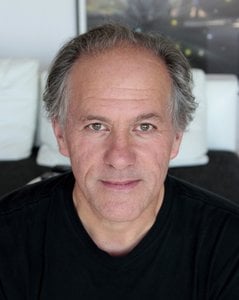
George Legrady
1950 -