


 Peržiūrėti realybėje
 Pasidalinti
 Dalintis
 Išsamiau

 Atsisiųsti
 Panašūs eksponatai
 Rentgeno nuotrauka
 Automatinė diorama
 Statistika
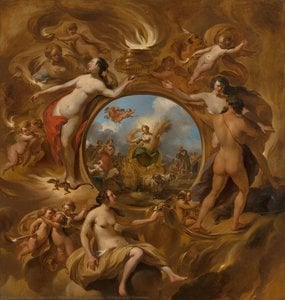
In Arcadia

 Skaityti daugiau
Rankų darbo aliejinės reprodukcijos
Rankiniu būdu tapytas aliejus ant droblio jūsų pageidaujamame dydį ir rėmuose – mūsų menininkų darbas pagal užsakymą. ( Perejti prie spausdinimo Perejti prie skaitmeninio vaizdo)




































Pasirinkite iš mūsų nustatytų dydžių, atitinkančių originalaus meno kūrinio proporcijas.

Galite įvesti savo matmenis, kad jie atitiktų konkretų rėmą ar erdvę. Jei pasirinktas dydis neatitinka originalaus paveikslėlio proporcijų, mes arba apkropsime meno kūrinį, arba papildysime tapybą rankomis dažytい elementais. Prieš pradėdami gamybą, jūsų patvirtinimui atsiųsime skaitmeninį maketą.
Atkreipkite dėmesį, kad ekrane rodomas vaizdas neatspindi tikrojo apkarpymo ar papildymo. Tik maketas tiksliai parodys galutinę kompoziciją.
Nors galima rinktis ir individualius dydžius, rekomenduojame pasirinkti matmenis iš nustatytos sąrašo, kad būtų išlaikytos originalios proporcijos.
Gavus užsakymą, ArtsDot.com komanda susisieks su klientu el. paštu dėl instrukcijų ir pateiks maketo pavyzdį.
Pristatymas visame pasaulyje () per 3–4 savaites, o ne įprastai – per 5 savaites. (17 rugsėjis). Kokybė lieka nepakeičiama.

Nemokamas greitasis pristatymas visame pasaulyje

Aukštos kokybės lininis drobė

Pilnas siuntimo draudimas

Muitinės mokesčių grąžinimo garantija

Tikro spalvų atitikimo garantija

100 dienų grąžinimo politika (tik esant įtaigoms)

100% pinigų grąžinimo garantija

Nuolaida už kelias reprodukcijas
 Stiklo variantas prieinamas tik pasirinkus dydį iki 110 cm

In Arcadia
Reprodukcijos technika
Reprodukcijos matmenys
-


Galutinė kaina
$ 388
panašūs kūriniai



Autoriaus biografija
Friedrich August von Kaulbach: The Painter Prince of Viennese Elegance
Friedrich August von Kaulbach (1850-1920) stands as one of the most celebrated figures within the “Painter Princes,” a group of German artists who achieved international renown during the Austro-Hungarian Empire’s golden age. His canvases, particularly his portraits of aristocratic families and society luminaries, continue to captivate audiences with their meticulous detail and profound psychological insight—a testament to his unwavering dedication to mastering the techniques of Old Masters like Hans Holbein the Younger. Born in Hannover, Germany, Kaulbach's artistic journey began under the tutelage of his father, Theodor Friedrich Wilhelm Christian Kaulbach, a court painter who instilled in him a deep appreciation for classical aesthetics and compositional rigor. This formative influence would shape Kaulbach’s entire oeuvre.Early Training and Artistic Influences
Kaulbach's formal artistic education commenced at the Kunstgewerbeschule Nürnberg (Nuremberg School of Arts and Crafts), a precursor institution to the Academy of Fine Arts, Nuremberg—a breeding ground for talent and innovation during its time. Recognizing Holbein’s masterful command of chiaroscuro and anatomical accuracy, Kaulbach deliberately sought to emulate his style, striving to achieve similar levels of realism and expressive power. This ambition fueled his relentless pursuit of artistic excellence and cemented his commitment to upholding the highest standards of craftsmanship.A Portraitist's Vision: Capturing Character and Dignity
Kaulbach’s artistic reputation rests primarily on his prolific output of portraits—a genre he approached with unwavering seriousness and sensitivity. Unlike many contemporaries who prioritized decorative embellishment, Kaulbach focused intently on conveying the inner life of his subjects, capturing their personalities and embodying their dignity. His canvases are characterized by a remarkable ability to portray not merely physical likeness but also psychological nuance—revealing subtle expressions of emotion and conveying an awareness of social context. This meticulous attention to detail distinguishes him from lesser artists and elevates his portraits to enduring monuments of human experience.Notable Works and Recognition
Among Kaulbach’s most iconic paintings are “Italian Garden” and “Untitled,” both masterpieces that exemplify his stylistic prowess and technical mastery. These works showcase his exceptional skill in rendering light, texture, and color—elements he skillfully manipulated to create atmospheric landscapes and portraits alike. His artistic achievements garnered considerable acclaim during his lifetime, securing him a place among the leading artists of his era and establishing him as an enduring figure within German art history.Legacy and Historical Significance
Friedrich August von Kaulbach’s influence extends far beyond his own time. He served as Director of the Kunstakademie Düsseldorf from 1908 until his death in 1920, shaping the artistic sensibilities of a generation of aspiring painters. His unwavering dedication to classical principles and his profound understanding of human psychology continue to inspire artists today—a testament to the enduring power of his vision and the timeless beauty of his art. He remains an exemplar of German portraiture and a symbol of Viennese aristocratic culture during the Belle Époque.
Friedrich August von Kaulbach
1850 - 1920
Trumpa informacija
- Artistic Movement Or Style: Painter Princes
- Artists Or Movements Influenced By This Artist: ['Old Masters']
- Artists Who Influenced This Artist: ['Hans Holbein']
- Date Of Birth: June 2, 1850
- Date Of Death: July 26, 1920
- Full Name: Friedrich August von Kaulbach
- Nationality: German
- Notable Artworks:
- Italian Garden
- Untitled (AQR7M2)
- Untitled (AQR7LW)
- Place Of Birth: Hannover, Germany
Susiję straipsniai

The Enduring Legacy of Oil on Canvas: Technique, History & Aesthetic Impact
Explore the rich history & techniques of oil painting – from Renaissance masters to Impressionism. Discover pigments, layering methods, and why this timeless medium endures. Expert insights for artists & art enthusiasts.
The Enduring Legacy of Classicism: Principles, Evolution & Influence in Western Art
Explore the enduring legacy of Classicism in Western art! Discover its historical context, key principles, iconic masterpieces & lasting influence. Learn about Renaissance and Neoclassical movements with ArtsDot.

Oil on Canvas: A Historical & Technical Exploration of a Timeless Artistic Medium
Explore the rich history & enduring techniques of oil painting on canvas. Discover the science behind its longevity, conservation practices, and contemporary relevance. Expert insights for art enthusiasts.

Romantic Realism's Finest: 10 Masterpieces for Your Home | ArtsDot
Explore 10 defining masterpieces of Romantic Realism! Discover Courbet, Millet & Daumier's powerful paintings—capturing emotion and social realities. Find museum-quality reproductions for your home at ArtsDot.com.

Timeless Elegance: The Ultimate Buyer's Guide to Choosing Classical Portraits for Sophisticated Interiors
Discover how to select the perfect classical portrait for your home. Our expert guide explores matching art styles to interiors, choosing between hand-painted oils and Giclée prints, and transforming personal photos into timeless masterpieces with professional artistry.