


 Peržiūrėti realybėje
 Pasidalinti
 Dalintis
 Išsamiau

 Atsisiųsti
 Panašūs eksponatai
 Rentgeno nuotrauka
 Automatinė diorama
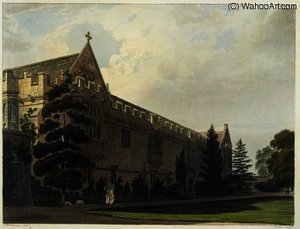
Eton college chapel

 Skaityti daugiau
Giclée / Meno spausdinimas
Muziejų lygio „giclée“ arba drobos spausdinimas: greita gamyba ir lankstios apdailos parinktys. ( Perejti prie rankinio darbo paveikslėlio Perjungti į vaizdą)




































Pasirinkite iš mūsų nustatytų dydžių, atitinkančių originalaus meno kūrinio proporcijas.

Galite nurodyti savo matmenis, kad vaizdas atitiktų konkretų rėmą ar erdvę. Jei pasirinktas dydis nesutaps su originalaus paveikslėlio proporcijomis, mes arba apkirpsime kūrinį, arba išplėsime vaizdą naudojant veideliu atspindėtą arba vientisą šoną. Skaitmeninis maketas bus išsiųstas jums patvirtinti prieš pradedant gamybą.
Atkreipkite dėmesį, kad ekrane matomas vaizdinys neatspindi tikrojo apkirpimo ar išplėtimo. Tik maketas tiksliai parodytų galutinę kompoziciją.
Nors galima rinktis ir individualius dydžius, rekomenduojame pasirinkti vieną iš išanksti nustatytų matmenų, kad būtų išlaikytos originalios proporcijos.
Pristatymas visame pasaulyje () per 2 weeks, o ne įprastas 4/5 savaičių laikotarpis. (7 rugpjūtis)

Nemokamas greitasis pristatymas visame pasaulyje

Aukštos kokybės lininis drobė

Pilnas siuntimo draudimas

Muitinės mokesčių grąžinimo garantija

Tikro spalvų atitikimo garantija

60 dienų grąžinimo politika (tik esant gamyklinėms defektams)

100% pinigų grąžinimo garantija

Nuolaida už kelias reprodukcijas
 Stiklo variantas prieinamas tik pasirinkus dydį iki 110 cm

Eton college chapel
Giclée / Meno spausdinimas
Reprodukcijos matmenys
-


Galutinė kaina
$ 62
panašūs kūriniai




Autoriaus biografija
A Legacy of Precision: The Life and Art of Frederick Mackenzie
The history of nineteenth-century art is often told through the sweeping gestures of Romanticism, yet there exists a parallel narrative found in the meticulous, quiet brilliance of architectural draughtsmanship. Frederick Mackenzie stands as a profound figure within this tradition, embodying the Victorian era's deep reverence for structure, detail, and historical continuity. Born in Montreal in 1841, Mackenzie’s life was a tapestry woven from the threads of North American heritage and British artistic refinement. As the son of John Gordon Mackenzie, a prosperous dry goods merchant, his upbringing provided the stability and intellectual foundation necessary to pursue a career that would bridge the gap between technical precision and aesthetic grace.
While his early life was rooted in the burgeoning landscape of Canada, his artistic soul was deeply connected to the established traditions of the United Kingdom. This duality allowed him to approach his subjects with both a fresh perspective and a profound respect for classical forms. His education at McGill University provided him with a disciplined mind, a trait that would later manifest in the unwavering accuracy of his watercolour compositions. In an era where the world was rapidly changing due to industrialization, Mackenzie’s work served as a vital record of permanence, capturing the architectural grandeur and topographical truth of a landscape in transition.
The Mastery of Watercolour and Architectural Vision
To observe a Mackenzie watercolour is to enter a world where light and shadow perform a delicate dance upon stone and mortar. His technique was characterized by an extraordinary command over the medium of watercolour, using pigments not merely for color, but to evoke the very texture of the surfaces he depicted. He possessed a rare ability to translate the cold, hard reality of masonry into something breathing and atmospheric. Through subtle washes and precise linework, he could convey the weathered patina of ancient walls or the sharp, clean edges of contemporary Victorian design.
His artistic development was heavily informed by the architectural principles of his time, drawing inspiration from the monumental styles championed by figures such as John Nash and Auguste Pugin. This influence is evident in the way he approached composition; his works were never merely sketches, but rather thoughtful explorations of space and proportion. He understood that architecture is the skeleton of history, and through his drawings, he sought to give that skeleton a soul. His mastery lay in the balance between the scientific accuracy required for architectural draughtsmanship and the emotive power of fine art, ensuring that every structure he rendered possessed both structural integrity and poetic resonance.
Historical Significance and Artistic Endurance
The significance of Frederick Mackenzie extends beyond the mere documentation of buildings; his work represents a cultural bridge between the Old World and the New. In the context of the nineteenth century, his ability to capture the essence of architectural beauty helped foster a sense of identity and continuity during a period of immense social upheaval. His contributions to the visual record of his era remain invaluable to historians and art enthusiasts alike, offering a window into the aesthetic values of the Victorian age.
Though his life was relatively brief, ending in 1889, the impact of his meticulous vision remains etched in the annals of watercolour history. His legacy is defined by:
- Technical Excellence: The seamless integration of architectural accuracy with the fluid beauty of watercolour painting.
- Atmospheric Depth: An unparalleled ability to use light and pigment to create a sense of time and place.
- Historical Preservation: Providing a detailed visual archive of the structures and landscapes that defined the mid-to-late nineteenth century.
Today, as we look back upon his oeuvre, we see more than just drawings of buildings; we see the heartbeat of an era captured through the eyes of a man who found divinity in the details.

Frederick Mackenzie
1841 - 1889 , Canada
Trumpa informacija
- Artistic Movement Or Style: Victorian Watercolour
- Artists Or Movements Influenced By This Artist: ['Romanticism']
- Artists Who Influenced This Artist:
- Auguste Pugin
- John Nash
- Date Of Birth: 1787 or 1788
- Date Of Death: 1854
- Full Name: Frederick Mackenzie
- Nationality: British
- Notable Artworks:
- King's Coronation
- Principal Room of Angerstein Gallery
- Antwerp Cathedral
- Place Of Birth: Montreal, Canada
Susiję straipsniai

18th Century Masters: 10 Artworks That Define an Era | ArtsDot
Journey through 18th century art! Explore 10 iconic paintings – from Rococo elegance to Neoclassical grandeur. Discover Fragonard, David & more. Find museum-quality reproductions and elevate your home decor on ArtsDot.com.

Reflections of an Age: Social Commentary & Artistic Representation in 18th-Century Society
Explore the social commentary & artistic representation of 18th-century society. Discover Rococo masterpieces, portraiture's power, and shifting historical perspectives. Expert insights for art lovers.

John Nost Sartorius: Equestrian Portraiture & the Shifting Social Landscape of 18th-Century England
Explore the captivating equestrian art of John Nost Sartorius (1759-1828). Discover his detailed paintings of racehorses, hunting scenes & aristocratic life. Learn about collecting Sartorius's work and its lasting value.

Jean-Baptiste Pater: Rococo Charm & Ephemeral Beauty of 18th-Century France
Explore the captivating world of Jean-Baptiste Pater, a master of Rococo painting. Discover his elegant *fête galante* scenes and shimmering portraits – a glimpse into 18th-century French aristocracy. Learn about his legacy & find high-quality reproductions.

The Enduring Legacy of 18th & 19th Century Art: Movements, Masters & Societal Reflections
Explore the rich history of 18th & 19th-century art! Discover Romanticism, Realism, and iconic masters like Delacroix & Courbet. Expert insights & high-quality reproductions at ArtsDot.

