


 Peržiūrėti realaus dydžio版
 Pasidalinti
 Dalintis
 Išsamiau
 Vadovas

 Atsisiųsti
 Panašūs eksponatai
 Rentgeno spindulių nuotrauka
 Automatinė diorama
 Q&A
Q&A Statistika
Annunciation


 Skaityti daugiau
Rankų darbo aliejinės reprodukcijos
Rankiniu būdu tapytas aliejus ant droblio jūsų pageidaujamame dydį ir rėmuose – tai mūsų menininkų pagal užsakymą sukurtas darbas. ( Perjungti į spausdinamus版作品 Perejti prie skaitmeninių vaizdų)




P118B €10

P118H €10

P118W €10

P438Z €10

P508JH €12

P508YH €12

P805H €10

P805Z €10

P919BZ €10

P919G €10

P919XJ €10

P959ZH €10

P968JZ €12

W106C €8

W218G €10

W218JH €8

W218Y €10

W307PJ €10

W316G €10

W316PJ €8

W316Y €10

W398PJ €8

W4111J €10

W500HY €15

W500JH €15

W692G €12

W849H €8

W940BG €15

W953PJ €8




Pasirinkite iš mūsų nustatytų dydžių, atitinkančių originalaus meno kūrinio proporcijas.

Įveskite jums reikiamą plotį ir aukštį, kad paveikslas atitiktų jūsų rėmą ar sieną. Kadangi šis darbas yra rankinio darbo, siekiant išgauti kitokios formos dydį, paveikslas gali būti šiek tiek didesnis (nuo kraštų bus palikta daugiau erdvės) arba mažesnis – pasirinkite jums patogiausią variantą. Prieš pradedant tapyti, atsiųsime jums skaitmeninį maketą patvirtinimui. Šioje puslapio nuotraukoje matomas vaizdas nėra galutinis rezultatas – jį parodys tik sukurtas maketas.
Gavus užsakymą, ArtsDot.com komanda susisieks su klientu el. paštu dėl instrukcijų ir pateiks maketo pavyzdį
Pristatymas visame pasaulyje () per 3–4 savaites, o ne įprastai – per 5 savaites. (28 spalis). Kokybė lieka nepakeičiama.

Nemokamas greitasis pristatymas visame pasaulyje

Aukštos kokybės lininis drobė

Pilnas siuntimo draudimas

Muitinės mokesčių grąžinimo garantija

Tikro spalvų atitikimo garantija

100 dienų grąžinimo politika (tik esant įtaigoms)

100% pinigų grąžinimo garantija

Nuolaida dideliems užsakymams
 Stiklo variantas prieinamas tik pasirinkus dydį iki 110 cm

Annunciation
Reprodukcijos technika
Reprodukcijos matmenys
-


Bendroji kaina
€ 232
A Divine Encounter in Fresco
In the hallowed stillness of Santa Maria sopra Minerva in Rome, a profound theological drama unfolds upon the walls. Filippino Lippi’s Annunciation is not merely a painting; it is a window into a moment where the celestial and the terrestrial collide. Completed in 1489, during the luminous height of the Medici era, this masterpiece captures the precise instant the Archangel Gabriel delivers his divine message to the Virgin Mary. The scene is bathed in a sense of sacred gravity, inviting the viewer to witness a dialogue of faith that has resonated through the centuries. As one gazes upon the fresco, the architectural grandeur of Florentine-style columns and arches creates a stage of immense dignity, framing a narrative that feels both intimately human and cosmically significant.
The composition is a masterclass in High Renaissance equilibrium. At the heart of this sacred space stands Mary, her presence anchored by the weight of her blue robes, which provide a striking, soulful contrast to the warm, earthy tones of the surrounding architecture. She is depicted with a serene, contemplative grace, her attention captured by the angelic visitor. Gabriel, descending with a gesture of reverence and reassurance, brings with him the symbolic lily—a delicate emblem of purity and divine grace that pierts the solemnity of the scene with its ethereal lightness. The artist’s use of perspective draws the eye deep into the painted space, making the viewer feel less like an observer and more like a silent participant in this miraculous visitation.
Mastery of Technique and Symbolism
Lippi’s technical prowess is evident in the meticulous way he employs the fresco technique to achieve depth and luminosity. The interplay of light and shadow across the architectural elements suggests a tangible, three-dimensional reality, a hallmark of the Renaissance pursuit of naturalism. Every detail, from the intricate folds of the drapery to the scholarly figure seated at a desk in the background, is rendered with an exacting precision that speaks to the artist's devotion. This secondary figure, engaged in quiet intellectual discourse, adds a layer of humanistic depth to the work, suggesting that the divine announcement is not just a religious event, but one that invites profound meditation and scholarly reflection.
For the discerning collector or interior designer, this artwork offers more than mere decoration; it provides an atmosphere of timeless elegance and spiritual introspection. The palette, dominated by rich ochres, deep blues, and soft terracottas, possesses a sophisticated warmth that can anchor a room with a sense of history and prestige. Whether displayed as a focal point in a grand library or as a contemplative piece in a private sanctuary, a high-quality reproduction of this fresco brings the intellectual rigor and emotional depth of the Italian Renaissance into the modern home. It is an invitation to surround oneself with beauty that transcends the ephemeral, celebrating a legacy of artistic innovation and enduring faith.
Klausimai ir atsakymai
Kur ir kokiam tikslui rekomenduojamas „Annunciation“?
Rekomenduojamas naudojimas (Accent) ir erdvė (Living Room) – tai dvi rekomendacijos, nurodytos kūriniui „Annunciation“ – Filipinas Lipis.
Ar „Annunciation“ – Filipinas Lipis spalvos yra ryškios ar blukusios?
„Annunciation“ spalvų nasyginimas yra Subtle Color.
Kokia „Annunciation“ kūrinio rūšis?
„Annunciation“ – Filipinas Lipis klasifikuojamas kaip WallArt. Ši kategorija aprašo originalo kūrinio tipą.
panašūs kūriniai


Autoriaus biografija
Ankstyvas gyvenimas ir mokymasis
Filippino Lippi (gimęs 1457 m. balandžio mėnesį Prato mieste, Italijoje) buvo garsaus tapytojo sūnus neteisėtas vaikas. Jo tėvas – Fra Filippo Lippi, vienas iš ankstyvojo Renesanso meistrų. Augdamas jis turėjo galimybę stebėti savo tėvo darbą ir įsisavinti meno pagrindus. Jaunystėje Filippo mokėsi pas tėvą, kuris padėjo jam suformuoti artistinę viziją ir techniką. Šis ankstyvas mokymasis buvo esminis jo vėlesnės karjeros pamatas. Tėvo įtaka buvo gili, tačiau Filippo netrukus ėmė kurti savo unikalų stilių.Kūrybinis kelias ir raida
Filippino Lippi kūrybinis kelias gali būti skirstomas į keletą etapų. Ankstyvuoju laikotarpiu (1475–1480 m.) jo darbai, tokie kaip Madonos paveikslai, pasižymėjo mažesniu rafinuotumu ir dažnai buvo priskiriami anoniminiam menininkui, žinomam kaip „Sandro draugas“. Šis periodas atspindėjo mokymosi etapą, kuriame Filippo bandė įsisavinti tėvo stilių. Evoliucijos laikotarpiu (1480–1485 m.) jo darbuose ėmė ryškėti asmeniškesnis ir efektyvesnis požiūris, ypač pastebimas *Tobijo kelionės* paveiksluose. Brandos periodas (1485–1504 m.) atnešė meistriškumą aukštojo Renesanso stiliaus srityje, puikiai iliustruotą tokiais kūriniais kaip *Kristaus pasirodymas Mergelei Marijai*. Šis darbas parodė Filippo Lippi gebėjimą sujungti emocinį gilumą ir techninę virtuoziškumą.Pagrindiniai darbai ir bendradarbiavimas
Filippino Lippi aktyviai dalyvavo Florencijos meno gyvenime, bendradarbiaudamas su kitais žymiais menininkais. Jis dirbo kartu su Perugino, Ghirlandaio ir Botticelli freskų projektuose Lorenco de’ Medici viloje. Be to, Filippo užbaigė Masaccio pradėtą dekoraciją Brancacci koplyčioje kartu su Masolino. Jo svarbiausi darbai apima: *Mergelei Marijai vainikuojant*, *Tobijas ir Angelas*, *Šv. Jeronimas* ir *Scenos iš Šv. Tomo Akviniečio gyvenimo*. Bendradarbiavimas su kitais menininkais turėjo didelės įtakos Filippo Lippi kūrybai, o jo darbuose atsispindi įvairių stilių derinys.Įtaka ir artistinis stilius
Filippino Lippi patyrė ankstyvosios Renesanso meno įtaką, ypač Sandro Botticelli ir Fra Filippo Lippi darbų. Jo stiliaus bruožai apima gyvybingas formas ir linijas, šiltą kolorizmą, detalius kraštovaizdžius, ekspresyvias figūras bei perspektyvinės geometrijos derinį su intymiais interjerais. Romėnų antikvarinių dirbinių studijos, kuriomis jis užsiėmė Romoje, turėjo įtakos jo darbams, įtraukiant antikinius motyvus į meną. Filippo Lippi gebėjimas sujungti šiuos elementus sukūrė unikalų ir atpažįstamą stilių, kuris išskyrė jį tarp kitų Renesanso menininkų. Jo paveikslai pasižymi emociniu gilumu ir subtiliais spalvų derinimais.Istorinė reikšmė ir palikimas
Filippino Lippi buvo vienas iš svarbiausių Florencijos freskų tradicijos atstovų. Jo įtaka aukštajam Renesansui yra neabejotina. Jo darbai saugomi muziejuose visame pasaulyje, įskaitant Uffizi galeriją Florencijoje. Filippo Lippi žinomas kaip menininkas, sujungęs ankstesnius Renesanso stilius ir naująjį aukštojo Renesanso estetiką. Jo darbai atspindi perėjimo laikotarpį meno istorijoje, o jo palikimas tebėra aktualus iki šiol. Jo kūryba įkvėpė daugelį vėlesnių menininkų ir prisidėjo prie Renesanso meno plėtros.
Filipinas Lipis
1457 - 1504 , Italija
Trumpa informacija
- Gimimo Data: 1457 m. balandis
- Gimimo Vieta: Prato, Italija
- Menininkų Įtaka: ['Raffaellino del Garbo']
- Meninis Stilius: Aukštasis Renesansas
- Mirties Data: 1504 m. balandis
- Pilietybė: Italas
- Pilnas Vardas: Filippino Lippi
- Įtakoję Menininkai:
- Fra Filippo Lippi
- Sandro Botticelli
- Žymiausi Darbai:
- Švč. Mergelės vainikavimas
- Tobijo kelionės
- Šv. Jeronimo scena
Susiję straipsniai

Dante Gabriel Rossetti: 25 Šedevrai, Įkvėpę Kartas | ArtsDot.lt
Atraskite 25 įspūdingiausius Dante Gabriel Rossetti šedevrus! Išsami analizė, meno istorija ir įkvėpimas interjerui. Reprodukcijos aliejumi – prerafaelitų klasika jūsų namams. Explore the full collection online!
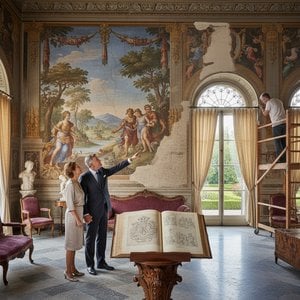
Šeimos Palikimas Tapyboje: Freskos Istorija ir Kultūrinė Reikšmė Kaip Amžina Vertybė
Atraskite freskų istoriją ir kultūrinę reikšmę! Ekspertai patars, kaip įamžinti šeimos palikimą sienų tapyboje. Aukštos kokybės restauravimas ir užsakomieji paveikslai. Investicija į ilgalaikį meno paveldą.

The Enduring Legacy of Fresco Painting: Techniques, History & Contemporary Relevance
Explore the rich history & enduring artistry of fresco painting – from Giotto to Michelangelo! Discover techniques, conservation efforts, & modern applications. Learn how ArtsDot brings this timeless art form to your home.

Emocijų Rezonansas Interjero Freskose: Istorinis Kontekstas ir Asmeninio Patyrimo Galimybės
Atraskite freskų istoriją ir meno galimybes interjere! Profesionalios freskų tapybos paslaugos, individualūs projektai, patikima restauravimas. Sukuriame unikalų grožį Jūsų namuose.

The Enduring Legacy of Fresco: Technique, History & Artistic Expression Across Cultures
Explore the rich history & enduring legacy of fresco painting! Discover ancient techniques, Giotto's masterpieces, and modern applications. Expert insights for art lovers & professionals.