


 Peržiūrėti realaus dydžio版
 Siųsti
 Dalintis
 Išsamiau
 Vadovas

 Atsisiųsti
 Panašūs eksponatai
 Rentgeno spindulių nuotrauka
 Diaporama
 Statistika
Sarah Bernhardt
 Acrylic On Canvas
- WallArt
- 19th-century photography
 1864
1864 21.0 x 16.0 cm
 J. Paul Getty muziejus
 Rodyti daugiau
Giclée / Meno spausdinimas
Muziejų lygio „giclée“ arba drobos spausdinimas: greita gamyba ir lankstios apdailos parinktys. ( Pirkti rankomis tapytą reprodukciją Perejti prie skaitmeninių vaizdų)




P118B €10

P118H €10

P118W €10

P438Z €10

P508JH €12

P508YH €12

P805H €10

P805Z €10

P919BZ €10

P919G €10

P919XJ €10

P959ZH €10

P968JZ €12

W106C €8

W218G €10

W218JH €8

W218Y €10

W307PJ €10

W316G €10

W316PJ €8

W316Y €10

W398PJ €8

W4111J €10

W500HY €15

W500JH €15

W692G €12

W849H €8

W940BG €15

W953PJ €8




Pasirinkite iš mūsų nustatytų dydžių, atitinkančių originalaus meno kūrinio proporcijas.

Įveskite jums reikiamą plotį ir aukštį, kad atvaizdas derėtų prie jūsų rėmo ar sienos. Spausdiną galima tik sumažinti, bet nepadidinti virš originalaus paveikslėlio dydžio, todėl keičiant proporcijas, dalis vaizdo prarandama. Prieš spausdinimą atsiųsime jums skaitmeninį maketą patvirtinimui. Šioje puslapio nuotraukoje matomas pjūvis nėra tikslus – jį rodo tik maketas.
Pristatymas visame pasaulyje () per 2 weeks, o ne įprastas 4/5 savaičių laikotarpis. (24 spalis)

Nemokamas greitasis pristatymas visame pasaulyje

Aukštos kokybės lininis drobė

Pilnas siuntimo draudimas

Muitinės mokesčių grąžinimo garantija

Tikro spalvų atitikimo garantija

100 dienų grąžinimo politika (tik esant įtaigoms)

100% pinigų grąžinimo garantija

Nuolaida dideliems užsakymams
 Stiklo variantas prieinamas tik pasirinkus dydį iki 110 cm

Sarah Bernhardt
Giclée / Meno spausdinimas
Reprodukcijos dydis
-


Visų pasirinktų variantų kaina
€ 54
A Portrait of Timeless Grace: Sarah Bernhardt by Félix Nadar
Félix Nadar’s “Sarah Bernhardt,” captured in 1864, transcends the conventional portrait and becomes a profound study of presence—a frozen moment of theatrical intensity. More than simply a likeness, it's an intimate revelation of the legendary actress herself, radiating both vulnerability and formidable strength. The photograph, executed with the meticulous precision characteristic of Nadar’s work, offers a rare glimpse into Bernhardt’s carefully constructed stage persona, yet simultaneously hints at the woman beneath the glittering facade.
The image is dominated by a striking monochrome palette—a symphony of grays ranging from deep charcoal to delicate silver. This deliberate absence of color forces the viewer to focus entirely on form and texture, highlighting the intricate details of Bernhardt’s face, the luxurious drape of her shawl, and the subtle play of light and shadow across her features. Nadar masterfully employs chiaroscuro—the dramatic contrast between light and dark—to sculpt Bernhardt's figure, emphasizing her cheekbones, the delicate curve of her lips, and the downward tilt of her head, a gesture that simultaneously conveys melancholy and quiet contemplation.
The Language of Photography: Technique and Process
Nadar’s choice of wet collodion process is crucial to understanding the photograph's unique character. This demanding technique required immediate development—the plate had to be prepared, exposed, and processed within minutes, creating a remarkable immediacy in the image. The slight imperfections inherent in this method – subtle shifts in tone, minute variations in sharpness – contribute to the photograph’s authentic feel, imbuing it with a sense of captured time rather than a polished, idealized representation.
The composition itself is remarkably restrained. Nadar eschews elaborate backgrounds or distracting props, focusing entirely on Bernhardt and her immediate surroundings. The shallow depth of field further isolates the subject, drawing the viewer’s attention to her face and creating an intimate sense of connection. Note the subtle vignette effect around the edges – a darkening that frames the subject and directs the eye inward, mirroring the theatrical spotlight she commanded on stage.
A Star is Born: Context and Symbolism
“Sarah Bernhardt” was taken at a pivotal moment in the actress’s career. Just twenty years old, she was already establishing herself as one of France's most celebrated performers, captivating audiences with her dramatic range and magnetic stage presence. The photograph captures this burgeoning fame—the poised confidence, the hint of vulnerability—and foreshadows the legendary status she would eventually achieve.
The shawl draped around Bernhardt’s shoulders is more than just a garment; it's a symbol of both protection and concealment. It frames her face, drawing attention to her expressive eyes and carefully controlled expression, while simultaneously hinting at the layers beneath—the private emotions and personal struggles that fueled her performances. The downward gaze, often interpreted as sadness or introspection, adds a layer of complexity to the portrait, suggesting a depth beyond mere theatricality.
A Legacy in Silver: Nadar’s Vision
Félix Nadar's “Sarah Bernhardt” stands as a testament to his pioneering spirit and artistic vision. He wasn’t simply documenting a celebrity; he was attempting to capture the essence of a personality, revealing the inner life behind the public persona. This photograph exemplifies Nadar’s approach to portraiture—a willingness to challenge conventions, embrace imperfection, and delve into the psychological complexities of his subjects. It remains a powerful and enduring image, offering a captivating glimpse into the world of 19th-century theater and the remarkable woman who dominated it.
问答 (or more naturally for a website heading): Klausimai ir atsakymai
Ar „Sarah Bernhardt“ yra be autorinės teisės?
Kalbant apie autorišką teisę, „Sarah Bernhardt“ yra pripa принадле belongs to the public domain – jo autorinė teisė pasibaigusi.
Kokia spalvų intensyvumas pasižymi „Sarah Bernhardt“, autorius – Félix Nadar?
„Sarah Bernhardt“ paletės spalvų nasyginimas yra Muted.
Ar „Sarah Bernhardt“, autorius – Félix Nadar yra portretinė, peisžinio tipo ar kvadratinė kompozicija?
„Sarah Bernhardt“, autorius – Félix Nadar kūrinio formatas yra Portrait. Formatas aprašo kompozicijos proporcijas.
Susiję kūriniai


Autoriaus biografija
Félix Nadar: Fotografijos pionierius
Pradiniai metai ir pradžia
- Gimė: Gaspard-Félix Tournachon 1820 m. balandžio 5 d. Paryzuje (nors kai kurie šaltiniai nurodo Lioną).
- Jo tėvas, Victor Tournachon, buvo spausdinimo srities specialistas ir knygyninkas.
- Pradinai studijavo mediciną, tačiau po tėvo mirties buvo priverstas ją palikti dėl finansinių sunkumų.
- Nadar, kaip jis tapo žinomas, savo karjerą pradėjo kaip karikatūristas ir romanistas, dirbdamas įvairiuose laikrašniuose.
Nuo karikatūros iki fotografijos
- Fotografijos eksperimentus pradėjo apie 1853 m.
- Savo pirmąjį fotografijos studiją atidarė 1854 m. adresu 113 rue St. Lazare, o 1860 m. persikėlė į 35 Boulevard des Capucines.
- Greitai pelnė pripažinimą dėl savo intriguojančių ir psichologiškai gilių portretų.
- Tradicijų atmetimas: Nadar vengė prabangaus fono, būdingo tuometinei portretų menui, teikdamas pirmenybę natūraliam šviesos naudojimui ir dėmesiui į modelio asmenybę.
Aviacijos fotografijos pionierius
- 1858 m. Nadar tapo pirmąoju žmogumi, padaryjusiu nuotraukas iš oro naudojant aerostatus.
- Jis įveikė technines iššūkius, susijusius su fotografinių plokščių iškėlimu didelėje aukštėje, išradęs dujomis atsparią medvilninę dangtį savo aerostato krepšiams.
- Taip pat buvo dirbtinio apšvietimo fotografe pionierius, ypač naudojdamas jį Paryžiaus katakombose.
- Le Géant: 1863 m. užsakė milžiniško aerostato „Le Géant“ (Gigantas) statymą, kuris įkvėpė Žilui Verne romanui *„Penkios savaitės aerostate“*.
Didieji pasiekimai ir įtaka
- Portretų menas: Fotografavo daugybę iškilmingų asmenų, įskaitant Victor Hugo, Charles Baudelaire, Sarah Bernhardt ir Gustave Courbet.
- Parisių belekryžėje (1870–71 m.) naudojdamas aerostatus įkurė pirmąjį pasaulinio oro pašto tarnybą.
- Savo studijoje 1874 m. surengė pirmąją impresionistų parodą, suteikdami kritiškai svarbią platformą pradedantiems menininkams.
- 1886 m. išleido tai, kas laikoma pirmąoju fotointerviu, kuriame dalyvavo chemikas Michel Eugène Chevreul.
Vėlesnieji metai ir palikimas
- Nuo 1895 m. iki 1909 m. savo studiją perkėlė į Marselį.
- Mirus 1910 m. kovo 20 d. Paryzuje, jis yra palaidotas Père Lachaise kapinėje.
- Po jo mirties studijos veiklos tęsė jo sūnus, Paul Nadar.
- Quand j’étais photographe: Išleido memuarus, kuriuose apžvelgė savo gyvenimą ir darbą, suteikdami vertingų įžvalgų apie XIX amžiaus fotografiją.
- Istorinė reikšmė: Nadaro inovatyvios technikos ir meninė vizija kruopščiai paveikė fotografijos vystymąsį kaip meno formą. Jo portretai išlieka ikoninės Paryžiaus intelektualų ir menininkų apygardų atvaizdai.
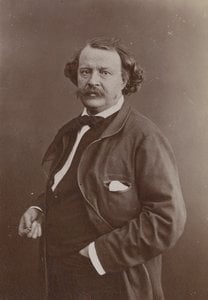
Félix Nadar
1820 - 1910 , Prancūzija
Trumpa informacija apie kūrėją
- Birth Date: 1820 m. balandžio 5 d.
- Death Date: 1910 m. kovo 20 d.
- Influenced: ['Žilio Verno']
- Influenced By: Nėra
- Movement:
- Fotografija
- Karikatūra
- Impresionizmas (susijęs)
- Name: Félix Nadar
- Nationality: Prancūzų
- Notable Works:
- Baudelaire, Hugo, Delacroix portretai
- Orų fotografija
- Fotinterviu su Chevreul
Susiję straipsniai

Monochrome Visions: Exploring the Aesthetic & Historical Significance of Black & White Photography
Explore the rich history & artistic power of black and white photography. From early techniques to iconic masters like Ansel Adams, discover why monochrome continues to captivate art lovers today. Expert insights for collectors.

Dark Masterpieces: 10 Iconic Paintings Dominated by Black Tones |
Explore 10 iconic paintings dominated by black tones, from Rembrandt’s chiaroscuro to Goya's dark expressions. Discover the stories behind these masterpieces & find museum-quality art reproductions for your home at .

Beyond the Lens: Photography's Enduring Influence on Modern & Contemporary Art
Explore photography's pivotal role in shaping modern & contemporary art. Discover key movements, influential artists like Stieglitz, and expert collecting advice from ArtsDot.

Beyond the Portrait: Félix Nadar & the Psychological Depths of 19th-Century Photography
Explore the revolutionary photography of Félix Nadar – pioneer of portraiture, aerial imaging & psychological depth. Discover his iconic portraits of Baudelaire, Hugo & more. A deep dive into 19th-century art history.

Pictorialism: A Search for Artistic Photography's Soul – Aesthetics, Techniques & Legacy
Explore the captivating world of Pictorialism – a pivotal movement that transformed photography into fine art. Discover key artists like Stieglitz & Käsebier, techniques, and collecting tips from experts.