
- Pradžia

- Spausdinimas ant drobės
- Eugenas Henri Paulas Gauginas
- Les Alyschamps
 Užsisakyti kopiją Pirkti skaitmeninį paveikslą
 Pasidalinti
 Dalintis
 Details
 Pridėti į mėgstamiausius

 Atsisiųsti
 Panašūs eksponatai
 X-Ray
X-Ray
 Automatinė diorama
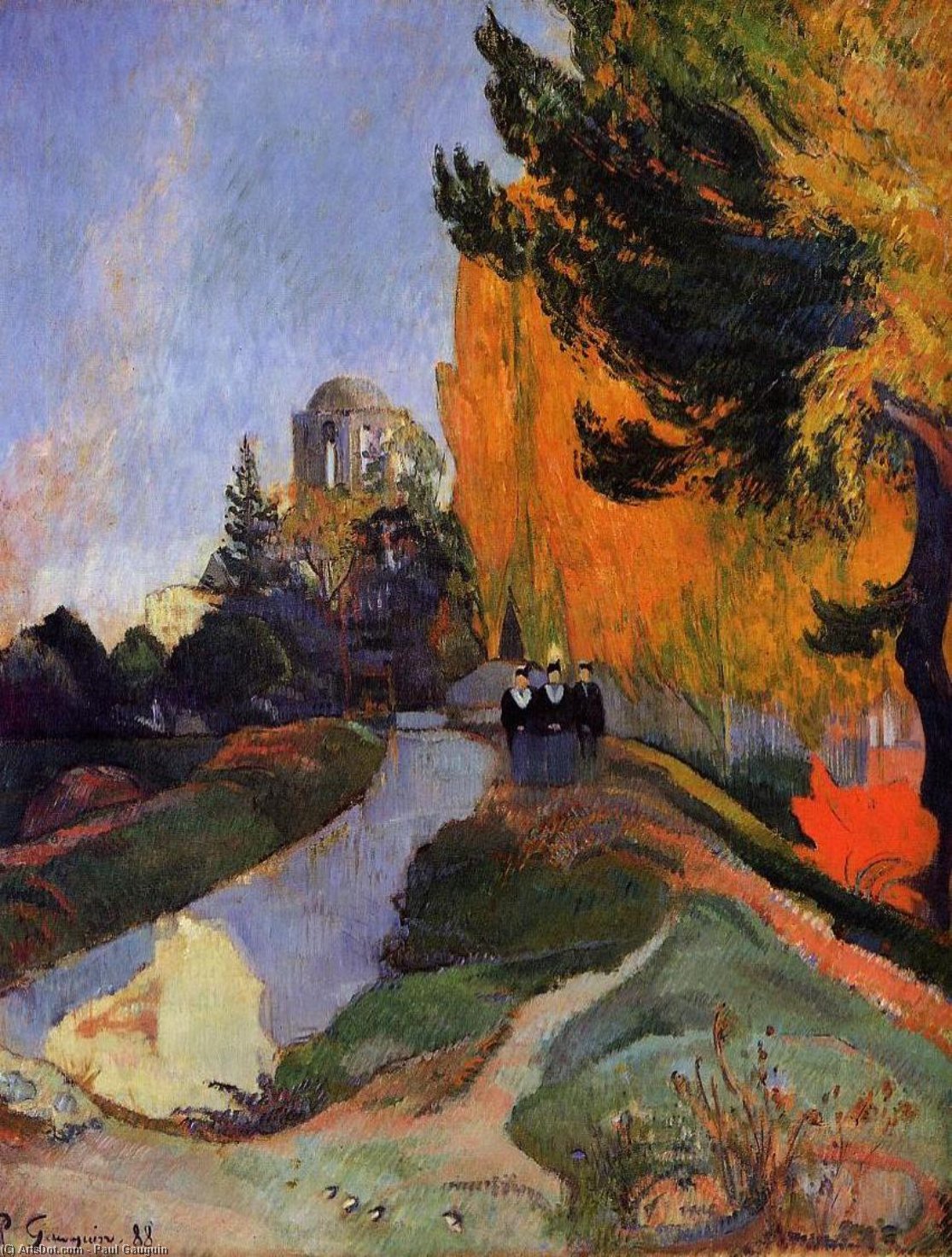
Les Alyschamps
 Aliejus ant drobės
- Sienų dekoracijos
- Post-Impressionism
 1888
1888 92.0 x 73.0 cm
 Orsė muziejus
Giclée / Meno spausdinimas
Muziejų lygio „giclée“ arba drobos spausdinimas: greita gamyba ir lankstios apdailos parinktys.
 Skaityti daugiau



P118B $10

P118H $10

P118W $10

P438Z $10

P508JH $12

P508YH $12

P805H $10

P805Z $10

P919BZ $10

P919G $10

P919XJ $10

P959ZH $10

P968JZ $12

W106C $8

W218G $10

W218JH $8

W218Y $10

W307PJ $10

W316G $10

W316PJ $8

W316Y $10

W398PJ $8

W4111J $10

W500HY $15

W500JH $15

W692G $12

W849H $8

W940BG $15

W953PJ $8




Pasirinkite iš mūsų nustatytų dydžių, atitinkančių originalaus meno kūrinio proporcijas.

Galite nurodyti savo matmenis, kad vaizdas atitiktų konkretų rėmą ar erdvę. Jei pasirinktas dydis nesutaps su originalaus paveikslėlio proporcijomis, mes arba apkirpsime kūrinį, arba išplėsime vaizdą naudojant veideliu atspindėtą arba vientisą šoną. Skaitmeninis maketas bus išsiųstas jums patvirtinti prieš pradedant gamybą.
Atkreipkite dėmesį, kad ekrane matomas vaizdinys neatspindi tikrojo apkirpimo ar išplėtimo. Tik maketas tiksliai parodytų galutinę kompoziciją.
Nors galima rinktis ir individualius dydžius, rekomenduojame pasirinkti vieną iš išanksti nustatytų matmenų, kad būtų išlaikytos originalios proporcijos.
Pristatymas visame pasaulyje () per 2 weeks, o ne įprastas 4/5 savaičių laikotarpis. (1 liepa)

Nemokamas greitasis pristatymas visame pasaulyje

Aukštos kokybės lininis drobė

Pilnas siuntimo draudimas

Muitinės mokesčių grąžinimo garantija

Tikro spalvų atitikimo garantija

60 dienų grąžinimo politika (tik esant gamyklinėms defektams)

100% pinigų grąžinimo garantija

Nuolaida už kelias reprodukcijas
 Stiklo variantas prieinamas tik pasirinkus dydį iki 110 cm

Les Alyschamps
Giclée / Meno spausdinimas
Reprodukcijos matmenys
-


Galutinė kaina
-
Kolekcinio eksponato aprašymas
A Moment of Tranquil Intensity: Paul Gauguin’s *Les Alyschamps*
Paul Gauguin's *Les Alyschamps*, painted in 1888 and currently residing within the hallowed halls of the Musée d’Orsay, isn’t merely a depiction of horse riders; it’s an immersion into a world of distilled emotion and vibrant, almost hallucinatory color. This canvas captures a fleeting moment of rural idyll—three figures on horseback traversing a sun-drenched road—yet within that seemingly simple scene lies a complex tapestry of Symbolist yearning and Gauguin's revolutionary approach to painting. The work immediately draws the eye with its bold palette; deep blues and greens dominate, punctuated by flashes of ochre and crimson, creating an atmosphere both luminous and subtly melancholic. It’s a landscape not of objective reality, but of feeling – a testament to Gauguin’s deliberate departure from the Impressionist pursuit of capturing fleeting light and instead focusing on conveying his inner experience.
Synthetism: A New Language for Color
Gauguin's *Les Alyschamps* is a prime example of his development of Synthetism, a term he himself coined. Rejecting the Impressionists’ emphasis on optical representation, Gauguin sought to synthesize disparate elements – color, form, and emotion – into a unified whole. He achieved this through a flattened perspective, reducing objects to their essential hues and shapes, almost as if viewed through a dream. The riders themselves are not rendered with meticulous detail; rather, they become vessels for the painting’s emotional core. Notice how the figures seem suspended in space, divorced from any specific topographical context. This deliberate simplification wasn't an accident; it was a conscious effort to bypass the limitations of naturalistic representation and tap directly into the viewer’s subconscious.
Symbolism and the Pursuit of Authenticity
The painting resonates deeply with Symbolist concerns, exploring themes of isolation, longing, and the search for spiritual truth. The solitary riders, seemingly lost in their own thoughts, evoke a sense of detachment from society – a sentiment that mirrored Gauguin’s own disillusionment with Parisian life and his desire to connect with more primal cultures. The bird soaring above, a recurring motif in Gauguin's work, can be interpreted as a symbol of freedom, transcendence, or perhaps even the artist’s own restless spirit. It adds a layer of dynamism to the otherwise static scene, hinting at possibilities beyond the immediate landscape. Considering Gauguin’s upbringing and his fascination with non-European cultures – particularly his time in Peru – it's not surprising that this painting embodies a yearning for something authentic and untainted by Western conventions.
Technique and Emotional Resonance
*Les Alyschamps* showcases Gauguin’s distinctive brushwork, characterized by broad, sweeping strokes applied with intense color. The paint is often laid on thickly, creating a tactile surface that invites the viewer to engage physically with the artwork. This impasto technique not only adds visual interest but also contributes to the painting's emotional intensity. The vibrant colors are applied in contrasting blocks, further amplifying their impact and drawing attention to key elements within the composition. The careful balance of light and shadow, combined with Gauguin’s masterful use of color, creates a powerful sense of atmosphere—a feeling of both serenity and underlying tension. It's a painting that rewards repeated viewing, revealing new nuances and emotional depths with each encounter.
ArtsDot offers exquisite, hand-painted reproductions of *Les Alyschamps*, meticulously crafted to capture the essence of Gauguin’s revolutionary style. Whether you are an art enthusiast, collector, or seeking a striking piece for your interior design, our reproductions provide a beautiful and authentic way to experience this iconic work of art.
panašūs kūriniai


Autoriaus biografija
Eugène Henri Paul Gauguin: A Revolutionary Post-Impressionist Painter
Paul Gauguin, a name synonymous with bold color and defiant individualism, stands as one of the most influential figures in the artistic landscape of the late nineteenth century—a pivotal innovator who irrevocably altered the course of modern art. Born June 7, 1848, in Paris, France, his life unfolded far from the conventional paths expected of a young man of his era, marked by an upbringing steeped in intellectual curiosity and shaped by encounters with cultures radically different from those of Western Europe. His father, a journalist, instilled in him a passion for storytelling and observation; his mother, descended from Peruvian aristocracy—a lineage that carried echoes of Flora Tristan’s pioneering feminist activism—infused him with ideals of social justice and an unwavering belief in the transformative power of art. This heritage would profoundly inform Gauguin's artistic vision, propelling him toward explorations of spirituality and authenticity—qualities he sought to embody in every brushstroke.Early Years & Influences: Impressionism’s Shadow
Gauguin’s formative years were spent absorbing the intellectual currents of Parisian society while simultaneously cultivating a burgeoning talent for painting. Initially captivated by the Impressionist movement, spearheaded by artists like Monet and Renoir, he embraced their pioneering techniques for capturing fleeting moments of light and color—a fascination that would prove crucial to his artistic development. However, Gauguin quickly recognized the limitations inherent in Impressionism’s preoccupation with optical perception, perceiving it as insufficient to convey deeper emotional truths. He diligently studied the works of Cézanne and Degas, absorbing their explorations of form and composition—artists who challenged the prevailing aesthetic conventions of their time. These influences would contribute to his gradual departure from Impressionistic ideals, paving the way for a stylistic revolution that would redefine modern art.The Pursuit of Authenticity: Brittany & Japonisme
Seeking inspiration beyond the confines of Parisian salons, Gauguin embarked on a journey of artistic discovery that began in Brittany—a region characterized by rugged landscapes and deeply rooted traditions. He meticulously observed the textures and colors of Breton peasants’ lives, attempting to capture their essence through simplified forms and bold brushstrokes. This period witnessed him experimenting with techniques reminiscent of Cézanne, whose sculptural approach to painting emphasized solidity and geometric precision. Simultaneously, Gauguin became enthralled by Japanese prints—Japonisme—which exerted a powerful influence on his artistic sensibilities. He adopted flattened perspectives, bold outlines, and decorative patterns inspired by Japanese aesthetics—a stylistic choice that reflected his fascination with non-Western cultures and their perceived spiritual purity.Tahiti & Symbolist Expression
The pivotal moment in Gauguin’s artistic transformation arrived in 1891 when he ventured to Tahiti—a Polynesian island nestled in the South Pacific—seeking refuge from the pressures of European society and pursuing a profound quest for artistic inspiration. Driven by an unwavering conviction that Tahiti held the key to unlocking deeper truths about human existence, he immersed himself in local customs and beliefs, depicting Tahitian women, landscapes, and religious rituals through his distinctive style—a style characterized by vibrant colors, simplified forms, and an aura of mysticism. Influenced by Symbolist artists like Edvard Munch and Gustave Moreau, Gauguin rejected Impressionism’s objective representation of reality, opting instead for expressive symbolism to convey emotion and spiritual significance. Iconic paintings such as “Vahine no te miti” and “The Vision After the Sermon” exemplify this stylistic commitment—works that resonate with primal energy and evoke profound contemplation.Legacy & Recognition
Despite facing considerable hardship during his Tahitian exile—including financial difficulties and deteriorating health—Gauguin persevered in his artistic endeavors, producing a prolific body of work that solidified his reputation as one of the most visionary artists of his era. His uncompromising pursuit of authenticity—a rejection of Western conventions in favor of embracing primal spirituality—inspired generations of artists who followed him. Though initially dismissed by critics and overshadowed by contemporaries like Vincent van Gogh, Gauguin’s influence endured, shaping movements such as Fauvism and Surrealism. Today, he is celebrated as a pioneer of modern art—an artist whose bold colors, simplified forms, and symbolic imagery continue to captivate audiences worldwide. His legacy serves as a testament to the transformative power of artistic vision and the enduring allure of exploring realms beyond the confines of conventional perception.
Eugenas Henri Paulas Gauginas
1848 - 1903 , Prancūzija
Trumpa informacija
- Artistic Movement Or Style: Post-Impressionizmas, Simbolizmas
- Artists Or Movements Influenced By This Artist: ['Pablo Picasso']
- Artists Who Influenced This Artist: ['Camille Pissarro']
- Date Of Birth: 1848 metų jūnijus 7.
- Date Of Death: 1903 metų maijus 8.
- Full Name: Eugène Henri Paul Gauguin
- Nationality: Prancūzas
- Notable Artworks:
- Clearing
- Vahine no te miti
- Manao Tupapau
- Little Breton Shepherd
- Place Of Birth: Parižius, Prancūzija
Susiję straipsniai

Chromatic Abundance: Exploring the Psychological Impact of Rich Color Palettes in Painting
Explore the fascinating world of color theory in painting! Discover how Impressionist & Post-Impressionist masters used vibrant hues to evoke emotion and create lasting impact. Expert insights for collectors & art enthusiasts.

Émile Bernard: Pioneering Synthetism & the Post-Impressionist Quest for Essence
Explore the life & work of Émile Bernard, a pivotal Post-Impressionist pioneer of Synthetism. Discover his influence on Van Gogh & Gauguin and learn about collecting his art with ArtsDot.

Paul Sérusier: Pioneering Synthetism & The Nabis’ Symbolic Revolution
Discover Paul Sérusier's pivotal role in the Nabis movement & the birth of Synthetism. Explore 'The Talisman,' his influence on modern art, and a deeper understanding of this symbolic revolution. Expert analysis & insights.

Chromatic Narratives: Exploring Emotional Resonance & Artistic Impact Through Color Palette Selection
Explore the profound impact of color on emotion & artistic expression. Discover how master artists like Klee & Matisse used palettes to evoke feeling and build lasting legacies. A guide for discerning art collectors.

The Equine Muse: A Historical & Artistic Exploration of Horses in Painting
Explore the captivating history of horses in painting! Discover Renaissance masterpieces, Baroque grandeur & expert insights for collecting equestrian art. Learn about symbolism, techniques & lasting value with ArtsDot.



