


The picture follows your choices: , .
Kolekcinio objekto aprašas
Experience Ernst Ludwig Kirchner's 'The Calla,' a vibrant Expressionist street scene pulsating with urban energy and emotional intensity. Bold colors, distorted forms, and impasto textures capture the anxieties of modern life.
 Skaityti daugiau
Autoriaus biografija
Ernst Ludwig Kirchneris (1880–1938) – žymusis Vokietijos ekspresionistas ir Die Brücke steigėjas. Išsiaiškinti jo ryškiusius emocijas iškviečiančius paveikslų kūriniais apie Berlyną, nuskaidrusis meno stiliumi ir istorinės reikšmės kontekstu.
Rankų darbo aliejinės reprodukcijos
Rankiniu būdu tapytas aliejus ant droblio jūsų pageidaujamame dydį ir rėmuose – tai mūsų menininkų pagal užsakymą sukurtas darbas. ( Perjungti į spausdinamus版作品 Perejti prie skaitmeninių vaizdų)
More about this painting
 Peržiūrėti realaus dydžio版
 Pasidalinti
 Dalintis
 Išsamiau
 Vadovas

 Atsisiųsti
 Panašūs eksponatai
 Rentgeno spindulių nuotrauka
 Automatinė diorama
 Q&A
Q&A Statistika
Order your painting in four simple steps
Take your time. You can change any answer; the price in your order card follows each choice.
1 Step one of four
Which size would you like?
These sizes keep the proportions of the original painting. The drawing shows your choice on a wall, above a two-metre sofa.
Or give your own measurements
Pasirinkite iš mūsų nustatytų dydžių, atitinkančių originalaus meno kūrinio proporcijas.

Įveskite jums reikiamą plotį ir aukštį, kad paveikslas atitiktų jūsų rėmą ar sieną. Kadangi šis darbas yra rankinio darbo, siekiant išgauti kitokios formos dydį, paveikslas gali būti šiek tiek didesnis (nuo kraštų bus palikta daugiau erdvės) arba mažesnis – pasirinkite jums patogiausią variantą. Prieš pradedant tapyti, atsiųsime jums skaitmeninį maketą patvirtinimui. Šioje puslapio nuotraukoje matomas vaizdas nėra galutinis rezultatas – jį parodys tik sukurtas maketas.
2 Step two of four
How should it be prepared: rolled, stretched or framed?
The prices below are for the size you chose in step one.
Choose the edges of the stretched canvas
Choose your frame

White €1

Blurside €1

Extended €1

P118B €10

P118H €10

P118W €10

P438Z €10

P508JH €12

P508YH €12

P805H €10

P805Z €10

P919BZ €10

P919G €10

P919XJ €10

P959ZH €10

P968JZ €12

W106C €8

W218G €10

W218JH €8

W218Y €10

W307PJ €10

W316G €10

W316PJ €8

W316Y €10

W398PJ €8

W4111J €10

W500HY €15

W500JH €15

W692G €12

W849H €8

W940BG €15

W953PJ €8

H24-GOLD €30

H24-SILVER €30

H36-GOLD €45

H36-SILVER €45
Įrėmintas
Moulding: . Overall size with the frame: .
3 Step three of four
Would you like anything changed in the painting?
Most people answer no. Because each painting is made by hand, our artist can also adapt it for you.
After order, ArtsDot.com team will email client for instructions and provide a mockup preview
4 Step four of four
A few finishing options
All of them are optional. The answers already selected cost nothing extra.
Who paints it?
Pristatymas visame pasaulyje () per 3–4 savaites, o ne įprastai – per 5 savaites. (29 spalis). Kokybė lieka nepakeičiama.
A nameplate, as in a museum?
Išgraviruotos bronzinės plokštelės detalės
This elegant plaque features the artist's name and the title of the artwork, finely engraved for a timeless presentation.
It is made from bronze with a refined, elegant finish. The text is precisely laser-engraved for a sharp and permanent result. Measuring 9x2 cm, the plaque is compact yet easy to read. It's built to be durable and scratch-resistant, offering a professional, museum-quality look. Mounting is simple thanks to the included adhesive backing.
Skaidrios akrilo plokštelės informacija
The plaque includes essential engraved details such as the artist's name, the title of the artwork, the date it was created, the type of media used-like oil on canvas or watercolor-a brief description of the piece, and a QR code that links to the complete artwork information.
It is crafted from clear acrylic, offering a sleek, modern appearance. The text is UV-engraved in black to ensure strong visual contrast. With a size of 10x15 cm, it ensures optimal readability. It comes equipped with two metal hooks for secure wall mounting. The plaque is designed to be weather-resistant, making it suitable for various environments, and it includes interactive features that work seamlessly with smartphone scanning.
Juodos akrilo plokštelės informacija
This elegant plaque includes engraved information such as the artist's name, the title of the artwork, the date it was created, the type of media used (like oil on canvas or watercolor), a short description of the artwork, and a QR code for quick access to more information.
The plaque itself is made from refined black acrylic with a premium finish. The text is laser-engraved in white for high contrast and readability. Its size is 10x15 cm, designed to be easy to read. It comes with two metal hooks for professional mounting. The design is sleek and fits any interior style. It is also weather-resistant and durable, with built-in digital integration for mobile compatibility.
A protective varnish?
When do you need it?
✓ Check and order
Your painting, as you ordered it

The calla
Reprodukcijos technika
Reprodukcijos matmenys
-

Aukščiausios klasės meistras
Daugiau detalių, meistriškumo ir papildomo gamybos laiko
-

Reprodukcijos rėmėjimo parinktys
-
-
Dėl meno kūrinių ar reprodukcijų, kurių bet kuri pusė yra didesnė nei 105 cm (apie 41 inch), rėmas bus siunčiamas kaip išskaidytas surinkimo rinkinys. Šis metodas užtikrina saugų pristatymą ir apsaugo nuo transportavimo metu galimos žalos.
Reikalingas profesionalus surinkimas – tai nėra „pasidaryk pats“ (DIY) produktas.
Rinkinys turi būti surinktas, o drobė išplėsta naudojant patyrį profesionalų rėmininką, medžio klijus (nėra įtraukti į rinkinį), drobės plėšimo kleslę bei presas, kad rėmo rėžiai išliktų tiesūs, kol klijai išdžiūvus. Netinkamas surinkimas arba netolydus drobės įtampa gali negrįžtamai sugadinti meno kūrinį, todėl šie atvejai nėra užtraukiami mūsų garantijos.
 Dėl meno kūrinių ar reprodukcijų, kurių bet kuri pusė yra didesnė nei 105 cm (apie 41 inch), rėmas bus siunčiamas kaip išskaidytas surinkimo rinkinys. Šis metodas užtikrina saugų pristatymą ir apsaugo nuo transportavimo metu galimos žalos.
Į komplektą įeina visi vientisos medienos elementai, tiksliai išpjauti pagal dydį.
Surmontinama naudojant pridėtus varžtus bei papildomai reikalingą medžio kliją kampų jungtims, kuris nėra pridėtas ir turi būti parinktas rėmininkui.
Reikalingi profesionalūs įrankiai, kurie nėra įtraukti į rinkinį: drobės kėlimo plytelės (stiprintuvai) ir klemiai, laikantys rėmo strygius tiesiu kampu, kol džiūsta lipas.
Svarbu:
Kampų jungtims reikalingi medžio klijai, barams reikia laikyti naudojant presas, kol klijai visiškai išdžiūvės, o surinktam rėmui įtempiamai privilgti būtinos drobės įtempimo plytযুক্ত. Šios priemonės į rinkinį neįtrauktos. Prieš užsakydami šio dydžio rinkinį, rekomenduojame pasimalkoti patyrusiu rėmų meistru.

Pavadinimo lentelė
-
-

Apsauginis lakas
Blizgus lakas (ryškina spalvas, saugo nuo šviesos ir drėgmės)
-

Personalizuoti kūrinį
Ką galima pakeisti (pavyzdžiui): pakeisti veidą klientui skirta nuotrauka; pridėti augintinį (pvz., katę pakeisti šuniu); įtraukti paslėptą žinutę fone; pakeisti fono kraštovaizdį ar elementus.
-

Skubiai
Pristatymas visame pasaulyje () per 3–4 savaites, o ne įprastai – per 5 savaites. (29 spalis). Kokybė lieka nepakeičiama.
-
Skubus pristatymas
Pristatymas visame pasaulyje () per 5 weeks. (5 lapkritis).
Įskaičiuota
Bendroji kaina
€ 276
Stiklo variantas prieinamas tik pasirinkus dydį iki 110 cm
Included with every order
- Nemokamas greitasis pristatymas visame pasaulyje
- Aukštos kokybės lininis drobė
- Pilnas siuntimo draudimas
- Muitinės mokesčių grąžinimo garantija
- Tikro spalvų atitikimo garantija
- 100 dienų grąžinimo politika (tik esant įtaigoms)
- 100% pinigų grąžinimo garantija
- Nuolaida dideliems užsakymams


A Frenzy of Urban Emotion: Ernst Ludwig Kirchner’s “The Calla”
Ernst Ludwig Kirchner's "The Calla" isn’t merely a depiction of a street scene; it’s a visceral plunge into the anxieties and intensities of early 20th-century urban life. Painted in 1913, during a period of immense social and political upheaval in Germany, this oil on canvas explodes with a raw energy characteristic of German Expressionism. Kirchner, a founding member of Die Brücke (The Bridge), sought to move beyond the constraints of academic realism, aiming instead to capture not just what he saw, but how he *felt* about it – a deeply subjective and often unsettling experience. The painting immediately assaults the viewer with its bold color palette dominated by fiery reds, deep greens, and bruised pinks, all grounded in earthy browns, creating a sense of immediate tension and unease. These aren’t colors that describe a pleasant afternoon; they are the hues of a simmering, restless city.
The composition itself is deliberately chaotic, mirroring the perceived disorder of modern urban existence. Kirchner abandons traditional perspective, flattening the space and layering figures in an overlapping mass that seems to press forward, almost overwhelming the viewer. There’s no single focal point; instead, our eye is drawn on a journey through this crowded tableau, encountering fleeting glimpses of faces, fragments of clothing, and the suggestion of movement at every turn. Diagonal lines – evident in the arrangement of figures and the brushstrokes themselves – contribute to this sense of dynamism, as if the scene is perpetually caught in motion. The distortion of forms, particularly the simplified, almost flattened rendering of the human figures, speaks directly to the Expressionist impulse to prioritize emotional impact over accurate representation.
The Language of Distortion: Technique and Style
Kirchner’s technique is deliberately loose and expressive, a hallmark of his approach. Thick impasto – the application of paint in heavy, textured layers – is evident throughout the canvas, creating a palpable sense of physicality and immediacy. The brushstrokes are visible, not concealed or blended, adding to the painting's raw energy. Lines aren’t clean or precise; they’re blurred and gestural, contributing to the overall feeling of disorientation and anxiety. This disregard for meticulous detail is central to the Expressionist aesthetic – a rejection of photographic realism in favor of conveying inner experience. The use of complementary colors—particularly the stark juxtaposition of red and green—intensifies the visual drama and amplifies the emotional impact.
Symbolism and the Anxieties of Modernity
“The Calla” is more than just a street scene; it’s a potent symbol of the alienation and anxieties inherent in modern urban life. The densely packed figures, lost within the anonymity of the crowd, represent the individual swallowed by the overwhelming scale of the city. Kirchner masterfully captures this sense of isolation through his deliberate distortion of form and color. The faces are often obscured, their features simplified to suggest a lack of identity. The overall impression is one of unease, as if the figures are trapped in a perpetual state of agitation. Some art historians interpret the painting as a commentary on the social unrest brewing in Germany at the time, reflecting the anxieties surrounding war and political instability. The title itself, “The Calla,” might allude to the ephemeral nature of beauty and life amidst this chaotic backdrop – a fleeting moment of grace within an overwhelming world.
A Legacy of Emotional Intensity
Kirchner’s "The Calla" stands as a powerful testament to the expressive potential of art. It exemplifies the core tenets of German Expressionism, prioritizing emotional impact over objective representation. Its bold colors, distorted forms, and dynamic composition continue to resonate with viewers today, offering a glimpse into the turbulent psychological landscape of early 20th-century Europe. Reproductions of this iconic work offer a unique opportunity to experience Kirchner’s vision firsthand, bringing his intense emotions and unsettling observations to your own space. Considered alongside other works by Kirchner within the context of Die Brücke, “The Calla” provides a crucial window into the birth of modern art and its enduring exploration of the human condition.
Klausimai ir atsakymai
Kokią spalvų paletę naudoja „The calla“ – Ernstas Ludvigas Kiršianas?
„The calla“ spalvos sudaro Dark paletę. Ši klasifikacija aprašo dominuojančias spalvų grupes.
Koks yra rekomenduojamas „The calla“ spausdinimo formatas – koks dydis ir orientacija?
Large dydis, Landscape orientacija: tai rekomenduojamas spausdinimo nustatymas kūriniui „The calla“ – Ernstas Ludvigas Kiršianas.
Kokią nuotaiką į erdvę atneštų „The calla“?
Dramatic atmosfera kūrybinėje veikale „The calla“ – Ernstas Ludvigas Kiršianas dera su rekomenduojama erdvė: tai Living Room.
panašūs kūriniai


Ernstas Ludvigas Kiršianas
1880 - 1938, Գերմանիա
Autoriaus biografija
Ernst Ludwig Kirchner (1880–1938): A Life Forged in Expression
Ernst Ludwig Kirchner, a name inextricably linked to the visceral heart of German Expressionism, wasn’t merely an artist; he was a conduit for anxieties simmering beneath the surface of early 20th-century Europe. Born into Bavaria's Aschaffenburg in 1880, his formative years were shaped by familial mobility – a constant shifting of landscapes dictated by his father’s profession as a paper scientist – fostering within him an inherent sense of displacement that would become a defining characteristic of his oeuvre. From Frankfurt to Perlen and finally settling in Chemnitz, Kirchner absorbed the palpable unease of a nation undergoing rapid modernization, imbibing influences from both philosophical currents and artistic precedents. Initially pursuing architecture at Dresden’s Königliche Technische Hochschule, he swiftly recognized painting as his true vocation—a path illuminated by admiration for masters like Albrecht Dürer and fueled by a resolute rejection of academic formalism. He found solace and camaraderie amongst fellow rebels – Fritz Bleyl, Karl Schmidt-Rottluff, Erich Heckel – forging bonds that would irrevocably alter the trajectory of twentieth-century art history.The Genesis of Expression: Early Influences & Artistic Formation
Kirchner’s artistic journey began with a profound engagement with nature and observation—a habit instilled by his childhood spent amidst Bavaria's rolling hills. His father’s profession provided him with invaluable insight into the industrial landscape, shaping his worldview and informing his artistic sensibility. He honed his skills at Dresden’s Hochschule für Grafik und Buchdruckschule (School of Graphic Arts), immersing himself in draughtsmanship and perspective drawing—disciplines that would serve as foundational tools for his subsequent explorations. Crucially, Kirchner encountered kindred spirits who shared a fervent belief in the transformative power of art—particularly Fritz Bleyl, Karl Schmidt-Rottluff and Erich Heckel—who would become instrumental in establishing *Die Brücke*, an artistic collective dedicated to shattering conventional aesthetic boundaries. This formative encounter ignited his passion for experimentation and cemented his commitment to confronting societal anxieties through visual language. The influence of Dürer’s meticulous detail and compositional rigor, alongside the expressive dynamism of Vincent van Gogh's brushstrokes—particularly in his depiction of swirling skies—provided Kirchner with invaluable stylistic models.Die Brücke: A Revolt Against Tradition
In 1905, Kirchner joined *Die Brücke* (“The Bridge”), a revolutionary artistic alliance that fundamentally challenged the prevailing aesthetic norms of German art. Alongside Bleyl, Schmidt-Rottluff and Heckel, Kirchner sought inspiration from sources deemed unacceptable by the established art world—primitive art from Africa and Oceania, mirroring the stylistic impulses of Edvard Munch—and championed bold color palettes and distorted forms as vehicles for conveying psychological turmoil. Rejecting idealized beauty, *Die Brücke* artists embraced dissonance and fragmentation to capture the anxieties inherent in modern urban life. Their manifesto declared a rejection of academic conventions and an affirmation of subjective experience—a stance that resonated deeply with Kirchner’s own worldview. The group's exploration of themes like loneliness, alienation and psychological instability reflected the broader cultural anxieties of the era. Notable works from this period include *The Street* (1908), which powerfully portrays the oppressive atmosphere of Berlin’s urban sprawl and captures the emotional detachment experienced by its inhabitants—a testament to Kirchner’s ability to distill complex psychological states into striking visual imagery.Exploring Form & Emotion: Kirchner's Distinctive Style
Kirchner’s artistic style is instantly recognizable for its distinctive characteristics—primarily his masterful manipulation of color and brushstroke. He eschewed naturalistic representation, prioritizing emotional impact over accurate depiction—a deliberate rejection of Impressionist ideals. His palette employed vibrant hues that pulsed with intensity, mirroring the turbulent inner landscape he sought to convey. Kirchner’s brushstrokes were energetic and visible, contributing to a palpable sense of immediacy and dynamism—a technique honed through meticulous observation and experimentation. Figures and objects were frequently distorted or elongated, reflecting a subjective rather than objective reality—a stylistic choice that underscored his belief in portraying psychological truths. He drew inspiration from Henri Matisse's use of flattened planes of color and simplified forms, mirroring the stylistic impulses of Fauvism. Furthermore, Kirchner’s fascination with primitive art—particularly sculptures from Africa and Oceania—influenced his approach to form and texture—demonstrating a desire to reconnect with primal energies and reject academic conventions.Legacy & Recognition: A Lasting Influence
Kirchner's artistic legacy extends far beyond the confines of Expressionism, influencing subsequent generations of artists who embraced bold experimentation and psychological depth. His unflinching portrayal of human experience—characterized by vulnerability, anxiety and a yearning for authenticity—continues to resonate powerfully with contemporary audiences. Despite facing persecution during the Nazi regime—where over 600 of his works were confiscated and deemed “degenerate”—Kirchner’s uncompromising artistic vision endured, securing him a prominent place in art history. His enduring influence can be seen in the work of artists across diverse mediums—from painting to sculpture to printmaking—solidifying his position as one of Germany's most significant modernist figures. Ernst Ludwig Kirchner died tragically in Davos, Switzerland, in 1938—a poignant reminder of the devastating consequences of artistic repression and a testament to the enduring power of art to confront societal injustices.


Susiję straipsniai

Ernst Ludwig Kirchner: Expressionism's Urban Anxiety & the Fragmentation of Modern Identity
Explore the powerful world of Ernst Ludwig Kirchner and German Expressionism. Discover his iconic paintings, Die Brücke group, and the movement's exploration of urban anxiety & modern identity. Expert analysis for collectors & enthusiasts.

Ekspresionizmo Deimantai: 10 Šedevrai Jūsų Namų Dekorui
Atraskite ekspresionizmo šedevrus! 10 įtakingiausių meno kūrinių, atskleisiančių Muncho, Kirchnerio ir kitų meistrų emocijas. Išmokite apie tapybos stilius bei spalvų paletę. Aukščiausios kokybės dailės reprodukcijos jūsų namams – ArtsDot.com.
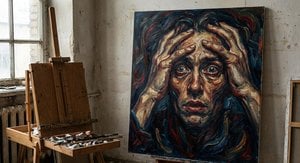
Figurative Expressionism: Emotional Intensity & Subjective Reality in 20th-Century Art
Explore the powerful world of Figurative Expressionism with ArtsDot. Discover key artists like Kirchner & Beckmann, understand its emotional depth, and learn how to collect this influential 20th-century art movement.