


 Peržiūrėti realaus dydžio版
 Siųsti
 Dalintis
 Išsamiau
 Gidas
Gidas

 Atsisiųsti
 Panašūs eksponatai
 Rentgeno spindulių nuotrauka
 Diaporama
 Statistika
The Mount, Hampstead
 Impressionism
 1926
1926 25.0 x 20.0 cm
 Camden Local Studies And Archives Centre
 Rodyti daugiau
Rankų darbo aliejinės reprodukcijos
Rankiniu būdu tapytas aliejus ant droblio jūsų pageidaujamame dydį ir rėmuose – mūsų menininkų darbas pagal užsakymą. ( Perjungti į spausdinimą Perejti prie skaitmeninių vaizdų)




































Pasirinkite iš mūsų nustatytų dydžių, atitinkančių originalaus meno kūrinio proporcijas.

Galite įvesti savo matmenis, kad jie atitiktų konkretų rėmą ar erdvę. Jei pasirinktas dydis neatitinka originalaus paveikslėlio proporcijų, mes arba apkropsime meno kūrinį, arba papildysime tapybą rankomis dažytい elementais. Prieš pradėdami gamybą, jūsų patvirtinimui atsiųsime skaitmeninį maketą.
Atkreipkite dėmesį, kad ekrane rodomas vaizdas neatspindi tikrojo apkarpymo ar papildymo. Tik maketas tiksliai parodys galutinę kompoziciją.
Nors galima rinktis ir individualius dydžius, rekomenduojame pasirinkti matmenis iš nustatytos sąrašo, kad būtų išlaikytos originalios proporcijos.
Gavus užsakymą, ArtsDot.com komanda susisieks su klientu el. paštu dėl instrukcijų ir pateiks maketo pavyzdį
Pristatymas visame pasaulyje () per 3–4 savaites, o ne įprastai – per 5 savaites. (23 rugsėjis). Kokybė lieka nepakeičiama.

Nemokamas greitasis pristatymas visame pasaulyje

Aukštos kokybės lininis drobė

Pilnas siuntimo draudimas

Muitinės mokesčių grąžinimo garantija

Tikro spalvų atitikimo garantija

100 dienų grąžinimo politika (tik esant įtaigoms)

100% pinigų grąžinimo garantija

Nuolaida dideliems užsakymams
 Stiklo variantas prieinamas tik pasirinkus dydį iki 110 cm

The Mount, Hampstead
Reprodukcijos technika
Reprodukcijos dydis
-


Visų pasirinktų variantų kaina
$ 263
Susiję kūriniai


Autoriaus biografija
A Life Etched in Light: The Serene World of Ernest Stamp
Ernest Stamp, born in Sowerby, Yorkshire in 1869 and passing away in Shoreham-by-Sea in 1942, was a British artist whose work beautifully captured the essence of Victorian and Edwardian England. While not a household name today, his meticulous watercolors and particularly his masterful mezzotints offer a poignant glimpse into a world on the cusp of change—a world steeped in atmospheric detail and quiet beauty. Stamp’s artistic journey began with studies at Hubert von Herkomer's renowned art school at Bushey around 1890-92, an environment that fostered both technical skill and a deep appreciation for landscape painting. This early training laid the foundation for his lifelong dedication to depicting scenes of rural England and the burgeoning urban landscapes of London. He exhibited regularly at prestigious venues like the Royal Academy, Manchester Academy of Fine Arts, and Walker Art Gallery in Liverpool, establishing himself as a respected artist within the British art community.The Allure of Reproduction: Mezzotints and Artistic Skill
Stamp’s reputation largely rests on his exceptional skill as a mezzotinter—a demanding printmaking technique that allowed him to recreate the delicate nuances of paintings with remarkable fidelity. He specialized in reproducing works by celebrated masters such as Gainsborough, Reynolds, Raeburn, and Lawrence, bringing their artistry to a wider audience through finely crafted prints. However, Stamp was not merely a copyist; he infused his reproductions with his own artistic sensibility, subtly enhancing the tonal qualities and atmospheric depth of the originals. This ability to interpret and elevate existing works demonstrated a profound understanding of light, shadow, and composition. Beyond reproduction, Stamp also created original mezzotints based on his own watercolor paintings, showcasing scenes from Hampstead and Cookham, which reveal his unique vision as an artist. His address history—from Prospect Studio in Bushey to 44 Willoughby Road in Hampstead—reflects a life deeply connected to artistic communities and the landscapes that inspired him.Hampstead Landscapes and Victorian Sensibility
Stamp’s paintings often depict serene landscapes, particularly those around Hampstead, London. These works are characterized by their delicate watercolor washes, soft palettes, and meticulous attention to detail. He captured the quiet beauty of the English countryside—rolling hills, winding roads, and picturesque villages bathed in gentle light. His scenes evoke a sense of tranquility and nostalgia, reflecting the Victorian sensibility that valued harmony, order, and natural beauty. A prime example is “A Rainy Day, Cookham” (1894), originally based on a watercolor by Frederick Walker, which Stamp masterfully transformed into an evocative etching. The print beautifully conveys the misty dampness and muted tonality of the subject, capturing the feeling of a quiet afternoon in the Berkshire village. This work exemplifies his ability to manipulate his medium to create a powerful atmospheric effect.Recognition and Legacy
Elected as an Associate of the Royal Etching Society (ARE) in 1894, Stamp’s artistic achievements were formally acknowledged by his peers. His works are now held in esteemed collections such as the Fitzwilliam Museum, Cambridge; Ashmolean Museum, Oxford; Museum of London; Victoria and Albert Museum; and Worthing Art Gallery—testaments to their enduring quality and historical significance. While he may not be a widely celebrated figure, Stamp’s contribution to British art lies in his exceptional technical skill, his ability to capture the beauty of Victorian England, and his dedication to preserving the legacy of earlier masters through his meticulous reproductions. His work offers a valuable window into a bygone era—a time when artistry was valued for its precision, detail, and emotional resonance.A Quiet Enduring Presence
Ernest Stamp’s life, though relatively undocumented in broad biographical terms, speaks volumes through his art. He settled in Worthing later in life, passing away there in 1942, leaving behind a body of work that continues to captivate viewers with its serene beauty and technical brilliance. His prints and paintings serve as a reminder of the enduring power of observation, the importance of artistic skill, and the quiet charm of Victorian England. Stamp’s legacy is not one of grand innovation but rather of refined execution and heartfelt representation, qualities that continue to resonate with art lovers today. He remains an important figure for those interested in the history of British printmaking and the aesthetic sensibilities of a transformative era. His work invites us to slow down, appreciate the subtle nuances of light and shadow, and find beauty in the everyday moments of life.
ernest stamp
1869 - 1942
Trumpa informacija apie kūrėją
- Artistic Movement Or Style: Impressionism
- Artists Or Movements Influenced By This Artist: ['Arts & Crafts Movement']
- Artists Who Influenced This Artist: ['William Morris']
- Date Of Birth: 1869
- Date Of Death: 1942
- Full Name: Ernest Stamp
- Nationality: British
- Notable Artworks:
- Perrin’s Court,
- Cottages near the ‘Bull and Bush’, July
- Place Of Birth: London, England
Susiję straipsniai

Evocations of Place: A Historical Journey Through Landscape Art
Explore the rich history of landscape art with ArtsDot. Discover renowned artists, movements like Impressionism & Romanticism, and expert guidance for collecting timeless pieces. Find your perfect serene escape today!

10 Romantinių Peizažų Simbolių: Tapybos Majestatės Viršūnės
Atraskite 10 legendinių romantinio peizažo kūrinių! Pasinerkite į Claude Lorrain, Caspar David Friedrich ir J.M.W. Turner genijaus pasaulį. Išmokite apie tapybos meistriškumą bei gamtos grožį. Aukščiausios kokybės meno reprodukcijos – ArtsDot.com. Tyrinėkite kolekciją!
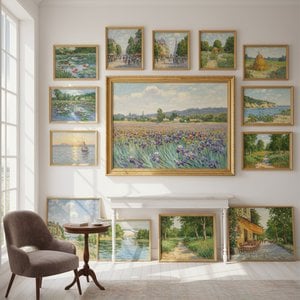
Impressionistinio Peizažo Simfonija: 10 Šedevrų, Apibrėžusių Epoją
Atraskite 10 impresionistinio peizažo šedevrų, kuriuos įkvėpė Monet, Renoir ir kiti! Sužinokite apie jų kūrybos istorijas bei spalvų magiją. Aukščiausios kokybės dailės reprodukcijos – ArtsDot.com. Išskirtinis interjero dizainas jūsų namams!

Impressionistic Landscapes: 10 Masterpieces That Changed Art & Decor
Journey into the heart of Impressionism! Explore 10 masterpieces by Monet, Renoir & Degas that revolutionized landscape art. Discover their stories, techniques & find museum-quality reproductions to elevate your home decor on ArtsDot.com.

Džono Konsteblio Šedevrai: 25 Išskirtiniai Darbai Jūsų Interjerui | ArtsDot
Atraskite 25 įspūdingiausius Džono Konsteblio paveikslus! Romantizmo meistro gamtos vaizdai, Dedham Vale peizažai ir meno istorijos šedevrai. Meno reprodukcijos jūsų interjerui – ArtsDot.com