


 Peržiūrėti realaus dydžio版
 Siųsti
 Dalintis
 Išsamiau
 Gidas
Gidas

 Atsisiųsti
 Panašūs eksponatai
 Rentgeno spindulių nuotrauka
 Diaporama
 Statistika
The Kremlin


 Rodyti daugiau
Rankų darbo aliejinės reprodukcijos
Rankiniu būdu tapytas aliejus ant droblio jūsų pageidaujamame dydį ir rėmuose – mūsų menininkų darbas pagal užsakymą. ( Perjungti į spausdinimą Perejti prie skaitmeninių vaizdų)




































Pasirinkite iš mūsų nustatytų dydžių, atitinkančių originalaus meno kūrinio proporcijas.

Galite įvesti savo matmenis, kad jie atitiktų konkretų rėmą ar erdvę. Jei pasirinktas dydis neatitinka originalaus paveikslėlio proporcijų, mes arba apkropsime meno kūrinį, arba papildysime tapybą rankomis dažytい elementais. Prieš pradėdami gamybą, jūsų patvirtinimui atsiųsime skaitmeninį maketą.
Atkreipkite dėmesį, kad ekrane rodomas vaizdas neatspindi tikrojo apkarpymo ar papildymo. Tik maketas tiksliai parodys galutinę kompoziciją.
Nors galima rinktis ir individualius dydžius, rekomenduojame pasirinkti matmenis iš nustatytos sąrašo, kad būtų išlaikytos originalios proporcijos.
Gavus užsakymą, ArtsDot.com komanda susisieks su klientu el. paštu dėl instrukcijų ir pateiks maketo pavyzdį
Pristatymas visame pasaulyje () per 3–4 savaites, o ne įprastai – per 5 savaites. (22 rugsėjis). Kokybė lieka nepakeičiama.

Nemokamas greitasis pristatymas visame pasaulyje

Aukštos kokybės lininis drobė

Pilnas siuntimo draudimas

Muitinės mokesčių grąžinimo garantija

Tikro spalvų atitikimo garantija

100 dienų grąžinimo politika (tik esant įtaigoms)

100% pinigų grąžinimo garantija

Nuolaida dideliems užsakymams
 Stiklo variantas prieinamas tik pasirinkus dydį iki 110 cm

The Kremlin
Reprodukcijos technika
Reprodukcijos dydis
-


Visų pasirinktų variantų kaina
$ 263
Susiję kūriniai


Autoriaus biografija
The Quiet Master of Watercolor: The Life and Legacy of Eliot O'Hara
In the delicate, translucent world of watercolor, few names command as much respect for technical precision and atmospheric soul as Eliot O'Hara. Born in 1890 in Waltham, Massachusetts, O’Hara did not follow the traditional path of a sheltered academic artist. Instead, his journey was one of profound responsibility and self-directed discovery. Following the untimely death of his father, Daniel O’Hara, in 1912, the young artist stepped into the mantle of the family manufacturing business. For years, he balanced the pragmatic demands of the O'Hara Waltham Dial Company with a growing, quiet passion for the brush. It was not through formal, early training, but through a relentless, solitary dedication to mastering the medium that he transformed himself from a businessman into one of the twentieth century’s most influential watercolorists.
The true awakening of O'Hara’s artistic spirit arrived through travel and exploration. His 1924 journey through Europe served as a vital catalyst, exposing him to new light, color, and cultural textures that would forever haunt his canvases. This thirst for the world led him to embark on an epic odyssey through Soviet Russia in 1929, supported by a prestigious Guggenheim Fellowship. Traveling by train, horseback, and foot, he captured the rugged grandeur of the Russian landscape, producing over a hundred sketches and watercolors that would later be completed in the studios of Paris. These works, ranging from dramatic woodcuts like The Kremlin to sweeping landscapes, showcased an artist capable of translating the monumental power of foreign lands into the intimate language of watercolor.
A Legacy of Instruction and Artistic Spirit
Beyond his personal canvases, O'Hara’s impact was felt most deeply through his role as a mentor and educator. In 1931, he established the Eliot O'Hara School for Watercolor Painting in Goose Rocks Beach, Maine—the first institution of its kind in the United States. He believed that technique was not an end in itself, but a vital vehicle for expression. His teaching philosophy emphasized the mastery of light and the ability to capture the fleeting "impressionistic" moment. Though the school was tragically lost in the Great Fires of 1947, O'Hara’s spirit remained unextinguished. He continued to share his wisdom through summer workshops across the country and through a series of influential instructional books, the first of which appeared in 1931 and the last in 1966.
His life was marked by a remarkable versatility and a sense of duty that extended even to his service during World War II, where he worked within the Camouflage Section of the U.S. Navy. This same eye for detail and environmental nuance informed his plein air paintings, which spanned the globe from the coasts of Alaska to the vibrant landscapes of Japan, China, Indonesia, and Thailand. Today, his work remains a cornerstone of American watercolor tradition:
- Technical Mastery: Renowned for his ability to manipulate the transparency and luminosity of the medium to create depth and atmosphere.
- Global Vision: A prolific chronicler of international landscapes, bringing the light of distant lands to American audiences.
- Educational Impact: An influential author and filmmaker whose instructional methods shaped generations of watercolorists.
- Institutional Recognition: His works are preserved in prestigious collections, including over 120 pieces held by the Ogunquit Museum of American Art.
Eliot O'Hara passed away in 1969, leaving behind a body of work that serves as a testament to the power of disciplined observation. He remains a "quiet master," an artist who found his greatest voice not in the clamor of fame, but in the subtle, flowing dance of pigment and water.

eliot o'hara
1890 - 1969
Trumpa informacija apie kūrėją
- Artistic Movement Or Style: Impressionism
- Artists Or Movements Influenced By This Artist: ['George Elbert Burr']
- Artists Who Influenced This Artist: ['Roger Eliot Fry']
- Date Of Birth: June 14, 1890
- Date Of Death: July 30, 1969
- Full Name: Eliot O'Hara
- Nationality: American
- Notable Artworks:
- Ring of Fire
- Aberdeen, Hong Kong's seaward harbor
- Place Of Birth: Waltham, Massachusetts
Susiję straipsniai
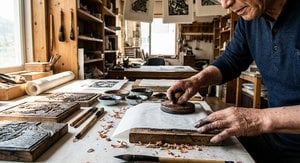
The Enduring Legacy of Woodblock Printmaking: Technique, History & Artistic Expression
Explore the rich history of woodblock printmaking – from ancient techniques to Ukiyo-e masterpieces. Discover expert insights on collecting, preserving & appreciating this enduring art form.
The Enduring Legacy of Printmaking: Techniques, Themes & Artistic Innovation Across Centuries
Explore the rich history of printmaking with ArtsDot. Discover techniques from intaglio to lithography, learn about collecting valuable prints & find museum-quality reproductions. Expert insights for art enthusiasts and collectors.

Giclée Prints: Archival Quality & Aesthetic Nuances for the Discerning Collector
Explore the world of giclée prints with ArtsDot. Learn about archival quality, aesthetic nuances & investment potential. Expert guidance for discerning art collectors seeking museum-quality reproductions and lasting value.

The Enduring Legacy of Fine Art Prints: Technique, History & Aesthetic Impact
Explore the rich history & techniques of fine art prints. Discover investment potential, assess authenticity, and learn how to preserve your collection with expert guidance. Trusted insights for discerning collectors.

Echoes of Time: Exploring the Enduring Appeal & Historical Context of Vintage Art Prints
Explore the captivating world of vintage art prints! Discover their history, collecting tips & enduring appeal. Expert insights on chromolithography and building a legacy collection with ArtsDot.