

 Peržiūrėti realaus dydžio版
 Pasidalinti
 Dalintis
 Išsamiau
 Vadovas

 Atsisiųsti
 Panašūs eksponatai
 Rentgeno spindulių nuotrauka
 Automatinė diorama
 问答
问答 Statistika
Sandø


 Skaityti daugiau
Giclée / Meno spausdinimas
Muziejų lygio „giclée“ arba drobos spausdinimas: greita gamyba ir lankstios apdailos parinktys. ( Pirkti rankų darbo tapybą Perejti prie skaitmeninių vaizdų)




































Pasirinkite iš mūsų nustatytų dydžių, atitinkančių originalaus meno kūrinio proporcijas.

Įveskite jums reikiamą plotį ir aukštį, kad atvaizdas derėtų prie jūsų rėmo ar sienos. Spausdiną galima tik sumažinti, bet nepadidinti virš originalaus paveikslėlio dydžio, todėl keičiant proporcijas, dalis vaizdo prarandama. Prieš spausdinimą atsiųsime jums skaitmeninį maketą patvirtinimui. Šioje puslapio nuotraukoje matomas pjūvis nėra tikslus – jį rodo tik maketas.
Pristatymas visame pasaulyje () per 2 weeks, o ne įprastas 4/5 savaičių laikotarpis. (7 lapkritis)

Nemokamas greitasis pristatymas visame pasaulyje

Aukštos kokybės lininis drobė

Pilnas siuntimo draudimas

Muitinės mokesčių grąžinimo garantija

Tikro spalvų atitikimo garantija

100 dienų grąžinimo politika (tik esant įtaigoms)

100% pinigų grąžinimo garantija

Nuolaida dideliems užsakymams
 Stiklo variantas prieinamas tik pasirinkus dydį iki 110 cm

Sandø
Giclée / Meno spausdinimas
Reprodukcijos matmenys
-


Bendroji kaina
€ 56
panašūs kūriniai


Autoriaus biografija
A Legacy of Light and Line: The Life of Eilif Peterssen
In the heart of nineteenth-century Norway, a period defined by a burgeoning national identity and a profound connection to the rugged Nordic landscape, Eilif Peterssen emerged as a transformative force. Born Hjalmar Eilif Emanuel Peterssen in 1852 within the vibrant cultural atmosphere of Christiania, now Oslo, his very lineage was steeped in the artistic traditions of his homeland. From his early years in the district of Frogner, Peterssen demonstrated an innate sensitivity to the world around him, a trait that would later manifest in his ability to capture both the monumental scale of Norwegian nature and the intimate nuances of the human soul. His journey was not merely one of personal growth but a sophisticated odyssey through Europe’s most prestigious art capitals, each stop adding a new layer of complexity to his brushwork.
The foundation of his technical mastery was laid in his native Norway, where he studied at the Johan Fredrik Eckersberg School of Painting. However, the true expansion of his artistic vocabulary occurred as he ventured beyond the borders of his birth nation. His travels through Copenhagen and Germany brought him into contact with the rigorous academic traditions of the Royal Danish Academy of Fine Arts and the innovative spirit of the Weimar Saxon-Grand Ducal Art School in Karlsruhe. It was during these formative years that Peterssen began to move away from strict realism, absorbing the experimental energies of his contemporaries. His time in Munich proved particularly transformative; under the guidance of masters like Wilhelm von Diez and Franz von Lenbach, he embraced the bold, expressive color palettes and plein air techniques characteristic of the Munich School, a movement that would forever alter his approach to light and atmosphere.
The Mastery of Portraiture and Landscape
Peterssen’s oeuvre is a breathtaking duality of subject matter, oscillating between the grandiosity of historical narrative and the quiet intimacy of portraiture. He gained early acclaim with his powerful history painting, Christian II signing the Death Warrant of Torben Oxe, a work that showcased his ability to command dramatic tension and historical weight. Yet, it was in the realm of portraiture that he truly established himself as one of Norway's most revered chroniclers of character. His portraits were more than mere likenesses; they were psychological studies that captured the essence of the era's most influential figures. Through his brush, the contemplative moods of legendary composer Edvard Grieg and the intellectual depth of playwright Henrik Ibsen were rendered with a profound, lifelike dignity.
Parallel to his success in portraiture was his deep, spiritual connection to the Norwegian landscape. As a prominent figure within the circle of the Skagen Painters, Peterssen sought to capture the ephemeral qualities of light as it danced across the Nordic terrain. His landscapes are characterized by an Impressionistic sensibility, where the boundaries between earth and sky often blur into a cohesive, atmospheric whole. Whether depicting the serene stillness of Sevilosen or the evocative, muted tones of The Salmon Fisher, his work evokes a sense of solitude and reverence for the natural world. His ability to translate the rugged textures of Norway into soft, luminous compositions allowed him to become a pioneer of Norwegian Landscape Impressionism.
A Lasting Contribution to National Identity
Beyond the canvas, Eilif Peterssen’s influence extended into the very fabric of Norwegian national symbolism. In 1905, a year of immense political significance for Norway, he was tasked with designing the nation's new coat of arms. His creation, featuring the iconic Norwegian lion, became a permanent fixture of the state's identity, used by both the government and the royal house to this day. This achievement underscores his role not just as an observer of culture, but as an active participant in the construction of a national aesthetic.
The significance of Peterssen’s career lies in his ability to bridge the gap between traditional academic realism and the modern, emotive impulses of Impressionism. His life's work serves as a vital link in the evolution of Nordic art, reflecting a period of intense transition and creative flowering. To look upon a Peterssen painting is to witness a master navigating the delicate balance between the tangible reality of the physical world and the intangible beauty of light and emotion. His legacy remains etched in the landscapes he loved and the faces he immortalized, standing as a testament to the enduring power of the Norwegian spirit.

Eilif Peterssen
1852 - 1928
Trumpa informacija
- Artistic Movement Or Style: Realism & Impressionism
- Artists Or Movements Influenced By This Artist: ['Skagen Painters']
- Artists Who Influenced This Artist:
- Ludwig Des Coulres
- Wilhelm Riebstahl
- Arnold Böcklin
- Franz Von Lenbach
- Date Of Birth: 1852
- Date Of Death: 1928
- Full Name: Hjalmar Eilif Emanuel Peterssen
- Nationality: Norwegian
- Notable Artworks:
- Summer Evening
- Winter in Rapallo
- Place Of Birth: Christiania (Oslo), Norway
Susiję straipsniai

Impressionistic Landscapes: 10 Masterpieces That Changed Art & Decor
Journey into the heart of Impressionism! Explore 10 masterpieces by Monet, Renoir & Degas that revolutionized landscape art. Discover their stories, techniques & find museum-quality reproductions to elevate your home decor on ArtsDot.com.

10 Romantinių Peizažų Simbolių: Tapybos Majestatės Viršūnės
Atraskite 10 legendinių romantinio peizažo kūrinių! Pasinerkite į Claude Lorrain, Caspar David Friedrich ir J.M.W. Turner genijaus pasaulį. Išmokite apie tapybos meistriškumą bei gamtos grožį. Aukščiausios kokybės meno reprodukcijos – ArtsDot.com. Tyrinėkite kolekciją!
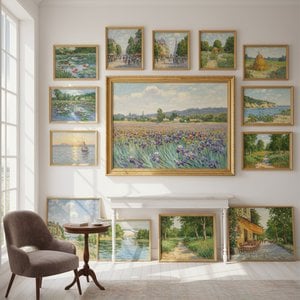
Impressionistinio Peizažo Simfonija: 10 Šedevrų, Apibrėžusių Epoją
Atraskite 10 impresionistinio peizažo šedevrų, kuriuos įkvėpė Monet, Renoir ir kiti! Sužinokite apie jų kūrybos istorijas bei spalvų magiją. Aukščiausios kokybės dailės reprodukcijos – ArtsDot.com. Išskirtinis interjero dizainas jūsų namams!

Beyond the Horizon: A Curated Guide to Integrating Post-Impressionist Landscapes into Modern Interiors
Transform your home with the emotive power of Post-Impressionist landscapes. Discover expert tips on selecting hand-painted oil reproductions to create a soulful, vibrant interior that reflects your unique style and connection to nature.

Evocations of Place: A Historical Journey Through Landscape Art
Explore the rich history of landscape art with ArtsDot. Discover renowned artists, movements like Impressionism & Romanticism, and expert guidance for collecting timeless pieces. Find your perfect serene escape today!