

 Peržiūrėti realaus dydžio版
 Pasidalinti
 Dalintis
 Išsamiau
 Vadovas

 Atsisiųsti
 Panašūs eksponatai
 Rentgeno spindulių nuotrauka
 Automatinė diorama
 Q&A
Q&A Statistika
untitled (4819)

 Skaityti daugiau
Giclée / Meno spausdinimas
Muziejų lygio „giclée“ arba drobos spausdinimas: greita gamyba ir lankstios apdailos parinktys. ( Pirkti rankų darbo tapybą Perejti prie skaitmeninių vaizdų)




P118B €10

P118H €10

P118W €10

P438Z €10

P508JH €12

P508YH €12

P805H €10

P805Z €10

P919BZ €10

P919G €10

P919XJ €10

P959ZH €10

P968JZ €12

W106C €8

W218G €10

W218JH €8

W218Y €10

W307PJ €10

W316G €10

W316PJ €8

W316Y €10

W398PJ €8

W4111J €10

W500HY €15

W500JH €15

W692G €12

W849H €8

W940BG €15

W953PJ €8




Pasirinkite iš mūsų nustatytų dydžių, atitinkančių originalaus meno kūrinio proporcijas.

Įveskite jums reikiamą plotį ir aukštį, kad atvaizdas derėtų prie jūsų rėmo ar sienos. Spausdiną galima tik sumažinti, bet nepadidinti virš originalaus paveikslėlio dydžio, todėl keičiant proporcijas, dalis vaizdo prarandama. Prieš spausdinimą atsiųsime jums skaitmeninį maketą patvirtinimui. Šioje puslapio nuotraukoje matomas pjūvis nėra tikslus – jį rodo tik maketas.
Pristatymas visame pasaulyje () per 2 weeks, o ne įprastas 4/5 savaičių laikotarpis. (3 lapkritis)

Nemokamas greitasis pristatymas visame pasaulyje

Aukštos kokybės lininis drobė

Pilnas siuntimo draudimas

Muitinės mokesčių grąžinimo garantija

Tikro spalvų atitikimo garantija

100 dienų grąžinimo politika (tik esant įtaigoms)

100% pinigų grąžinimo garantija

Nuolaida dideliems užsakymams
 Stiklo variantas prieinamas tik pasirinkus dydį iki 110 cm

untitled (4819)
Giclée / Meno spausdinimas
Reprodukcijos matmenys
-


Bendroji kaina
€ 55
A Portrait of Inner Turmoil: Unpacking Egon Schiele's "Untitled (4819)"
Egon Schiele’s “Untitled (4819),” a haunting depiction of a woman shielding her face with her hand, is more than just a portrait; it’s a visceral exploration of vulnerability, mortality, and the psychological landscape of early 20th-century Austria. Painted in 1917, during a period of immense personal and societal upheaval – Schiele's life was tragically cut short at the young age of 28 – this work embodies the artist’s signature style: raw emotion rendered with unsettling intensity and a profound understanding of human fragility. The painting immediately commands attention through its stark contrast—the pale, almost luminous skin of the figure against the aggressively yellow wall behind her. This deliberate juxtaposition creates an atmosphere of unease, suggesting both isolation and a desperate attempt to ward off an unseen threat.
Schiele’s technique is characterized by his distinctive use of line – thick, agitated strokes that seem to vibrate with energy. The figure's body is depicted in a simplified, almost skeletal manner, emphasizing the underlying structure beneath the surface. The loose application of paint and the lack of meticulous detail contribute to the painting’s sense of immediacy and emotional rawness. Notice how the lines around her face are particularly forceful, conveying a feeling of suppressed anguish. The pose itself—the hand pressed firmly against the cheek—is laden with symbolism. It speaks to a desire for concealment, a need to protect oneself from an overwhelming experience, perhaps even from the artist’s own self-awareness.
Expressionism and the Shadow of Loss
Schiele was a pivotal figure in the Expressionist movement, a style that sought to convey subjective emotions rather than objective reality. His work is deeply influenced by his personal tragedies – the early deaths of his father (due to syphilis) and sister Elvira – as well as the broader anxieties of a world on the brink of war. These experiences fueled an obsession with themes of mortality, illness, and psychological distress, all powerfully expressed through distorted forms and jarring color palettes. The painting’s somber mood reflects this preoccupation, echoing the pervasive sense of dread that permeated Europe at the time.
Consider the historical context: 1917 was a year marked by political instability, economic hardship, and the looming threat of World War I. Schiele's art served as a visual manifestation of these anxieties, capturing the emotional turmoil experienced by many individuals during this turbulent period. The yellow wall, often interpreted as representing illness or decay, further reinforces this sense of impending doom. It’s not merely a backdrop; it actively participates in the painting’s narrative, contributing to its overall atmosphere of unease.
Symbolism and the Unspoken Narrative
Beyond the immediate depiction of a woman shielding her face, “Untitled (4819)” is rich with symbolic meaning. The ponytail, a common motif in Schiele’s work, can be interpreted as representing both youthful vulnerability and a defiant rejection of societal norms. The nude form itself—a recurring theme in Schiele's oeuvre—is not presented in a purely sensual way but rather as an embodiment of raw emotion and exposed vulnerability. The act of covering the face suggests a desire to shut out the world, to retreat from painful experiences.
Furthermore, the painting’s ambiguity invites multiple interpretations. Is the woman protecting herself from a physical threat or from her own inner demons? Is she experiencing grief, fear, or perhaps even shame? Schiele deliberately leaves these questions unanswered, allowing viewers to project their own emotions and experiences onto the image. This open-endedness is characteristic of Expressionist art, which sought to engage the viewer in a dialogue rather than offering simple, definitive answers.
A Timeless Exploration of Human Emotion
“Untitled (4819)” remains a powerfully evocative work of art, demonstrating Schiele’s extraordinary ability to capture the complexities of human emotion. Its unsettling beauty and profound psychological depth continue to resonate with audiences today. Reproductions of this painting offer a unique opportunity to experience firsthand the intensity and vulnerability that define Schiele's artistic vision. Whether displayed in a private collection or a public space, “Untitled (4819)” serves as a poignant reminder of the fragility of life and the enduring power of art to explore the darkest corners of the human psyche.
Klausimai ir atsakymai
Kokia yra autorinės teisės situacijos priežastis kūriniam darbui „untitled (4819)“ – Egon Šylė?
„untitled (4819)“ – Egon Šylė yra yra viešosios erdvės dalis – jo autorinė teisė pasibaigusi. Autorinės teisės galioja nuo mirties metų, kai šis kūrėjas mirė 1918 m.
Kur galiu rasti statistiką apie „untitled (4819)“ – Egon Šylė?
Statistika apie „untitled (4819)“ – Egon Šylė pateikiama kūrinio Statistika puslapio: mėnesiniai kūrinio apsilankėjimai, kito šio autoriaus kūrinių apsilankėjimai bei neseniai apsilankiusiųjų skirstymas pagal šalis ir kalbas.
Kokia yra „untitled (4819)“ – Egon Šylė švytėjimo intensyvumas?
„untitled (4819)“ spalvos pasižymi Gentle Luminance šviesos intensyvumu.
panašūs kūriniai


Autoriaus biografija
Egon Schiele
Austrijos pozicija dviejų pasaulinio karo horizonte buvo labai abejojanti: vienu metu ji buvo šiek tiek iš Šiaurės į rytus, lengvai įsitikinusi veiksmų vyrai. Mažėjęs šalis po 1918 m., beveik visiškai neišplitusi tarptautiniu pasauliu buvo lengvai įvykdinta Hitlerio Reichui 1938 m.; meno srityje tai reiškė kad modernizmo istorija buvo išvykstanti nuo Šiaurės iki pietų, su pagrindiniu dėmesiu į formą. Vokelių šiek tiek pripažino ekspresionizmą kaip svarbų meno srovę; jis buvo vienas iš žymiausius austrių artistas XX amžiaus pradžioje – kartu su Gustavu Klimtu ir Oskar Kokoschka išvykę į Vieną buvo laikomas vienu iš Žyduvo šimtmečio svarbiausių vizualinių menininkų.
Gyvenimas
Egonas Šylė gimė 1890 m. vasario 3 d. Tulne, Austrijoje. Jo tėvas Adolfas Šylė buvo Tulno geležinkelio stoties direktorius ir gimė 1851 m. Vienoje Adolfo Šyly tevai turėjo tris jaunesnes seseris: Elvirą, Melaniją ir Gertrūdą. Elvira mirė vaikyste dėl gimtinių sifiliso. Jo tėvas buvo užsikrėtęs sifiliu įsimėlynėje savo jaunystės metais po vienos jo naujosios žmonos išėjimo iš kambario.
Meno vystymasis
Šylė mokytojo Christian Griepenkerl įtaką išgyveno Vienoje 1907 m. ir G. Klimtas tapo jo svarbiu rėmėju. Šylė paliko akademiją 1906 m., nes jos mokymo metodai buvo labai konservatyvus, ir įkūrė Naują austrių dailės grupę 1909 m. Grupėje vyravo ekspresionistinė estetika, kuri iššūkiant šiuolaikinėms kultūros normas.
Žymūs kūriniai
Šylė buvo vienas iš žymiausius austrių artistas XX amžiaus pradžioje – kartu su Gustavu Klimtu ir Oskar Kokoschka išvykę į Vieną buvo laikomas vienu iš Žyduvo šimtmečio svarbiausių vizualinių menininkų. Šylė buvo ekspresionizmo meno srovės atstovas.
Žymūs veiksniai
Šylė buvo žinomas dėl savo iššūkiantį įžiūrą į pasaulio problemas ir šiuolaikinę estetika, kuri iššūkiant šiuolaikinėms kultūros normas. Šylė buvo ekspresionizmo meno srovės atstovas.

Egon Šylė
1890 - 1918 , Austrija
Trumpa informacija
- Artistic Movement Or Style: Ekspresionizmas
- Artists Who Influenced This Artist: ['Gustavas Klimtas']
- Date Of Birth: 1890 m.
- Date Of Death: 1918 m.
- Full Name: Egon Schiele
- Nationality: Austras
- Notable Artworks:
- Savęs portretas su fizižalis
- Porą įemčianti
- Žemės apėjimų kraštovaizdis
- Place Of Birth: Tulnas, Austrija
Susiję straipsniai
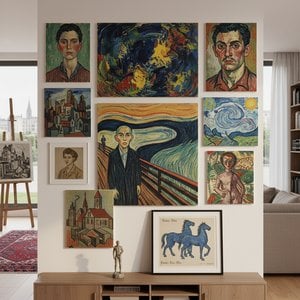
Ekspresionizmo Deimantai: 10 Šedevrai Jūsų Namų Dekorui
Atraskite ekspresionizmo šedevrus! 10 įtakingiausių meno kūrinių, atskleisiančių Muncho, Kirchnerio ir kitų meistrų emocijas. Išmokite apie tapybos stilius bei spalvų paletę. Aukščiausios kokybės dailės reprodukcijos jūsų namams – ArtsDot.com.

Egon Schiele: Expressionism, Anxiety & the Modern Condition – A Comprehensive Exploration
Explore the emotionally charged world of Egon Schiele (1890-1918). Discover his Expressionist masterpieces, psychological themes, and lasting impact on modern art. A comprehensive guide for collectors & enthusiasts.

Golden Glow: The Ultimate Buyer's Guide to Brightening Your New Home with Radiant Yellow Background Art
Transform your new home into a sun-drenched sanctuary with our expert guide to yellow background art. Discover how radiant hues like ochre and chrome boost joy through 'Dopamine Decor.' Explore hand-painted oil reproductions and bespoke wedding portraits at ArtsDot.com.
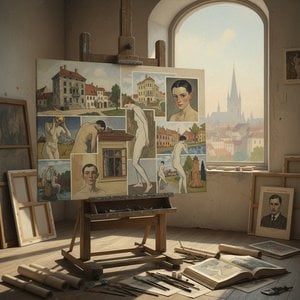
Egon Schiele: 25 Šedevrai, Atspindintys Menininko Sielą | ArtsDot.lt
Atraskite 25 įspūdingiausius Egon Schiele šedevrus! Gilinkitės į ekspresionizmo pasaulį, portretų istorijas ir unikalią menininko spalvų paletę. Aukštos kokybės reprodukcijos interjerui – ArtsDot.lt

Expressionist Painting: 10 Masterpieces That Defined a Movement | ArtsDot
Explore 10 Expressionist paintings that revolutionized art! Discover Munch, Kirchner & Kandinsky's iconic works. Find museum-quality reproductions and vibrant canvas prints to elevate your home decor on ArtsDot.com.


