

 Peržiūrėti realaus dydžio版
 Pasidalinti
 Dalintis
 Išsamiau
 Vadovas

 Atsisiųsti
 Panašūs eksponatai
 Rentgeno spindulių nuotrauka
 Automatinė diorama
 问答
问答 Statistika
Self Portrait with Brown Background


 Skaityti daugiau
Giclée / Meno spausdinimas
Muziejų lygio „giclée“ arba drobos spausdinimas: greita gamyba ir lankstios apdailos parinktys. ( Pirkti rankų darbo tapybą Perejti prie skaitmeninių vaizdų)




P118B €10

P118H €10

P118W €10

P438Z €10

P508JH €12

P508YH €12

P805H €10

P805Z €10

P919BZ €10

P919G €10

P919XJ €10

P959ZH €10

P968JZ €12

W106C €8

W218G €10

W218JH €8

W218Y €10

W307PJ €10

W316G €10

W316PJ €8

W316Y €10

W398PJ €8

W4111J €10

W500HY €15

W500JH €15

W692G €12

W849H €8

W940BG €15

W953PJ €8




Pasirinkite iš mūsų nustatytų dydžių, atitinkančių originalaus meno kūrinio proporcijas.

Įveskite jums reikiamą plotį ir aukštį, kad atvaizdas derėtų prie jūsų rėmo ar sienos. Spausdiną galima tik sumažinti, bet nepadidinti virš originalaus paveikslėlio dydžio, todėl keičiant proporcijas, dalis vaizdo prarandama. Prieš spausdinimą atsiųsime jums skaitmeninį maketą patvirtinimui. Šioje puslapio nuotraukoje matomas pjūvis nėra tikslus – jį rodo tik maketas.
Pristatymas visame pasaulyje () per 2 weeks, o ne įprastas 4/5 savaičių laikotarpis. (3 lapkritis)

Nemokamas greitasis pristatymas visame pasaulyje

Aukštos kokybės lininis drobė

Pilnas siuntimo draudimas

Muitinės mokesčių grąžinimo garantija

Tikro spalvų atitikimo garantija

100 dienų grąžinimo politika (tik esant įtaigoms)

100% pinigų grąžinimo garantija

Nuolaida dideliems užsakymams
 Stiklo variantas prieinamas tik pasirinkus dydį iki 110 cm

Self Portrait with Brown Background
Giclée / Meno spausdinimas
Reprodukcijos matmenys
-


Bendroji kaina
€ 56
A Portrait of Introspection: Egon Schiele’s ‘Self Portrait with Brown Background’
Egon Schiele, an Austrian Expressionist painter born in 1890 in Tulln an der Donau, embarked on a life profoundly shaped by artistic passion and personal tragedy. His father succumbed to syphilis when he was just fourteen, leaving him grappling with grief and fostering within him a preoccupation with mortality—a theme that would permeate his oeuvre. Raised initially by his mother and later under the watchful eye of his uncle Leopold Czihaczek, Schiele’s childhood lacked conventional stability but nurtured an unwavering independence, evident even in his fascination with trains – a motif subtly recurring throughout his artistic explorations. Despite familial challenges, he cultivated exceptional drawing skills, defying expectations that prioritized practicality over creative pursuits. The untimely death of his sister Elvira further deepened the artist's emotional landscape, contributing to a sensitivity that would translate into powerfully evocative imagery.The Watercolor’s Delicate Embrace: Style and Technique
Schiele’s masterful use of watercolor distinguishes ‘Self Portrait with Brown Background’ as a cornerstone of Expressionist aesthetics. Unlike oil paints which offer rich textures and blending capabilities, watercolor allows for an ethereal quality—a luminosity that captures the immediacy of observation and conveys profound emotion. Schiele employed bold lines to delineate the contours of his figure and the background, creating a striking contrast between solidity and vulnerability. The artist’s brushstrokes are deliberate yet fluid, layering washes of color to build up tonal variations and imbue the painting with an atmospheric depth that transcends mere representation. This technique prioritizes capturing psychological states over photographic accuracy, aligning perfectly with Expressionist ideals.A Window into Schiele's Soul: Context and Significance
Painted in 1912, ‘Self Portrait with Brown Background’ resides within a pivotal moment in art history—the burgeoning Expressionist movement. Rejecting Impressionistic notions of objective perception, Expressionists sought to convey inner feelings and anxieties through distorted forms and jarring colors. Schiele's work reflects the broader cultural preoccupation with psychological exploration during this era, mirroring anxieties surrounding identity and existential uncertainty. The painting serves as a poignant self-examination, revealing Schiele’s own contemplation and confronting viewers with an unflinching gaze—a characteristic of his artistic vision that distinguishes him from many contemporaries. It exemplifies Expressionism's commitment to portraying the human condition with raw honesty and emotional intensity.Symbolic Resonance: The Brown Background and Its Implications
The choice of brown as a dominant color in the background is laden with symbolic significance. Often associated with earth, decay, and introspection, it underscores Schiele’s preoccupation with mortality—a central concern throughout his artistic output. The muted hue contrasts sharply with the woman's pale complexion, emphasizing her vulnerability and highlighting the psychological tension inherent in the portrait. Furthermore, the brown color can be interpreted as representing a subconscious awareness of darkness and shadow, mirroring the artist’s own internal struggles. It invites contemplation on themes of loss, transformation, and confronting one's inner demons—elements that resonate powerfully within the viewer’s experience.Emotional Impact: A Moment Frozen in Time
‘Self Portrait with Brown Background’ transcends mere visual depiction; it communicates a palpable sense of melancholy and quiet contemplation. Schiele’s gaze directs outwards, yet simultaneously conveys inwardness—a feeling of profound solitude and self-awareness. The painting's simplicity – combined with its masterful execution – compels viewers to confront uncomfortable truths about human existence. It remains an enduring testament to Schiele’s ability to distill complex emotions into a single image, securing its place as a seminal work within Expressionist art history and continuing to inspire admiration for its psychological depth and artistic brilliance.Klausimai ir atsakymai
Kam rekomenduojama „Self Portrait with Brown Background“ – Egon Šylė reprodukcija?
Rekomenduojamas „Self Portrait with Brown Background“ spausdinio naudojimas yra Accent.
Kokia „Self Portrait with Brown Background“ vieta ir populiarumas Expressionism veikloje?
„Self Portrait with Brown Background“ – Egon Šylė priskiriamas Iconic kategorijai ir priklauso Expressionism stiliui.
Kokią paletę ir kokią emociją sujungia „Self Portrait with Brown Background“?
Darbe „Self Portrait with Brown Background“ Neutrals spalvos sukuria Reflective nuotaiką.
panašūs kūriniai


Autoriaus biografija
Egon Schiele
Austrijos pozicija dviejų pasaulinio karo horizonte buvo labai abejojanti: vienu metu ji buvo šiek tiek iš Šiaurės į rytus, lengvai įsitikinusi veiksmų vyrai. Mažėjęs šalis po 1918 m., beveik visiškai neišplitusi tarptautiniu pasauliu buvo lengvai įvykdinta Hitlerio Reichui 1938 m.; meno srityje tai reiškė kad modernizmo istorija buvo išvykstanti nuo Šiaurės iki pietų, su pagrindiniu dėmesiu į formą. Vokelių šiek tiek pripažino ekspresionizmą kaip svarbų meno srovę; jis buvo vienas iš žymiausius austrių artistas XX amžiaus pradžioje – kartu su Gustavu Klimtu ir Oskar Kokoschka išvykę į Vieną buvo laikomas vienu iš Žyduvo šimtmečio svarbiausių vizualinių menininkų.
Gyvenimas
Egonas Šylė gimė 1890 m. vasario 3 d. Tulne, Austrijoje. Jo tėvas Adolfas Šylė buvo Tulno geležinkelio stoties direktorius ir gimė 1851 m. Vienoje Adolfo Šyly tevai turėjo tris jaunesnes seseris: Elvirą, Melaniją ir Gertrūdą. Elvira mirė vaikyste dėl gimtinių sifiliso. Jo tėvas buvo užsikrėtęs sifiliu įsimėlynėje savo jaunystės metais po vienos jo naujosios žmonos išėjimo iš kambario.
Meno vystymasis
Šylė mokytojo Christian Griepenkerl įtaką išgyveno Vienoje 1907 m. ir G. Klimtas tapo jo svarbiu rėmėju. Šylė paliko akademiją 1906 m., nes jos mokymo metodai buvo labai konservatyvus, ir įkūrė Naują austrių dailės grupę 1909 m. Grupėje vyravo ekspresionistinė estetika, kuri iššūkiant šiuolaikinėms kultūros normas.
Žymūs kūriniai
Šylė buvo vienas iš žymiausius austrių artistas XX amžiaus pradžioje – kartu su Gustavu Klimtu ir Oskar Kokoschka išvykę į Vieną buvo laikomas vienu iš Žyduvo šimtmečio svarbiausių vizualinių menininkų. Šylė buvo ekspresionizmo meno srovės atstovas.
Žymūs veiksniai
Šylė buvo žinomas dėl savo iššūkiantį įžiūrą į pasaulio problemas ir šiuolaikinę estetika, kuri iššūkiant šiuolaikinėms kultūros normas. Šylė buvo ekspresionizmo meno srovės atstovas.

Egon Šylė
1890 - 1918 , Austrija
Trumpa informacija
- Artistic Movement Or Style: Ekspresionizmas
- Artists Who Influenced This Artist: ['Gustavas Klimtas']
- Date Of Birth: 1890 m.
- Date Of Death: 1918 m.
- Full Name: Egon Schiele
- Nationality: Austras
- Notable Artworks:
- Savęs portretas su fizižalis
- Porą įemčianti
- Žemės apėjimų kraštovaizdis
- Place Of Birth: Tulnas, Austrija
Susiję straipsniai

Egon Schiele: 25 Šedevrai, Atspindintys Menininko Sielą | ArtsDot.lt
Atraskite 25 įspūdingiausius Egon Schiele šedevrus! Gilinkitės į ekspresionizmo pasaulį, portretų istorijas ir unikalią menininko spalvų paletę. Aukštos kokybės reprodukcijos interjerui – ArtsDot.lt

Ephemeral Visions: Exploring the Artistic Legacy & Contemporary Practice of Watercolor Painting
Explore the captivating world of watercolor painting! Discover its rich history, essential techniques, influential artists & collecting tips. A comprehensive guide for art enthusiasts from ArtsDot.

Ephemeral Visions: Exploring the History & Emotional Resonance of Watercolor Painting
Explore the captivating history of watercolor painting, from ancient techniques to modern masters like Kandinsky & Blake. Discover essential artists, collecting tips & the emotional power of this luminous medium. Expert insights for art enthusiasts.

Watercolor Wonders: 10 Masterpieces That Redefined Art History | ArtsDot
Journey through 10 legendary watercolor masterpieces by Sargent, Turner & Homer! Explore iconic landscapes, portraits & floral art that redefined history. Find museum-quality reproductions and curated decor ideas at ArtsDot.com.
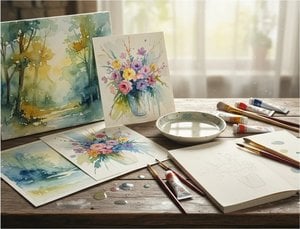
Ephemeral Visions: Exploring the Artistic Legacy & Nuances of Watercolor Painting
Explore the captivating world of watercolor painting! Discover its rich history, essential techniques, influential artists & collecting tips from art experts. A comprehensive guide for enthusiasts.


