

- 136.0 x 110.0 cm


Vaizdas atitinka jūsų pasirinkimus: , .
Kolekcinio objekto aprašas
 Skaityti daugiau
Autoriaus biografija
Pažinkite Edvardą Munchą (1863–1944), ekspresionizmo pionierį! Atraskite jo ikoninius kūrinius, pavyzdžiui, 'Šauksmą', bei meno tyrinimus apie nerimą, mirtį, meilę ir psichologines temas. Norvegų dailininkas, paveikęs XX a. avangardą.
Rankų darbo aliejinės reprodukcijos
Rankiniu būdu tapytas aliejus ant droblio jūsų pageidaujamame dydį ir rėmuose – tai mūsų menininkų pagal užsakymą sukurtas darbas. ( Perjungti į spausdinamus版作品 Perejti prie skaitmeninių vaizdų)
Daugiau informacijos apie šį paveikslą
 Peržiūrėti realaus dydžio版
 Pasidalinti
 Dalintis
 Išsamiau
 Vadovas

 Atsisiųsti
 Panašūs eksponatai
 Rentgeno spindulių nuotrauka
 Automatinė diorama
 问答
问答 Statistika
Užsisakykite savo paveislinį keturiuose paprastuose žingsniuose
Neskubėkite. Galite pakeisti bet kurį atsakymą; kaina jūsų užsakymo kortelėje keičiasi po kiekvieno pasirinkimo.
1 Pirmas iš keturių žymių
Kokio dydžio norėtumėte?
Šie dydžiai išlaiko originalaus paveikslėlio proporcijas. Piešinyje matomas jūsų pasirinkimas ant sienos, virš dvimetrinio sofos.
Arba nurodykite savo matmenis
Pasirinkite iš mūsų nustatytų dydžių, atitinkančių originalaus meno kūrinio proporcijas.

Įveskite jums reikiamą plotį ir aukštį, kad paveikslas atitiktų jūsų rėmą ar sieną. Kadangi šis darbas yra rankinio darbo, siekiant išgauti kitokios formos dydį, paveikslas gali būti šiek tiek didesnis (nuo kraštų bus palikta daugiau erdvės) arba mažesnis – pasirinkite jums patogiausią variantą. Prieš pradedant tapyti, atsiųsime jums skaitmeninį maketą patvirtinimui. Šioje puslapio nuotraukoje matomas vaizdas nėra galutinis rezultatas – jį parodys tik sukurtas maketas.
2 Antras iš keturių žingsnių
Kaip turėtų būti paruoštas: surolluotas, įtemptas ar įdėtas į rėmą?
Žemiau pateiktos kainos galioja pasirinktam pirmame žingsnyje dydžiui.
Pasirinkite ištempto drobės kraštus
Pasirinkite rėmelį

Baltas apasutojimas €1

Išblėstantis šonas €1

Išplėstinis €1

P118B €10

P118H €10

P118W €10

P438Z €10

P508JH €12

P508YH €12

P805H €10

P805Z €10

P919BZ €10

P919G €10

P919XJ €10

P959ZH €10

P968JZ €12

W106C €8

W218G €10

W218JH €8

W218Y €10

W307PJ €10

W316G €10

W316PJ €8

W316Y €10

W398PJ €8

W4111J €10

W500HY €15

W500JH €15

W692G €12

W849H €8

W940BG €15

W953PJ €8

H24-GOLD €30

H24-SILVER €30

H36-GOLD €45

H36-SILVER €45
Įrėmintas
Rėmo apvadas: . Bendras dydis su rėmu: .
3 Trečias iš keturių žingsnių
Ar norėtumėte paveisale kažką pakeisti?
Dauguma žmonių atsako ne. Kadangi kiekvienas paveikslas yra sukuriamas rankomis, mūsų suregistis taip pat gali jį pritaikyti jums.
Gavus užsakymą, ArtsDot.com komanda susisieks su klientu el. paštu dėl nurodymų ir pateiks preliminarią maketą.
4 Ketvirtas iš keturių žymių
Keletas apdailos variantų
Visi jie yra neprivalomi. Jau pasirinkti atsakymai nieko papildomo nekainuoja.
Kas tai piešia?
Pristatymas visame pasaulyje () per 3–4 savaites, o ne įprastai – per 5 savaites. (4 lapkritis). Kokybė lieka nepakeičiama.
Pavadinimo plokštelė, kaip muziejuje?
Išgraviruotos bronzinės plokštelės detalės
This elegant plaque features the artist's name and the title of the artwork, finely engraved for a timeless presentation.
It is made from bronze with a refined, elegant finish. The text is precisely laser-engraved for a sharp and permanent result. Measuring 9x2 cm, the plaque is compact yet easy to read. It's built to be durable and scratch-resistant, offering a professional, museum-quality look. Mounting is simple thanks to the included adhesive backing.
Skaidrios akrilo plokštelės informacija
The plaque includes essential engraved details such as the artist's name, the title of the artwork, the date it was created, the type of media used-like oil on canvas or watercolor-a brief description of the piece, and a QR code that links to the complete artwork information.
It is crafted from clear acrylic, offering a sleek, modern appearance. The text is UV-engraved in black to ensure strong visual contrast. With a size of 10x15 cm, it ensures optimal readability. It comes equipped with two metal hooks for secure wall mounting. The plaque is designed to be weather-resistant, making it suitable for various environments, and it includes interactive features that work seamlessly with smartphone scanning.
Juodos akrilo plokštelės informacija
This elegant plaque includes engraved information such as the artist's name, the title of the artwork, the date it was created, the type of media used (like oil on canvas or watercolor), a short description of the artwork, and a QR code for quick access to more information.
The plaque itself is made from refined black acrylic with a premium finish. The text is laser-engraved in white for high contrast and readability. Its size is 10x15 cm, designed to be easy to read. It comes with two metal hooks for professional mounting. The design is sleek and fits any interior style. It is also weather-resistant and durable, with built-in digital integration for mobile compatibility.
Apsauginis lakas?
Kada jums reikia?
✓ Patikrinti ir užsakyti
Jūsų paveikslas, tiksliai taip, kaip užsakėte

Eye in Eye
Reprodukcijos technika
Reprodukcijos matmenys
-

Aukščiausios klasės meistras
Daugiau detalių, meistriškumo ir papildomo gamybos laiko
-

Reprodukcijos rėmėjimo parinktys
-
-
Dėl meno kūrinių ar reprodukcijų, kurių bet kuri pusė yra didesnė nei 105 cm (apie 41 inch), rėmas bus siunčiamas kaip išskaidytas surinkimo rinkinys. Šis metodas užtikrina saugų pristatymą ir apsaugo nuo transportavimo metu galimos žalos.
Reikalingas profesionalus surinkimas – tai nėra „pasidaryk pats“ (DIY) produktas.
Rinkinys turi būti surinktas, o drobė išplėsta naudojant patyrį profesionalų rėmininką, medžio klijus (nėra įtraukti į rinkinį), drobės plėšimo kleslę bei presas, kad rėmo rėžiai išliktų tiesūs, kol klijai išdžiūvus. Netinkamas surinkimas arba netolydus drobės įtampa gali negrįžtamai sugadinti meno kūrinį, todėl šie atvejai nėra užtraukiami mūsų garantijos.
 Dėl meno kūrinių ar reprodukcijų, kurių bet kuri pusė yra didesnė nei 105 cm (apie 41 inch), rėmas bus siunčiamas kaip išskaidytas surinkimo rinkinys. Šis metodas užtikrina saugų pristatymą ir apsaugo nuo transportavimo metu galimos žalos.
Į komplektą įeina visi vientisos medienos elementai, tiksliai išpjauti pagal dydį.
Surmontinama naudojant pridėtus varžtus bei papildomai reikalingą medžio kliją kampų jungtims, kuris nėra pridėtas ir turi būti parinktas rėmininkui.
Reikalingi profesionalūs įrankiai, kurie nėra įtraukti į rinkinį: drobės kėlimo plytelės (stiprintuvai) ir klemiai, laikantys rėmo strygius tiesiu kampu, kol džiūsta lipas.
Svarbu:
Kampų jungtims reikalingi medžio klijai, barams reikia laikyti naudojant presas, kol klijai visiškai išdžiūvės, o surinktam rėmui įtempiamai privilgti būtinos drobės įtempimo plytযুক্ত. Šios priemonės į rinkinį neįtrauktos. Prieš užsakydami šio dydžio rinkinį, rekomenduojame pasimalkoti patyrusiu rėmų meistru.

Pavadinimo lentelė
-
-

Apsauginis lakas
Blizgus lakas (ryškina spalvas, saugo nuo šviesos ir drėgmės)
-

Personalizuoti kūrinį
Ką galima pakeisti (pavyzdžiui): pakeisti veidą klientui skirta nuotrauka; pridėti augintinį (pvz., katę pakeisti šuniu); įtraukti paslėptą žinutę fone; pakeisti fono kraštovaizdį ar elementus.
-

Skubiai
Pristatymas visame pasaulyje () per 3–4 savaites, o ne įprastai – per 5 savaites. (4 lapkritis). Kokybė lieka nepakeičiama.
-
Skubus pristatymas
Pristatymas visame pasaulyje () per 5 weeks. (11 lapkritis).
Įskaičiuota
Bendroji kaina
€ 235
Stiklo variantas prieinamas tik pasirinkus dydį iki 110 cm
Pridedama prie kiekvieno užsakymo
- Nemokamas greitasis pristatymas visame pasaulyje
- Aukštos kokybės lininis drobė
- Pilnas siuntimo draudimas
- Muitinės mokesčių grąžinimo garantija
- Tikro spalvų atitikimo garantija
- 100 dienų grąžinimo politika (tik esant įtaigoms)
- 100% pinigų grąžinimo garantija
- Nuolaida dideliems užsakymams


The Haunting Gaze: Unveiling Edvard Munch's *Eye in Eye*
Edvard Munch’s *Eye in Eye*, painted in 1894, isn’t merely a depiction of two figures; it’s a visceral plunge into the depths of human emotion. This arresting canvas, measuring just over a foot square, immediately commands attention with its bold colors and unsettling intimacy. It's a cornerstone of the Expressionist movement, a period defined by artists seeking to convey subjective experience rather than objective reality – a pursuit that Munch embodies with unparalleled intensity. The scene unfolds beneath a gnarled tree, framing two individuals locked in a silent, charged exchange: a man and a woman, their eyes meeting across a space both intimate and fraught with unspoken tension. The composition isn’t about narrative; it's about the raw feeling of connection – or perhaps, disconnection – that permeates human interaction. The muted palette—earthy browns, deep blues, and flashes of crimson—contributes to an atmosphere of melancholy and unease, mirroring the psychological landscape Munch so masterfully explored.
Munch’s technique is deliberately rough-hewn, reflecting the turbulent emotions he sought to capture. Thick, visible brushstrokes dominate the canvas, creating a sense of immediacy and urgency. The forms are distorted, subtly unsettling the viewer's perception of reality. Notice how the figures aren’t rendered with photographic precision; instead, they possess an almost sculptural quality, emphasizing their physicality and vulnerability. The background—a simple house receding into shadow—provides context without distracting from the central drama unfolding between the two subjects. The inclusion of two clocks – one on the left, another towards the center – adds a layer of complexity, hinting at the relentless passage of time and perhaps the urgency driving their encounter. A solitary bird soaring above the tree introduces an element of dynamism, a fleeting moment of freedom against the backdrop of contained emotion.
Decoding the Symbolism: Time, Connection, and Unspoken Words
The symbolism within *Eye in Eye* is layered and open to interpretation, reflecting Munch’s own preoccupation with themes of anxiety, love, and death. The eye-to-eye contact itself is profoundly significant. It's not a simple act of recognition; it’s an intense, almost confrontational gaze that suggests vulnerability, judgment, or perhaps even a shared understanding of something unspoken. The absence of mouths adds to the painting’s enigmatic quality, forcing the viewer to project their own emotions and interpretations onto the scene. The trees, frequently associated with life, death, and connection to nature in art history, here seem to act as a barrier, subtly separating the figures from the outside world and intensifying their internal dialogue.
The clocks are particularly potent symbols. They represent not just time but also mortality and the pressure of societal expectations. Their presence underscores the sense that this encounter is fleeting, imbued with a certain urgency. The bird, a traditional symbol of freedom and hope, offers a brief respite from the prevailing mood of melancholy, suggesting a yearning for escape or transcendence. The house in the background—a simple, unassuming structure—represents domesticity and perhaps the constraints within which these two individuals find themselves. It’s a space of potential connection but also of unspoken tensions.
Edvard Munch: A Portrait of an Era
To fully appreciate *Eye in Eye*, it's crucial to understand the context in which it was created – the late 19th century, a period marked by rapid social and technological change, alongside growing anxieties about modernity. Munch, along with Vincent van Gogh and Egon Schiele, was at the forefront of the Expressionist movement, rejecting the conventions of academic art in favor of subjective emotional expression. His work often explored themes of psychological distress, alienation, and the darker aspects of human experience – subjects that resonated deeply with a generation grappling with uncertainty and disillusionment. Munch’s personal life—marked by tragedy, illness, and mental instability—fueled his artistic vision, imbuing his paintings with an undeniable sense of raw emotion. His exploration of these themes continues to resonate powerfully today.
Considered alongside other works like *Despair* and *Anxiety*, *Eye in Eye* exemplifies Munch’s ability to distill complex emotions into a single, arresting image. It's a testament to his skill as an artist and his profound understanding of the human psyche. For those seeking a deeper appreciation of Expressionism or simply captivated by Munch’s haunting vision, reproductions of *Eye in Eye* offer a powerful way to connect with this seminal work of art.
Klausimai ir atsakymai
Kokia „Eye in Eye“ kūrinio rūšis?
„Eye in Eye“ – Edvardas Munkas klasifikuojamas kaip WallArt. Ši kategorija aprašo originalo kūrinio tipą.
Kuriem metais buvo sukurta „Eye in Eye“ – Edvardas Munkas?
„Eye in Eye“ – Edvardas Munkas sukurtas 1894 m.
Kokį Edvardas Munkas kūrybos etapą atitinka „Eye in Eye“ data, nurodyta kaip 1894?
„Eye in Eye“, sukurta 1894 m., priklauso Edvardas Munkas kūrybinio karjeros laikotarpio Mature Period.
panašūs kūriniai


Edvardas Munkas
1863 - 1944, Švedija
Autoriaus biografija
Edvard Munkas: Šešėlių ir Jausmų Simfonija
Edvardas Munkas, gimęs 1863 metais Adalsbruko kaime, Norvegijoje, tapo menininku, kurio kūriniai amžiams įtvirtino modernios eros nerimą ir emocinį sukrėtimą. Jo gyvenimas, giliai pažymėtas nuostolių ir visapusiškos melancholijos, buvo neatsiejamas nuo jo išskirtinio meno. Vaikystės šešėlį metė motinos ir sesers ankstyva mirtis nuo tuberkuliozės – tragedija, kuri įskiepijo jam obsesiją dėl mirtingumo, ligų ir žmogaus egzistencijos trapumo. Tėvo griežtos religinės nuostatos bei jo pačių kovos su psichikos liga dar labiau sustiprino Munką apėmusį baimės jausmą, formavusį ne tik asmeninį gyvenimą, bet ir jo paveikslų simbolinę kalbą. Jis ne tiesiog piešė scenas; jis išreikšdavo savo vidinį pasaulį, psichologinius sukrėtimus paversdamas vizualia forma.Meninės Virsmo Genesis: Įtaka ir Raida
Munkas formaliai mokėsi Karališkajame meno ir dizaino institute Kristianijoje (dabartinė Osle), tačiau jo kūrybos ugnį uždegė susidūrimas su bohemišku pasauliu ir Hanso Jægerio nihiliistinės filosofijos įtaka. Jægeris skatino Munką atsisakyti tradicinių akademinių stilių ir pasinerti į savo subjektyvios patirties gelmes, ką menininkas pavadino „sielos tapybos“ koncepcija. Šis lūžis pažymėjo pradžią Munkui būdingam stiliui – žiauriai emocijai, iškreiptoms formoms ir atsisakymui nuo natūralistinio vaizdavimo. Kelionės į Paryžių 1890-ųjų dešimtmetyje atvėrė jam Post-Impressionistų judėjimo duris, kur jis pasisemė įkvėpimo iš tokių menininkų kaip Paulis Gauguinas, Vincentas van Goghas ir Henri de Toulouse-Lautrec. Šių meistrų ryškios spalvos, ekspresyvūs potėliai ir psichologinis intensyvumas giliai atrezgėjo Munkui. Jis ne tiesiog kopijavo jų techniką; jis sintezavo jas į kažką unikalaus – vizualinę kalbą, pajėgią perteikti pačius giluminius ir nerimą keliantį žmogaus emocijas. Taip pat svarbi buvo jo viešnagė Berlyne, kuri padėjo susipažinti su dramaturgu Augustu Strindbergu, kurio psichologinių temų tyrinimas dar labiau sustūmė Munką į meninius eksperimentus.Ikoniškos Vizijos: Pagrindiniai Darbai ir Jų Simbolinė Naštą
Munkui skirta kūrinių galerija kupina vaizdų, kurie tapo giliai įsišaknyję bendroje sąmonėje. „Šauksmas“, galbūt jo žinomiausias darbas, pranoksta paveikslo statusą ir tampa universaliu egzistencinio nerimo simboliu. Sūkuriuojantis, ugninis kraštovaizdis ir figūros iškreiptas veidas įkūnija pirminį šauksmą prieš visatos abejingumą. „Madona“, kontroversiška ir giliai asmeniška kūrinys, tyrinėja seksualumo, motinystės ir mirtingumo temas su nerimą keliančiu atvirumu. Pakartotiniai motifai, tokie kaip „Sergantis vaikas“ – įkvėptas jo sesers Sofijos netekties – yra skaudūs priminimai apie Munkui vaikystėje paliktą traumą ir visada artėjančią mirties šešėlį. „Melancholija I ir II“, gilią liūdesio ir vienatvės parodantys paveikslai, atskleidžia pažeidžiamumą, kuris yra tiek giliai asmeniškas, tiek universaliai suvokiamas. Šie darbai nėra tiesiog atvaizdai išorinės realybės; tai langai į menininko sielą, suteikiantys žiūrovams beprotišką pažvelgimą į žmogaus psichikos tamsiausius kampelius. Munkas nesiekė sukurti gražių paveikslų; jis siekė perteikti tiesą – net jei ta tiesa buvo skausminga ir nerimą kelianti.Pavelės Palikimas: Istorinė Signifikacija ir Nuolatinis Įtaka
Edvardo Munkui indėlis į moderniąją dailę yra neįvertinamas. Jis stovi kaip kertinis veikėjas formuojant Ekspresionizmą, atverdamas kelią menininkams, kurie prioritetą teikia subjektyvioms emocijoms virš objektyvaus vaizdavimo. Jo nesavanaudingo tyrinimo apie universalią žmogaus patirtį – meilę, nuostolius, nerimą ir mirtį – poveikis išlieka iki šių dienų, įtvirtindamas jo vietą kaip vieno svarbiausių ir ilgiausiai trunkanciu menininkų pasaulyje. Jo darbai giliai paveikė paskesnes kartas menininkų, paveikdami tokius judėjimus kaip Vokietijos ekspresionizmas ir kitus. Jis drąsiai susidūrė su žmogaus būties tamsiais aspektais, iššaukdamas tradicinius grožio ir meno atvaizdo suvokimą. Netgi pasiekęs šlovę ir pripažinimą – kulminacija tapo Munkio muziejaus įkūrimu Osle – jo asmeninis gyvenimas liko neramus, pažymėtas psichikos nestabilumo ir vienatvės laikotarpiais. Tačiau per viską jis tęsė kurti, palikdamas kūrinių rinkinį, kuris ir toliau provokuoja, iššaukia ir įkvepia. Munkui palikimas yra ne tik patys paveikslai; tai drąsa susidurti su žmogaus egzistencijos sudėtingumu ir versti tuos reiškinius į meną, kalbantį į mūsų esybės giliausius aspektus.


Susiję straipsniai

Edvard Munch: Anxiety, Modernity & the Dawn of Expressionism
Explore the profound world of Edvard Munch, pioneer of Expressionism. Discover the origins of 'The Scream' & his haunting depictions of anxiety, mortality, and love. Expert analysis & high-quality reproductions at ArtsDot.
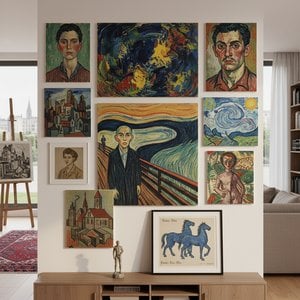
Ekspresionizmo Deimantai: 10 Šedevrai Jūsų Namų Dekorui
Atraskite ekspresionizmo šedevrus! 10 įtakingiausių meno kūrinių, atskleisiančių Muncho, Kirchnerio ir kitų meistrų emocijas. Išmokite apie tapybos stilius bei spalvų paletę. Aukščiausios kokybės dailės reprodukcijos jūsų namams – ArtsDot.com.

German Expressionism's 10 Defining Masterpieces | Art for Your Home
Explore 10 defining German Expressionism masterpieces – from Munch's 'The Scream' to Kandinsky’s abstracts. Discover the artists, stories & bold colors behind this powerful art movement. Find museum-quality reproductions at ArtsDot.com.