

 Pasidalinti
 Dalintis
 Išsamiau
 Vadovas

 Atsisiųsti
 Panašūs eksponatai
 Automatinė diorama
 问答
问答 Statistika
St George (detail)


 Skaityti daugiau
Giclée / Meno spausdinimas
Muziejų lygio „giclée“ arba drobos spausdinimas: greita gamyba ir lankstios apdailos parinktys. ( Pirkti rankų darbo tapybą Perejti prie skaitmeninių vaizdų)




































Pasirinkite iš mūsų nustatytų dydžių, atitinkančių originalaus meno kūrinio proporcijas.

Įveskite jums reikiamą plotį ir aukštį, kad atvaizdas derėtų prie jūsų rėmo ar sienos. Spausdiną galima tik sumažinti, bet nepadidinti virš originalaus paveikslėlio dydžio, todėl keičiant proporcijas, dalis vaizdo prarandama. Prieš spausdinimą atsiųsime jums skaitmeninį maketą patvirtinimui. Šioje puslapio nuotraukoje matomas pjūvis nėra tikslus – jį rodo tik maketas.
Pristatymas visame pasaulyje () per 2 weeks, o ne įprastas 4/5 savaičių laikotarpis. (4 lapkritis)

Nemokamas greitasis pristatymas visame pasaulyje

Aukštos kokybės lininis drobė

Pilnas siuntimo draudimas

Muitinės mokesčių grąžinimo garantija

Tikro spalvų atitikimo garantija

100 dienų grąžinimo politika (tik esant įtaigoms)

100% pinigų grąžinimo garantija

Nuolaida dideliems užsakymams
 Stiklo variantas prieinamas tik pasirinkus dydį iki 110 cm

St George (detail)
Giclée / Meno spausdinimas
Reprodukcijos matmenys
-


Bendroji kaina
€ 56
Donatello’s St. George: A Renaissance Knight of Faith and Form
The marble figure of St. George, sculpted by Donatello around 1416, stands as more than just a depiction of a saint; it's a pivotal moment in the evolution of Renaissance sculpture – a testament to the artist’s innovative spirit and his profound understanding of human form and narrative. Originally gracing the north wall of Orsanmichele, Florence’s imposing guildhall, this statue immediately captivated viewers with its dynamic energy and strikingly realistic portrayal, marking a decisive shift away from the more stylized conventions of the preceding Gothic period.
Donatello, already establishing himself as a leading figure in Florentine art, was at the peak of his creative powers when he undertook this commission for the guild of armourers. The subject itself – St. George slaying the dragon – is a potent symbol deeply rooted in Christian iconography and medieval legend. This wasn’t merely a historical narrative; it represented the triumph of good over evil, faith over darkness, and the unwavering defense of Christendom. Donatello masterfully translated this complex symbolism into a tangible form, imbuing the statue with an almost palpable sense of urgency and heroic resolve.
A Study in Movement and Technique
What immediately distinguishes St. George is not simply its subject matter but the way Donatello renders movement within a static medium. The figure isn’t rigidly posed; instead, he appears poised for action, his right leg subtly shifted forward as if bracing himself for a decisive thrust. This subtle contrapposto – a shift in weight and balance that creates an illusion of life – is revolutionary for its time, demonstrating Donatello's mastery of anatomy and his ability to capture the dynamism of human movement. The careful attention to detail—the glint of armor, the determined expression on the face, the powerful musculature beneath the fabric—all contribute to this remarkable sense of realism.
Donatello’s technique is equally noteworthy. He employed a technique known as “stiacciato,” or low relief, which allowed him to create a remarkably shallow surface. This wasn't simply a stylistic choice; it was a deliberate strategy for conveying depth and atmosphere. The background landscape—a distant cave, a colonnade, and a grove of trees—is rendered with astonishing subtlety, using the stiacciato technique to suggest perspective and distance. The figures themselves are sculpted in higher relief, drawing the viewer’s eye to the central drama of the scene – St. George confronting his formidable foe.
Symbolism and Context
Beyond its immediate visual impact, St. George embodies a complex web of symbolic meanings. As the patron saint of England, he represented courage, chivalry, and military virtue—qualities highly valued by the Florentine armourers who commissioned the statue. The dragon itself symbolizes evil, temptation, and all that opposes Christian faith. The inclusion of the princess rescued from the dragon further reinforces this narrative of salvation and redemption.
Furthermore, St. George’s placement within Orsanmichele—a building dedicated to the guilds—highlights the statue's significance as a symbol of civic pride and religious devotion. The guild of armourers sought to honor their patron saint, not only through artistic representation but also by associating themselves with his virtues and ideals. The statue served as a constant reminder of their commitment to both craftsmanship and faith.
A Legacy in Marble
Donatello’s St. George is more than just a beautiful sculpture; it's a landmark achievement in the history of Renaissance art. It demonstrated a new approach to sculpting, one that prioritized realism, dynamism, and expressive emotion. The statue’s influence can be seen in countless subsequent works of art, solidifying Donatello’s place as one of the most important sculptors of his era. Today, a faithful replica stands proudly at the Bargello Museum in Florence, allowing viewers to appreciate the enduring power and beauty of this remarkable masterpiece.
Klausimai ir atsakymai
Kokią nuotaiką „St George (detail)“ – Donatelis išreiškia Early Renaissance kontekste?
„St George (detail)“ Reflective emocija akompaniuoja jo Early Renaissance stiliui.
Kas sukūrė „St George (detail)“ ir kokiu stiliumi tai atlikta?
Kūrinį „St George (detail)“ sukūrė Donatelis, pasižymintis Early Renaissance stiliumi.
Iš ko ir kokiu stiliumi sukurta „St George (detail)“?
„St George (detail)“ sukurta naudojant Marble, Early Renaissance stiliuje.
panašūs kūriniai


Autoriaus biografija
ankstyvasis gyvenimas ir karjera
Donato di Niccolò di Betto Bardi, žinomas kaip Donatello, gimė Florencijoje, Italijoje, apie 1386 metus. Studijuodamas klasikiną skulptūrą, jis sukūrė itin stiprų pagrindą savo ankstyvojo renesanso stiliui, kuris vėliau tapo tikruoju florenticinio renesanso ženkliniu bružu. Šis naujas požiūris į meną ir kultūrą suformavo visą tuometinę epochą.pagrindiniai darbai ir inovacijos
Donatello garsiausias kūrinys, Daidas, tapo pirmąoju laisva, nuogą vyrišką skulptūra nuo antikos laikų. Šis Medici šeimos užsakytas šedevras demonstravo neįtikėtiną menininko inovaciją ir techninę meistriškę. Kiti išdayančios dėmesį darbai apima:- Šv. Liudviką iš Tuluzy (šiuo metu saugomą Santa Croce bazilikos muziejuje), kurį puošia Donatello sukurta klasikinė rėmelis.
- Izaako aukojimą, sukurtą Florencijos Santa Maria del Fiore bazilikos varpėdėms, pasižintį iš ryškių portretinių detalių.
- kryžius (1425 m.) Santa Croce bažnyčai, kuriame Kristus yra pavaizduotas agonijos akimirkos metu.
meninis stilius ir palikimas
Donatello kūrybinį kelią galima suskirstyti į platesnes fazes, prasizしたもの iš ekspresivityvės ir klasikinio monumentalumo vystymo. Nors jo darbai bendruomenėje iš pradžių nebuvo iškart priimti, jie vėliau tapo itin populiariai, paveikdami kitas Italijos kurlarını bei visą Europos menininkų bendruomenę. pagrindiniai meno judėjimai:asmeninis gyvenimas ir darbo stilius
Donatello buvo žinomas kaip draugiškas ir gerbiama asmenybė, tačiau jo gebėjimai valdyti karjeros verslo pusę buvo trūdingi. Jis tendencijuodavo priimti daugiau užsakymų, nei galėjo įsipareigoti įvykdyti, dėl čega darbai dažnai vėluodavo arba juos tektų perduoti kiti skulptoriai. pastebimais meniniai darbai ir menininkai:- Leonardo da Vinci: Prisylėdimas (detalė)
- Amico Aspertini: Pano statula / laukinio liūto skulptūra
- Michelangelo Buonarroti: Tondo pitt
muziejai ir meno kolekcijos:
- Museo della Collegiata (Empoli, Italija): paslėpta renesanso perla, kurioje galima rasti Francesco Botticini ir Raffaello Botticini darbus.
- ankstyvojo Italijos renesanso meno judėjimas

Donatelis
1386 - 1466 , इटalija
Trumpa informacija
- Artistic Movement Or Style: Renesansas (ankstyvasis renesansas)
- Artists Or Movements Influenced By This Artist:
- Italijos renesansas
- Ankstyvasis renesansas
- Florentijos renesansas
- Artists Who Influenced This Artist: ['Klasikinė skulptūra']
- Date Of Birth: apie 1386 m.
- Date Of Death: 1466 m.
- Full Name: Donatello di Niccolò
- Nationality: Italijos
- Notable Artworks:
- Davidas
- Tuluozos Šv. Liudvikas
- Isaako aukas
- Kryžius
- Place Of Birth: Firenos miestas, Italija
Susiję straipsniai

Bronze Sculptures That Defined Art History | ArtsDot
Journey through art history with our Top 10 bronze sculptures! Explore masterpieces by Rodin, Michelangelo & more. Discover stories behind iconic statues and find museum-quality reproductions for your home decor at ArtsDot.com.

The Enduring Form: Exploring Themes & Techniques in Sculpture Across Historical Periods
Explore the rich history of sculpture from ancient masterpieces to contemporary innovations. Discover key techniques, influential artists & investment potential for discerning art collectors.
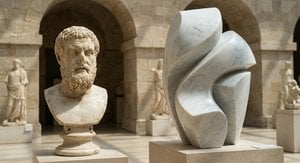
The Enduring Allure of Marble in Art History: From Classical Sculpture to Modern Abstraction
Explore the captivating history of marble sculpture from ancient Greece to modern art. Discover renowned artists like Canova & Michelangelo, carving techniques, and investment insights at ArtsDot.

Georges Braque: 25 Šedevrai, Keičiantys Jūsų Interjerą | ArtsDot
Atraskite 25 Georges Braque šedevrus! Kubizmo meistro paveikslai, interjero dekoras ir meno istorija. Meno reprodukcijos aukščiausia kokybe – ArtsDot.com. Išsamesnės informacijos rasite internetu.

Georges Seurat: 25 Šedevrai, Apšviečiantys Modernaus Meno Takus | ArtsDot
Atraskite 25 Georges Seurat šedevrus! Išsami analizė, istorijos ir įkvėpimas interjero dizainui. Pointilizmo meistras, impresionizmas ir chromoluminarizmas – viskas ArtsDot.com. Explore the full collection online!