

 Pasidalinti
 Dalintis
 Išsamiau
 Vadovas

 Atsisiųsti
 Panašūs eksponatai
 Automatinė diorama
 问答
问答 Statistika
Saint George


 Skaityti daugiau
Giclée / Meno spausdinimas
Muziejų lygio „giclée“ arba drobos spausdinimas: greita gamyba ir lankstios apdailos parinktys. ( Pirkti rankų darbo tapybą Perejti prie skaitmeninių vaizdų)




































Pasirinkite iš mūsų nustatytų dydžių, atitinkančių originalaus meno kūrinio proporcijas.

Įveskite jums reikiamą plotį ir aukštį, kad atvaizdas derėtų prie jūsų rėmo ar sienos. Spausdiną galima tik sumažinti, bet nepadidinti virš originalaus paveikslėlio dydžio, todėl keičiant proporcijas, dalis vaizdo prarandama. Prieš spausdinimą atsiųsime jums skaitmeninį maketą patvirtinimui. Šioje puslapio nuotraukoje matomas pjūvis nėra tikslus – jį rodo tik maketas.
Pristatymas visame pasaulyje () per 2 weeks, o ne įprastas 4/5 savaičių laikotarpis. (8 lapkritis)

Nemokamas greitasis pristatymas visame pasaulyje

Aukštos kokybės lininis drobė

Pilnas siuntimo draudimas

Muitinės mokesčių grąžinimo garantija

Tikro spalvų atitikimo garantija

100 dienų grąžinimo politika (tik esant įtaigoms)

100% pinigų grąžinimo garantija

Nuolaida dideliems užsakymams
 Stiklo variantas prieinamas tik pasirinkus dydį iki 110 cm

Saint George
Giclée / Meno spausdinimas
Reprodukcijos matmenys
-


Bendroji kaina
€ 56
A Renaissance Sentinel in Marble
In the heart of Florence, where the echoes of the Quattrocento still resonate through the cobblestone streets, stands a figure of unparalleled poise and quiet strength. Donatello’s Saint George, completed around 1417, is far more than a mere religious icon; it is a breathtaking embodiment of the burgeoning Renaissance spirit. Carved from luminous Carrara marble, the sculpture captures a moment of profound psychological depth. Unlike the rigid, stylized figures of the preceding Gothic era, this Saint George possesses a palpable human presence. His gaze, directed upward with an expression of focused determination and spiritual contemplation, invites the viewer into his internal struggle between earthly duty and divine devotion. For the discerning collector or lover of classical beauty, this piece offers a window into an age where art began to breathe with the vitality of human emotion.
The technical mastery displayed in this work is nothing short of extraordinary. Donatello utilized the medium of marble to achieve a delicate balance between the hardness of armor and the softness of skin. Through meticulous carving and polishing, he created a surface that catches the light with a subtle, pearlescent glow, lending the figure a lifelike vitality. The use of classical contrapposto—the slight shifting of weight onto one leg—imbues the statue with a sense of potential movement, as if the knight might step forward from his niche at any moment. Every fold of his drapery and every detail of his protective gear speaks to Donatello’s commitment to anatomical accuracy and textural realism, making it an ideal centerpiece for those seeking to bring a sense of historical weight and sophisticated texture to a curated interior.
Civic Pride and Symbolic Grandeur
To understand the soul of Saint George, one must look to the vibrant streets of 15th-century Florence. Commissioned by the powerful Guild of Armorers and Swordsmiths for the Orsanmichele, the statue served as a public declaration of both religious faith and civic excellence. In an era marked by political turbulence, Saint George stood as a symbol of Florentine resilience and courage. The sculpture’s placement within an intricate Gothic niche provided a dramatic architectural frame, yet the figure itself broke free from its surroundings through its sheer naturalism. This tension between the structured, geometric lines of the architecture and the organic, fluid form of the saint mirrors the very essence of the Early Renaissance: the marriage of classical order with humanistic passion.
For interior designers and art enthusiasts, incorporating a reproduction of this masterpiece means introducing a narrative of protection, honor, and timelessness into a space. The neutral, sophisticated palette of beige and cream tones allows the piece to integrate seamlessly into diverse decor styles, from the grandeur of a classical estate to the minimalist elegance of a modern gallery. It is not merely a decoration; it is an invitation to reflect on the virtues of steadfastness and grace. Owning such a work is an opportunity to surround oneself with the enduring legacy of Donatello, ensuring that the spirit of the Florentine Renaissance continues to inspire and command attention in the contemporary home.
Klausimai ir atsakymai
Kokią emociją sukelia „Saint George“?
„Saint George“ siejama su Calm jausmu. Emocinis tonas aprašo įspūdį, kurį sukelia kūrinys.
Kokia spalva labiausiai išsiskiria kūryniame „Saint George“?
Rosy Brown (#b3a595) yra pagrindinė kūrinio „Saint George“ – Donatelis spalva.
Kada ir kokiais medžiagomis buvo sukurta „Saint George“?
„Saint George“ – Donatelis technika – Marble, kūrybinė data – 1417.
panašūs kūriniai


Autoriaus biografija
ankstyvasis gyvenimas ir karjera
Donato di Niccolò di Betto Bardi, žinomas kaip Donatello, gimė Florencijoje, Italijoje, apie 1386 metus. Studijuodamas klasikiną skulptūrą, jis sukūrė itin stiprų pagrindą savo ankstyvojo renesanso stiliui, kuris vėliau tapo tikruoju florenticinio renesanso ženkliniu bružu. Šis naujas požiūris į meną ir kultūrą suformavo visą tuometinę epochą.pagrindiniai darbai ir inovacijos
Donatello garsiausias kūrinys, Daidas, tapo pirmąoju laisva, nuogą vyrišką skulptūra nuo antikos laikų. Šis Medici šeimos užsakytas šedevras demonstravo neįtikėtiną menininko inovaciją ir techninę meistriškę. Kiti išdayančios dėmesį darbai apima:- Šv. Liudviką iš Tuluzy (šiuo metu saugomą Santa Croce bazilikos muziejuje), kurį puošia Donatello sukurta klasikinė rėmelis.
- Izaako aukojimą, sukurtą Florencijos Santa Maria del Fiore bazilikos varpėdėms, pasižintį iš ryškių portretinių detalių.
- kryžius (1425 m.) Santa Croce bažnyčai, kuriame Kristus yra pavaizduotas agonijos akimirkos metu.
meninis stilius ir palikimas
Donatello kūrybinį kelią galima suskirstyti į platesnes fazes, prasizしたもの iš ekspresivityvės ir klasikinio monumentalumo vystymo. Nors jo darbai bendruomenėje iš pradžių nebuvo iškart priimti, jie vėliau tapo itin populiariai, paveikdami kitas Italijos kurlarını bei visą Europos menininkų bendruomenę. pagrindiniai meno judėjimai:asmeninis gyvenimas ir darbo stilius
Donatello buvo žinomas kaip draugiškas ir gerbiama asmenybė, tačiau jo gebėjimai valdyti karjeros verslo pusę buvo trūdingi. Jis tendencijuodavo priimti daugiau užsakymų, nei galėjo įsipareigoti įvykdyti, dėl čega darbai dažnai vėluodavo arba juos tektų perduoti kiti skulptoriai. pastebimais meniniai darbai ir menininkai:- Leonardo da Vinci: Prisylėdimas (detalė)
- Amico Aspertini: Pano statula / laukinio liūto skulptūra
- Michelangelo Buonarroti: Tondo pitt
muziejai ir meno kolekcijos:
- Museo della Collegiata (Empoli, Italija): paslėpta renesanso perla, kurioje galima rasti Francesco Botticini ir Raffaello Botticini darbus.
- ankstyvojo Italijos renesanso meno judėjimas

Donatelis
1386 - 1466 , इटalija
Trumpa informacija
- Artistic Movement Or Style: Renesansas (ankstyvasis renesansas)
- Artists Or Movements Influenced By This Artist:
- Italijos renesansas
- Ankstyvasis renesansas
- Florentijos renesansas
- Artists Who Influenced This Artist: ['Klasikinė skulptūra']
- Date Of Birth: apie 1386 m.
- Date Of Death: 1466 m.
- Full Name: Donatello di Niccolò
- Nationality: Italijos
- Notable Artworks:
- Davidas
- Tuluozos Šv. Liudvikas
- Isaako aukas
- Kryžius
- Place Of Birth: Firenos miestas, Italija
Susiję straipsniai

Georges Braque: 25 Šedevrai, Keičiantys Jūsų Interjerą | ArtsDot
Atraskite 25 Georges Braque šedevrus! Kubizmo meistro paveikslai, interjero dekoras ir meno istorija. Meno reprodukcijos aukščiausia kokybe – ArtsDot.com. Išsamesnės informacijos rasite internetu.
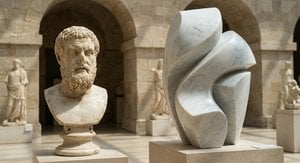
The Enduring Allure of Marble in Art History: From Classical Sculpture to Modern Abstraction
Explore the captivating history of marble sculpture from ancient Greece to modern art. Discover renowned artists like Canova & Michelangelo, carving techniques, and investment insights at ArtsDot.

Bronze Sculptures That Defined Art History | ArtsDot
Journey through art history with our Top 10 bronze sculptures! Explore masterpieces by Rodin, Michelangelo & more. Discover stories behind iconic statues and find museum-quality reproductions for your home decor at ArtsDot.com.

Georges Seurat: 25 Šedevrai, Apšviečiantys Modernaus Meno Takus | ArtsDot
Atraskite 25 Georges Seurat šedevrus! Išsami analizė, istorijos ir įkvėpimas interjero dizainui. Pointilizmo meistras, impresionizmas ir chromoluminarizmas – viskas ArtsDot.com. Explore the full collection online!

The Enduring Form: Exploring Themes & Techniques in Sculpture Across Historical Periods
Explore the rich history of sculpture from ancient masterpieces to contemporary innovations. Discover key techniques, influential artists & investment potential for discerning art collectors.