


 Peržiūrėti realybėje
 Pasidalinti
 Dalintis
 Išsamiau

 Atsisiųsti
 Panašūs eksponatai
 Rentgeno nuotrauka
 Automatinė diorama
 Statistika
Deposition (detail)


 Skaityti daugiau
Rankų darbo aliejinės reprodukcijos
Rankiniu būdu tapytas aliejus ant droblio jūsų pageidaujamame dydį ir rėmuose – mūsų menininkų darbas pagal užsakymą. ( Perejti prie spausdinimo Perejti prie skaitmeninio vaizdo)




P118B $10

P118H $10

P118W $10

P438Z $10

P508JH $12

P508YH $12

P805H $10

P805Z $10

P919BZ $10

P919G $10

P919XJ $10

P959ZH $10

P968JZ $12

W106C $8

W218G $10

W218JH $8

W218Y $10

W307PJ $10

W316G $10

W316PJ $8

W316Y $10

W398PJ $8

W4111J $10

W500HY $15

W500JH $15

W692G $12

W849H $8

W940BG $15

W953PJ $8




Pasirinkite iš mūsų nustatytų dydžių, atitinkančių originalaus meno kūrinio proporcijas.

Galite įvesti savo matmenis, kad jie atitiktų konkretų rėmą ar erdvę. Jei pasirinktas dydis neatitinka originalaus paveikslėlio proporcijų, mes arba apkropsime meno kūrinį, arba papildysime tapybą rankomis dažytい elementais. Prieš pradėdami gamybą, jūsų patvirtinimui atsiųsime skaitmeninį maketą.
Atkreipkite dėmesį, kad ekrane rodomas vaizdas neatspindi tikrojo apkarpymo ar papildymo. Tik maketas tiksliai parodys galutinę kompoziciją.
Nors galima rinktis ir individualius dydžius, rekomenduojame pasirinkti matmenis iš nustatytos sąrašo, kad būtų išlaikytos originalios proporcijos.
Gavus užsakymą, ArtsDot.com komanda susisieks su klientu el. paštu dėl instrukcijų ir pateiks maketo pavyzdį.
Pristatymas visame pasaulyje () per 3–4 savaites, o ne įprastai – per 5 savaites. (10 rugsėjis). Kokybė lieka nepakeičiama.

Nemokamas greitasis pristatymas visame pasaulyje

Aukštos kokybės lininis drobė

Pilnas siuntimo draudimas

Muitinės mokesčių grąžinimo garantija

Tikro spalvų atitikimo garantija

100 dienų grąžinimo politika (tik esant įtaigoms)

100% pinigų grąžinimo garantija

Nuolaida už kelias reprodukcijas
 Stiklo variantas prieinamas tik pasirinkus dydį iki 110 cm

Deposition (detail)
Reprodukcijos technika
Reprodukcijos matmenys
-


Galutinė kaina
$ 613
The Weight of Faith and the Dawn of Realism
Donatello's Deposition, a pivotal work from 1465, isn’t merely a depiction of Christ being lowered from the cross; it’s a profound meditation on grief, loss, and the nascent hope that permeates the early Renaissance. Born in Florence during a period of explosive artistic innovation – a time when classical ideals were being reinterpreted through a distinctly Italian lens – Donatello's approach to sculpture was revolutionary. He moved decisively away from the stylized elegance of his predecessor, Ghiberti, embracing instead a raw emotionality and anatomical accuracy previously unseen in religious art. This particular detail panel, part of a larger narrative scene likely adorning a chapel or tomb, captures a moment of intense human drama – the Virgin Mary’s anguish as she cradles her son, surrounded by the figures of John the Evangelist, Nicodemus, and Joseph of Arimathea.
The sculpture's power lies not just in its technical brilliance—the subtly modeled musculature of the figures, the delicate folds of their garments, the masterful use of light and shadow to create a palpable sense of volume—but also in its deeply human portrayal. Donatello eschews idealized forms, opting instead for figures rendered with an almost unsettling realism. Mary’s face is etched with sorrow, her hands clasped together in a gesture of profound grief. The youthful vigor of John the Evangelist contrasts sharply with the solemnity of Nicodemus and Joseph, suggesting the diverse range of human responses to this devastating event. The composition itself—a dynamic pyramid built around the central figure of Mary—creates a sense of stability amidst chaos, mirroring the enduring strength of faith in the face of unimaginable loss.
A Symphony of Marble: Technique and Material
Crafted primarily from marble – likely sourced from Carrara, renowned for its purity and veining – Deposition exemplifies Donatello’s mastery of his chosen medium. The sculptor skillfully exploited the inherent qualities of the stone, utilizing subtle gradations in texture to convey depth and form. Notice how the rougher surfaces of the drapery contrast with the smoother planes of the figures' skin, creating a captivating interplay between tactile sensation and visual perception. The use of *contrapposto*—a technique where the figure’s weight is shifted onto one leg, creating a naturalistic pose—is particularly evident in Mary’s stance, lending her an air of both vulnerability and dignity.
Donatello's innovative approach extended beyond simply carving the stone. He employed a meticulous process of grinding and polishing to achieve the desired sheen and luminosity. The surface is not uniformly smooth; rather, it possesses a subtle texture that reflects light in intriguing ways, enhancing the sculpture’s three-dimensionality. Furthermore, Donatello likely utilized a technique known as *spolvero*, applying small bits of charcoal or other pigments to the marble's surface to create highlights and shadows, adding further nuance to the figures’ expressions and gestures. This careful attention to detail speaks volumes about his dedication to capturing not just the likeness but also the very essence of his subjects.
Echoes of Antiquity and the Renaissance Spirit
Deposition is deeply rooted in classical antiquity, a hallmark of Donatello’s artistic philosophy. The pyramidal composition, reminiscent of Roman sculpture, provides a sense of order and balance. The figures themselves—particularly Mary—draw inspiration from ancient depictions of mourning goddesses, albeit imbued with a distinctly Renaissance sensibility. However, Donatello doesn't simply imitate the past; he transforms it, infusing it with his own unique vision. The emotional intensity of the scene, the realistic portrayal of human suffering, and the emphasis on individual expression are all hallmarks of the early Renaissance—a period marked by a renewed interest in humanism and a celebration of earthly experience.
The sculpture’s placement within a larger architectural context – likely as part of a tomb or chapel façade – further amplifies its significance. It served not only as a devotional image but also as a testament to the deceased, embodying their faith and commemorating their memory. Deposition stands as a powerful reminder of the enduring human capacity for both sorrow and hope—a timeless masterpiece that continues to resonate with viewers centuries after its creation.
panašūs kūriniai


Autoriaus biografija
ankstyvasis gyvenimas ir karjera
Donato di Niccolò di Betto Bardi, žinomas kaip Donatello, gimė Florencijoje, Italijoje, apie 1386 metus. Studijuodamas klasikiną skulptūrą, jis sukūrė itin stiprų pagrindą savo ankstyvojo renesanso stiliui, kuris vėliau tapo tikruoju florenticinio renesanso ženkliniu bružu. Šis naujas požiūris į meną ir kultūrą suformavo visą tuometinę epochą.pagrindiniai darbai ir inovacijos
Donatello garsiausias kūrinys, Daidas, tapo pirmąoju laisva, nuogą vyrišką skulptūra nuo antikos laikų. Šis Medici šeimos užsakytas šedevras demonstravo neįtikėtiną menininko inovaciją ir techninę meistriškę. Kiti išdayančios dėmesį darbai apima:- Šv. Liudviką iš Tuluzy (šiuo metu saugomą Santa Croce bazilikos muziejuje), kurį puošia Donatello sukurta klasikinė rėmelis.
- Izaako aukojimą, sukurtą Florencijos Santa Maria del Fiore bazilikos varpėdėms, pasižintį iš ryškių portretinių detalių.
- kryžius (1425 m.) Santa Croce bažnyčai, kuriame Kristus yra pavaizduotas agonijos akimirkos metu.
meninis stilius ir palikimas
Donatello kūrybinį kelią galima suskirstyti į platesnes fazes, prasizしたもの iš ekspresivityvės ir klasikinio monumentalumo vystymo. Nors jo darbai bendruomenėje iš pradžių nebuvo iškart priimti, jie vėliau tapo itin populiariai, paveikdami kitas Italijos kurlarını bei visą Europos menininkų bendruomenę. pagrindiniai meno judėjimai:asmeninis gyvenimas ir darbo stilius
Donatello buvo žinomas kaip draugiškas ir gerbiama asmenybė, tačiau jo gebėjimai valdyti karjeros verslo pusę buvo trūdingi. Jis tendencijuodavo priimti daugiau užsakymų, nei galėjo įsipareigoti įvykdyti, dėl čega darbai dažnai vėluodavo arba juos tektų perduoti kiti skulptoriai. pastebimais meniniai darbai ir menininkai:- Leonardo da Vinci: Prisylėdimas (detalė)
- Amico Aspertini: Pano statula / laukinio liūto skulptūra
- Michelangelo Buonarroti: Tondo pitt
muziejai ir meno kolekcijos:
- Museo della Collegiata (Empoli, Italija): paslėpta renesanso perla, kurioje galima rasti Francesco Botticini ir Raffaello Botticini darbus.
- ankstyvojo Italijos renesanso meno judėjimas

Donatelis
1386 - 1466 , इटalija
Trumpa informacija
- Artistic Movement Or Style: Renesansas (ankstyvasis renesansas)
- Artists Or Movements Influenced By This Artist:
- Italijos renesansas
- Ankstyvasis renesansas
- Florentijos renesansas
- Artists Who Influenced This Artist: ['Klasikinė skulptūra']
- Date Of Birth: apie 1386 m.
- Date Of Death: 1466 m.
- Full Name: Donatello di Niccolò
- Nationality: Italijos
- Notable Artworks:
- Davidas
- Tuluozos Šv. Liudvikas
- Isaako aukas
- Kryžius
- Place Of Birth: Firenos miestas, Italija
Susiję straipsniai

The Enduring Form: Exploring Themes & Techniques in Sculpture Across Historical Periods
Explore the rich history of sculpture from ancient masterpieces to contemporary innovations. Discover key techniques, influential artists & investment potential for discerning art collectors.
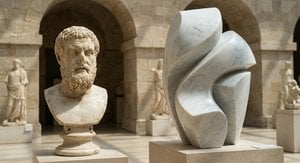
The Enduring Allure of Marble in Art History: From Classical Sculpture to Modern Abstraction
Explore the captivating history of marble sculpture from ancient Greece to modern art. Discover renowned artists like Canova & Michelangelo, carving techniques, and investment insights at ArtsDot.

The Enduring Form: Sculpture Across History, Technique & Emotional Resonance
Explore the rich history of sculpture with ArtsDot. Discover key techniques, influential artists & investment potential for discerning collectors. Expert insights into valuing and collecting timeless masterpieces.

Bronze Age to Modern Masters: 10 Sculptures That Redefined Art | ArtsDot
Journey through art history with 10 legendary bronze sculptures – from Michelangelo's David to Rodin’s Thinker. Explore the stories, techniques & timeless beauty of these masterpieces. Find museum-quality reproductions & elevate your home decor on ArtsDot.com.

Bronze Sculptures That Defined Art History | ArtsDot
Journey through art history with our Top 10 bronze sculptures! Explore masterpieces by Rodin, Michelangelo & more. Discover stories behind iconic statues and find museum-quality reproductions for your home decor at ArtsDot.com.