


 Pasidalinti
 Dalintis
 Išsamiau

 Atsisiųsti
 Panašūs eksponatai
 Automatinė diorama
 Statistika
Bearded Prophet (detail)


 Skaityti daugiau
Rankų darbo aliejinės reprodukcijos
Rankiniu būdu tapytas aliejus ant droblio jūsų pageidaujamame dydį ir rėmuose – mūsų menininkų darbas pagal užsakymą. ( Perejti prie spausdinimo Perejti prie skaitmeninio vaizdo)




































Pasirinkite iš mūsų nustatytų dydžių, atitinkančių originalaus meno kūrinio proporcijas.

Galite įvesti savo matmenis, kad jie atitiktų konkretų rėmą ar erdvę. Jei pasirinktas dydis neatitinka originalaus paveikslėlio proporcijų, mes arba apkropsime meno kūrinį, arba papildysime tapybą rankomis dažytい elementais. Prieš pradėdami gamybą, jūsų patvirtinimui atsiųsime skaitmeninį maketą.
Atkreipkite dėmesį, kad ekrane rodomas vaizdas neatspindi tikrojo apkarpymo ar papildymo. Tik maketas tiksliai parodys galutinę kompoziciją.
Nors galima rinktis ir individualius dydžius, rekomenduojame pasirinkti matmenis iš nustatytos sąrašo, kad būtų išlaikytos originalios proporcijos.
Gavus užsakymą, ArtsDot.com komanda susisieks su klientu el. paštu dėl instrukcijų ir pateiks maketo pavyzdį.
Pristatymas visame pasaulyje () per 3–4 savaites, o ne įprastai – per 5 savaites. (9 rugsėjis). Kokybė lieka nepakeičiama.

Nemokamas greitasis pristatymas visame pasaulyje

Aukštos kokybės lininis drobė

Pilnas siuntimo draudimas

Muitinės mokesčių grąžinimo garantija

Tikro spalvų atitikimo garantija

100 dienų grąžinimo politika (tik esant įtaigoms)

100% pinigų grąžinimo garantija

Nuolaida už kelias reprodukcijas
 Stiklo variantas prieinamas tik pasirinkus dydį iki 110 cm

Bearded Prophet (detail)
Reprodukcijos technika
Reprodukcijos matmenys
-


Galutinė kaina
$ 263
The Silent Prophet: Donatello’s Bearded Messenger
Donatello's "Bearded Prophet" – often referred to as “Pensieroso,” meaning “the Thinker” – stands not merely as a sculpture, but as a profound meditation on humanity’s relationship with the divine and the weight of existence. Crafted in gleaming white marble between 1418 and 1420 during the nascent years of the Florentine Renaissance, this remarkable piece transcends its material form to embody an era's burgeoning spirit of individualism and intellectual inquiry. It resides today within the Museo dell’Opera del Duomo in Florence, a testament to Donatello’s enduring legacy as one of the movement’s most revolutionary figures.
The sculpture depicts a figure caught in a moment of intense introspection – a man seemingly lost in contemplation, his gaze fixed on some distant horizon. He is not engaged in action or proclaiming a message; instead, he embodies a quiet dignity and profound melancholy. Donatello masterfully captures this stillness through the subtle curve of the spine, the downturned mouth hinting at sorrow, and the closed eyes that suggest an absorption within the depths of his own thoughts. This wasn’t simply a portrait of a man; it was a representation of the human condition itself – grappling with questions of faith, mortality, and purpose.
A Renaissance Revival: Style and Technique
Donatello's "Bearded Prophet" represents a pivotal shift in sculptural style. Moving away from the stylized elegance of the International Gothic tradition that dominated Florence at the time, Donatello embraced the principles of classical antiquity – particularly those of Greek sculpture. He sought to achieve a greater sense of realism and naturalism, evident in the meticulously rendered details of the figure’s face, hands, and clothing. The drapery is not merely decorative; it flows realistically around the body, revealing subtle musculature and creating a dynamic interplay of light and shadow.
The sculpture's technique is equally noteworthy. Donatello employed a “basso rilievo,” or low relief, which means that the figures are sculpted slightly away from the background plane. This creates an illusion of depth and volume, drawing the viewer into the scene. The use of white marble itself was deliberate; its purity and luminosity enhance the figure’s solemnity and spiritual quality. Donatello's mastery of carving is evident in the incredibly fine detail of the beard – each strand meticulously sculpted to convey texture and weight.
Symbolism and Context: A Prophet for His Time
The identity of the prophet depicted remains deliberately ambiguous, adding to the sculpture’s universal appeal. He could represent any figure from the Bible, or indeed, any individual grappling with profound questions of faith and morality. However, many scholars believe he embodies a contemporary Florentine ideal – a man of intellect and virtue striving for spiritual enlightenment. The scroll held in his hand is a potent symbol of wisdom and divine revelation.
Created during a period of intense political and social upheaval in Florence, the sculpture reflects the city’s growing interest in humanism and its rediscovery of classical learning. The Medici family, powerful patrons of the arts, commissioned the work, recognizing its potential to embody the values of civic virtue and intellectual pursuit. The placement of the sculpture within the Duomo's campanile – a prominent landmark overlooking Florence – further emphasized its significance as a symbol of the city’s aspirations.
Emotional Resonance: A Timeless Reflection
Despite being over six centuries old, Donatello’s “Bearded Prophet” continues to resonate deeply with viewers today. Its quiet intensity and profound sense of melancholy evoke a powerful emotional response – a recognition of our shared humanity and the enduring mysteries of existence. The sculpture invites us to contemplate our own place in the world, to grapple with our own questions of faith and purpose, and to find solace in the beauty and dignity of the human spirit.
Reproductions of this iconic work offer an exceptional opportunity to bring its timeless message into any setting, serving as a focal point for contemplation and conversation. Its subtle power and enduring appeal make it a treasured addition to both private collections and public spaces alike.
panašūs kūriniai


Autoriaus biografija
ankstyvasis gyvenimas ir karjera
Donato di Niccolò di Betto Bardi, žinomas kaip Donatello, gimė Florencijoje, Italijoje, apie 1386 metus. Studijuodamas klasikiną skulptūrą, jis sukūrė itin stiprų pagrindą savo ankstyvojo renesanso stiliui, kuris vėliau tapo tikruoju florenticinio renesanso ženkliniu bružu. Šis naujas požiūris į meną ir kultūrą suformavo visą tuometinę epochą.pagrindiniai darbai ir inovacijos
Donatello garsiausias kūrinys, Daidas, tapo pirmąoju laisva, nuogą vyrišką skulptūra nuo antikos laikų. Šis Medici šeimos užsakytas šedevras demonstravo neįtikėtiną menininko inovaciją ir techninę meistriškę. Kiti išdayančios dėmesį darbai apima:- Šv. Liudviką iš Tuluzy (šiuo metu saugomą Santa Croce bazilikos muziejuje), kurį puošia Donatello sukurta klasikinė rėmelis.
- Izaako aukojimą, sukurtą Florencijos Santa Maria del Fiore bazilikos varpėdėms, pasižintį iš ryškių portretinių detalių.
- kryžius (1425 m.) Santa Croce bažnyčai, kuriame Kristus yra pavaizduotas agonijos akimirkos metu.
meninis stilius ir palikimas
Donatello kūrybinį kelią galima suskirstyti į platesnes fazes, prasizしたもの iš ekspresivityvės ir klasikinio monumentalumo vystymo. Nors jo darbai bendruomenėje iš pradžių nebuvo iškart priimti, jie vėliau tapo itin populiariai, paveikdami kitas Italijos kurlarını bei visą Europos menininkų bendruomenę. pagrindiniai meno judėjimai:asmeninis gyvenimas ir darbo stilius
Donatello buvo žinomas kaip draugiškas ir gerbiama asmenybė, tačiau jo gebėjimai valdyti karjeros verslo pusę buvo trūdingi. Jis tendencijuodavo priimti daugiau užsakymų, nei galėjo įsipareigoti įvykdyti, dėl čega darbai dažnai vėluodavo arba juos tektų perduoti kiti skulptoriai. pastebimais meniniai darbai ir menininkai:- Leonardo da Vinci: Prisylėdimas (detalė)
- Amico Aspertini: Pano statula / laukinio liūto skulptūra
- Michelangelo Buonarroti: Tondo pitt
muziejai ir meno kolekcijos:
- Museo della Collegiata (Empoli, Italija): paslėpta renesanso perla, kurioje galima rasti Francesco Botticini ir Raffaello Botticini darbus.
- ankstyvojo Italijos renesanso meno judėjimas

Donatelis
1386 - 1466 , इटalija
Trumpa informacija
- Artistic Movement Or Style: Renesansas (ankstyvasis renesansas)
- Artists Or Movements Influenced By This Artist:
- Italijos renesansas
- Ankstyvasis renesansas
- Florentijos renesansas
- Artists Who Influenced This Artist: ['Klasikinė skulptūra']
- Date Of Birth: apie 1386 m.
- Date Of Death: 1466 m.
- Full Name: Donatello di Niccolò
- Nationality: Italijos
- Notable Artworks:
- Davidas
- Tuluozos Šv. Liudvikas
- Isaako aukas
- Kryžius
- Place Of Birth: Firenos miestas, Italija
Susiję straipsniai

The Enduring Form: Sculpture Across History, Technique & Emotional Resonance
Explore the rich history of sculpture with ArtsDot. Discover key techniques, influential artists & investment potential for discerning collectors. Expert insights into valuing and collecting timeless masterpieces.

Bronze Age to Modern Masters: 10 Sculptures That Redefined Art | ArtsDot
Journey through art history with 10 legendary bronze sculptures – from Michelangelo's David to Rodin’s Thinker. Explore the stories, techniques & timeless beauty of these masterpieces. Find museum-quality reproductions & elevate your home decor on ArtsDot.com.

The Enduring Form: Exploring Themes & Techniques in Sculpture Across Historical Periods
Explore the rich history of sculpture from ancient masterpieces to contemporary innovations. Discover key techniques, influential artists & investment potential for discerning art collectors.

Bronze Sculptures That Defined Art History | ArtsDot
Journey through art history with our Top 10 bronze sculptures! Explore masterpieces by Rodin, Michelangelo & more. Discover stories behind iconic statues and find museum-quality reproductions for your home decor at ArtsDot.com.
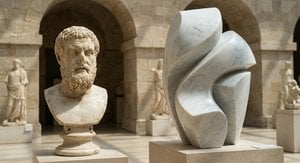
The Enduring Allure of Marble in Art History: From Classical Sculpture to Modern Abstraction
Explore the captivating history of marble sculpture from ancient Greece to modern art. Discover renowned artists like Canova & Michelangelo, carving techniques, and investment insights at ArtsDot.