

 Peržiūrėti realaus dydžio版
 Pasidalinti
 Dalintis
 Išsamiau
 Vadovas

 Atsisiųsti
 Panašūs eksponatai
 Rentgeno spindulių nuotrauka
 Automatinė diorama
 问答
问答 Statistika
Pulpit

 Skaityti daugiau
Giclée / Meno spausdinimas
Muziejų lygio „giclée“ arba drobos spausdinimas: greita gamyba ir lankstios apdailos parinktys. ( Pirkti rankų darbo tapybą Perejti prie skaitmeninių vaizdų)




P118B €10

P118H €10

P118W €10

P438Z €10

P508JH €12

P508YH €12

P805H €10

P805Z €10

P919BZ €10

P919G €10

P919XJ €10

P959ZH €10

P968JZ €12

W106C €8

W218G €10

W218JH €8

W218Y €10

W307PJ €10

W316G €10

W316PJ €8

W316Y €10

W398PJ €8

W4111J €10

W500HY €15

W500JH €15

W692G €12

W849H €8

W940BG €15

W953PJ €8




Pasirinkite iš mūsų nustatytų dydžių, atitinkančių originalaus meno kūrinio proporcijas.

Įveskite jums reikiamą plotį ir aukštį, kad atvaizdas derėtų prie jūsų rėmo ar sienos. Spausdiną galima tik sumažinti, bet nepadidinti virš originalaus paveikslėlio dydžio, todėl keičiant proporcijas, dalis vaizdo prarandama. Prieš spausdinimą atsiųsime jums skaitmeninį maketą patvirtinimui. Šioje puslapio nuotraukoje matomas pjūvis nėra tikslus – jį rodo tik maketas.
Pristatymas visame pasaulyje () per 2 weeks, o ne įprastas 4/5 savaičių laikotarpis. (15 lapkritis)

Nemokamas greitasis pristatymas visame pasaulyje

Aukštos kokybės lininis drobė

Pilnas siuntimo draudimas

Muitinės mokesčių grąžinimo garantija

Tikro spalvų atitikimo garantija

100 dienų grąžinimo politika (tik esant įtaigoms)

100% pinigų grąžinimo garantija

Nuolaida dideliems užsakymams
 Stiklo variantas prieinamas tik pasirinkus dydį iki 110 cm

Pulpit
Giclée / Meno spausdinimas
Reprodukcijos matmenys
-


Bendroji kaina
€ 56
panašūs kūriniai


Autoriaus biografija
Early Life and Artistic Roots
Dominikus Zimmermann, born in the humble village of Gaispoint near Wessobrunn, Bavaria, in 1685, emerged from a family deeply entrenched in the artistic traditions of Southern Germany. The Zimmermanns were part of the renowned “Wessobrunner School,” a collective of artists and craftsmen who flourished during the Baroque period, celebrated for their exceptional skill in stucco work and fresco painting. This familial legacy profoundly shaped young Dominikus’s early development; he didn't so much choose an artistic path as inherit one. Initially, he followed in his family’s footsteps, honing his talents as a stuccoist—a demanding craft requiring both technical precision and aesthetic sensibility. However, the seeds of architectural ambition were already being sown within him, nurtured by observing the grand designs taking shape across Bavaria. His older brother, Johann Baptist Zimmermann, a gifted painter and fresco artist, would become not merely a sibling but a crucial collaborator throughout Dominikus’s career, their combined talents forging some of the most breathtaking religious spaces of the Rococo era.The Rise of a Master Builder
Dominikus's transition from skilled stuccoist to respected *Baumeister* (master builder and architect) was gradual yet decisive. He wasn’t formally trained in architecture; instead, his knowledge grew through practical experience, meticulous observation, and an innate understanding of spatial dynamics. His early independent projects, like the Dominican convent church at Mödingen beginning in 1716, already hinted at a distinctive style—a delicate balance between Baroque grandeur and emerging Rococo sensibilities. The collaboration with Johann Baptist on this project proved pivotal, showcasing their synergistic approach to creating *Gesamtkunstwerke* – total works of art where architecture, sculpture, painting, and stucco seamlessly merged into a unified aesthetic experience. By the 1740s, Zimmermann had established himself as a leading architect in Bavaria, sought after for his ability to translate religious fervor into tangible form. He even served as mayor of Landsberg am Lech from 1748 to 1753, demonstrating a commitment to civic life alongside his artistic pursuits.The Pilgrimage Churches: A Synthesis of Faith and Form
Dominikus Zimmermann’s most enduring legacy lies in the magnificent pilgrimage churches he designed and built—structures that epitomize the Rococo style and capture the spiritual intensity of the era. The church at Steinhausen (1728-1733) marked a turning point, showcasing an oval floor plan, slender piers supporting a vibrantly painted vault, and delicately colored decorations. This was considered by many to be the first truly Rococo church due to its airy lightness and flowing ornamentation. However, it was the Pilgrimage Church of Wies near Steingaden (1745-1754) that cemented Zimmermann’s reputation as a master architect. Commissioned in response to a miraculous event involving a weeping wooden crucifix, the Wies church is an extraordinary expression of faith translated into architectural poetry. The exterior, deceptively simple, belies the opulent interior—a dazzling display of stucco work, frescoes, and intricate carvings. Light floods through strategically placed windows, illuminating the space and creating an ethereal atmosphere that invites contemplation and reverence.Influences and Artistic Style
Zimmermann’s style wasn't born in isolation; it was a synthesis of various influences, skillfully adapted to his own vision. The Baroque tradition provided a foundation—the emphasis on dramatic effect, opulent ornamentation, and the integration of different art forms. However, Zimmermann moved beyond the heavier, more imposing aesthetic of High Baroque, embracing the Rococo’s preference for lightness, elegance, and playful asymmetry. He drew inspiration from Italian architecture, particularly the work of Guarini and Borromini, but infused it with a distinctly Bavarian sensibility—a warmth and intimacy that resonated with local traditions. His close collaboration with his brother Johann Baptist was also crucial; their combined talents created a unique artistic synergy where architectural form and painted decoration complemented each other perfectly.Historical Significance and Lasting Legacy
Dominikus Zimmermann died near the Pilgrimage Church in Wies in 1766, leaving behind a body of work that continues to inspire awe and admiration. His churches are not merely beautiful buildings; they are powerful expressions of religious faith, skillfully crafted spaces designed to evoke spiritual experience. He is considered one of the most important architects of the Rococo period, and his influence can be seen in countless churches and palaces across Southern Germany and Austria.- Key Characteristics: Integration of architecture, stucco work, and fresco painting; delicate ornamentation; emphasis on light and space; a synthesis of Baroque and Rococo styles.
- Major Works: Abbey church, Mödingen; Pilgrimage Church in Steinhausen; Pilgrimage Church in Wies; Church of Our Lady in Günzburg.
- Legacy: Zimmermann’s churches remain iconic examples of Rococo architecture and continue to be celebrated for their beauty, spiritual intensity, and artistic innovation.

Dominikus Zimmermann
1685 - 1766 , Germany
Trumpa informacija
- Full Name: Dominikus Zimmermann
- Nationality: German
- Date Of Birth: 1685
- Date Of Death: 1766
- Place Of Birth: Wesobrunn, Germany
- Notable Artworks:
- Pulpit
- Weyarn Church
- Steinhausen church
- Artistic Movement Or Style: Rococo, Baroque
Susiję straipsniai

Theatricality & Triumph: Baroque Drama in Painting & Sculpture
Explore the dramatic world of Baroque art! Discover its history, defining characteristics, & lasting influence on painting & sculpture. Expert insights into Caravaggio, Zurbarán, and Bernini – plus high-quality reproductions at ArtsDot.

Baroko Dramatizmas: Elegancijos ir Emocijų Įnešimas į Šiuolaikinius Interjerus
Atraskite baroko dramatiškumą! Meno konsultacijos, rankų darbo reprodukcijos ir patarimai, kaip įnešti eleganciją bei emocijas į jūsų interjerą su ArtsDot.com. Kokybė garantuota!
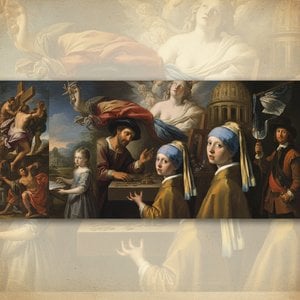
Baroko Šedevrai: 10 Menų Simbolių, Apibūdinusių Epoką | ArtsDot
Atraskite 10 baroko šedevrų, kurie apibrėžė epoką! Karolis Rubenzas, Berninis ir kiti meistrai – jų kūriniai, istorijos bei spalvos. Aukščiausios kokybės dailės reprodukcijos ir interjero įkvėpimas ArtsDot.com. Išnagrinėkite visą kolekciją internete!

The Visceral Stage: Exploring Dramatic Narratives & Emotional Intensity in Baroque Art
Explore the dramatic world of Baroque art! Discover iconic masters like Caravaggio & Rembrandt, their techniques, and the movement's lasting impact. Expert insights for collectors & enthusiasts at ArtsDot.

The Dramatic Flourish: Exploring the Baroque Movement's Enduring Legacy in Art History
Explore the dramatic world of Baroque art! Discover iconic artists like Caravaggio & Rubens, defining techniques, and its lasting impact on art history. Expert insights for collectors & enthusiasts at ArtsDot.