


 Peržiūrėti realaus dydžio版
 Siųsti
 Dalintis
 Išsamiau
 Vadovas

 Atsisiųsti
 Panašūs eksponatai
 Rentgeno spindulių nuotrauka
 Diaporama
 Statistika
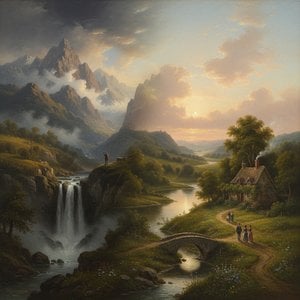
Tintern Abbey
 Romanticism
 49.0 x 75.0 cm
 Rodyti daugiau
Rankų darbo aliejinės reprodukcijos
Rankiniu būdu tapytas aliejus ant droblio jūsų pageidaujamame dydį ir rėmuose – mūsų menininkų darbas pagal užsakymą. ( Perjungti į spausdinimą Perejti prie skaitmeninių vaizdų)




































Pasirinkite iš mūsų nustatytų dydžių, atitinkančių originalaus meno kūrinio proporcijas.

Įveskite jums reikiamą plotį ir aukštį, kad paveikslas atitiktų jūsų rėmą ar sieną. Kadangi šis darbas yra rankinio darbo, siekiant išgauti kitokio formos dydį, paveikslas gali būti šiek tiek didesnis (nuo kraštų bus palikta daugiau erdvės) arba mažesnis – pasirinkite jums patogiausią variantą. Prieš pradedant tapyti, atsiųsime jums skaitmeninį maketą patvirtinimui. Šioje puslapio nuotraukoje matomas vaizdas nėra galutinis rezultatas – jį parodys tik sukurtas maketas.
Gavus užsakymą, ArtsDot.com komanda susisieks su klientu el. paštu dėl instrukcijų ir pateiks maketo pavyzdį
Pristatymas visame pasaulyje () per 3–4 savaites, o ne įprastai – per 5 savaites. (23 spalis). Kokybė lieka nepakeičiama.

Nemokamas greitasis pristatymas visame pasaulyje

Aukštos kokybės lininis drobė

Pilnas siuntimo draudimas

Muitinės mokesčių grąžinimo garantija

Tikro spalvų atitikimo garantija

100 dienų grąžinimo politika (tik esant įtaigoms)

100% pinigų grąžinimo garantija

Nuolaida dideliems užsakymams
 Stiklo variantas prieinamas tik pasirinkus dydį iki 110 cm

Tintern Abbey
Reprodukcijos technika
Reprodukcijos dydis
-


Visų pasirinktų variantų kaina
€ 231
Susiję kūriniai


Autoriaus biografija
A Life Etched in Color: The Story of Daniel Sherrin
Daniel Sherrin, born in 1868, remains a compelling yet somewhat enigmatic figure within the landscape of early 20th-century Lithuanian art. While biographical details are scarce – a testament to the turbulent times and limited documentation surrounding artists from this region – his work speaks volumes, revealing a deeply sensitive soul grappling with modernity, abstraction, and a unique personal vision. Sherrin’s artistic journey unfolded against a backdrop of significant political and social upheaval in Lithuania, then part of the Russian Empire, later achieving independence before facing renewed challenges. This context undoubtedly shaped his aesthetic choices and thematic concerns. He wasn't merely painting *pictures*; he was documenting an era, a feeling, a shift in consciousness.From Realism to Rhythmic Abstraction
Sherrin’s early work demonstrates a grounding in traditional realism, typical of the academic training available at the time. However, this foundation quickly gave way to experimentation. He didn't abandon representation entirely but began to deconstruct it, fragmenting forms and prioritizing color and texture over precise depiction. This evolution wasn’t abrupt; rather, it was a gradual process of distillation, stripping away extraneous detail to reveal the underlying emotional core of his subjects. His paintings from the 1920s and 30s are characterized by a rhythmic abstraction – swirling compositions filled with vibrant hues and dynamic brushstrokes. These weren't purely formal exercises; they often hinted at landscapes, figures, or urban scenes, but rendered in a way that emphasized feeling over fidelity. The influence of Expressionism is palpable, though Sherrin developed a distinctly Lithuanian sensibility, infused with the folk traditions and spiritual undercurrents of his homeland. He wasn’t simply mimicking Western trends; he was synthesizing them with his own cultural heritage.The ArtsDot Collection & Recognition
Much of what we know about Sherrin today is thanks to the extensive collection housed within ArtsDot, and particularly the significant holdings at the MO Museum in Vilnius. This body of work provides a rare glimpse into the breadth and depth of his artistic output. The MO Museum’s curation has been instrumental in bringing Sherrin's paintings to wider attention, revealing him as a pivotal figure in Lithuanian modernism. Furthermore, pieces held by institutions like the Wadsworth Atheneum demonstrate an international resonance that was perhaps not fully appreciated during his lifetime. The sheer volume of work suggests a prolific artist who consistently explored new avenues of expression. It’s important to note that Sherrin wasn't operating in isolation; he was part of a vibrant artistic community in Vilnius, engaging with fellow painters and intellectuals.Themes & Symbolism: A Search for Identity
Recurring themes within Sherrin’s oeuvre include the Lithuanian landscape – not as picturesque scenery but as a symbolic representation of national identity and resilience. Figures often appear fragmented or distorted, perhaps reflecting the psychological toll of political instability and social change. Color plays a crucial role in his work; vibrant reds, blues, and yellows evoke both joy and melancholy, creating a complex emotional tapestry.- Landscapes as Metaphor: Sherrin’s depictions of nature are rarely literal; they serve as vehicles for exploring deeper themes of belonging and displacement.
- The Fragmented Figure: The human form in his paintings often appears incomplete or distorted, symbolizing the challenges faced by individuals within a rapidly changing society.
- Color & Emotion: His use of color is highly expressive, conveying a range of emotions from hope and optimism to anxiety and despair.
Legacy and Historical Significance
Daniel Sherrin died in 1940, a year that marked another turning point in Lithuanian history – the Soviet occupation. His work largely faded from public view for decades, overshadowed by the dominant Socialist Realist aesthetic of the Soviet era. However, with Lithuania’s independence in 1990, there has been a renewed interest in his art and its significance within the broader context of modernism. Sherrin is now recognized as a key figure in the development of abstract expressionism in Lithuania, bridging the gap between traditional realism and avant-garde experimentation. His paintings offer a powerful testament to the enduring human spirit, a search for identity amidst chaos, and a unique artistic vision that continues to resonate with audiences today. He represents not just a painter but a cultural touchstone, a voice from a nation striving to define itself in a world of constant change.
Daniel Sherrin
1868 - 1940
Susiję straipsniai

Evocations of Place: A Historical Journey Through Landscape Art
Explore the rich history of landscape art with ArtsDot. Discover renowned artists, movements like Impressionism & Romanticism, and expert guidance for collecting timeless pieces. Find your perfect serene escape today!
The Sublime and the Picturesque: Exploring Emotion & Nature in Romantic Landscape Painting
Explore the emotional power of Romantic landscape painting! Discover the sublime & picturesque aesthetics, key artists like Friedrich & Cole, and lasting influence on art history. Find your perfect piece at ArtsDot.

The Sublime and the Picturesque: Exploring Emotion & Nature in Romantic Landscape Painting
Explore the emotional power of Romantic landscape painting! Discover the sublime & picturesque traditions, key artists like Friedrich & Cole, and find your perfect artwork at ArtsDot.

10 Romantinių Peizažų Simbolių: Tapybos Majestatės Viršūnės
Atraskite 10 legendinių romantinio peizažo kūrinių! Pasinerkite į Claude Lorrain, Caspar David Friedrich ir J.M.W. Turner genijaus pasaulį. Išmokite apie tapybos meistriškumą bei gamtos grožį. Aukščiausios kokybės meno reprodukcijos – ArtsDot.com. Tyrinėkite kolekciją!

Hubert Robert: Picturing Ruins, Preserving Memory – A Study of Romantic Antiquarianism & Artistic Innovation
Explore the captivating world of Hubert Robert, master of Romantic landscape painting & 'capriccio' ruins. Discover his historical context, artistic innovations, and collecting insights with ArtsDot.