


 Peržiūrėti realaus dydžio版
 Siųsti
 Dalintis
 Išsamiau
 Gidas
Gidas

 Atsisiųsti
 Panašūs eksponatai
 Rentgeno spindulių nuotrauka
 Diaporama
 Statistika
Sindanglaya
 Other
Other 76.0 x 55.0 cm
 Rodyti daugiau
Giclée / Meno spausdinimas
Muziejų lygio „giclée“ arba drobos spausdinimas: greita gamyba ir lankstios apdailos parinktys. ( Pirkti rankomis tapytą reprodukciją Perejti prie skaitmeninių vaizdų)




P118B $10

P118H $10

P118W $10

P438Z $10

P508JH $12

P508YH $12

P805H $10

P805Z $10

P919BZ $10

P919G $10

P919XJ $10

P959ZH $10

P968JZ $12

W106C $8

W218G $10

W218JH $8

W218Y $10

W307PJ $10

W316G $10

W316PJ $8

W316Y $10

W398PJ $8

W4111J $10

W500HY $15

W500JH $15

W692G $12

W849H $8

W940BG $15

W953PJ $8




Pasirinkite iš mūsų nustatytų dydžių, atitinkančių originalaus meno kūrinio proporcijas.

Galite nurodyti savo matmenis, kad vaizdas atitiktų konkretų rėmą ar erdvę. Jei pasirinktas dydis nesutaps su originalaus paveikslėlio proporcijomis, mes arba apkirpsime kūrinį, arba išplėsime vaizdą naudojant veideliu atspindėtą arba vientisą šoną. Skaitmeninis maketas bus išsiųstas jums patvirtinti prieš pradedant gamybą.
Atkreipkite dėmesį, kad ekrane matomas vaizdinys neatspindi tikrojo apkirpimo ar išplėtimo. Tik maketas tiksliai parodytų galutinę kompoziciją.
Nors galima rinktis ir individualius dydžius, rekomenduojame pasirinkti vieną iš išanksti nustatytų matmenų, kad būtų išlaikytos originalios proporcijos.
Pristatymas visame pasaulyje () per 2 weeks, o ne įprastas 4/5 savaičių laikotarpis. (22 rugsėjis)

Nemokamas greitasis pristatymas visame pasaulyje

Aukštos kokybės lininis drobė

Pilnas siuntimo draudimas

Muitinės mokesčių grąžinimo garantija

Tikro spalvų atitikimo garantija

100 dienų grąžinimo politika (tik esant įtaigoms)

100% pinigų grąžinimo garantija

Nuolaida dideliems užsakymams
 Stiklo variantas prieinamas tik pasirinkus dydį iki 110 cm

Sindanglaya
Giclée / Meno spausdinimas
Reprodukcijos dydis
-


Visų pasirinktų variantų kaina
$ 62
Susiję kūriniai


Autoriaus biografija
The Poetic Soul of Displacement: The Life of Czesław Miłosz
Czesław Miłosz stands as a singular and profound voice in the landscape of twentieth-century literature, a writer whose very essence was shaped by the shifting borders and ethnic tensions of his homeland. Born in 1898 in the region of Wołyń, Poland, his early years were steeped in a world where identity was often caught in the crosswinds of historical upheaval. This formative period instilled within him an enduring sensitivity to the themes of displacement, loss, and the fragility of human existence—themes that would eventually become the heartbeat of his poetic oeuvre. His intellectual journey, which took him from the rigorous academic environments of Moscow and Warsaw to the vibrant, avant-garde circles of Paris, allowed him to weave together a tapestry of diverse cultural influences.
The development of Miłosz’s artistic style was deeply influenced by his exposure to the radical movements of his era. In Paris, during the 1920s, he immersed himself in the complexities of Surrealism and existentialist thought, learning to utilize dreamlike imagery and associative language to confront the difficult truths of reality. His work is characterized by a meticulous observation of the world, paired with a lyrical precision that captures both the beauty of nature and the horrors of human conflict. This duality—the ability to find the sacred within the mundane—is perhaps his greatest technical achievement, as he navigated the tension between the personal lyric and the historical epic.
Themes of Memory, Faith, and the Human Condition
The works of Miłosz are much more than mere verses; they are profound meditations on the weight of history and the persistence of memory. Through collections such as Zniewolony Cień (The Captive Shadow) and Dzienniki Ziemi (Diary of a Land), he grappled with the trauma of war and the complexities of human relationships under the shadow of totalitarianism. His writing often explores the intersection of faith and doubt, reflecting a soul that sought meaning amidst the wreckage of the twentieth century. There is a haunting quality to his exploration of exile, where the loss of a physical homeland mirrors a deeper, spiritual displacement.
Beyond the political and historical, Miłosz’s art is deeply rooted in the folklore and mythology of his Polish-Jewish heritage. This connection to myth allowed him to create a sense of timelessness within his poetry, bridging the gap between ancient tradition and modern catastrophe. His ability to synthesize these elements—the surreal, the historical, and the mythological—ensured that his work resonated far beyond the borders of Poland, touching upon universal truths about the human condition. His literary legacy is defined by this unwavering commitment to witnessing the truth, no matter how harrowing, while maintaining a profound reverence for the light of human consciousness.

czeslaw mystkowski
1898 - 1938
Trumpa informacija apie kūrėją
- Artistic Movement Or Style: Watercolor
- Artists Or Movements Influenced By This Artist: ['Catastrophism poetry']
- Artists Who Influenced This Artist: ['École de Paris']
- Date Of Birth: 1898
- Date Of Death: 1938
- Full Name: Czesław Miłosz
- Nationality: Polish
- Notable Artworks: ['Sindanglaya']
- Place Of Birth: Polish eastern land (Wołyń)
Susiję straipsniai

Ephemeral Echoes: Exploring the Aesthetic & Historical Significance of Vintage Watercolor Painting
Explore the captivating world of vintage watercolor painting! Discover its rich history, techniques, influential artists & collecting tips. Expert insights for enthusiasts and collectors at ArtsDot.

Ephemeral Visions: Exploring the History & Emotional Resonance of Watercolor Painting
Explore the captivating history of watercolor painting, from ancient techniques to modern masters like Kandinsky & Blake. Discover essential artists, collecting tips & the emotional power of this luminous medium. Expert insights for art enthusiasts.

Watercolor Wonders: 10 Masterpieces That Redefined Art History | ArtsDot
Journey through 10 legendary watercolor masterpieces by Sargent, Turner & Homer! Explore iconic landscapes, portraits & floral art that redefined history. Find museum-quality reproductions and curated decor ideas at ArtsDot.com.

Ephemeral Visions: Exploring the Artistic Legacy & Contemporary Practice of Watercolor Painting
Explore the captivating world of watercolor painting! Discover its rich history, essential techniques, influential artists & collecting tips. A comprehensive guide for art enthusiasts from ArtsDot.
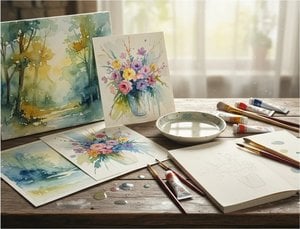
Ephemeral Visions: Exploring the Artistic Legacy & Nuances of Watercolor Painting
Explore the captivating world of watercolor painting! Discover its rich history, essential techniques, influential artists & collecting tips from art experts. A comprehensive guide for enthusiasts.