


 Peržiūrėti realaus dydžio版
 Siųsti
 Dalintis
 Išsamiau
 Vadovas

 Atsisiųsti
 Panašūs eksponatai
 Rentgeno spindulių nuotrauka
 Diaporama
 Statistika
A.158
 Acrylic On Canvas
- WallArt
- Abstract Expressionism
 100.0 x 100.0 cm
 MAGA - Museo Arte Gallarate
 Rodyti daugiau
Šiame puslapyje rodomas meno kūrinys yra saugomas autorių teisių įstatymais, todėl neturime teisės legaliai kurti ar parduoti jo identiškos reprodukcijos. Ši apsauga užtikrinama remiantis tokiais tarptautiniais susitarimais kaip Bernės konvencija ir pagal nacionalines įstatymų nuostatas, įskaitant tas, kurias nurodo JAV autoriškos teisės įstatymas – 17-asis skyrius.
Kaip pagarbią ir teisėtą alternatyvą, mes siūlome pagal užsakymą rankomis dažytus paveikslus, įkvėptus originalo. Mūsų įgudę ir profesionalūs menininkai kruopščiai tiria originalo stilių, nuotaiką ir meninę esmę, kad sukurtų naują, unikalią kūrinį, kuris sukelia tą paties jausmą – išlikdamas tuo tarciau originaliu, savarankišku kūrybiniu darbu.
Šis metodas visiškai atitinka autorių teises, nes jame nėra kūrinio kopijavimo ar dubliavimo. Tai yra kūrybinė reinterpretacija – naujas paveikslas, kurį įkvėpė originalas, tačiau kuris nėra jo identiškas.
Rankų darbo aliejinės reprodukcijos
Rankiniu būdu tapytas aliejus ant droblio jūsų pageidaujamame dydį ir rėmuose – mūsų menininkų darbas pagal užsakymą. ( Perjungti į spausdinimą Perejti prie skaitmeninių vaizdų)




P118B €10

P118H €10

P118W €10

P438Z €10

P508JH €12

P508YH €12

P805H €10

P805Z €10

P919BZ €10

P919G €10

P919XJ €10

P959ZH €10

P968JZ €12

W106C €8

W218G €10

W218JH €8

W218Y €10

W307PJ €10

W316G €10

W316PJ €8

W316Y €10

W398PJ €8

W4111J €10

W500HY €15

W500JH €15

W692G €12

W849H €8

W940BG €15

W953PJ €8




Pasirinkite iš mūsų nustatytų dydžių, atitinkančių originalaus meno kūrinio proporcijas.

Įveskite jums reikiamą plotį ir aukštį, kad paveikslas atitiktų jūsų rėmą ar sieną. Kadangi šis darbas yra rankinio darbo, siekiant išgauti kitokio formos dydį, paveikslas gali būti šiek tiek didesnis (nuo kraštų bus palikta daugiau erdvės) arba mažesnis – pasirinkite jums patogiausią variantą. Prieš pradedant tapyti, atsiųsime jums skaitmeninį maketą patvirtinimui. Šioje puslapio nuotraukoje matomas vaizdas nėra galutinis rezultatas – jį parodys tik sukurtas maketas.
Gavus užsakymą, ArtsDot.com komanda susisieks su klientu el. paštu dėl instrukcijų ir pateiks maketo pavyzdį
Pristatymas visame pasaulyje () per 3–4 savaites, o ne įprastai – per 5 savaites. (18 spalis). Kokybė lieka nepakeičiama.

Nemokamas greitasis pristatymas visame pasaulyje

Aukštos kokybės lininis drobė

Pilnas siuntimo draudimas

Muitinės mokesčių grąžinimo garantija

Tikro spalvų atitikimo garantija

100 dienų grąžinimo politika (tik esant įtaigoms)

100% pinigų grąžinimo garantija

Nuolaida dideliems užsakymams
 Stiklo variantas prieinamas tik pasirinkus dydį iki 110 cm

A.158
Reprodukcijos technika
Reprodukcijos dydis
-


Visų pasirinktų variantų kaina
€ 229
The Luminous Path: An Exploration of A.158
To stand before A.158 is to encounter a moment suspended between vibrant energy and serene contemplation. Claudio Verna’s canvas presents an immediate, arresting visual dialogue—a field of soft, enveloping pink bisected by a decisive, radiant yellow line. This is not merely decoration; it is a carefully orchestrated optical experience. The background itself seems imbued with the warmth of a blush-toned dawn, suggesting emotional resonance and gentle expanse. Yet, this softness is challenged, guided, and ultimately elevated by that singular streak of yellow. It draws the eye with an almost magnetic force, inviting the viewer into its luminous passage.
Technique and Compositional Flow
Verna’s mastery in this piece lies in his handling of acrylic on canvas. The application appears fluid yet controlled, allowing the pink ground to breathe while maintaining a palpable depth. The yellow line functions as more than just a compositional element; it is a vector, an invisible current guiding the viewer's gaze across the 100 x 100 cm square. While there is a subtle human presence anchored in the lower left corner, its relative quietude allows the abstract interplay of color and line to dominate the narrative. The technique speaks to a modern sensibility—one that values graphic clarity alongside atmospheric wash.
Symbolism of Color and Line
In art history, color choices are rarely accidental. Here, the pairing of soft pink with brilliant yellow evokes themes of optimism, transition, and illumination. Pink often symbolizes tenderness or nascent emotion, providing a receptive emotional field. Against this, the sharp, bright yellow acts as a conduit—a path toward understanding or breakthrough. The line itself suggests journey, connection, or perhaps even the passage of time viewed through an optimistic lens. It is the visible manifestation of an idea moving from one state to another.
Integrating Art into Living Space
For the discerning collector or interior designer, A.158 offers unparalleled versatility. Its abstract nature means it complements a vast array of décor styles, from minimalist modernism to richly textured bohemian spaces. Imagine this piece anchoring a room—the soft pink echoing blush textiles or pale wood tones, while the yellow line provides the necessary jolt of curated energy against deep jewel-toned furniture. It is a focal point that whispers rather than shouts, adding intellectual depth without overwhelming the domestic harmony.
The Enduring Resonance of Modern Abstraction
Claudio Verna’s work situates itself within a lineage of post-war Italian abstractionism, yet it possesses a distinctly contemporary lightness. It speaks to an era where academic rigor met emotional freedom. Owning this reproduction is acquiring a piece that honors the journey of modern art—a dialogue between structure and feeling. It invites daily contemplation, suggesting that even in the most structured environments, there remains room for a luminous, guiding path.
问答 (or more naturally for a website heading): Klausimai ir atsakymai
Kas yra „A.158“ autorius ir kokiu stiliaus metu?
Claudio Verna sukūrė „A.158“, priklausantį Abstract Expressionism stiliui.
Kur galima pamatyti originalą „A.158“, autorius – Claudio Verna?
Originalus kūrinys „A.158“, autorius – Claudio Verna saugomas MAGA - Museo Arte Gallarate, Gallarate, Italy muziejuje. Kopija leidžia šį darbinį eksponuoti namuose.
Kur galiu atsisiųsti „A.158“, autorius – Claudio Verna?
Šio kūrinio „A.158“, autorius – Claudio Verna vaizdą galite atsisiųsti iš puslapio Atsisiųsti: aukštos raiškos skaitmeninio vaizdo atsisiuntimas.
Susiję kūriniai


Autoriaus biografija
Early Life and Artistic Foundations
Claudio Verna, born in the picturesque town of Guardiagrele, Italy, in 1937, embarked on an artistic journey that would establish him as a pivotal figure in Italian post-war painting. His early life, marked by a family relocation to Foligno in Umbria, instilled within him a deep appreciation for the region’s rich cultural heritage and landscape—elements that subtly permeate his later work despite its abstract nature. Verna's formal education began with studies in Umbria before he pursued a degree in political science at the University of Florence, graduating in 1961 with a thesis exploring the complex relationship between “Figurative Arts in Industrial Civilization.” This academic grounding proved crucial, providing him with a framework for understanding art’s evolving role within a rapidly changing society. It was during his time in Florence that Verna first engaged with the currents of classical abstractionism and began exhibiting his work, laying the initial foundations for a career defined by rigorous exploration and independent thought.The Birth of Pittura Analitica
Following his move to Rome in 1961, Verna deliberately withdrew from the public art scene for several years. This period wasn’t one of inactivity but rather intense self-examination—a crucial phase where he sought to define a unique artistic language and methodology. By 1967, when he re-emerged, it was with a clear vision that would give rise to *Pittura Analitica* (Analytical Painting). This movement, born from Verna’s conviction in the “ancient and indispensable reasons” of painting, represented a profound reflection on the very act of creation and its connection to artistic tradition. Pittura Analitica wasn't merely about what was depicted but *how* it was depicted—a focus on the fundamental elements of color, form, and surface. It became an Italian response to the prevailing minimalism, yet distinguished itself through a heightened sensitivity to chromatic intensity and emotional resonance.A Language of Color and Rigor
Verna’s paintings are characterized by their striking simplicity and essentiality. He strips away extraneous detail, focusing instead on the pure expressive power of color. His canvases become arenas where hues interact, vibrate, and define space—often employing vertical lines and muted tones that create a sense of contemplative calm. The artist doesn't simply apply color; he investigates its qualities, exploring saturation, light, and texture with meticulous precision. This pursuit isn’t cold or detached, however. Verna describes his work as existing “between the polarity of extreme rigor and intense emotional abandon,” suggesting a dynamic tension between intellectual control and visceral feeling. His works from the 1970s demonstrate this shift towards greater freedom of expression after an initial period of austerity linked to the principles of Analytical Painting, revealing a pulsating relationship between geometry and color.Exhibitions, Recognition, and Lasting Influence
Throughout his prolific career, Claudio Verna has held over one hundred solo exhibitions in Italy and abroad, cementing his reputation as a leading figure in contemporary Italian art. His work has been showcased at prestigious venues including the Venice Biennale (1970 and 1980), and retrospectives have graced museums in Gibellina, Spoleto, Ferrara, Conegliano, Treviso, L’Aquila, and Milan's Mudima Foundation. He has also participated in numerous group exhibitions across Europe and beyond—from Düsseldorf to London, Philadelphia to Moscow—further expanding his international reach. In 2008, Verna received the esteemed “Antonio Feltrinelli” Prize for painting from the National Academy of the Lincei, a testament to his significant contributions to the art world. His appointment as a National Academician of the Accademia di San Luca further solidified his position within Italy’s artistic establishment.A Legacy of Reflection and Innovation
Claudio Verna's enduring legacy lies in his unwavering commitment to exploring the fundamental principles of painting. He challenged conventional notions of representation, prompting viewers to engage with art on a deeper, more intellectual level. The publication of the Catalogue Raisonné of his work in 2010, curated by Volker W. Feierabend and Marco Meneguzzo, serves as a comprehensive testament to his artistic journey and its profound impact on contemporary art discourse. Verna’s influence extends beyond his own canvases; he inspired generations of artists to question the nature of their practice and to seek new ways of expressing themselves through color, form, and texture. He remains an active artist today, continuing to refine his unique vision and contribute to the ongoing evolution of abstract painting.
Claudio Verna
1937 - , Italy
Trumpa informacija apie kūrėją
- Full Name: Claudio Verna
- Nationality: Italian
- Date Of Birth: 1937
- Place Of Birth: Guardia Grele, Italy
- Notable Artworks:
- Pittura
- Deriva
- Costellazione
- Artistic Movement Or Style: Pittura Analitica, Minimalism
Susiję straipsniai

Geometrinės Abstrakcijos Šedevrai: 10 Kūrinių, Pakeitusių Meną | ArtsDot.com
Atraskite 10 geometrinės abstrakcijos šedevrų – nuo Mondriano iki Malevičiaus! Sužinokite apie Piet Mondrian, Kazimir Malevič ir kitus menininkus. Meno kūriniai jūsų interjerui | ArtsDot.com

Kandinsky's Masterpieces: 25 Paintings That Define Abstract Art | ArtsDot
Journey through Wassily Kandinsky's 25 most iconic abstract paintings. Explore his revolutionary use of color, form & spiritual expressionism. Find museum-quality Kandinsky reproductions and elevate your home decor with ArtsDot.com. Discover all masterpieces on ArtsDot.com!

Top 10 Abstraktus Ekspresionizmas: Simboliai ir Grožio Paslaptys
Atraskite 10 legendinių abstraktus ekspresionizmo kūrinių! Pažinkite Pollocko, Rothko ir kitų genijų istorijas bei jų spalvingas meno interpretacijas. Puikios meninės reprodukcijos jūsų namams – ArtsDot.com
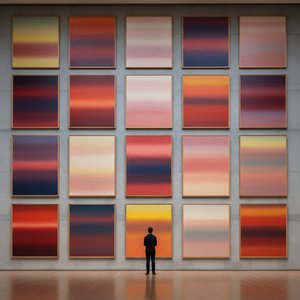
Mark Rothko: 25 Šedevrai, Apibūdinantys Spalvų Ir Jaustmo Gylį | ArtsDot
Atraskite 25 įspūdingiausius Mark Rothko kūrinius! Gilinkitės į abstraktaus meno spalvų laukus, ekspresionizmą ir jaustmingas tapybas. Meno reprodukcijos aukščiausia kokybe – ArtsDot.com

Blush & Brilliance: 10 Iconic Paintings Dominated by Light Pink Tones |
Explore 10 iconic paintings bathed in captivating light pink tones! From Monet's Impressionism to Renoir’s romance, discover the stories behind these blush-hued masterpieces. Find museum-quality art reproductions & decor inspiration at .