


 Peržiūrėti realaus dydžio版
 Siųsti
 Dalintis
 Išsamiau
 Vadovas

 Atsisiųsti
 Panašūs eksponatai
 Rentgeno spindulių nuotrauka
 Diaporama
 Statistika
Happy hour #2
 Painting
- Contemporary Realism
 2005
2005- Contemporary
 190.0 x 300.0 cm
 Culturgest - Fundação Caixa Geral de Depósitos
 Rodyti daugiau
Šiame puslapyje rodomas meno kūrinys yra saugomas autorių teisių įstatymais, todėl neturime teisės legaliai kurti ar parduoti jo identiškos reprodukcijos. Ši apsauga užtikrinama remiantis tokiais tarptautiniais susitarimais kaip Bernės konvencija ir pagal nacionalines įstatymų nuostatas, įskaitant tas, kurias nurodo JAV autoriškos teisės įstatymas – 17-asis skyrius.
Šis metodas visiškai atitinka autorių teises, nes jame nėra kūrinio kopijavimo ar dubliavimo. Tai yra kūrybinė reinterpretacija – naujas paveikslas, kurį įkvėpė originalas, tačiau kuris nėra jo identiškas.
Giclée / Meno spausdinimas
Muziejų lygio „giclée“ arba drobos spausdinimas: greita gamyba ir lankstios apdailos parinktys. ( Pirkti rankomis tapytą reprodukciją Perejti prie skaitmeninių vaizdų)




P118B €10

P118H €10

P118W €10

P438Z €10

P508JH €12

P508YH €12

P805H €10

P805Z €10

P919BZ €10

P919G €10

P919XJ €10

P959ZH €10

P968JZ €12

W106C €8

W218G €10

W218JH €8

W218Y €10

W307PJ €10

W316G €10

W316PJ €8

W316Y €10

W398PJ €8

W4111J €10

W500HY €15

W500JH €15

W692G €12

W849H €8

W940BG €15

W953PJ €8




Pasirinkite iš mūsų nustatytų dydžių, atitinkančių originalaus meno kūrinio proporcijas.

Įveskite jums reikiamą plotį ir aukštį, kad atvaizdas derėtų prie jūsų rėmo ar sienos. Spausdiną galima tik sumažinti, bet nepadidinti virš originalaus paveikslėlio dydžio, todėl keičiant proporcijas, dalis vaizdo prarandama. Prieš spausdinimą atsiųsime jums skaitmeninį maketą patvirtinimui. Šioje puslapio nuotraukoje matomas pjūvis nėra tikslus – jį rodo tik maketas.
Pristatymas visame pasaulyje () per 2 weeks, o ne įprastas 4/5 savaičių laikotarpis. (24 spalis)

Nemokamas greitasis pristatymas visame pasaulyje

Aukštos kokybės lininis drobė

Pilnas siuntimo draudimas

Muitinės mokesčių grąžinimo garantija

Tikro spalvų atitikimo garantija

100 dienų grąžinimo politika (tik esant įtaigoms)

100% pinigų grąžinimo garantija

Nuolaida dideliems užsakymams
 Stiklo variantas prieinamas tik pasirinkus dydį iki 110 cm

Happy hour #2
Giclée / Meno spausdinimas
Reprodukcijos dydis
-


Visų pasirinktų variantų kaina
€ 54
A Carnival of Souls: The Cinematic Grandeur of Happy Hour #2
In the vast, vibrant expanse of Bruno Pacheco’s Happy hour #2, the viewer is not merely an observer but a guest invited into a sprawling, kaleidoscopic celebration. This monumental work, measuring an imposing 190 x 300 cm, functions as a profound meditation on the intersection of modern photography and the classical tradition of group portraiture. At first glance, the eye is met with a jubilant assembly of at least fourteen clowns, their faces adorned with intricate makeup and their bodies draped in a diverse array of costumes that range from the whimsical to the melancholic. Yet, beneath this surface-level festivity lies a complex dialogue about how we capture moments of collective joy and the heavy weight of history that often accompanies them.
Pacheco’s technique is a masterful exercise in transformation. He takes the ephemeral, often undifferentiated nature of a group photograph—a medium designed to freeze a fleeting second for the sake of memory—and subjects it to the slow, deliberate, and laborious process of painting. By translating the "snapshot" logic into the monumental scale of fine art, he elevates a casual gathering into something iconic. The brushwork captures every minute detail, from the subtle textures of fabric to the expressive, sometimes haunting, eyes of the performers. This transition from the digital or photographic lens to the tactile reality of paint imbues each figure with a sense of permanence and weight that a mere photograph could never achieve.
The historical resonance of this piece is deeply rooted in the evolution of the group portrait. Pacheco draws an invisible but palpable line from the legendary 17th-century masterpieces, such as Rembrandt’s The Night Watch or Velázquez’s The Maids of Honour, to the contemporary era of mass media. While classical group portraits were often commissioned to solidify social status, political power, or familial lineage, Pacheco utilizes the "group portrait" to explore a more democratic, almost chaotic, sense of community. He deconstructs the traditional hierarchy of painting, replacing the solemnity of the elite with the vibrant, unpredictable energy of the circus and the street, thereby questioning what truly deserves the immortality of the canvas.
For the discerning collector or interior designer, Happy hour #2 offers an unparalleled emotional and aesthetic impact. The sheer scale of the work makes it a commanding centerpiece, capable of anchoring a room with its rich palette and narrative depth. It is a piece that invites endless re-examination; one moment it evokes the laughter of a carnival, and the next, a poignant sense of "happiness after mourning." This duality makes it an ideal acquisition for those seeking art that transcends simple decoration to become a profound conversation starter—a work that brings both the theatricality of the stage and the contemplative stillness of a museum into the private sanctuary of a home.
问答 (or more naturally for a website heading): Klausimai ir atsakymai
Ar galėčiau pamatyti „Happy hour #2“, autorius – Bruno Pacheco ant savo sienos prieš pirkdama/pirkdamas?
„Happy hour #2“, autorius – Bruno Pacheco puslapio AR peržiūra naudojasi papildytoji realybe, kad suderinamame įrenginyje parodytų kūrinį jūsų erdvėje.
Ar „Happy hour #2“, autorius – Bruno Pacheco spalvos yra ryškios ar išblukusios?
„Happy hour #2“, autorius – Bruno Pacheco spalvų nasyginimas yra Clear Color Presence. Nasyginimas apibūdina, kokių spalvos yra ryškių arba išblukusių.
Kas sukūrė „Happy hour #2“ ir kokia metais?
Bruno Pacheco sukūrė „Happy hour #2“ 2005 m.
Susiję kūriniai


Autoriaus biografija
The Visual Alchemy of Bruno Pacheco
Born in Lisbon, Portugal, Bruno Pacheco has cultivated a practice that exists at the delicate intersection of memory, photography, and the classical weight of oil painting. His artistic journey is one of continuous dialogue between the ephemeral nature of the captured moment and the enduring permanence of the canvas. Having refined his craft through studies at the Faculty of Fine Arts at Lisbon University and later completing a Master's degree at Goldsmith’s College in London, Pacheco has developed a sophisticated visual language that interrogates how we perceive reality through various lenses—be they the digital snapshot, the television screen, or the historical masterpiece.
Pacheco’s methodology is deeply rooted in a process of re-imagining. He does not merely paint from life; rather, he works from a continuous recollection of images, often re-photographing subjects before translating them into paint. This technique allows him to select specific details, gestures, and framings, creating a jigsaw puzzle of imagery that can range from fragmented, symbolic narratives to monumental, sweeping compositions. His work frequently explores the mimetic potential of painting, testing the limits of pictorial illusion and the ways in which repetition can transform an ordinary motif into something profound.
A Dialogue with History and Media
One of the most compelling aspects of Pacheco’s oeuvre is his ability to bridge the gap between the contemporary era of mass media and the grand traditions of European art history. He engages in a complex game with the history of photography and television, treating these modern devices as subjects for deep meditation. In works such as Happy hour #2, he utilizes the concept of the group portrait—a genre traditionally used to solidify social or political status—to explore how modern media captures collective joy and the heavy weight of history. By applying a slow, laborious painting process to the logic of a "snapshot," he elevates casual, fleeting gatherings into iconic, monumental events.
This connection to the past is not merely stylistic but conceptual. Pacheco draws invisible lines from legendary 17th-century masterpieces, such as those by Rembrandt and Velázquez, to the contemporary way we consume images today. His work often involves a process of "neutralization," where the distinction between figure and ground begins to collapse, destabilizing traditional visual hierarchies. Whether he is exploring themes of metamorphosis through references to majolica plates or investigating the textures of everyday objects like wetsuits, his art remains a profound inquiry into how meaning is constructed and deconstructed through the act of seeing.
Exhibitions and Recognition
Throughout his career, Pacheco has established a significant presence in the international art scene, with exhibitions spanning from Lisbon and Porto to London, Madrid, Beijing, and Oslo. His trajectory has been marked by several prestigious recognitions, including:
- Awards: Twice honored by the Calouste Gulbenkian Foundation in 2000/01 and 2004/05, and recipient of the União Latina Award in 2005.
- Solo Exhibitions: Notable shows include works at the Módulo gallery, Casa das Histórias Paula Rego, and Culturgest.
- Group Participations: His work has been featured in major international forums such as the Beijing Biennale, the Barbican Gallery in London, and the Serralves Museum in Porto.
Today, living and working between Lisbon and London, Pacheco continues to push the boundaries of his medium. His paintings remain a testament to the power of the image to transcend its original context, turning the fleeting glance of a photograph into a lasting, tactile reality that invites the viewer into a much deeper, more complex narrative.

Bruno Pacheco
1974 - , Portugal
Trumpa informacija apie kūrėją
- Artistic Movement Or Style: Contemporary painting and photography
- Full Name: Bruno Pacheco
- Nationality: Portuguese
- Notable Artworks:
- Happy hour #2
- In a flash
- Place Of Birth: Lisbon, Portugal
- Date Of Birth: 1974
Susiję straipsniai
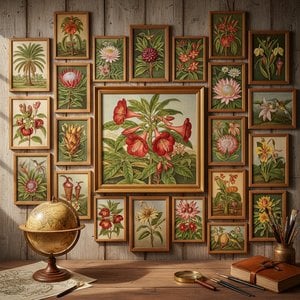
Marianne North's Masterpieces: 25 Botanical Paintings That Bloom With Adventure | ArtsDot
Journey through the vibrant world of Marianne North’s botanical paintings! Explore 25 iconic artworks from this Victorian artist, celebrating exotic flora & travel. Find museum-quality reproductions and curated decor ideas at ArtsDot.com.

Šeimos Simfonija Ant Drobo: Amžinas Atvaizdas Jūsų Artimiesiems
Užsisakykite unikalų šeimos portretą ant drobės iš ArtsDot! Rankų darbo, aukščiausios kokybės reprodukcijos ir individualizuotas dizainas. Amžinas atvaizdas Jūsų artimiesiems – dovana, kuri puošia namus ir saugo šeimos istoriją.

Fernand Léger: 25 Šedevrai, Apibrėžę Moderniąją Meninę Viziją | ArtsDot
Atraskite 25 įspūdingiausius Fernand Léger šedevrus! Kubizmo meistro paveikslai, atspindintys pramonės amžių ir modernaus meno spalvas. Meno reprodukcijos interjerui – ArtsDot.com

Albert Kretschmer: Capturing 19th-Century Costume & the Seeds of Expressionism
Explore the exquisite costume studies of Albert Kretschmer (1825-1891). Discover his detailed illustrations, influence on art history & connection to early Expressionism. Learn about collecting this remarkable artist's work.

Top 10 Masterpieces for Your Living Room: Iconic Paintings & Art Decor Ideas |
Transform your living room with iconic art! Explore our guide to the Top 10 most famous paintings – from Van Gogh's Starry Night to Mona Lisa. Discover artist stories, techniques & find museum-quality reproductions for timeless decor. Explore the full collection on