

 Peržiūrėti realaus dydžio版
 Pasidalinti
 Dalintis
 Išsamiau
 Vadovas

 Atsisiųsti
 Panašūs eksponatai
 Rentgeno spindulių nuotrauka
 Automatinė diorama
 问答
问答 Statistika
The Property Room

- 115.0 x 83.0 cm


 Skaityti daugiau
Giclée / Meno spausdinimas
Muziejų lygio „giclée“ arba drobos spausdinimas: greita gamyba ir lankstios apdailos parinktys. ( Pirkti rankų darbo tapybą Perejti prie skaitmeninių vaizdų)




P118B €10

P118H €10

P118W €10

P438Z €10

P508JH €12

P508YH €12

P805H €10

P805Z €10

P919BZ €10

P919G €10

P919XJ €10

P959ZH €10

P968JZ €12

W106C €8

W218G €10

W218JH €8

W218Y €10

W307PJ €10

W316G €10

W316PJ €8

W316Y €10

W398PJ €8

W4111J €10

W500HY €15

W500JH €15

W692G €12

W849H €8

W940BG €15

W953PJ €8




Pasirinkite iš mūsų nustatytų dydžių, atitinkančių originalaus meno kūrinio proporcijas.

Įveskite jums reikiamą plotį ir aukštį, kad atvaizdas derėtų prie jūsų rėmo ar sienos. Spausdiną galima tik sumažinti, bet nepadidinti virš originalaus paveikslėlio dydžio, todėl keičiant proporcijas, dalis vaizdo prarandama. Prieš spausdinimą atsiųsime jums skaitmeninį maketą patvirtinimui. Šioje puslapio nuotraukoje matomas pjūvis nėra tikslus – jį rodo tik maketas.
Pristatymas visame pasaulyje () per 2 weeks, o ne įprastas 4/5 savaičių laikotarpis. (15 lapkritis)

Nemokamas greitasis pristatymas visame pasaulyje

Aukštos kokybės lininis drobė

Pilnas siuntimo draudimas

Muitinės mokesčių grąžinimo garantija

Tikro spalvų atitikimo garantija

100 dienų grąžinimo politika (tik esant įtaigoms)

100% pinigų grąžinimo garantija

Nuolaida dideliems užsakymams
 Stiklo variantas prieinamas tik pasirinkus dydį iki 110 cm

The Property Room
Giclée / Meno spausdinimas
Reprodukcijos matmenys
-


Bendroji kaina
€ 56
A Moment Suspended in Time
In the quiet, evocative depths of Arthur Hughes’ 1878 masterpiece, The Property Room, we find ourselves invited into a private, contemplative world that feels both intimately familiar and hauntingly mysterious. The painting presents a woman poised at the threshold of a staircase, her hands resting on her hips in a gesture that suggests a pause between action and thought. As she gazes downward, the viewer is drawn into her silent inquiry, sharing in that universal sense of anticipation or curiosity. This is not merely a depiction of a domestic interior; it is a carefully orchestrated stage where every object serves as a silent witness to a narrative unfolding in the stillness of a Victorian afternoon.
The composition is a masterclass in the Pre-Raphaelite tradition of finding profound meaning within the mundane. Surrounded by an array of scattered books, ticking clocks, and a solitary bird perched high in the corner, the scene vibrates with a subtle, underlying tension. The presence of these objects—the weight of literature, the relentless march of time represented by the clocks, and the fleeting life of the bird—creates a rich tapestry of symbolism. One cannot help but wonder if the woman is searching for something lost among these "properties," or if she is contemplating the transience of the very items that surround her.
The Artistry of Light and Detail
Arthur Hughes, a significant figure within the Pre-Raphaelite Brotherhood, utilizes his signature technique to breathe life into this domestic tableau. His approach is characterized by an extraordinary attention to detail and a commitment to a heightened realism that seeks to capture the true essence of light and texture. In The Property Room, the use of light and shadow is particularly masterful; soft illumination dances across the surfaces of the books and the wood of the staircase, creating a sense of three-dimensional depth that pulls the observer into the room. The muted color palette, far from being somber, provides a sophisticated warmth that fosters an atmosphere of intimacy and quietude.
For the discerning collector or interior designer, this painting offers more than just visual beauty; it offers a mood. The delicate interplay of shadows and the soft, earthy tones make it a versatile piece for high-end decor, capable of anchoring a room with its historical gravity and poetic grace. Whether placed in a sunlit library or a moody study, a high-quality oil reproduction of this work brings with it the soul of the 19th-century British art movement.
A Legacy of Poetic Realism
To understand the emotional resonance of this work, one must look to Hughes’ place in art history. As a painter who sought to revive the sincerity and detail of the early Italian Renaissance, Hughes excelled at depicting "poetic narratives"—scenes that tell a story without the need for overt drama. The Property Room is a quintessential example of this ability to marry the physical world with the psychological state of his subjects. The painting does not shout; it whispers, inviting the viewer to lean in closer and listen to the stories hidden within the folds of her dress and the spines of the scattered books.
Owning a reproduction of such a significant piece allows for the preservation of this Victorian elegance within a modern setting. Each brushstroke in a hand-painted reproduction serves to honor Hughes' original vision, ensuring that the meticulous textures and the evocative, melancholic beauty of his work continue to inspire generations of art lovers and decorators alike.
Klausimai ir atsakymai
Kodėl „The Property Room“ autoriškos teisės statusas yra toks, koks yra?
Autorinės teisės statusas kūriniui „The Property Room“ – yra viešosios erdvės dalis – jo autorinė teisė pasibaigusi – nustatomas remiantis to, kad menininkas mirė 1915 m.
Ar galiu peržiūrėti „The Property Room“ – Artūras Hjūzas prieš užsakant?
Norėdami peržiūrėti „The Property Room“ – Artūras Hjūzas reprodukciją, atidarykite kūrinio Peržiūra interjere puslapį.
Kokią spalvų paletę naudoja „The Property Room“?
„The Property Room“ spalvos sudaro Earthy paletę. Ši klasifikacija aprašo dominuojančias spalvų grupes.
panašūs kūriniai


Autoriaus biografija
Rašutis gyvenimas ir mokymuo
Arthur Hughes, britas mykštininkas ir iliustratorius, susijęs su Pre-rafaelite brukteriais, gimė Londone 1832 m সালের sausio mėnesio 27 d. 1846 m. jis įėjo į Somerset House dailės mokyklą, kur jo pirmasis meistras buvo Alfred Stevens. Vėliau jis studijavo Royal Academy mokykloje, kur susitiko su John Everet Millais ir Holman Hunt, tapdami dalimi Pre-rafaelite dailininkų grupės.Žymūs kūriniai ir stilius
Hughes'o pirmas vaizdas, Musidora, buvo rodomas Royal Academy, kai jis buvo tik 17 metų. Jis tęsė savo įnašą Royal Academy, o vėliau – Grosvenor ir New Gallery vystavimose beveik kasmet. Jo labiausiai žinomi kūriniai yra „Pavasario meilė“ ir „Ilga apjungimas“, kurie išvaizduoja sutrūkštus juos, apmąstojančius meilės ir grožio praläufigumą, įkvėpti John Everet Millais ankstesniais „porų“ piktavimais.Asmeninis gyvenimas ir palikta medžiaga
1855 m. Hughes išvirtavė Tryphena Foord, kuri buvo jo modelis „Pavasario meilės“ kūrinybei. Jis mirė Kew Green, Londone, 1915 m. gruodžio mėnesio 22 d., palikdamas apie 700 žinomus vaizdų ir piešinių, taip pat daugiau nei 750 knygų iliustracijų. Jo dukra Emily turėjo sušalinti jo paruošimo skėrių ir privačius dokumentus dėl vietos trūkumo po motinos mirtį 1921 m.Dailinis stilius ir įtakos
Magija, šviesūs spalvos atspojimai ir delikatas piešinys apibūdina Hughes'o kūrinius. Jis buvo įkvėptas ir rašytoju George Macdonald, kurioje iliustravo keletą książų, ir sukūrė daugybę iliustracijų Norman Macleod mėnesiojainiui žurnaliui „Good Words“.- pamatyti daugiau Arthur Hughes kūrinių ArtsDot
- skaityti daugiau apie Arthur Hughes Wikipedia
- sureikti dailių judesių chronologiją, kad suprastumėte Pre-rafaelite dailės kontekstą
Pagrindiniai kūriniai ir vystavimai
- „Pavasario meilė“, 1855 m. (rodomas Grosvenor galerijoje) - „Ilga apjungimas“, 1862 m. (rodomas New galerijoje) - Musidora, 1849 m. (rodomas Royal Academy)Žymūs muziejai ir kolekcijos
- Toledo muziejus (turima Hughes'o Ophelia) - Viktorijos ir Albertų muziejus (saugo kelis Hughes'o iliustracijas)
Artūras Hjūzas
1832 - 1915 , Jungtinė Karalystė
Trumpa informacija
- Artistic Movement Or Style: Pre-rafaeliai
- Artists Or Movements Influenced By This Artist: ['John Everett Millais']
- Artists Who Influenced This Artist:
- Alfred Stevens
- George Macdonald
- Date Of Birth: 1832年1月27日
- Date Of Death: 1915年12月22日
- Full Name: Arthur Hughes
- Nationality: Britas
- Notable Artworks:
- April Love
- The Long Engagement
- Musidora
- Place Of Birth: London, Jungtinė Karalystė
Susiję straipsniai
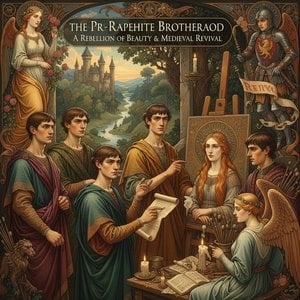
The Pre-Raphaelite Brotherhood: A Rebellion of Beauty & Medieval Revival
Explore the captivating world of the Pre-Raphaelite Brotherhood! Discover their rebellion against academic art, iconic masterpieces, and lasting influence on Victorian aesthetics. Learn about Rossetti, Burne-Jones & more.

Romantic Realism's Finest: 10 Masterpieces for Your Home | ArtsDot
Explore 10 defining masterpieces of Romantic Realism! Discover Courbet, Millet & Daumier's powerful paintings—capturing emotion and social realities. Find museum-quality reproductions for your home at ArtsDot.com.

The Visceral Language of Emotion: Exploring Affective Representation in Art History
Explore the profound history of emotional representation in art. Discover how masters like Rembrandt & Bacon evoked visceral responses, and learn about collecting emotionally resonant artworks with ArtsDot.

Portrayals of Power: A Historical & Artistic Analysis of Representations in Painting
Explore the fascinating history of power representation in art! Discover investment-worthy Renaissance masterpieces & expert insights for discerning collectors at ArtsDot.com.

Arthur Hughes: Pre-Raphaelite Visions of Beauty & Melancholy
Explore the captivating world of Arthur Hughes (1832-1915), a leading Pre-Raphaelite painter. Discover his dreamy landscapes, poetic narratives & iconic Victorian artworks. Learn about his life, style & collecting today.