


 Peržiūrėti realaus dydžio版
 Siųsti
 Dalintis
 Išsamiau
 Vadovas

 Atsisiųsti
 Panašūs eksponatai
 Rentgeno spindulių nuotrauka
 Diaporama
 Statistika
Bateaux par grand vent


 Rodyti daugiau
Rankų darbo aliejinės reprodukcijos
Rankiniu būdu tapytas aliejus ant droblio jūsų pageidaujamame dydį ir rėmuose – mūsų menininkų darbas pagal užsakymą. ( Perjungti į spausdinimą Perejti prie skaitmeninių vaizdų)




P118B $10

P118H $10

P118W $10

P438Z $10

P508JH $12

P508YH $12

P805H $10

P805Z $10

P919BZ $10

P919G $10

P919XJ $10

P959ZH $10

P968JZ $12

W106C $8

W218G $10

W218JH $8

W218Y $10

W307PJ $10

W316G $10

W316PJ $8

W316Y $10

W398PJ $8

W4111J $10

W500HY $15

W500JH $15

W692G $12

W849H $8

W940BG $15

W953PJ $8




Pasirinkite iš mūsų nustatytų dydžių, atitinkančių originalaus meno kūrinio proporcijas.

Galite įvesti savo matmenis, kad jie atitiktų konkretų rėmą ar erdvę. Jei pasirinktas dydis neatitinka originalaus paveikslėlio proporcijų, mes arba apkropsime meno kūrinį, arba papildysime tapybą rankomis dažytい elementais. Prieš pradėdami gamybą, jūsų patvirtinimui atsiųsime skaitmeninį maketą.
Atkreipkite dėmesį, kad ekrane rodomas vaizdas neatspindi tikrojo apkarpymo ar papildymo. Tik maketas tiksliai parodys galutinę kompoziciją.
Nors galima rinktis ir individualius dydžius, rekomenduojame pasirinkti matmenis iš nustatytos sąrašo, kad būtų išlaikytos originalios proporcijos.
Gavus užsakymą, ArtsDot.com komanda susisieks su klientu el. paštu dėl instrukcijų ir pateiks maketo pavyzdį
Pristatymas visame pasaulyje () per 3–4 savaites, o ne įprastai – per 5 savaites. (25 rugsėjis). Kokybė lieka nepakeičiama.

Nemokamas greitasis pristatymas visame pasaulyje

Aukštos kokybės lininis drobė

Pilnas siuntimo draudimas

Muitinės mokesčių grąžinimo garantija

Tikro spalvų atitikimo garantija

100 dienų grąžinimo politika (tik esant įtaigoms)

100% pinigų grąžinimo garantija

Nuolaida dideliems užsakymams
 Stiklo variantas prieinamas tik pasirinkus dydį iki 110 cm

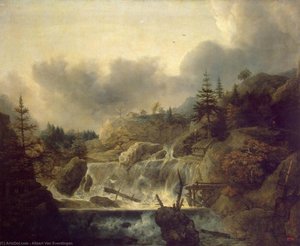
Bateaux par grand vent
Reprodukcijos technika
Reprodukcijos dydis
-


Visų pasirinktų variantų kaina
$ 263
A Tempest in Oil: The Dramatic Mastery of Allaert van Everdingen
In the annals of the Dutch Golden Age, few images capture the raw, unbridled power of the natural world as poignantly as Allaert van Everdingen’s Bateaux par Grand Vent. Executed around 1657, this masterpiece serves as a profound window into the maritime soul of the seventeenth-century Netherlands. The painting does not merely depict a seascape; it orchestrates a visceral encounter with the elements. As the viewer gazes upon the turbulent North Sea, they are immediately thrust into a world where the boundary between the heavens and the ocean dissolves into a chaotic dance of wind and wave. The central sailboat, caught in the throes of a desperate struggle against colossal, cresting swells, acts as a poignant focal point—a visual metaphor for the human condition when confronted by the overwhelming and unpredictable forces of fate.
The brilliance of Everdingen lies in his ability to marry technical precision with deep emotional resonance. Through the sophisticated use of atmospheric perspective, the artist creates an expansive sense of depth that pulls the observer into the heart of the storm. Distant vessels appear as ghostly, muted silhouettes against the horizon, their forms softened by the salt spray and heavy mist, while the foreground elements possess a tactile, rugged presence. This manipulation of light and shadow—the interplay of murky indigos, somber grays, and earthy browns—builds a sense of mounting tension. The lighting is intentionally diffused and overcast, eschewing bright highlights for a moody, low-key luminosity that reinforces the painting's themes of peril and resilience.
Technique and the Texture of Turbulence
To behold Bateaux par Grand Vent is to appreciate the meticulous craftsmanship characteristic of the Dutch marine tradition. Everdingen utilized oil on canvas with a masterful command of layering, applying thin, translucent glazes to achieve a luminous quality that seems to glow from within the dark pigments. This technique allows for a remarkable variation in texture; one can almost feel the heavy, churning weight of the seawater and the frantic billowing of the wind-sweed sails. The artist employs strong diagonal lines within the waves to instill a sense of instability and motion, ensuring that the composition never feels static, but rather caught in a singular, breathless moment of maritime crisis.
For the discerning collector or interior designer, this artwork offers more than mere decoration; it provides a commanding presence. The subdued, cool color palette makes it an exceptionally versatile piece for sophisticated environments, capable of anchoring a room with its somber elegance and historical weight. Whether placed in a contemporary gallery setting or a classic study, the painting invites contemplation on the themes of struggle and endurance. It is a work that demands attention, offering a timeless aesthetic that celebrates the rugged beauty of the sea and the enduring spirit of those who navigate its most treacherous paths.
Susiję kūriniai


Autoriaus biografija
The Master of the Northern Wild: The Life of Allaert van Everdingen
In the golden era of Dutch painting, where many masters sought to capture the serene, low-lying horizons of their homeland, Allaert van Everding and Everdingen carved a path toward something far more rugged and untamed. Born in Alkmaar around 1621, the son of a government clerk, Allaert was part of a family deeply rooted in the artistic traditions of the Netherlands. Alongside his brothers Jan and Caesar, he was shaped by the rigorous training of the Dutch Golden Age, beginning his journey under the tutelage of Roelandt Savery in Utrecht. This early exposure to Savery’s brilliant, almost fantastical style provided a foundation, yet Everdingen would eventually move far beyond the colorful legacies of the Brueghel school to find a voice that was uniquely atmospheric and profoundly dramatic.
The trajectory of his life changed irrevocably through a stroke of maritime fortune. In 1644, while traveling toward the Baltic Sea, a violent storm forced his ship to seek shelter in Norway. This unplanned detour, as recounted by the biographer Arnold Houbraken, would become the defining catalyst for his artistic evolution. Immersed in the breathtaking scenery of the Scandinavian coast, Everdingen found himself captivated by landscapes that were entirely alien to the Dutch eye: jagged mountains, rushing waterfalls, and dense, mysterious forests. He meticulously documented these excursions through sketches and drawings, capturing the raw energy of the Norwegian and Swedish terrain. When he eventually settled in Haarlem and later Amsterdam, these memories were transformed onto canvas, bringing a sense of the exotic and the sublime to the much more temperate Netherlands.
A Revolution of Light and Shadow
What distinguishes Everdingen from his contemporaries is not merely the subject matter he chose, but the revolutionary way in which he rendered it. While many landscape painters of the mid-17th century focused on clear, panoramic vistas, Everdingen embraced a system of powerful shading and rich, colored tones that acted as a precursor to the dramatic chiaroscuro later perfected by Rembrandt. His work moved away from the bright, even lighting of his predecessors toward a more emotive, atmospheric perspective. In his hands, a forest was not just a collection of trees, but a sanctuary of deep shadows and filtered light; a river was not merely water, but a churning force of nature reflected in the gloom of a rocky gorge.
His technical mastery extended into the realm of printmaking, where he utilized etching and mezzotint to explore the nuances of texture and depth. This versatility allowed him to translate the ruggedness of his Scandinavian inspirations into works that felt both tactile and ethereal. His ability to manipulate light created a sense of movement within the stillness of the landscape, making the viewer feel the dampness of the mist and the roar of the falls. This mastery of tone and texture ensured that his work resonated with a sense of drama that was rare among the more pastoral Dutch masters of his time.
Legacy and Historical Significance
The historical significance of Allaert van Everdingen lies in his role as a bridge between the classical landscape traditions and the burgeoning Romantic movement. By introducing the motifs of the wild, northern wilderness into the Dutch canon, he expanded the emotional vocabulary of landscape painting. His influence can be traced through the works of later masters, most notably Jacob van Ruisdael, who adopted many of the rugged, atmospheric elements that Everdingen had pioneered. The artist’s ability to find beauty in the formidable and the untamed helped shift the focus of landscape art from mere topographical documentation to a profound exploration of nature's power.
Though he passed away in Amsterdam in 1675, his impact remained etched in the annals of art history. His life serves as a testament to how unexpected journeys can reshape an artistic vision, turning a maritime mishap into a lifelong mission to capture the sublime. Today, we remember him not just as a painter of scenery, but as a pioneer who brought the soul of the Scandinavian wilderness to the heart of the Dutch Golden Age.
allaert van everdingen
1621 - 1675
Trumpa informacija apie kūrėją
- Artistic Movement Or Style: Dutch Golden Age Landscape Painting
- Artists Or Movements Influenced By This Artist: ['Rembrandt']
- Artists Who Influenced This Artist:
- Roelandt Savery
- Jan van Goyen
- Date Of Birth: June 18, 1621
- Date Of Death: November 8, 1675
- Full Name: Allaert van Everdingen
- Nationality: Dutch
- Notable Artworks:
- De geschutgieterij Julita Bruk van de familie Trip
- Scandinavian Rocky River Landscape
- Paysage Scandinave près de Mölndal
- Place Of Birth: Alkmaar, Netherlands
Susiję straipsniai

Golden Age Reflections: Dutch Baroque Painting & Cultural Innovation
Explore the Dutch Golden Age of painting! Discover key artists like Vermeer & ter Borch, their innovative techniques, and the rich cultural context behind these Baroque masterpieces. Learn about collecting & appreciating this iconic art period.

Willem van de Velde the Elder: Master of Maritime Painting & Chronicler of the Dutch Golden Age
Discover the captivating maritime paintings of Willem van de Velde the Elder, a master chronicler of the Dutch Golden Age. Explore his unparalleled realism and lasting influence on naval art history.

Olandijos Aukso Amžius: 10 Šedevrų, Apibrėžiančių Meną ir Stilių
Atraskite Olandijos Aukso Amži\u017us meninius šedevrus! 10 legendin\u017iŴ paveikslžiai – Rembrandto, Vermeerio ir kt. darbai. Sužnkitę j\u016ungo namus aukso amži\u017us grožiu! Āukrai, interjero dizainas – viskas ArtsDot.com. Ižirkite kolekciją internete!

Illuminating Innovation: Exploring the Dutch Golden Age of Painting
Explore the Dutch Golden Age of painting with ArtsDot. Discover Rembrandt, Vermeer & other Masters. Learn about key characteristics, iconic artworks, and lasting influence. Expert insights for collectors & enthusiasts.

Rembrandto van Rijn šedevrai: 25 paveikslai, įkvėpę amžius | ArtsDot
Atraskite 25 įspūdingiausius Rembrandto paveikslus! Išsami istorija, meno technikos ir simbolika. Olandų baroko šedevrai jūsų interjerui – aukštos kokybės reprodukcijos ArtsDot.com. Explore the full collection online!