


 Pasidalinti
 Dalintis
 Išsamiau

 Atsisiųsti
 Panašūs eksponatai
 Automatinė diorama
Bison Bas-Relief


 Skaityti daugiau
Rankų darbo aliejinės reprodukcijos
Rankiniu būdu tapytas aliejus ant droblio jūsų pageidaujamame dydį ir rėmuose – mūsų menininkų darbas pagal užsakymą. ( Perejti prie spausdinimo Perjungti į vaizdą)




































Pasirinkite iš mūsų nustatytų dydžių, atitinkančių originalaus meno kūrinio proporcijas.

Galite įvesti savo matmenis, kad jie atitiktų konkretų rėmą ar erdvę. Jei pasirinktas dydis neatitinka originalaus paveikslėlio proporcijų, mes arba apkropsime meno kūrinį, arba papildysime tapybą rankomis dažytい elementais. Prieš pradėdami gamybą, jūsų patvirtinimui atsiųsime skaitmeninį maketą.
Atkreipkite dėmesį, kad ekrane rodomas vaizdas neatspindi tikrojo apkarpymo ar papildymo. Tik maketas tiksliai parodys galutinę kompoziciją.
Nors galima rinktis ir individualius dydžius, rekomenduojame pasirinkti matmenis iš nustatytos sąrašo, kad būtų išlaikytos originalios proporcijos.
Gavus užsakymą, ArtsDot.com komanda susisieks su klientu el. paštu dėl instrukcijų ir pateiks maketo pavyzdį.
Pristatymas visame pasaulyje () per 3–4 savaites, o ne įprastai – per 5 savaites. (11 rugpjūtis). Kokybė lieka nepakeičiama.

Nemokamas greitasis pristatymas visame pasaulyje

Aukštos kokybės lininis drobė

Pilnas siuntimo draudimas

Muitinės mokesčių grąžinimo garantija

Tikro spalvų atitikimo garantija

60 dienų grąžinimo politika (tik esant gamyklinėms defektams)

100% pinigų grąžinimo garantija

Nuolaida už kelias reprodukcijas
 Stiklo variantas prieinamas tik pasirinkus dydį iki 110 cm

Bison Bas-Relief
Reprodukcijos technika
Reprodukcijos matmenys
-


Galutinė kaina
$ 263
Kūrinio aprašymas
The Spirit of the American Frontier
In the quiet strength of the Bison Bas-Relief, one finds more than just a sculptural study of a magnificent creature; one encounters the very soul of a burgeoning nation. Created in 1909 by the master sculptor Alexander Phimister Proctor, this plaster model captures the raw, untamed essence of the American West. The bison, with its heavy brow, formidable horns, and textured coat, emerges from the surface with a tactile presence that commands immediate respect. As a piece of relief sculpture, it utilizes depth and shadow to create a lifelike dimension, inviting the viewer to trace the rugged contours of an animal that once roamed the vast, endless prairies of the continent.
The artistry of Proctor, a renowned animalier, is evident in the meticulous attention to anatomical detail. Every curve of the bison's musculature and every tuft of its thick mane serves to communicate power and resilience. This work does not merely represent an animal; it embodies a sense of permanence and rugged dignity. For collectors and interior designers, such a piece offers a profound sculptural focal point, bringing a sense of organic history and grounded strength to any sophisticated space, whether it be a classic study or a contemporary gallery setting.
A Symbol of National Identity
The historical significance of this bas-relief is deeply intertwined with one of America's most iconic presidencies. This particular model was a gift to Theodore Roosevelt, a man whose passion for the American wilderness was as legendary as his political influence. The story behind its creation is a fascinating study in cultural symbolism. When Roosevelt took office, he sought to move away from the traditional European motifs that had long defined American institutional decor. In a bold move of artistic patriotism, he replaced the stone-carved lions on the mantle of the State Dining Room at the White House with carvings of the American bison.
To Roosevelt, the lion was a relic of old-world monarchy, whereas the bison represented a uniquely American identity—a symbol of strength, endurance, and the untamed spirit of the frontier. By elevating this creature to the halls of power, Proctor helped cement the bison as an icon of national heritage. Owning a reproduction of this work allows one to possess a fragment of this historical narrative, connecting the modern observer to the era of westward expansion and the deliberate shaping of American iconography.
Timeless Elegance for the Discerning Collector
Beyond its historical weight, the Bison Bas-Relief possesses an aesthetic versatility that transcends time. The monochromatic, plaster-like quality of the relief provides a neutral yet deeply textured appearance that complements a wide array of interior design styles. In a traditional setting, it evokes the grandeur of a museum or a historic estate; in a modern, minimalist environment, its sculptural form acts as a sophisticated piece of organic art that breaks the monotony of flat surfaces.
For those seeking to curate an environment filled with meaning and texture, this artwork offers an unparalleled opportunity. It is a conversation piece that bridges the gap between natural history and fine art. The emotional impact of the work lies in its ability to evoke nostalgia for a lost wilderness while maintaining a commanding, sculptural presence that feels entirely contemporary. It is an investment in character, bringing the enduring legacy of Proctor’s craftsmanship and the majestic spirit of the American West into the heart of the home.
panašūs kūriniai


Autoriaus biografija
The Sculptor in Buckskin: The Life and Legacy of Alexander Phimister Proctor
In the annals of American sculpture, few figures command as much rugged respect as Alexander Phimister Proctor, an artist who famously earned the moniker "the sculptor in buckskin." Born in the quiet township of Bosanquet, Ontario, in 1860, Proctor’s journey was one of constant movement across the North American frontier. His early years, shaped by the arduous migrations of his family through Michigan and Iowa, instilled in him a profound connection to the vast, untamed landscapes of the West. When his family finally settled in Denver, Colorado, the dramatic scenery of the Rocky Mountains and the sweeping plains became more than just a backdrop; they became the very soul of his artistic pursuit. This deep-seated intimacy with the wilderness allowed Proctor to approach his subjects not merely as an observer, and certainly not as a mere decorator, but as a man who understood the rhythmic pulse of animal life and the heavy weight of frontier history.
Proctor’s formal education provided the technical scaffolding for his wilder inspirations. Seeking to refine his raw observations, he traveled to the great artistic hubs of the era, studying at the National Academy of Design and the Art Students League in New York, before venturing to Paris to train at the prestigious Académie Julien and Académie Colarossi. It was in the studios of Europe that he encountered the sophisticated French Beaux-Arts style, a movement characterized by its elegance and anatomical precision. This training allowed him to marry the scientific rigor of a naturalist with the expressive fluidity of a master sculptor. He did not simply model clay; he studied the musculature of bison and the tension in a horse's gait, often undertaking dissections and studying specimens at the American Museum of Natural History to ensure that every bronze tendon and sinew possessed an undeniable truth.
A Mastery of Motion and Monumental Spirit
The true brilliance of Proctor’s work lies in his ability to freeze a moment of intense kinetic energy within the permanence of bronze. His sculptures are never static; they breathe with the vitality of the American West. Whether capturing the explosive power of a "Bronco Buster" or the heavy, rhythmic presence of the "Buffalo" statues that grace Washington, D.C., Proctor possessed an uncanny ability to convey movement and psychological depth. His influence from masters like Auguste Rodin is evident in his pursuit of a humanist aesthetic, where the physical form serves as a vessel for emotion. This was particularly evident in his equestrian monuments, where he depicted cowboys and Native Americans with a dignity that transcended mere caricature, presenting them instead as monumental figures of a vanishing era.
His career was punctuated by a series of prestigious triumphs that cemented his status on the world stage:
- The World's Columbian Exposition (1893): A pivotal moment where he showcased life-size animal figures, including the Polar Bear and Buckaroo, establishing his reputation in Chicago.
- International Accolades: Winning gold medals at the Paris Exposition in 1900 for works like Indian Warrior and the Panama-Pacific International Exposition in 1915.
- Civic Contributions: The creation of enduring landmarks such as the Tigers at Princeton University and the Pioneer Mother in Kansas City.
As the twentieth century progressed, Proctor’s work became an essential part of the American civic landscape. His ability to translate the spirit of the frontier into monumental bronze meant that his art did not just sit in galleries; it lived in public squares and atop bridges, serving as a permanent reminder of the continent's wild heritage. Even as the frontier closed, Proctor’s sculptures remained—vibrant, muscular, and eternally alive. He passed away in 1950, leaving behind a legacy that continues to bridge the gap between the raw, unbridled beauty of nature and the refined sophistication of fine art.

Alexander Phimister Proctor
1860 - 1950 , Canada
Trumpa informacija
- Artistic Movement Or Style: Animalier
- Date Of Birth: September 27, 1860
- Date Of Death: September 5, 1950
- Full Name: Alexander Phimister Proctor
- Nationality: American
- Notable Artworks:
- Buckaroo
- (Stalking Panther)
- Bison Bas-Relief
- Place Of Birth: Bosanquet, Canada
Susiję straipsniai

Bronze Sculptures That Defined Art History | ArtsDot
Journey through art history with our Top 10 bronze sculptures! Explore masterpieces by Rodin, Michelangelo & more. Discover stories behind iconic statues and find museum-quality reproductions for your home decor at ArtsDot.com.

Sculpting with Soul: An Expert Guide to the Tactile Elegance of Plaster Relief Art
Discover the captivating world of plaster relief art. Our expert guide explores the history, techniques, and curation of textured bas-relief, helping collectors bring depth, light, and soulful dimension to their modern interiors through sophisticated sculptural masterpieces.

The Enduring Form: Exploring Themes & Techniques in Sculpture Across Historical Periods
Explore the rich history of sculpture from ancient masterpieces to contemporary innovations. Discover key techniques, influential artists & investment potential for discerning art collectors.
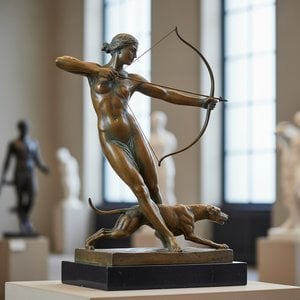
Paul Manship: Reassessing the Master of American Art Deco Sculpture
Explore the captivating world of Paul Manship, a leading figure in American Art Deco sculpture. Discover his iconic works like Prometheus, influence on modernism, and investment potential. Expert insights for collectors.

Bronze Age to Modern Masters: 10 Sculptures That Redefined Art | ArtsDot
Journey through art history with 10 legendary bronze sculptures – from Michelangelo's David to Rodin’s Thinker. Explore the stories, techniques & timeless beauty of these masterpieces. Find museum-quality reproductions & elevate your home decor on ArtsDot.com.

