


 Peržiūrėti realaus dydžio版
 Siųsti
 Dalintis
 Išsamiau
 Vadovas

 Atsisiųsti
 Panašūs eksponatai
 Rentgeno spindulių nuotrauka
 Diaporama
 Statistika
Journey
 Oil
Oil- WallArt
- Bengal School of Art
 1913
1913- 19th Century
 210.0 x 150.0 cm
 National Gallery of Modern Art
 Rodyti daugiau
Rankų darbo aliejinės reprodukcijos
Rankiniu būdu tapytas aliejus ant droblio jūsų pageidaujamame dydį ir rėmuose – mūsų menininkų darbas pagal užsakymą. ( Perjungti į spausdinimą Perejti prie skaitmeninių vaizdų)




P118B €10

P118H €10

P118W €10

P438Z €10

P508JH €12

P508YH €12

P805H €10

P805Z €10

P919BZ €10

P919G €10

P919XJ €10

P959ZH €10

P968JZ €12

W106C €8

W218G €10

W218JH €8

W218Y €10

W307PJ €10

W316G €10

W316PJ €8

W316Y €10

W398PJ €8

W4111J €10

W500HY €15

W500JH €15

W692G €12

W849H €8

W940BG €15

W953PJ €8




Pasirinkite iš mūsų nustatytų dydžių, atitinkančių originalaus meno kūrinio proporcijas.

Įveskite jums reikiamą plotį ir aukštį, kad paveikslas atitiktų jūsų rėmą ar sieną. Kadangi šis darbas yra rankinio darbo, siekiant išgauti kitokio formos dydį, paveikslas gali būti šiek tiek didesnis (nuo kraštų bus palikta daugiau erdvės) arba mažesnis – pasirinkite jums patogiausią variantą. Prieš pradedant tapyti, atsiųsime jums skaitmeninį maketą patvirtinimui. Šioje puslapio nuotraukoje matomas vaizdas nėra galutinis rezultatas – jį parodys tik sukurtas maketas.
Gavus užsakymą, ArtsDot.com komanda susisieks su klientu el. paštu dėl instrukcijų ir pateiks maketo pavyzdį
Pristatymas visame pasaulyje () per 3–4 savaites, o ne įprastai – per 5 savaites. (23 spalis). Kokybė lieka nepakeičiama.

Nemokamas greitasis pristatymas visame pasaulyje

Aukštos kokybės lininis drobė

Pilnas siuntimo draudimas

Muitinės mokesčių grąžinimo garantija

Tikro spalvų atitikimo garantija

100 dienų grąžinimo politika (tik esant įtaigoms)

100% pinigų grąžinimo garantija

Nuolaida dideliems užsakymams
 Stiklo variantas prieinamas tik pasirinkus dydį iki 110 cm

Journey
Reprodukcijos technika
Reprodukcijos dydis
-


Visų pasirinktų variantų kaina
€ 231
The Soul of the Bengal School: A Study of Abanindranath Tagore’s Journey
In the twilight of the 19th century, a profound artistic revolution began to stir within the heart of India, led by a visionary who sought to reclaim a national identity through the brush. Abanindranath Tagore, a central figure of the illustrious Tagore family, stood at the forefront of this movement, challenging the rigid dominance of British academic realism. His masterpiece, Journey (often referred to as Journey’s End), serves as a poignant testament to this era of transition. Created in 1913, the painting is not merely a depiction of a weary animal; it is a soulful rejection of Western oil traditions in favor of a new, indigenous aesthetic that blended the delicate precision of Mughal miniature traditions with the ethereal, misty qualities of the Japanese wash technique.
The composition invites the viewer into a moment of profound stillness and quietude. At its center lies a camel, collapsed under the immense weight of a heavy load, resting upon a bed of cloth. There is an undeniable intimacy in how Tagore captures this scene; the subject matter—a traditional vignette of trade and travel—is stripped of grandiosity to focus on the raw, emotive essence of endurance. The palette is masterfully subdued, dominated by warm, earthy tones that evoke a sense of dust, heat, and the passage of time. Through his precise yet delicate linework, Tagore defines the contours of the camel’s body and the irregular folds of its burden, creating a rhythmic harmony between the organic forms of the animal and the textured layers of the surrounding fabric.
Technique and the Ethereal Atmosphere
What distinguishes Journey from the heavy, physical presence of contemporary European oil paintings is its luminous, almost translucent quality. Tagore utilized a technique that favored a soft, atmospheric glow over harsh shadows. The light appears to descend from above, casting gentle shadows that lend a subtle three-dimensionality to the forms without breaking the flattened, decorative perspective characteristic of the Bengal School. This approach creates a misty, dreamlike appearance, where the boundaries between the subject and its environment seem to blur into a unified, emotive atmosphere.
For the discerning collector or interior designer, this artwork offers a sophisticated balance of texture and tone. The brushstrokes, while appearing slightly rough in certain areas to suggest the grit of travel, are applied with a finesse that allows for a sense of light to permeate the surface. This interplay of light and shadow makes the piece an exceptional focal point for spaces that require a sense of calm, depth, and historical resonance. It is a work that does not shout for attention but rather commands it through its quiet, persistent beauty.
Symbolism and Emotional Resonance
Beyond its technical brilliance, Journey is steeped in profound symbolism. The camel, burdened by its heavy load after long distances, serves as a powerful metaphor for resilience and the indomitable spirit of endurance. It reflects the very struggle of the Indian art movement itself—the weight of colonial influence being carried toward a new, self-determined destination. The load represents the labor, commerce, and the heavy history of a nation in flux, while the stillness of the scene suggests a moment of necessary reflection and rest amidst the toil.
To possess a reproduction of this masterpiece is to bring a piece of the Bengali Renaissance into one's personal sanctuary. The painting evokes a melancholic yet peaceful mood, making it an ideal selection for those seeking to infuse their interiors with intellectual depth and emotional warmth. It remains an unforgettable image, capturing a pivotal moment in art history where tradition was not merely preserved but reimagined to create something truly eternal.
问答 (or more naturally for a website heading): Klausimai ir atsakymai
Kur šiandien galima pamatyti kūrinį „Journey“, autorius – Abanindranathas Tagore?
Kūrinys „Journey“, autorius – Abanindranathas Tagore rodomas National Gallery of Modern Art, Nauji Dely, Indija. Nuoroda į muziejų nurodo originalą, o ne reprodukciją.
Kokio meno kryžmės dalis yra „Journey“, autorius – Abanindranathas Tagore?
„Journey“ yra Bengal School of Art kūrinys. Šis stilius nurodo meninę tradiciją, kurios šis darbas yra dalis.
Kam rekomenduojamas „Journey“, autorius – Abanindranathas Tagore reprodukcija?
Rekomenduojamas „Journey“ spausdinio naudojimas yra Cultural.
Susiję kūriniai


Autoriaus biografija
Ankstyvasis gyvenimas ir kilmė
- Gimė: 1861 m. gegužės 7 d., Joransanko, Kalkata, Britų Indija
- Mirė: 1951 m. gruodžio 5 d.
- Šeima: išilgai gerbiančios Tagore šeimos narys; Rabindranath Tagore globotasisjažu. Jo senelis buvo Girindranath Tagore, o tėvas – Gunendranath Tagore.
- Šeima: 1880-aisiais studijavo Kolkatos Sanskrit College, vėliau mokėsi Kalkatos meno mokykloje.
Meninis vystymasis ir įtodiniai veiksniai
- Pradiniai mokslai: Kalkatos meno mokykloje O. Ghilardi išmokėjo pastelės technikos, o Charles Palmer – aliejaus tapybos.
- Mogolų ir Rajputų stiliai: siekė modernizuoti šiuos stilius, atsisakydamas Vakarų meno modelių.
- Swadeshi vertybės: į savo kūrybą įtraukė Swadeshi vertybes, skatindamas Indijos tradicijas.
- Whistlerio esteticizmas: buvo paveiktas Whistlerio estetiniais principais.
- Japonų įtaka: vėliau, susitikęs su menininkais Tikan ir Hesida, savo stiliuje pradinai įtraukė kinišką ir japonų kaligrafijos tradicijas.
Svarbiausi darbai ir meninės įtakos
- Rohini II: pastebimas darbas, demonstrajantis jo meninį meistriškumą.
- Shajahan mirtis: dar vienas reikšmingas paveikslas, atspindintis jo stilių.
- Sezoninis gėlė vazyje: demonstruoja jo technikos ir temų suvokimo meistriškumą.
- „Arabijos naktys“ serija (1930): laikoma vienu jo didžiausių pasiekimų, kuriame naudojant „Arabijos nakties“ istorijas tyrėjo kolonialinę Kalkatą.
- Bharat Mata: svarbus paveikslas, simbolizuojantis Motiną Indiją.
- Bengalo meno mokyklos įkūrėjas: playing leido pagrindinį vaidmenį formuojant šiuolaikinę Indijos tapybą ir skatindamas nacionalistinį meną.
- Indijos orientacijos meno draugija (1907): įkūrė šią draugiją siekdamas skatinti tradicinius Indijos meno formas.
Palikimas ir istorinė reikšmė
- Šiuolaikinės Indijos tapybos pionierius: pripažintas kaip pagrindinė figūra Indijos šiuolaikinės meno plėtroje.
- Įtaka būsimiesiems menininkams: buvo mentoru tokioms iškilusioms asmenybėms kaip Nandalal Bose, Asit Halder, Kshitindranath Majumdar ir Jamini Roy.
- Tradicinių meno formų atgimimas: advocated for a return to traditional Indian techniques and styles.
- Poveikis bendrai bengalų vaikų literatūrai: parašė įtakingas vaikų knygas, tokias kaip Rajkahini,
Budo Angla, Nalak ir Khirer Putul. - Tautinės meno brangybės: jo kūriniai laikomi Tautinėmis meno brangybėmis.

Abanindranathas Tagore
1871 - 1951 , Indija
Trumpa informacija apie kūrėją
- Artistic Movement Or Style: Bengalo meno mokykla
- Artists Or Movements Influenced By This Artist:
- Nandalal Bose
- Kshitindranath Majumdar
- Jamini Roy
- Artists Who Influenced This Artist:
- Whistleris
- Mogū mūsliai
- Radžputų mūsliai
- Date Of Birth: 1871 m. gegužio 7 d.
- Date Of Death: 1951 m. gruodžio 5 d.
- Full Name: Abanindranath Tagore
- Nationality: Indas
- Notable Artworks:
- Rohini II
- Shajahanio mirtis
- Sezoninis gėlė vazyje
- Place Of Birth: Jorasanko, Indija
Susiję straipsniai

Hudson River School: 10 Šedevrai, Apibrėžę Amerikos Peizažo Meną
Atraskite 10 legendinių Hudson River School kūrinių! Thomas Cole, Frederic Church ir kiti meistrai sukuria nepakartojamą gamtos grožio vaizdą. Išmokite apie jų techniką ir įkvėpkite savo interjerą aukštos kokybės reprodukcijomis iš ArtsDot.com!

Raja Ravi Varma: Bridging Tradition & Modernity in 19th-Century Indian Art
Explore the life & art of Raja Ravi Varma, a pioneer who fused European techniques with Indian iconography. Discover his iconic paintings, lasting legacy, and influence on modern Indian art at ArtsDot.
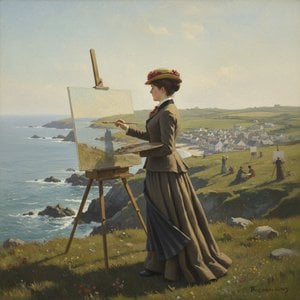
Elizabeth Adela Forbes: A Pioneering Impressionist of the Newlyn School
Explore the life & art of Elizabeth Adela Forbes, a pioneering Impressionist of the Newlyn School. Discover her captivating paintings, unique style, and lasting legacy with ArtsDot.

The Sublime Landscape: Exploring the Hudson River School Movement
Explore the captivating world of the Hudson River School! Discover the history, artists, and defining characteristics of this iconic American art movement. Learn about Romanticism's influence & find inspiration for your collection.

The Hague School: Realism, Atmosphere & the Dawn of Dutch Impressionism
Explore the Hague School's pivotal role in Dutch art history. Discover realism, atmospheric landscapes & its influence on Impressionism. Learn about key artists like Mauve & Maris with ArtsDot.
