Národní Galerie
Explore Czech & international art at Prague's National Gallery! Discover masterpieces from medieval to modern times, including Alfons Mucha’s Slav Epic and works by Van Gogh & Picasso across historic palaces.
- Name: Národní Galerie
- Country: Czechia
- City: Prague
- Website: https://www.ngprague.cz/en/
- Current Description: A Tapestry of Czech & European Art: Exploring the Národní Galerie in Prague
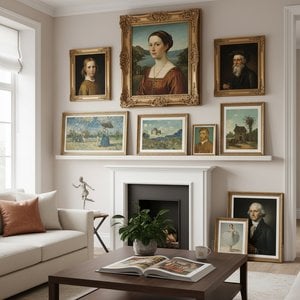
The Národní Galerie, or National Gallery in Prague, isn’t merely a repository of artistic masterpieces; it's an immersive journey through centuries of creative expression, woven into the very fabric of one of Europe’s most enchanting cities. Founded in 1920 from the unification of existing collections, this institution has blossomed into the largest collection of art within the Czech Republic, offering a breathtaking panorama that stretches from the delicate beauty of medieval panel paintings to the bold experimentation of modern Cubism and beyond. What truly sets the Národní Galerie apart is its unique presentation – rather than being confined to a single monolithic structure, the gallery unfolds across several historic palaces scattered throughout Prague, each building itself a work of art providing an evocative backdrop for the treasures within. This deliberate dispersal isn’t simply logistical; it creates a dialogue between artwork and architecture, allowing visitors to experience art not as isolated objects but as integral parts of Prague's rich cultural landscape.
Palaces as Portals: A Journey Through Architectural Time
Visiting the Národní Galerie is akin to stepping through portals into different eras. The Trade Fair Palace (Veletržní palác), with its striking functionalist architecture, stands in bold contrast to the historical settings found elsewhere. This modern edifice, a testament to early 20th-century architectural innovation, serves as the primary location for the gallery’s extensive collection of 20th and 21st-century art – a space designed to challenge and inspire. Here, one encounters works that grapple with the complexities of modernity, reflecting the turbulent history of the Czech lands and the broader European experience. Then there's the Sternberg Palace, an opulent baroque residence that houses a remarkable array of European paintings from the 14th to 18th centuries. Within its richly decorated halls, visitors can stand before masterpieces by El Greco, Rubens, and Rembrandt, experiencing their artistry within a setting befitting their grandeur. The Kinský Palace (Palác Kinských) offers another distinct experience, showcasing Baroque art alongside an intriguing collection of Asian art, demonstrating the gallery’s commitment to global artistic dialogue. Each palace isn’t merely a container for art; it actively participates in the viewing experience, enriching and contextualizing the works on display. The very stones seem to whisper stories of past inhabitants and artistic movements, adding layers of meaning to each encounter.
The Heartbeat of Czech Artistic Identity
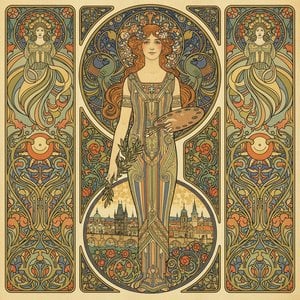
While the Národní Galerie proudly presents international artistry, its dedication to preserving and promoting Czech artistic heritage is paramount. This commitment finds its most magnificent expression in Alfons Mucha’s *Slav Epic*, a monumental cycle of twenty canvases depicting pivotal moments in Slavic history and mythology. A cornerstone of Czech Art Nouveau, this sweeping work isn’t just a collection of paintings; it’s a national narrative rendered in vibrant color and intricate detail. The sheer scale of the *Epic* is breathtaking, demanding contemplation and inviting viewers to immerse themselves in the myths and legends that have shaped Slavic identity. Beyond Mucha, the gallery offers an unparalleled overview of Czech art history, from the ethereal beauty of medieval Gothic panel paintings and illuminated manuscripts – testaments to a rich spiritual tradition – to the innovative spirit of Czech Cubism, a unique national variation of this avant-garde movement that flourished in the early 20th century. This distinctive form of Cubism, characterized by its dynamic energy and geometric forms, reflects a distinctly Bohemian sensibility.
A Legacy Forged Through Time
The story of the Národní Galerie is one of resilience and dedication. From its origins in 1796 as a society dedicated to elevating artistic taste, through periods of political upheaval and national transformation, the gallery has consistently served as a cultural beacon for the Czech people. Its growth over the decades reflects not only an expanding collection but also a deepening understanding of art’s power to connect us to the past, illuminate the present, and inspire the future. The Národní Galerie isn’t simply preserving artworks; it is actively engaging with them, interpreting their significance for contemporary audiences, and ensuring that these cultural treasures continue to resonate for generations to come. It stands as a testament to the enduring human need for creative expression and a celebration of the artistic spirit that thrives within Prague’s historic heart.
ADDITIONAL RESEARCH: