
New to Gothic? Start here
34 Famous Gothic 아티스트 You Should Know
If you remember one Gothic 아티스트, make it 두초 (1255–1319), the name behind 루첼라이 마돈나 및 마에스타 (앞면, 중앙 패널). After that come 시모네 마르티니, 젠틸레 다 파브리아노, 피사넬로 및 슈테판 로흐너. Our 34 picks go from 마스터 마테오 (born 1161) to Jan Baegert (born 1465), from 8 countries.
How we picked them. We list the artists our catalogue links to Gothic, from the most famous down. Artists born after 1955 that we cannot yet check on Wikidata are left out. The Wikipedia number shows in how many of our 32 languages Wikipedia writes about them.


Quick facts
Gothic in a nutshell
- 34아티스트
- 1161–1465출생 연도
- 8출생 국가
- 0여성
- 1,535카탈로그 내 작품들
- 주요 작품을 가장 많이 보유한 미술관
- 메트로폴리탄 미술관 (8), 국립 미술관 (5), 우피치 미술관 (4), 이사벨라 스튜어트 가드너 미술관 (3)
Meet them one by one
The 34 famous Gothic 아티스트, from most famous down


3of 34
젠틸레 다 파브리아노 1370–1427
이탈리아 From 파브리아노 국제 고딕 양식 On Wikipedia in 23 of 32 languages

AllPaintingsStore.com에서 제공하는 자료를 통해 국제 고딕 양식에 대한 더 깊은 통찰력을 탐구해 보세요. Wikipedia 의 정보를 통해 그의 삶과 작품 세계를 더욱 자세히 살펴보세요.


16of 34
마스터 프랑케 (프라테르 프랑케) 1380–1435
네덜란드 From 니더라인 고딕 르네상스 On Wikipedia in 14 of 32 languages

Johannes Francke, known as Frater Francke, stands as a pivotal figure in the burgeoning artistic landscape of 15th-century Germany – specifically within the vibrant Gothic tradition of Hamburg. Early Life and Training: Precise information regarding Francke's formative years is scarce.


18of 34
Jacopo di Cione 1325–1399
Italian From Florence Gothic On Wikipedia in 7 of 32 languages

Born in Florence sometime between 1320 and 1330, he emerged from a family deeply rooted in artistic tradition—his three elder brothers, Andrea di Cione (Orcagna), Nardo di Cione, and Matteo di Cione—were themselves accomplished painters, establishing a lineage of creative excellence.


19of 34
자우메 우게트 1445–1492
Catalan From 발스 Late Gothic, Flemish influence On Wikipedia in 10 of 32 languages

Between 1440 and 1445, his hand reached into the workshops of Zaragoza and Tarragona, where he encountered the influential Flemish style brought by Luis Dalmau. His ability to command both scale and detail is evident in his diverse body of work: The Archangel St Michael: A celestial sentinel rendered with heroic posture, framed by stylized foliage and a radiant, textured gold leaf that seems to emanate an inner light.


20of 34
Lucas Moser 1390–1443
German From Weil der Stadt Late Gothic Art On Wikipedia in 10 of 32 languages

Lukas Moser, a name perhaps unfamiliar to many outside the circles of art history, represents a pivotal figure in the transition from the International Gothic style to the burgeoning realism that would characterize early Renaissance painting.


21of 34
Master Bertram 1345–1415
German From Minden International Gothic On Wikipedia in 13 of 32 languages

Born in Minden, Germany, around 1345 and passing away in Hamburg circa 1415, Master Bertram remains a captivating figure within the history of European art. Often referred to as Meister Bertram or Master of Minden, he stands as a pivotal artist bridging the International Gothic style with the nascent trends of the early Renaissance in Northern Europe.
Works to know · Their 100 best-known works · Master Bertram reproductions


22of 34
Pere Serra 1357–1406
Spanish Gothic-Italian

Pere Serra, also known as Jaume Serra, stands as a compelling figure in the transition from the International Gothic style to the burgeoning Renaissance aesthetic within Catalonia. Born around 1357 and passing away in 1406, his life coincided with a period of significant artistic and cultural change across Europe, yet he maintained a distinctly Catalan sensibility throughout his career.


Works to know · Their 100 best-known works · 파올로 디 조반니 페이 reproductions
 The Coronation of the Virgin, and Saints
 The Camarlingo Niccolò di Leonardo della Gazaia, His Scrivener and Three Taxpayers (Sienese account book cover)
 Madonna and Child Enthroned with Saint John the Evangelist, Saint Peter, Saint Agnes, Saint Catherine of Alexandria, Saint Lucy, an Unidentified Female Saint, Saint Paul, and Saint John the Baptist, with Eve and the Serpent; the Annunciation
- 14See all 14 works by 파올로 디 조반니 페이
24of 34
Giovannino De' Grassi 1350–1398
Italian From Milan Gothic Illuminations

Giovannino de’ Grassi remains one of the most captivating enigmas of the late medieval period, a figure whose brushstrokes breathed life into the prestigious Visconti court of Milan. He operated in an era where the transition from the rigid structures of the Middle Ages to the burgeoning naturalism of the early Renaissance was beginning to stir, and de’ Grassim stood at the very heart of this aesthetic evolution.


25of 34
Lluís Borrassà 1360–1425
Catalan From Girona International Gothic On Wikipedia in 8 of 32 languages

A pioneer who fundamentally reshaped the visual language of Catalonia, Borrassà emerged from the historic streets of Girona to become a master of the International Gothic style. The foundations of Borrassá’s mastery were laid in his youth, likely under the guidance of his father, Honorat Borrassà, a fellow painter.


26of 34
Michele Giambono 1400–1462
Italian From Venice International Gothic On Wikipedia in 10 of 32 languages

In the heart of fifteenth-century Venice, a city defined by its shimmering lagoons and unparalleled maritime wealth, the artistry of Michele Giambono emerged as a luminous bridge between the medieval past and the dawning Renaissance. As a follower of luminaries such as Jacobello del Fiore and Gentile da Fabriano, Giambono inherited a fascination with delicate line work and the use of precious materials to evoke the celestial realm.


27of 34
Giovanni dal Ponte 1385–1438
Italian From 피렌체 Late Gothic/Renaissance On Wikipedia in 7 of 32 languages

Born around 1385 in the heart of Tuscany, his life unfolded during a period where the graceful lines of the Gothic tradition were beginning to yield to the burgeoning naturalism championed by artists like Masaccio.


31of 34
Master Of The Life Of The Virgin
German Late Gothic On Wikipedia in 11 of 32 languages

The earliest evidence of his workshop dates back to around 1463, with the completion of a series of eight panels for the Ursulakirche (Ursuline Church) in Cologne. These scenes – including the Annunciation, Visitation, Nativity, Presentation in the Temple, Flight into Egypt, and various episodes from Mary’s childhood and later life – quickly established his reputation.


32of 34
Jan Baegert 1465–1535
From Wesel Late Gothic On Wikipedia in 3 of 32 languages

By 1492, Jan Baegert was recognized as a master in Kalkar, a significant milestone that confirmed his ability to manage large-scale commissions independently. Following the death of his father in 1502, Jan Baegert took over the family business in Wesel.
See them at Tracing the physical remains of Jan Baegert’s output requires looking toward the Westphalian and Lower Rhine regions.


33of 34
Master Of The Osservanza
Italian Late Gothic On Wikipedia in 8 of 32 languages

He was born around 1405 in Siena, likely into a family involved in the production of dyes—a profession reflected in his surname, “ di Pietro ” (of Peter).


34of 34
Master of Heiligenkreuz Abbey
Austrian International Gothic On Wikipedia in 5 of 32 languages

The earliest known works attributed to the Master are diptychs – two-panel paintings – discovered at the Cistercian Abbey of Heiligenkreuz in southeastern Austria. The left panel depicts the Annunciation, showcasing the Virgin Mary receiving the news of her divine conception, while the reverse portrays the Madonna and Child – a tender scene brimming with serenity.


Pictures worth knowing
Famous Gothic works to recognise
When it happened
Gothic, step by step
- 1188
- 1285
- 1333
- 1334
- 1336
- 1340
- 1342
- 1375
- 1383
- 1384
- 1394
- 1395
- 1395
- 1395
Fun figures
The numbers behind the list
| 이탈리아 | 16 |
|---|---|
| Germany | 4 |
| 네덜란드 | 3 |
| Italy | 3 |
| 독일 | 2 |
| 스페인 | 2 |
| Spain | 1 |
| Austria | 1 |
| 12th 세기 | 1 |
|---|---|
| 13th 세기 | 6 |
| 14th 세기 | 18 |
| 15th 세기 | 5 |
| 메트로폴리탄 미술관 | 8 |
|---|---|
| 국립 미술관 | 5 |
| 우피치 미술관 | 4 |
| 이사벨라 스튜어트 가드너 미술관 | 3 |
| Museo dell'Opera del Duomo | 2 |
| 월라프 리하르츠 미술관 | 2 |
| 루브르 박물관 | 2 |
| 함부르크 미술관 | 2 |
Just the names
List of 34 famous Gothic 아티스트 to know
- 1
 두초이탈리아 · 1255–1319
- 2
 시모네 마르티니이탈리아 · 1284–1344
- 3젠틸레 다 파브리아노이탈리아 · 1370–1427
- 4
 피사넬로이탈리아 · 1395–1455
- 5
 슈테판 로흐너독일 · 1410–1451
- 6
 아뇰로 가디이탈리아 · 1350–1396
- 7
 림부르크 형제네덜란드 · 1385–1416
- 8
 파올로 베네치아노이탈리아 · 1333–1358
- 9
 리포 멤미이탈리아인 · 1291–1356
- 10
 스피넬로 아레티노이탈리아 · 1350–1410
- 11
 베르나르도 다디이탈리아 · 1290–1348
- 12
 안드레아 피사노이탈리아 · 1290–1348
- 13
 마스터 마테오스페인 · 1161–1217
- 14
 장 말루엘네덜란드 (네덜란드계) · 1370–1415
- 15
 틸만 리멘슈나이더독일 · 1460–1531
- 16마스터 프랑케 (프라테르 프랑케)네덜란드 · 1380–1435
- 17
 클라우스 슬루터네덜란드 · 1355–1406
- 18Jacopo di CioneItalian · 1325–1399
- 19자우메 우게트Catalan · 1445–1492
- 20Lucas MoserGerman · 1390–1443
- 21Master BertramGerman · 1345–1415
- 22Pere SerraSpanish · 1357–1406
- 23
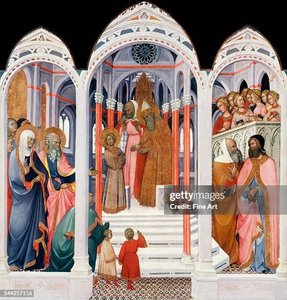 파올로 디 조반니 페이이탈리아 · 1345–1411
- 24Giovannino De' GrassiItalian · 1350–1398
- 25Lluís BorrassàCatalan · 1360–1425
- 26Michele GiambonoItalian · 1400–1462
- 27Giovanni dal PonteItalian · 1385–1438
- 28
 프라하의 테오도리크체코 ·
- 29
 니콜로 디 피에트로 제리니이탈리아 · 1368–1415
- 30
 파치노 디 보나구이다이탈리아 · 1280–1340
- 31Master Of The Life Of The VirginGerman ·
- 32Jan Baegert1465–1535
- 33Master Of The OsservanzaItalian ·
- 34Master of Heiligenkreuz AbbeyAustrian ·
Good questions
What people ask about Gothic
Who is the most famous Gothic 아티스트?
두초 (#1) is first in this ranking, followed by 시모네 마르티니 (#2) and 젠틸레 다 파브리아노 (#3).
Who are the 5 most famous Gothic 아티스트?
두초 (#1), 시모네 마르티니 (#2), 젠틸레 다 파브리아노 (#3), 피사넬로 (#4) 및 슈테판 로흐너 (#5).
Which country produced the most Gothic 아티스트?
이탈리아: 16 of the 34 아티스트 in this list were born there, then Germany (4) 및 네덜란드 (3).
Who are the great Gothic 아티스트 of 이탈리아?
The highest-ranked 아티스트 born in 이탈리아 are 두초 (#1), 시모네 마르티니 (#2), 젠틸레 다 파브리아노 (#3), 피사넬로 (#4) 및 아뇰로 가디 (#6).
Who was the first Gothic 아티스트?
The earliest-born 아티스트 in this list is 마스터 마테오 (#13), born in 1161.
Where are the great works of Gothic art today?
The museums holding the most key works of this list are 메트로폴리탄 미술관 (8), 국립 미술관 (5) 및 우피치 미술관 (4).
Which city produced the most Gothic 아티스트?
피렌체: 5 of the 아티스트 in this list were born there.
What techniques did Gothic 아티스트 use?
“He skillfully employed tempera on panel, achieving luminous colors and textural richness.” — from our biography of 마스터 프랑케 (프라테르 프랑케) (#16).
When were most Gothic 아티스트 born?
Most 아티스트 in this list were born in the 14th 세기 (18 of 34), between 1161 and 1465 overall.
Can I order a painting by a famous Gothic 아티스트?
Our catalogue holds 1,535 works by these 아티스트. Each one can be ordered as a hand-painted oil reproduction or a print.
Read more
More stories on ArtsDot.com
Other styles
Famous artists of other styles
 유명한 Baroque 예술가밤의 망루 (De Nachtwacht) · 렘브란트
 유명한 Contemporary Realist 예술가이삭 줍는 사람들 · 장프랑수아 밀레
 유명한 Impressionist 예술가별이 빛나는 밤 (뉴욕, MoMA) · 빈센트 반 고흐
 유명한 Romanticist 예술가토성, 그의 아들을 잡아먹는 중 · 프란시스코 데 고야
 유명한 Neoclassicist 예술가The Death of Marat · 자크루이 다비드
 유명한 Realist 예술가세계의 기원 · 귀스타브 쿠르베
 유명한 Renaissance 예술가모나리자 (라 죠콘다) · 레오나르도 다 빈치
 유명한 Dutch Golden Age 예술가진주 귀걸이를 한 소녀 · 요하네스 페르메이르
 유명한 Expressionist 예술가구성 VII · 바실리 칸딘스키
 유명한 Rococo 예술가사랑의 교훈 · 앙투안 바토
Other eras
Famous artists of other eras
 유명한 Early Medieval 예술가Snowy River · 왕유
 유명한 High Medieval 예술가마에스타의 마돈나 (오니산티 마돈나) · 조토 디 본도네
 유명한 Late Medieval 예술가수태고지와 두 성인 · 시모네 마르티니
 유명한 Renaissance 예술가아담의 창조 · 미켈란젤로 부오나로티
 유명한 Early Modern 예술가마태오의 부르심 · 카라바조
 유명한 19th Century 예술가수련 (또는 연꽃) · 클로드 모네
 유명한 Modern 예술가게르니카 · 파블로 피카소
 유명한 Contemporary 예술가Wind Sculpture III (one in a series of nine) · Yinka Shonibare
Keep exploring