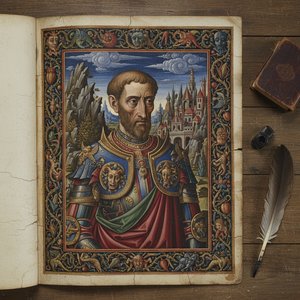
Taddeo Crivelli: A Renaissance Illuminator Bridging Gothic and Lombard Traditions
Taddeo Crivelli (c. 1425 – ca. 1479), born in Ferrara, represents a pivotal figure within the burgeoning artistic landscape of fifteenth-century Italy—a testament to the dynamic interplay between Gothic sensibilities and emerging Lombard stylistic innovations. While definitive biographical details remain elusive, scholarly consensus points towards a formative period spent absorbing the grandeur of Cosmé Tura’s frescoes in Siena, establishing a foundational connection with the expressive power of the Gothic tradition. This influence would subsequently permeate his own oeuvre, particularly evident in meticulous detail and heightened emotional intensity.- Early Life & Training: Precise information regarding Crivelli's upbringing is scarce. However, he emerged from Ferrara’s artistic milieu—a region experiencing considerable patronage under Borso d’Este—where he honed his skills alongside fellow luminaries like Carlo Crivelli and Andrea Mantegna. This environment fostered a collaborative spirit that propelled the development of innovative techniques and stylistic approaches.
- Ferrara & The Influence of Cosmé Tura: Crivelli's formative years in Ferrara coincided with the ascendancy of Cosmé Tura’s artistic vision, which championed a synthesis of Gothic ornamentation and expressive color palettes. This stylistic convergence profoundly impacted Crivelli’s artistic trajectory, shaping his meticulous rendering of drapery folds, intricate floral motifs, and emotionally charged depictions of biblical narratives.
- Notable Commissions & Illuminated Manuscripts: Crivelli achieved considerable renown for his contributions to illuminated manuscripts—a craft he elevated to an art form. His magnum opus remains the Borso Deste Bible, commissioned by Borso d’Este's advisor Teofilo Calcagnini, showcasing a masterful blend of Lombard and Gothic elements. Alongside this monumental undertaking, Crivelli undertook the ambitious project of illustrating Boccaccio’s *Decameron*, cementing his reputation as a storyteller and visual artist.
- Bologna & The Ptolemy Map: Following Borso’s death in 1471, Crivelli relocated to Bologna, where he collaborated with Domenico Pagliarolo on the gradual for San Procolo Monastery. This period witnessed a significant shift towards engraving—a skill Crivelli mastered, notably achieving recognition as the engraver of Ptolemy's *Cosmographia*, marking an unprecedented fusion of textual scholarship and visual representation.
- Legacy & Artistic Significance: Taddeo Crivelli’s artistic legacy extends beyond his individual masterpieces; he embodies a crucial transitional moment in Renaissance art history—a bridge between the expressive fervor of Gothic painting and the burgeoning geometric precision of Lombard style. His meticulous attention to detail, coupled with his masterful use of color and symbolism, continues to inspire admiration and scholarly debate, securing his place as one of the most influential illuminators of his era.
- Bertoni, Giorgio. *Taddeo Crivelli*. Firenze: Edizioni Studio Tirocini Arti Decorative, 1968.
Q&A
Taddeo Crivelli은(는) 어느 시대의 작품을 남겼나요?
Taddeo Crivelli은(는) Renaissance 시대에 활동했습니다. 이 시기는 역사적 맥락 속에서 작가의 예술적 위치를 보여줍니다.
Taddeo Crivelli의 작품 중 몇 점을 둘러보실 수 있나요?
전체 작품 보기 페이지에서 Taddeo Crivelli의 작품 작품 7점점을 만나보실 수 있습니다.
Taddeo Crivelli의 작품을 분위기별로 찾아볼 수 있나요?
Taddeo Crivelli의 작품은 각 작품이 지닌 분위기에 따라 분류된 무드 룸 페이지에서 무드별로 감상하실 수 있습니다.