The Quiet Observer of Berlin
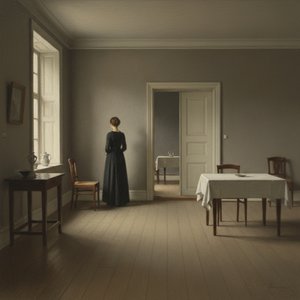
Born in 1861 in Neuhof, Paul Gehrmann lived a life shaped by the steady, observational rhythms of the late nineteenth and early twentieth centuries. As a painter based in Berlin, his work captured the stillness of domestic life and the expansive quietude of the natural world. He was a man of his era, finding his purpose in the meticulous rendering of light and the textures of the objects that define a room. His presence in the German art scene was marked by a commitment to the tangible, focusing on the way light interacts with wood, fabric, and stone.
His technical approach was characterized by a certain physical presence on the canvas. He often employed an impasto technique, using a thick, pastose application of oil to give his subjects a sense of weight and reality. This tactile quality allowed him to move beyond mere representation, turning a simple interior into a study of light and shadow. His hands were skilled in the art of the detail, whether he was documenting the grain of a chair or the distant silhouette of a fjord.
Themes and Subject Matter
Gehrmann’s oeuvre reveals a fascination with two distinct modes of existence: the intimate enclosure of the home and the vastness of the landscape. His compositions often centered on the interplay between architecture and light, creating scenes that felt lived-in and permanent. His subjects included:
- Interior scenes featuring Biedermeier-style furniture.
- Landscapes such as the Norwegian fjords.
- Studies of light-filled rooms and domestic arrangements.
In his depictions of interiors, he displayed a particular sensitivity to the Biedermeier aesthetic, focusing on the elegant simplicity and functional beauty of the furniture. These works were not merely records of rooms but were explorations of how a space holds the light. He captured the way a sunbeam might strike a polished surface or settle into the folds of a curtain, turning the mundane into something worthy of careful study.
A Life in Berlin
The later years of his life were spent in Berlin, where he continued to refine his craft until his death in 1923. His work from the period between 1902 and 1919 represents a significant portion of his output, a time when his ability to capture light-drenched interiors was most pronounced. He remained a painter of the tangible, never straying from the physical world he so carefully observed. His legacy is found in these quiet, well-constructed glimpses of a bygone European sensibility, preserved through the careful application of oil on canvas and linen.
Q&A
Paul Gehrmann은(는) 어느 시대의 작품을 남겼나요?
Paul Gehrmann은(는) 19th Century 시대에 활동했습니다. 이 시기는 역사적 맥락 속에서 작가의 예술적 위치를 보여줍니다.
Paul Gehrmann의 작품을 분위기별로 찾아볼 수 있나요?
Paul Gehrmann의 작품은 각 작품이 지닌 분위기에 따라 분류된 무드 룸 페이지에서 무드별로 감상하실 수 있습니다.
미술 사조별로 분류된 Paul Gehrmann의 작품은 어디에서 볼 수 있나요?
Paul Gehrmann의 작품은 작가의 모든 미술 사조 페이지에서 사조별로 만나보실 수 있습니다.
Paul Gehrmann의 작품 중 몇 점을 둘러보실 수 있나요?
전체 작품 보기 페이지에서 Paul Gehrmann의 작품 작품 1점점을 만나보실 수 있습니다.